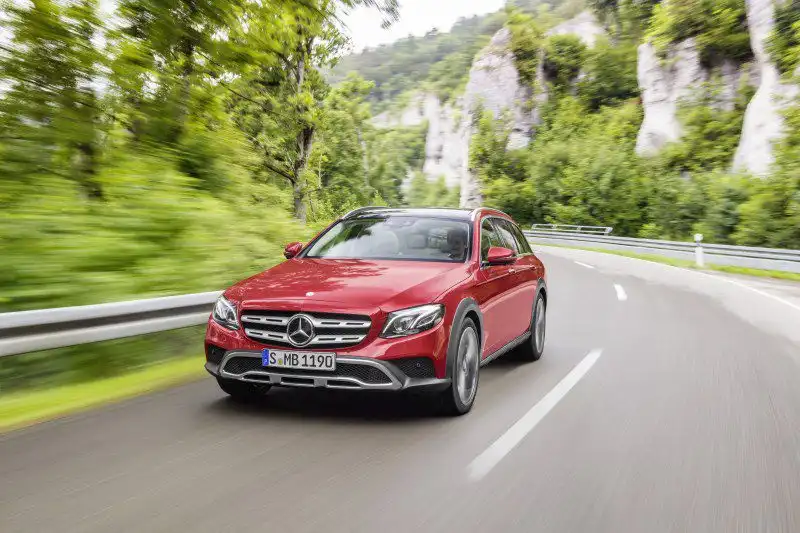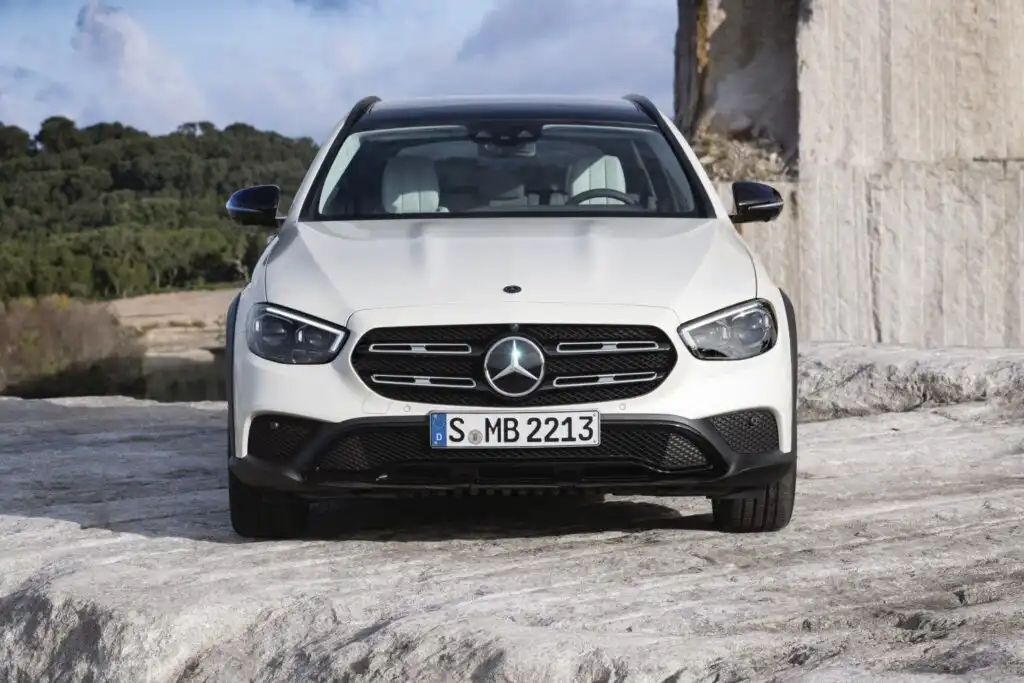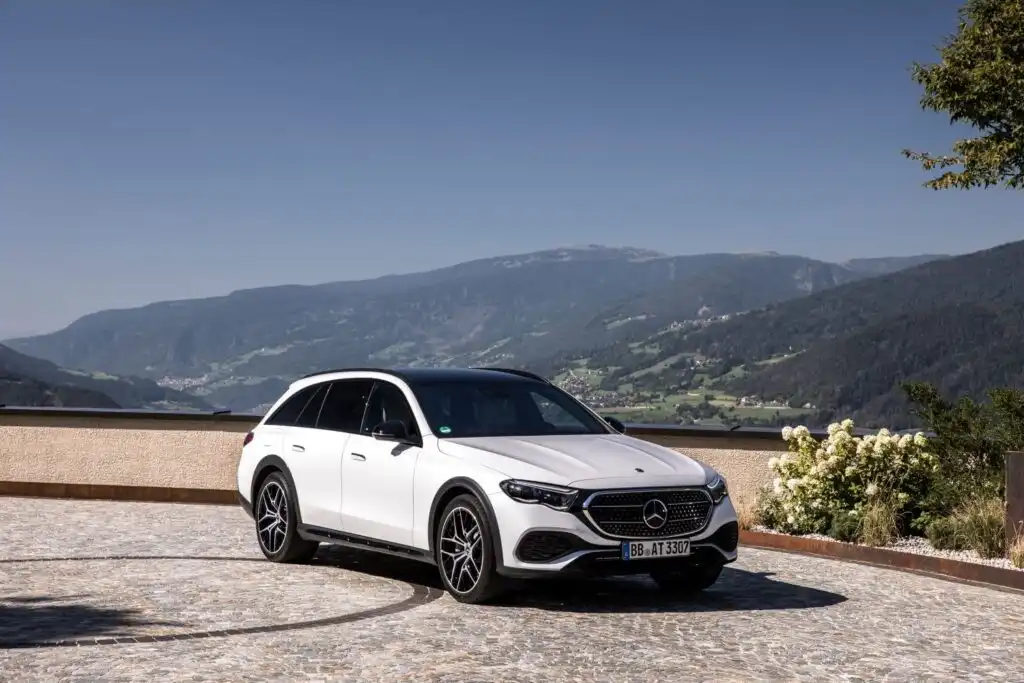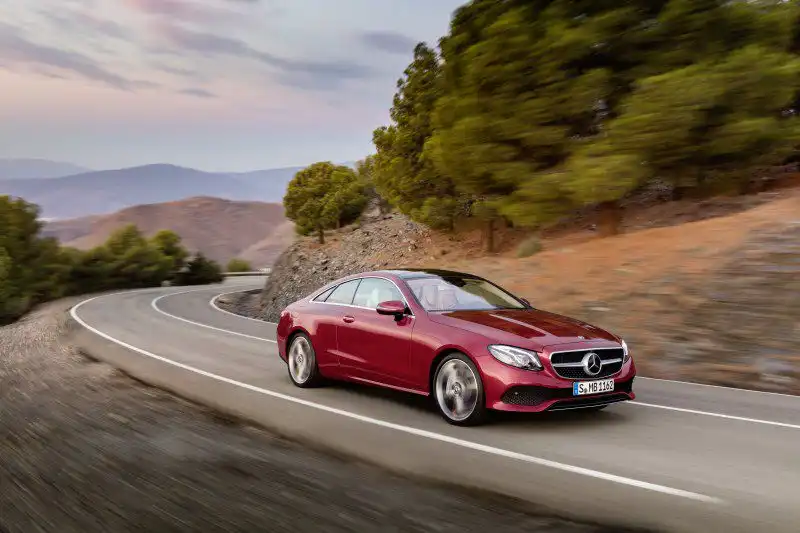
The Mercedes-Benz E-Class Coupe (C238) E 300, equipped with the 245 horsepower engine and 9G-TRONIC automatic transmission, represents a compelling blend of luxury, performance, and technology within the broader E-Class range. Produced from 2016 to 2018, this variant occupied a significant position as a mid-range offering, bridging the gap between the entry-level E 200 models and the more potent E 400 and AMG variants. It was primarily marketed towards buyers seeking a sophisticated grand tourer with a balance of power and efficiency, appealing to both European and North American markets.
Technical Specifications
| Brand | Mercedes-Benz |
| Model | E-Class |
| Generation | E-Class Coupe (C238) |
| Type (Engine) | E 300 (245 Hp) 9G-TRONIC |
| Start of production | 2016 |
| End of production | 2018 |
| Powertrain Architecture | Internal Combustion engine |
| Body type | Coupe |
| Seats | 4 |
| Doors | 2 |
| Fuel consumption (urban) | 8.9-8.4 l/100 km (26.4 – 28 US mpg, 31.7 – 33.6 UK mpg, 11.2 – 11.9 km/l) |
| Fuel consumption (extra urban) | 5.9-5.3 l/100 km (39.9 – 44.4 US mpg, 47.9 – 53.3 UK mpg, 16.9 – 18.9 km/l) |
| Fuel consumption (combined) | 7.0-6.4 l/100 km (33.6 – 36.8 US mpg, 40.4 – 44.1 UK mpg, 14.3 – 15.6 km/l) |
| CO2 emissions | 151-136 g/km |
| Fuel Type | Petrol (Gasoline) |
| Acceleration 0 – 100 km/h | 6.4 sec |
| Acceleration 0 – 62 mph | 6.4 sec |
| Acceleration 0 – 60 mph | 6.1 sec |
| Maximum speed | 250 km/h (155.34 mph) |
| Emission standard | Euro 6 |
| Weight-to-power ratio | 6.6 kg/Hp, 152.2 Hp/tonne |
| Weight-to-torque ratio | 4.4 kg/Nm, 229.8 Nm/tonne |
| Power | 245 Hp @ 5500 rpm |
| Torque | 370 Nm @ 1400-4000 rpm (272.9 lb.-ft. @ 1400-4000 rpm) |
| Engine layout | Front, Longitudinal |
| Engine Model/Code | M 274.920 |
| Engine displacement | 1991 cm3 (121.5 cu. in.) |
| Number of cylinders | 4 |
| Engine configuration | Inline |
| Fuel injection system | Direct injection |
| Engine aspiration | Turbocharger, Intercooler |
| Engine oil capacity | 7 l (7.4 US qt | 6.16 UK qt) |
| Kerb Weight | 1610 kg (3549.44 lbs.) |
| Max. weight | 2230 kg (4916.31 lbs.) |
| Max load | 620 kg (1366.87 lbs.) |
| Trunk (boot) space – minimum | 425 l (15.01 cu. ft.) |
| Fuel tank capacity | 66 l (17.44 US gal | 14.52 UK gal) |
| Max. roof load | 75 kg (165.35 lbs.) |
| Permitted trailer load with brakes (12%) | 1800 kg (3968.32 lbs.) |
| Permitted trailer load without brakes | 750 kg (1653.47 lbs.) |
| Length | 4826 mm (190 in.) |
| Width | 1860 mm (73.23 in.) |
| Width including mirrors | 2055 mm (80.91 in.) |
| Height | 1430 mm (56.3 in.) |
| Wheelbase | 2873 mm (113.11 in.) |
| Front track | 1605 mm (63.19 in.) |
| Rear (Back) track | 1609 mm (63.35 in.) |
| Front overhang | 841 mm (33.11 in.) |
| Rear overhang | 1112 mm (43.78 in.) |
| Drag coefficient (Cd) | 0.28 |
| Minimum turning circle (turning diameter) | 11.37 m (37.3 ft.) |
| Drivetrain Architecture | Rear wheel drive |
| Drive wheel | Rear wheel drive |
| Number of gears and type of gearbox | 9 gears, automatic transmission G-TRONIC |
| Front suspension | Independent multi-link suspension |
| Rear suspension | Independent multi-link suspension |
| Front brakes | Ventilated discs |
| Rear brakes | Ventilated discs |
| Assisting systems | ABS (Anti-lock braking system) |
| Steering type | Steering rack and pinion |
| Power steering | Electric Steering |
| Tires size | 225/55 R17 |
| Wheel rims size | 17 |
Powertrain & Engine Architecture
The E 300 Coupe utilized Mercedes-Benz’s M274.920 2.0-liter inline-four cylinder engine. This engine is a key component of the company’s modular engine family, known for its efficiency and refinement. It features direct fuel injection and a single twin-scroll turbocharger with an intercooler, producing 245 horsepower and 273 lb-ft of torque. The engine’s torque curve is relatively flat, delivering peak torque from 1400 to 4000 rpm, contributing to strong mid-range acceleration. Paired with the engine is the 9G-TRONIC nine-speed automatic transmission. This transmission is designed for smooth shifts and optimized fuel economy, with closely spaced gear ratios allowing the engine to operate within its optimal power band more frequently. The transmission features a wide range of driving modes, including Eco, Comfort, Sport, and Individual, allowing drivers to tailor the vehicle’s performance to their preferences.
Driving Characteristics
The E 300 Coupe with the 9G-TRONIC transmission offers a comfortable and refined driving experience. While not as overtly sporty as the E 400 or AMG models, it provides ample power for everyday driving and highway cruising. Acceleration from 0 to 60 mph takes approximately 6.1 seconds. The 9G-TRONIC transmission contributes to smooth and almost imperceptible gear changes, enhancing the overall driving experience. Compared to the six-speed automatic offered in earlier E-Class generations, the 9G-TRONIC provides improved fuel economy and reduced engine noise at highway speeds. The gear ratios are tuned for efficiency, but Sport mode sharpens the shift points and provides quicker responses. Compared to a manual transmission equipped E 300, the automatic offers less driver engagement but greater convenience, particularly in urban traffic.
Equipment & Trim Levels
The E 300 Coupe came standard with a generous array of features, including leather upholstery, automatic climate control, a high-resolution infotainment system with a central display screen, and a suite of safety technologies such as adaptive cruise control, lane keeping assist, and automatic emergency braking. Optional extras included a premium sound system, a panoramic sunroof, heated and ventilated front seats, and advanced driver assistance packages. Interior trim options ranged from wood veneers to aluminum accents, allowing buyers to personalize the cabin to their taste. The standard dashboard configuration featured analog gauges with a central color display, providing information on vehicle performance and system status.
Chassis & Braking
The C238 E-Class Coupe features a sophisticated chassis design with an independent multi-link suspension at both the front and rear. This suspension setup provides a comfortable ride while maintaining good handling characteristics. The E 300 Coupe typically came equipped with ventilated disc brakes on all four wheels, providing ample stopping power. ABS (Anti-lock Braking System) and electronic stability control are standard features, enhancing safety and control in various driving conditions. The steering system utilizes electric power steering, offering precise and responsive steering feel. The suspension tuning is geared towards comfort, but the car remains stable and predictable during cornering.
Market Reception & Comparison
The E 300 Coupe was generally well-received by automotive critics, who praised its refined driving experience, luxurious interior, and advanced technology. It was often compared to rivals such as the BMW 4 Series Coupe and the Audi A5 Coupe. The E 300 offered a compelling combination of performance, comfort, and fuel economy, making it a popular choice among buyers in the mid-size luxury coupe segment. Fuel economy figures typically ranged from 26 to 37 mpg, depending on driving conditions. Compared to the more powerful E 400, the E 300 offered a more affordable entry point into the E-Class Coupe range, while still providing a satisfying driving experience. The E 300 also proved to be more fuel-efficient than the E 400.
Legacy
The M274 engine and 9G-TRONIC transmission combination used in the E 300 Coupe have proven to be relatively reliable in the long term. While some owners have reported minor issues with the turbocharger or fuel injectors, these are generally not widespread. The 9G-TRONIC transmission is known for its durability and smooth operation. In the used car market, the E 300 Coupe remains a desirable option for buyers seeking a stylish and well-equipped luxury coupe. Its combination of performance, comfort, and technology continues to appeal to a wide range of drivers. Maintenance costs are generally comparable to other luxury vehicles in its class, with routine servicing required to ensure optimal performance and reliability.