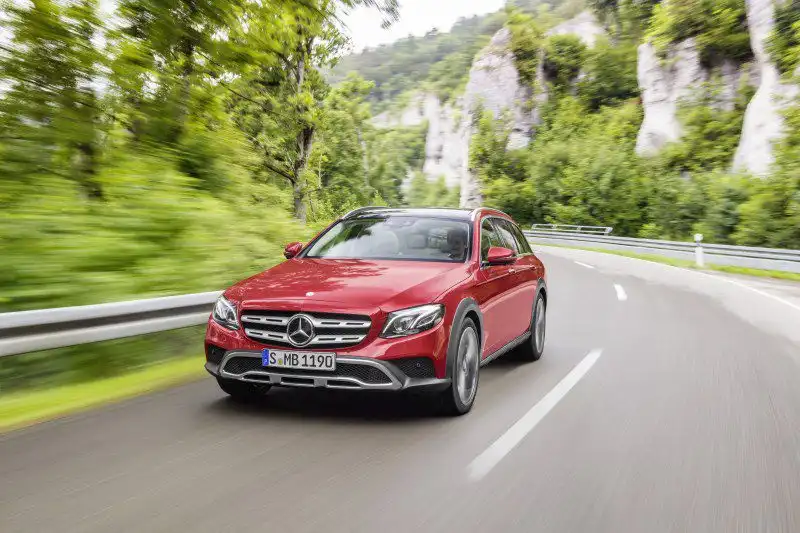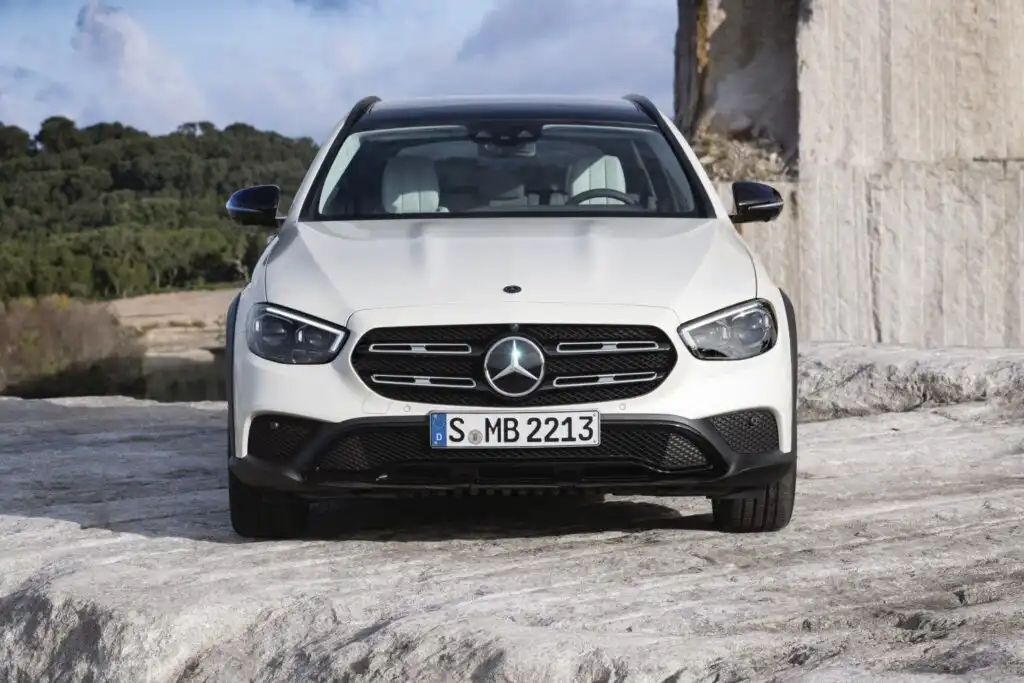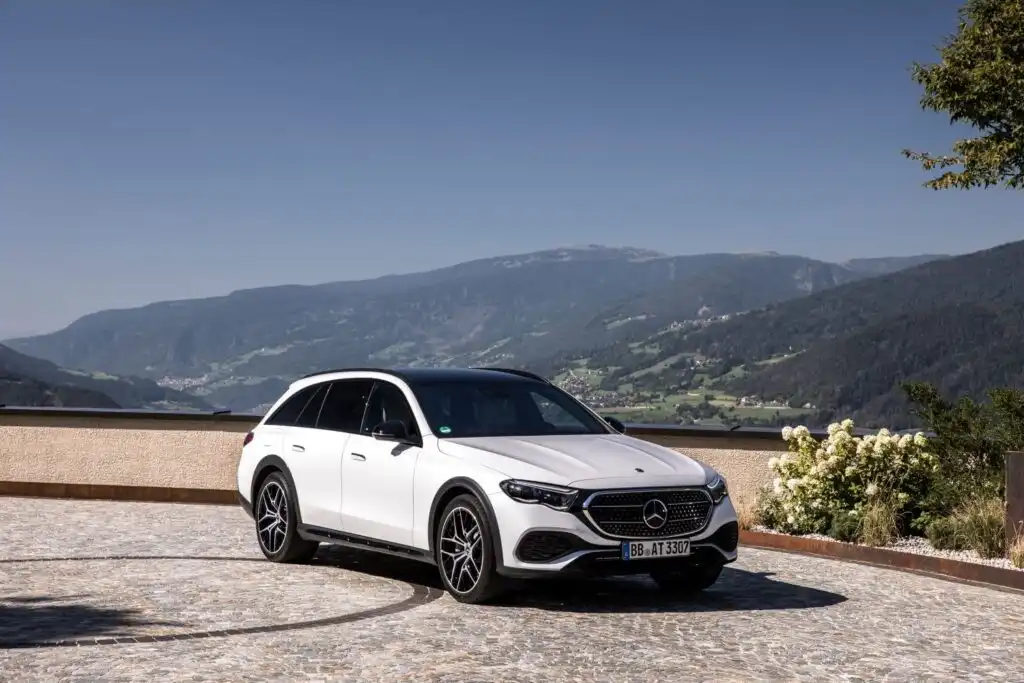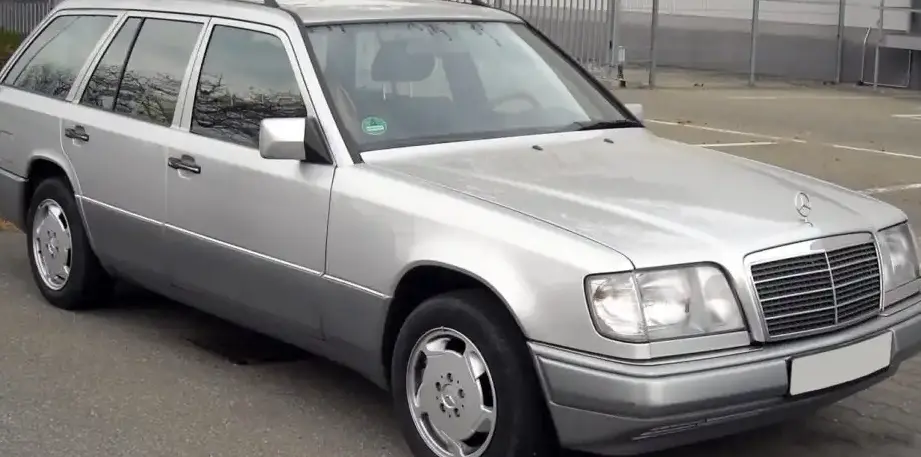
The Mercedes-Benz E 200 T, part of the S124 series T-Modell (estate) range, was produced from July 1993 to February 1996. This variant occupied a middle ground within the E-Class lineup, offering a balance between performance, practicality, and affordability. It represented a popular choice for families and those requiring a versatile vehicle with the renowned Mercedes-Benz build quality. The S124 platform, introduced in 1985, was a significant evolution of the W123, offering increased refinement, safety features, and a more modern design. The E 200 T with the automatic transmission aimed to provide comfortable and convenient transportation, appealing to buyers who prioritized ease of driving over outright sportiness.
Technical Specifications
| Brand | Mercedes-Benz |
| Model | E-class |
| Generation | E-class T-modell (S124) |
| Type | E 200 T (136 Hp) Automatic |
| Start of production | July, 1993 |
| End of production | February, 1996 |
| Powertrain Architecture | Internal Combustion engine |
| Body type | Station wagon (estate) |
| Seats | 5 |
| Doors | 5 |
| Fuel consumption (urban) | 11.7 l/100 km (20.1 US mpg) |
| Fuel consumption (extra urban) | 7.6 l/100 km (30.9 US mpg) |
| Fuel Type | Petrol (Gasoline) |
| Acceleration 0 – 100 km/h | 12.7 sec |
| Acceleration 0 – 62 mph | 12.7 sec |
| Acceleration 0 – 60 mph | 12.1 sec |
| Maximum speed | 183 km/h (113.71 mph) |
| Weight-to-power ratio | 10.8 kg/Hp |
| Weight-to-torque ratio | 7.7 kg/Nm |
| Power | 136 Hp @ 5500 rpm |
| Torque | 190 Nm @ 4000 rpm (140.14 lb.-ft. @ 4000 rpm) |
| Engine layout | Front, Longitudinal |
| Engine Model/Code | M 111 E 20 / 111.940 |
| Engine displacement | 1998 cm3 (121.93 cu. in.) |
| Number of cylinders | 4 |
| Engine configuration | Inline |
| Cylinder Bore | 89.9 mm (3.54 in.) |
| Piston Stroke | 78.7 mm (3.1 in.) |
| Compression ratio | 9.6:1 |
| Number of valves per cylinder | 4 |
| Fuel injection system | Multi-port manifold injection |
| Engine aspiration | Naturally aspirated engine |
| Valvetrain | DOHC |
| Engine oil capacity | 5.5 l (5.81 US qt | 4.84 UK qt) |
| Coolant capacity | 8.5 l (8.98 US qt | 7.48 UK qt) |
| Kerb Weight | 1470 kg (3240.8 lbs.) |
| Max. weight | 2130 kg (4695.85 lbs.) |
| Max load | 660 kg (1455.05 lbs.) |
| Trunk (boot) space – minimum | 530 l (18.72 cu. ft.) |
| Trunk (boot) space – maximum | 885 l (31.25 cu. ft.) |
| Fuel tank capacity | 72 l (19.02 US gal | 15.84 UK gal) |
| Length | 4765 mm (187.6 in.) |
| Width | 1740 mm (68.5 in.) |
| Height | 1490 mm (58.66 in.) |
| Wheelbase | 2800 mm (110.24 in.) |
| Front track | 1497 mm (58.94 in.) |
| Rear track | 1488 mm (58.58 in.) |
| Drivetrain Architecture | Rear wheel drive |
| Number of gears | 4 |
| Gearbox type | Automatic transmission |
| Front suspension | Wishbone |
| Rear suspension | Independent multi-link suspension |
| Front brakes | Ventilated discs |
| Rear brakes | Disc |
| Assisting systems | ABS (Anti-lock braking system) |
| Steering type | Cone worm with recirculation balls |
| Power steering | Hydraulic |
| Tires size | 195/65 R15 |
| Wheel rims size | 6.5J x 15 |
INTRODUCTION
The Mercedes-Benz E 200 T (S124) represented a practical and refined option within the E-Class range. Introduced in 1993, it combined the spaciousness of a station wagon with the luxury and engineering expected from Mercedes-Benz. Positioned as a mid-range offering, it sat below the more powerful E 280 and E 320 models, but above the base E 180. The “T-Modell” designation signified the estate body style, offering increased cargo capacity and versatility compared to the sedan. This variant was primarily aimed at European markets, where estate cars were – and continue to be – highly popular, though limited numbers were imported to the United States.
Powertrain & Engine Architecture
The E 200 T was powered by the M111 E 20 engine, a 1.998-liter inline-four cylinder gasoline engine. This engine, identifiable by its code 111.940, featured multi-port fuel injection and a double overhead camshaft (DOHC) valvetrain. The M111 was known for its relatively smooth operation and decent fuel economy for its time. The engine produced 136 horsepower at 5500 rpm and 190 Nm (140 lb-ft) of torque at 4000 rpm. Paired with this engine was a four-speed automatic transmission, providing smooth and convenient gear changes. This transmission was a common unit used across various Mercedes-Benz models of the era, known for its reliability, though not particularly sporty shift characteristics. The engine’s longitudinal front-engine layout and rear-wheel drive configuration were typical for Mercedes-Benz vehicles of this period.
Driving Characteristics
The E 200 T Automatic offered a comfortable and relaxed driving experience. While not a performance-oriented vehicle, the 136 hp engine provided adequate power for everyday driving and highway cruising. Acceleration from 0 to 60 mph took approximately 12.1 seconds, and the top speed was around 113.7 mph. The automatic transmission, while smooth, did contribute to a slight reduction in responsiveness compared to the available manual transmission. Gear ratios were optimized for fuel efficiency and comfortable cruising rather than rapid acceleration. The rear-wheel drive configuration provided balanced handling, but the relatively soft suspension setup prioritized ride comfort over sharp cornering. Compared to the more powerful E 280 or E 320, the E 200 T felt noticeably less energetic, but it offered a more economical and accessible entry point into the E-Class range.
Equipment & Trim Levels
The E 200 T Automatic came standard with a respectable level of equipment. This typically included power windows, central locking, power steering, and an anti-lock braking system (ABS). Interior upholstery was usually cloth, though leather was available as an option. The dashboard featured a classic Mercedes-Benz design with wood trim accents. Optional extras included a sunroof, automatic climate control, upgraded audio systems, and heated seats. Trim levels were relatively simple, with most variations coming from the selection of optional equipment. The focus was on providing a well-equipped and comfortable vehicle without excessive luxury.
Chassis & Braking
The S124 chassis featured an independent suspension system at all four wheels. The front suspension utilized wishbones, while the rear employed a multi-link setup, providing a comfortable ride and good handling characteristics. Braking duties were handled by ventilated discs at the front and solid discs at the rear. The ABS system helped to maintain stability during hard braking. Stabilizer bars were fitted to both the front and rear axles to reduce body roll. The E 200 T’s suspension was tuned for comfort, resulting in a slightly softer ride compared to sportier E-Class variants.
Market Reception & Comparison
The E 200 T Automatic was generally well-received by critics as a practical and reliable family vehicle. It was praised for its spacious interior, comfortable ride, and build quality. However, some reviewers noted that the engine lacked the punch of the larger displacement models. Fuel economy was considered reasonable for a vehicle of its size and class. Compared to the E 280 and E 320, the E 200 T offered a more affordable entry point into the E-Class range, making it appealing to a wider range of buyers. The 1.8L engine was also generally considered easier and cheaper to maintain than the larger six-cylinder units.
Legacy
The Mercedes-Benz E 200 T (S124) has developed a reputation for long-term reliability, particularly the M111 engine. Well-maintained examples are still found on the road today, testament to the robust engineering of the era. In the used car market, these vehicles are often sought after by enthusiasts and collectors who appreciate their classic styling and build quality. While not the fastest or most luxurious E-Class variant, the E 200 T offers a compelling combination of practicality, comfort, and affordability, making it a desirable classic Mercedes-Benz.