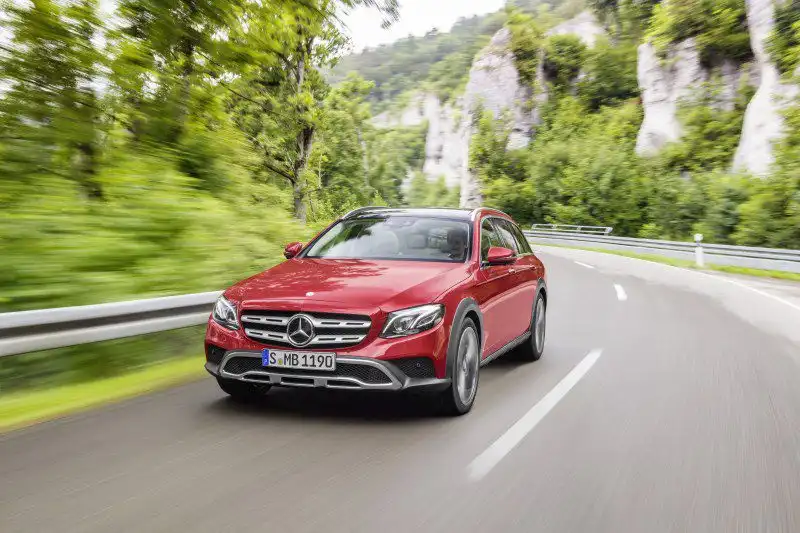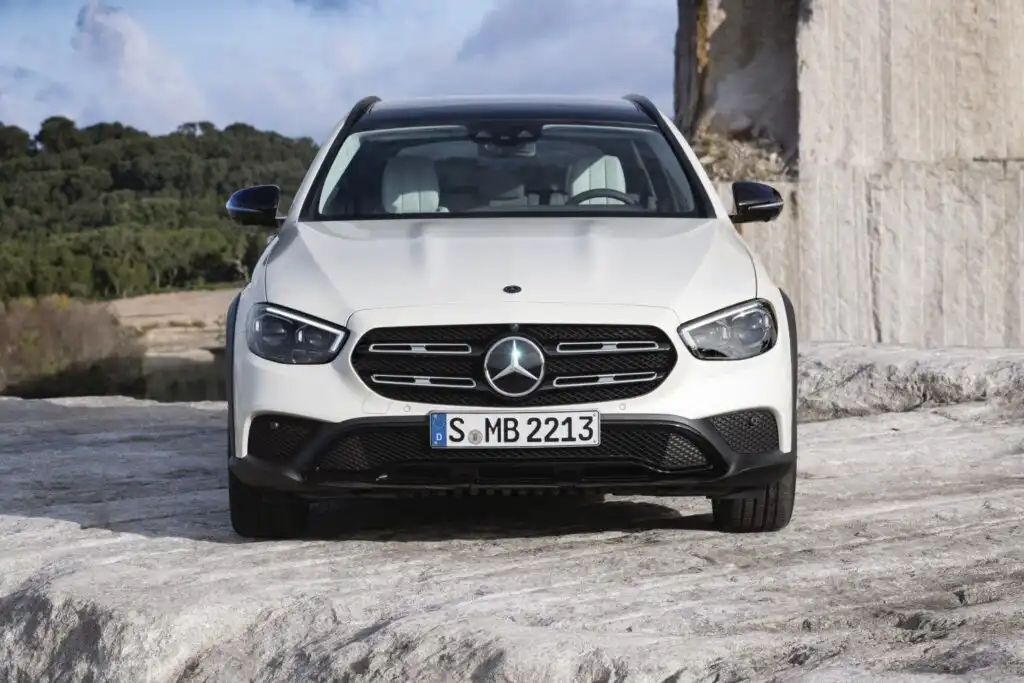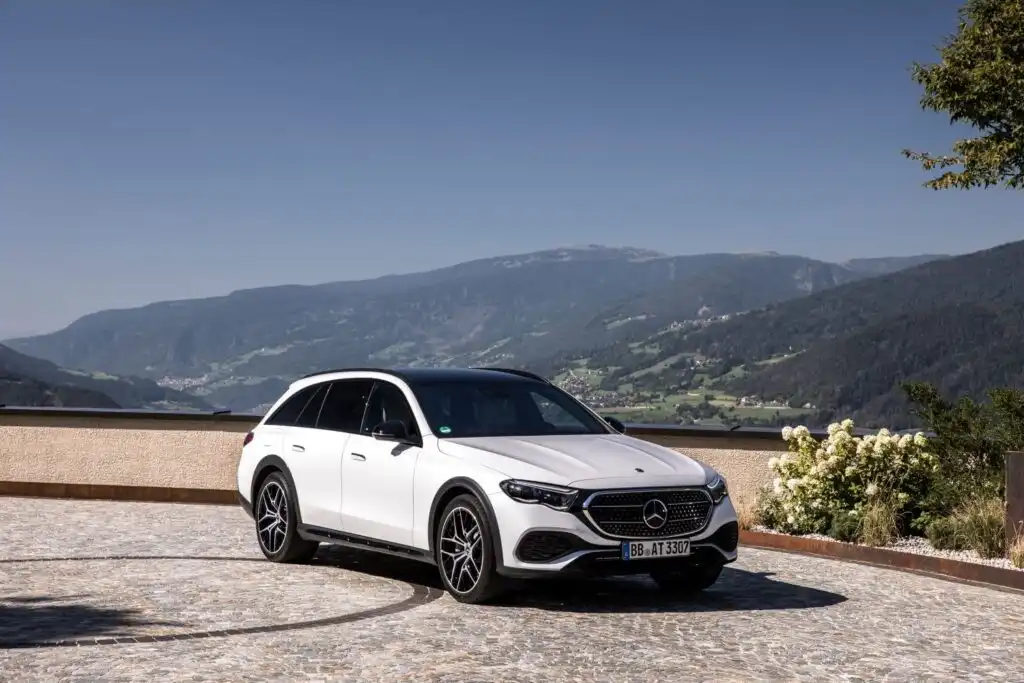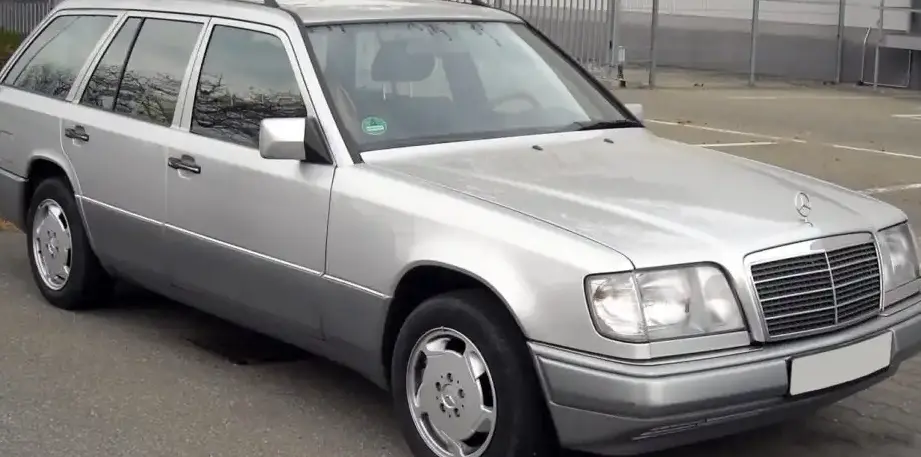
The Mercedes-Benz E 300 T 4MATIC, produced between July 1993 and April 1995, represents a compelling blend of practicality and performance within the W124 series of estate cars (T-Modell). Positioned as a mid-to-upper range offering, it catered to buyers seeking the space of a wagon with the refinement and all-weather capability of Mercedes-Benz’s 4MATIC all-wheel-drive system. This variant occupied a space above the base E 220 T and E 280 T models, but below the higher-performance E 320 T, offering a balance between fuel economy, power, and luxury features. The E 300 T 4MATIC was primarily sold in European markets, where the demand for practical, high-quality wagons was strong.
Technical Specifications
| Brand | Mercedes-Benz |
| Model | E-class |
| Generation | E-class T-modell (S124) |
| Type | E 300 T (180 Hp) 4MATIC Automatic |
| Start of production | July, 1993 |
| End of production | April, 1995 |
| Powertrain Architecture | Internal Combustion engine |
| Body type | Station wagon (estate) |
| Seats | 5 |
| Doors | 5 |
| Fuel consumption (urban) | 14.6 l/100 km (16.1 US mpg, 19.3 UK mpg, 6.8 km/l) |
| Fuel consumption (extra urban) | 10 l/100 km (23.5 US mpg, 28.2 UK mpg, 10 km/l) |
| Fuel consumption (combined) | 12.3 l/100 km (19.1 US mpg, 23 UK mpg, 8.1 km/l) |
| Fuel Type | Petrol (Gasoline) |
| Acceleration 0 – 100 km/h | 9.8 sec |
| Acceleration 0 – 62 mph | 9.8 sec |
| Acceleration 0 – 60 mph | 9.3 sec |
| Maximum speed | 204 km/h (126.76 mph) |
| Weight-to-power ratio | 9.3 kg/Hp, 107.8 Hp/tonne |
| Weight-to-torque ratio | 6.5 kg/Nm, 152.7 Nm/tonne |
| Power | 180 Hp @ 5700 rpm |
| Power per litre | 60.8 Hp/l |
| Torque | 255 Nm @ 4400 rpm (188.08 lb.-ft. @ 4400 rpm) |
| Engine layout | Front, Longitudinal |
| Engine Model/Code | M 103 E 30 / 103.985 |
| Engine displacement | 2960 cm3 (180.63 cu. in.) |
| Number of cylinders | 6 |
| Engine configuration | Inline |
| Cylinder Bore | 88.5 mm (3.48 in.) |
| Piston Stroke | 80.2 mm (3.16 in.) |
| Compression ratio | 9.2:1 |
| Number of valves per cylinder | 2 |
| Fuel injection system | Multi-port manifold injection |
| Engine aspiration | Naturally aspirated engine |
| Valvetrain | SOHC |
| Engine oil capacity | 6.5 l (6.87 US qt | 5.72 UK qt) |
| Coolant | 9 l (9.51 US qt | 7.92 UK qt) |
| Kerb Weight | 1670 kg (3681.72 lbs.) |
| Max. weight | 2300 kg (5070.63 lbs.) |
| Max load | 630 kg (1388.91 lbs.) |
| Trunk (boot) space – minimum | 530 l (18.72 cu. ft.) |
| Trunk (boot) space – maximum | 885 l (31.25 cu. ft.) |
| Fuel tank capacity | 72 l (19.02 US gal | 15.84 UK gal) |
| Length | 4765 mm (187.6 in.) |
| Width | 1740 mm (68.5 in.) |
| Height | 1498 mm (58.98 in.) |
| Wheelbase | 2800 mm (110.24 in.) |
| Front track | 1497 mm (58.94 in.) |
| Rear (Back) track | 1485 mm (58.46 in.) |
| Drivetrain Architecture | The Internal combustion engine (ICE) drives the rear wheels permanently, and the front wheels are driven through an electrically or mechanically operated clutch if necessary. |
| Drive wheel | All wheel drive (4×4) |
| Number of gears and type of gearbox | 4 gears, automatic transmission |
| Front suspension | Wishbone |
| Rear suspension | Independent multi-link suspension |
| Front brakes | Ventilated discs |
| Rear brakes | Disc |
| Assisting systems | ABS (Anti-lock braking system) |
| Steering type | Cone worm with recirculation balls |
| Power steering | Hydraulic Steering |
| Tires size | Front wheel tires: 195/65 R15Rear wheel tires: 195/65 R15 |
| Wheel rims size | Front wheel rims: 6.5J x 15Rear wheel rims: 6.5J x 15 |
INTRODUCTION
The Mercedes-Benz E 300 T 4MATIC, part of the W124 series produced from 1985 to 1996, represents a high point in Mercedes-Benz engineering and build quality. The T-Modell (estate) variant offered a spacious and practical alternative to the sedan, appealing to families and those requiring significant cargo capacity. Introduced in July 1993 and continuing through April 1995, the E 300 T 4MATIC combined a robust 3.0-liter inline-six engine with a four-speed automatic transmission and Mercedes-Benz’s sophisticated 4MATIC all-wheel-drive system. This combination aimed to provide a secure and comfortable driving experience in all weather conditions, making it a popular choice in regions with inclement weather.
Powertrain & Engine Architecture
The heart of the E 300 T 4MATIC is the M103 E 30 engine, a 2,960cc (180.6 cu in) inline-six cylinder powerplant. This engine, known for its smoothness and durability, features a single overhead camshaft (SOHC) design and multi-port fuel injection. The engine code 103.985 identifies this specific iteration. The M103 engine is renowned for its robust construction and relatively simple design, contributing to its longevity. The four-speed automatic transmission (typically the 4G-TRONIC) was chosen for its smooth operation and ease of use, complementing the engine’s torque characteristics. The 4MATIC system employs a viscous coupling to distribute power between the front and rear axles as needed, providing enhanced traction without requiring driver intervention. The system is primarily rear-wheel drive, engaging the front wheels only when rear wheel slip is detected.
Driving Characteristics
The E 300 T 4MATIC delivers a refined and comfortable driving experience. While not overtly sporty, the 180 horsepower and 255 Nm (188 lb-ft) of torque provide adequate performance for everyday driving and highway cruising. Acceleration from 0 to 60 mph takes approximately 9.3 seconds, and the car reaches a top speed of 204 km/h (127 mph). The automatic transmission offers smooth gear changes, although it can feel somewhat dated by modern standards. The 4MATIC system significantly enhances stability and traction, particularly on slippery surfaces. Compared to the rear-wheel-drive E 300 T, the 4MATIC version offers increased confidence in adverse weather conditions. However, the added weight of the 4MATIC components does slightly impact fuel economy and responsiveness compared to the lighter, rear-wheel-drive models.
Equipment & Trim Levels
The E 300 T 4MATIC typically came well-equipped, reflecting Mercedes-Benz’s commitment to luxury and comfort. Standard features included power windows, power locks, central locking, air conditioning, and a high-quality audio system. Interior upholstery was typically cloth or leather, with wood trim accents on the dashboard and door panels. Optional extras included a sunroof, heated seats, automatic climate control, and upgraded audio systems. The level of equipment could vary depending on the specific market and individual customer preferences. The E 300 T 4MATIC generally offered a more luxurious interior than the base E 220 T models, but lacked some of the more exclusive features found in the E 320 T.
Chassis & Braking
The W124 chassis features independent suspension all around, with a wishbone setup at the front and a multi-link suspension at the rear. This configuration provides a comfortable ride and good handling characteristics. The E 300 T 4MATIC is equipped with ventilated disc brakes at the front and solid disc brakes at the rear. Anti-lock braking system (ABS) is standard, enhancing safety and control during emergency braking. The steering is a recirculating ball system with hydraulic power assistance, providing a balanced feel and reasonable responsiveness. The added weight of the 4MATIC system necessitated slightly stiffer suspension settings compared to the rear-wheel-drive models.
Market Reception & Comparison
The E 300 T 4MATIC was generally well-received by automotive critics, who praised its comfortable ride, spacious interior, and all-weather capability. It was seen as a practical and refined estate car that offered a compelling alternative to other luxury wagons. Compared to the E 280 T, the E 300 T 4MATIC offered more power and the added security of all-wheel drive. However, it was more expensive and slightly less fuel-efficient. Compared to the E 320 T, the E 300 T 4MATIC offered a more affordable entry point into the high-performance T-Modell range, albeit with slightly less power. Fuel economy was reasonable for its class, averaging around 19 mpg combined, but was not a standout feature.
Legacy
The Mercedes-Benz E 300 T 4MATIC has proven to be a durable and reliable vehicle, with many examples still on the road today. The M103 engine is known for its longevity, and the 4MATIC system has generally proven to be robust. However, like all older vehicles, the E 300 T 4MATIC requires regular maintenance to keep it in good condition. Common issues include wear and tear on suspension components, corrosion, and potential leaks from seals and gaskets. In the used car market, the E 300 T 4MATIC is sought after by enthusiasts who appreciate its classic styling, build quality, and practicality. Values have been steadily increasing in recent years, reflecting its growing status as a desirable classic Mercedes-Benz.