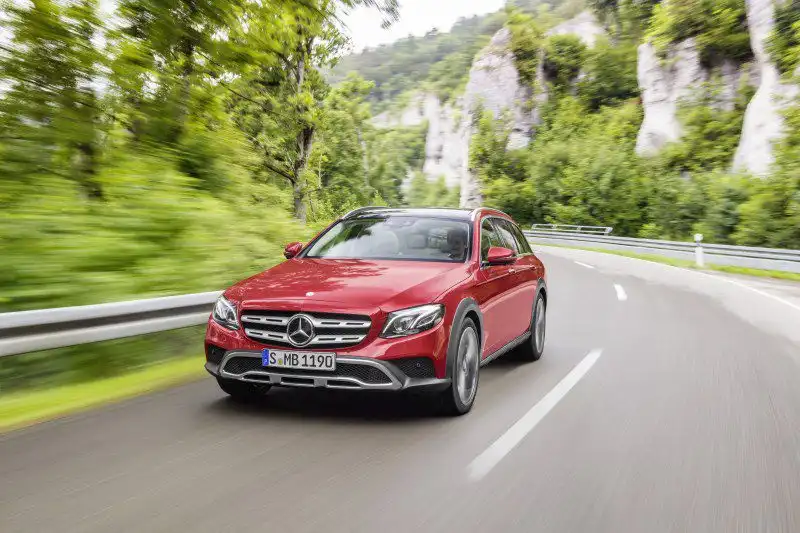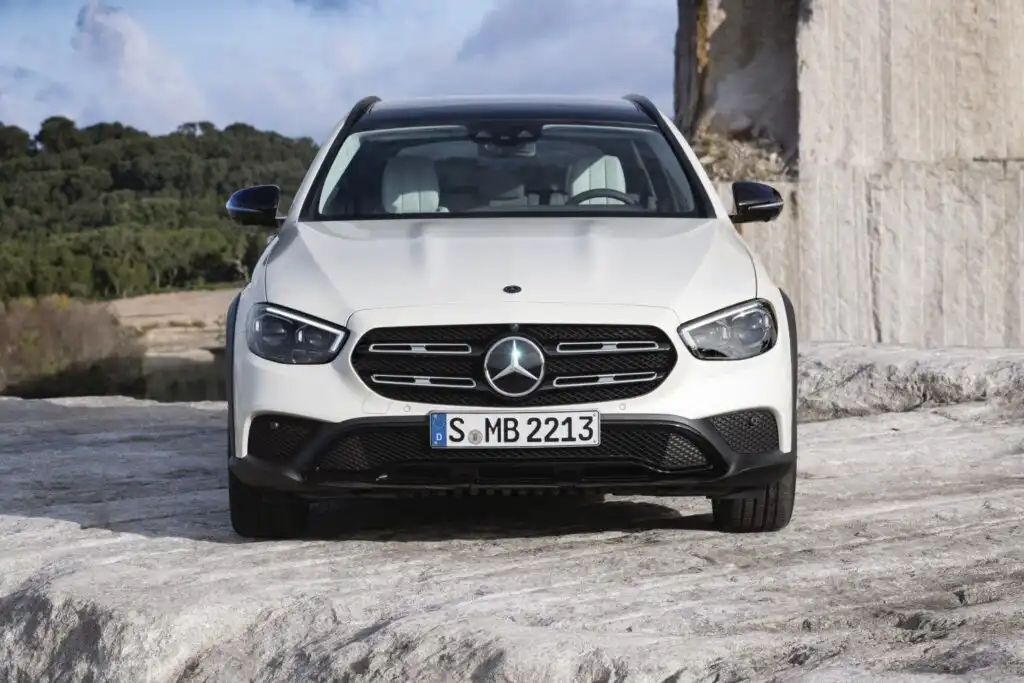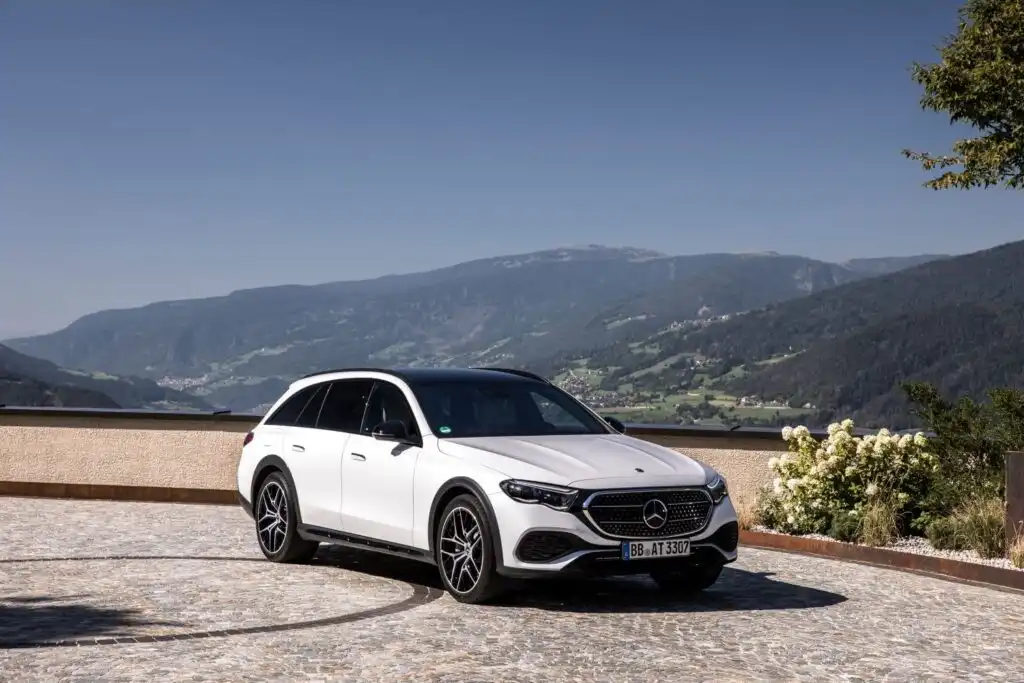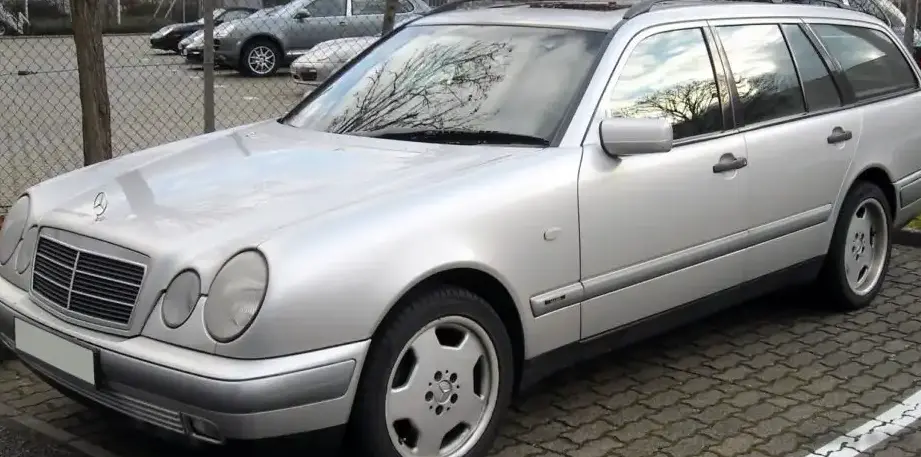
The Mercedes-Benz E 200 T-modell (S210), produced from August 1995 to July 1999, represented the entry point into the desirable E-Class wagon range. Part of the W210 series, the T-modell – Mercedes’ designation for its estate (station wagon) body style – offered a practical and refined alternative to the sedan. The E 200, powered by a 2.0-liter inline-four engine producing 136 horsepower, served as a more affordable and fuel-efficient option within the lineup, appealing to buyers prioritizing practicality and comfort over outright performance. It occupied a crucial position in the market, offering the prestige of the E-Class badge with a lower price tag than its six and eight-cylinder siblings.
Technical Specifications
| Brand | Mercedes-Benz |
| Model | E-class |
| Generation | E-class T-modell (S210) |
| Type (Engine) | E 200 (136 Hp) |
| Start of production | August, 1995 |
| End of production | July, 1999 |
| Powertrain Architecture | Internal Combustion engine |
| Body type | Station wagon (estate) |
| Seats | 5 |
| Doors | 5 |
| Fuel consumption (urban) | 11.3 l/100 km (20.8 US mpg) |
| Fuel consumption (extra urban) | 6.5 l/100 km (36.2 US mpg) |
| Fuel Type | Petrol (Gasoline) |
| Acceleration 0 – 100 km/h | 12.2 sec |
| Acceleration 0 – 62 mph | 12.2 sec |
| Acceleration 0 – 60 mph | 11.6 sec |
| Maximum speed | 198 km/h (123.03 mph) |
| Weight-to-power ratio | 11.5 kg/Hp |
| Weight-to-torque ratio | 8.2 kg/Nm |
| Power | 136 Hp @ 5500 rpm |
| Torque | 190 Nm @ 3700 rpm (140.14 lb.-ft. @ 3700 rpm) |
| Engine layout | Front, Longitudinal |
| Engine Model/Code | M 111 E 20 / 111.945 |
| Engine displacement | 1998 cm3 (121.93 cu. in.) |
| Number of cylinders | 4 |
| Engine configuration | Inline |
| Cylinder Bore | 89.9 mm (3.54 in.) |
| Piston Stroke | 78.7 mm (3.1 in.) |
| Compression ratio | 10:1 |
| Number of valves per cylinder | 4 |
| Fuel injection system | Multi-port manifold injection |
| Engine aspiration | Naturally aspirated engine |
| Valvetrain | DOHC |
| Engine oil capacity | 5.5 l (5.81 US qt | 4.84 UK qt) |
| Coolant | 8.5 l (8.98 US qt | 7.48 UK qt) |
| Kerb Weight | 1560 kg (3439.21 lbs.) |
| Max. weight | 2140 kg (4717.89 lbs.) |
| Max load | 580 kg (1278.68 lbs.) |
| Trunk (boot) space – minimum | 600 l (21.19 cu. ft.) |
| Trunk (boot) space – maximum | 1975 l (69.75 cu. ft.) |
| Fuel tank capacity | 70 l (18.49 US gal | 15.4 UK gal) |
| Length | 4816 mm (189.61 in.) |
| Width | 1799 mm (70.83 in.) |
| Height | 1505 mm (59.25 in.) |
| Wheelbase | 2833 mm (111.54 in.) |
| Front track | 1542 mm (60.71 in.) |
| Rear (Back) track | 1546 mm (60.87 in.) |
| Drivetrain Architecture | Rear wheel drive |
| Number of gears | 5 gears, manual transmission |
| Front suspension | Double wishbone |
| Rear suspension | Hydro-pneumatic element, Independent multi-link suspension |
| Front brakes | Ventilated discs |
| Rear brakes | Disc |
| Assisting systems | ABS (Anti-lock braking system) |
| Steering type | Steering rack and pinion |
| Power steering | Hydraulic Steering |
| Tires size | 205/65 R15 |
| Wheel rims size | 7J x 15 |
Powertrain & Engine Architecture
The E 200 T-modell utilized the M111 E 20 engine, a 1.998-liter (2.0L) inline-four cylinder powerplant. This engine, part of Mercedes’ new generation of four-cylinder engines, featured multi-port fuel injection and a double overhead camshaft (DOHC) valvetrain. The engine code, 111.945, identifies specific variations within the M111 family. The M111 was known for its relatively smooth operation and decent fuel economy for its time. The five-speed manual transmission was standard, providing a direct connection to the rear wheels. While an automatic transmission was available, it impacted performance and fuel consumption. The engine’s longitudinal mounting allowed for a more balanced weight distribution, contributing to the car’s handling characteristics.
Driving Characteristics
The E 200 T-modell, with its 136 horsepower and 140 lb-ft of torque, offered respectable, though not exhilarating, performance. Acceleration from 0 to 60 mph took around 11.6 seconds, and top speed was limited to 123 mph. Compared to the more powerful E 280 or E 320 models, the E 200 felt noticeably slower, particularly when fully loaded. The five-speed manual transmission allowed drivers to extract the most from the engine, while the optional automatic, though convenient, resulted in a more sluggish driving experience. The gear ratios were tuned for fuel efficiency and comfortable cruising rather than outright acceleration. The rear-wheel drive configuration provided a balanced feel, but traction could be limited in slippery conditions.
Equipment & Trim Levels
The E 200 T-modell typically came standard with features expected of a luxury vehicle in the mid-1990s. This included power windows, power locks, central locking, and a basic audio system. Interior upholstery was typically cloth, though leather was available as an option. Dashboard configuration was consistent across the E-Class range, featuring a classic Mercedes-Benz design with wood trim accents. Optional extras included a sunroof, upgraded audio systems, automatic climate control, and heated seats. The T-modell also benefited from the wagon-specific features like a self-leveling rear suspension to maintain ride height when carrying heavy loads.
Chassis & Braking
The S210 E-Class featured a robust chassis with a double wishbone front suspension and an independent multi-link rear suspension, often incorporating a hydro-pneumatic leveling system on the rear. This suspension setup provided a comfortable ride and good handling characteristics. Front brakes were ventilated discs, offering ample stopping power, while rear brakes were solid discs. Anti-lock Braking System (ABS) was standard, enhancing safety. The E 200 T-modell’s weight of approximately 3439 lbs was relatively moderate for a wagon of its size, contributing to its manageable handling. Stabilizer bars were fitted front and rear to reduce body roll during cornering.
Market Reception & Comparison
The E 200 T-modell was generally well-received by critics as a practical and well-built wagon. However, its performance was often criticized as being underwhelming, especially when compared to its more powerful siblings. Fuel economy was a strong point, making it an attractive option for buyers who prioritized efficiency. Compared to the E 280 T-modell, the E 200 offered a significant price advantage, but at the cost of performance. The E 200 also provided a more affordable entry point into the E-Class range than the diesel-powered E 290 TD. Reliability was generally good, though maintenance costs could be higher than those of more mainstream brands.
Legacy
The M111 engine, found in the E 200 T-modell, proved to be a durable and reliable powerplant when properly maintained. While not known for exceptional performance, it offered years of dependable service. Today, the E 200 T-modell is a relatively affordable entry point into classic Mercedes-Benz ownership. Parts availability is generally good, though specialized components can be expensive. These wagons are increasingly sought after by enthusiasts who appreciate their practicality, comfort, and classic Mercedes-Benz styling. The E 200 T-modell represents a sweet spot in the W210 range, offering a blend of luxury, practicality, and affordability that continues to appeal to buyers today.