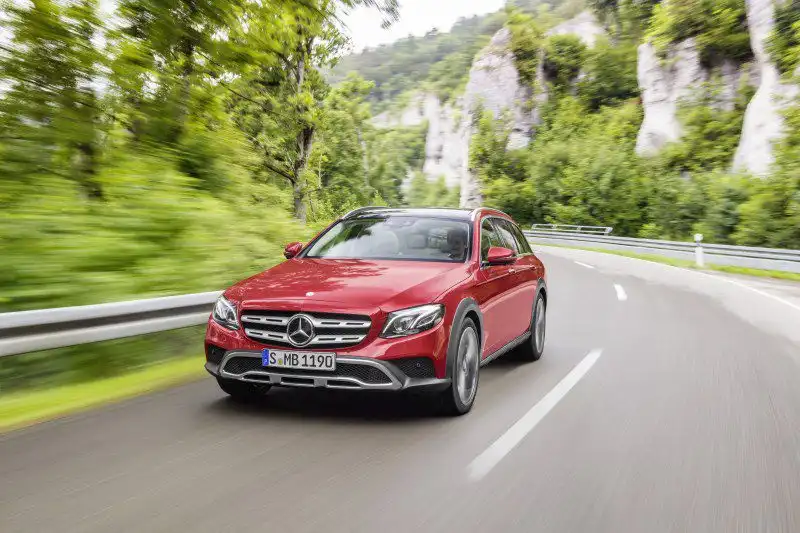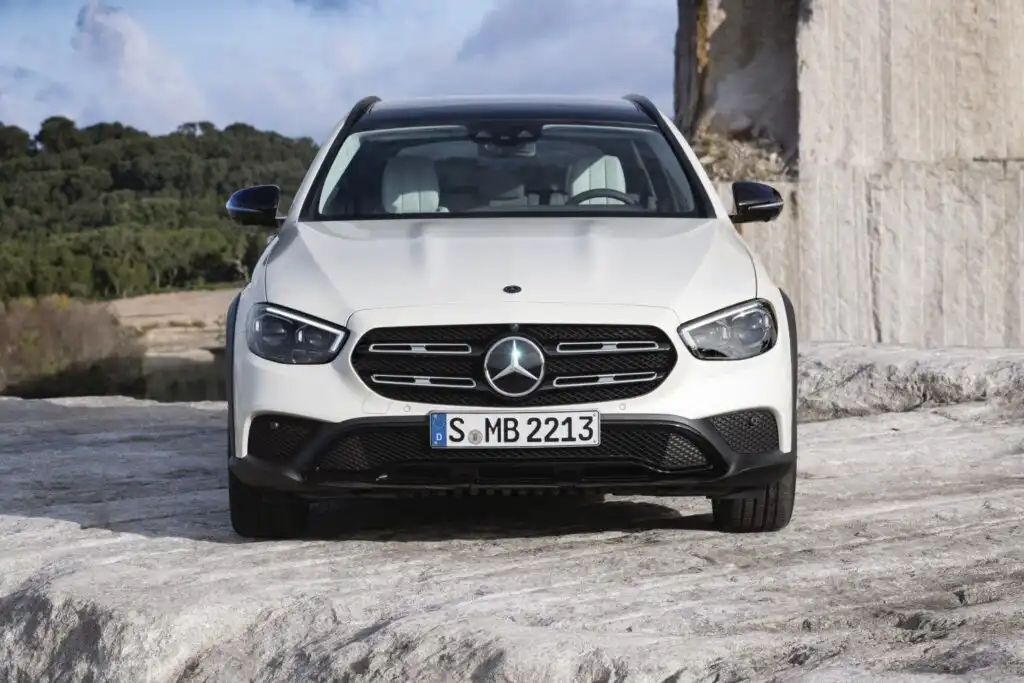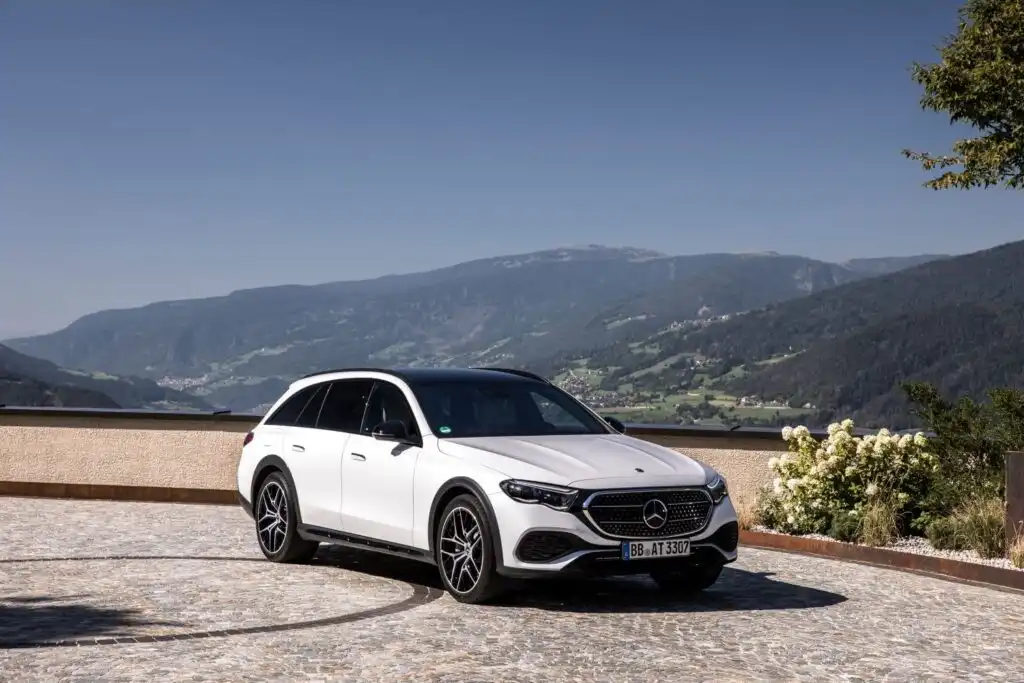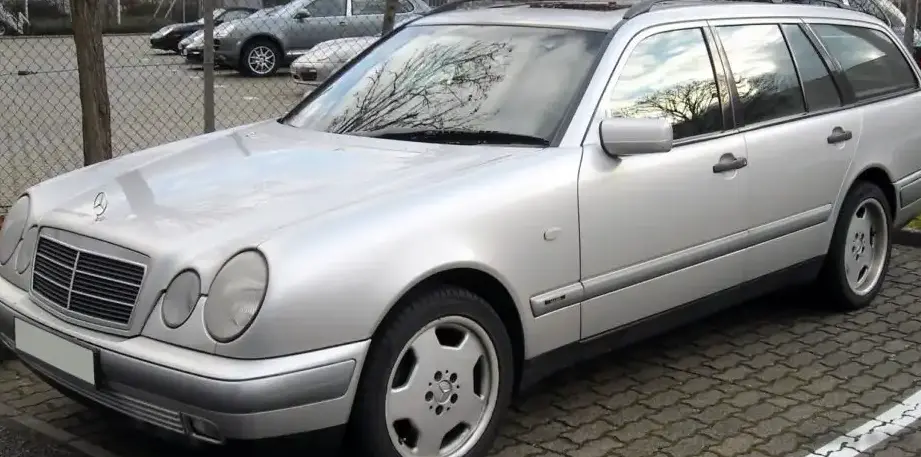
The Mercedes-Benz E-Class T-modell (S210) E 200 Kompressor, produced from March 1997 to July 1999, represented a compelling blend of practicality and performance within the W210 series. This variant, a station wagon (estate) powered by a supercharged 2.0-liter inline-four engine, occupied a mid-range position in the E-Class lineup, offering a more accessible entry point to the premium wagon segment compared to the larger six and eight-cylinder models. It was primarily marketed in Europe, where the demand for practical, yet luxurious, wagons was significantly higher than in the United States.
Technical Specifications
| Brand | Mercedes-Benz |
| Model | E-Class |
| Generation | E-Class T-modell (S210) |
| Type (Engine) | E 200 Kompressor (192 Hp) Automatic |
| Start of production | March, 1997 |
| End of production | July, 1999 |
| Powertrain Architecture | Internal Combustion engine |
| Body type | Station wagon (estate) |
| Seats | 5 |
| Doors | 5 |
| Fuel consumption (urban) | 15.4 l/100 km (15.3 US mpg, 18.3 UK mpg, 6.5 km/l) |
| Fuel consumption (extra urban) | 8.1 l/100 km (29 US mpg, 34.9 UK mpg, 12.3 km/l) |
| Fuel consumption (combined) | 10.7 l/100 km (22 US mpg, 26.4 UK mpg, 9.3 km/l) |
| Fuel Type | Petrol (Gasoline) |
| Acceleration 0 – 100 km/h | 9.1 sec |
| Acceleration 0 – 62 mph | 9.1 sec |
| Acceleration 0 – 60 mph | 8.6 sec |
| Maximum speed | 220 km/h (136.7 mph) |
| Weight-to-power ratio | 8.4 kg/Hp, 118.5 Hp/tonne |
| Weight-to-torque ratio | 6 kg/Nm, 166.7 Nm/tonne |
| Power | 192 Hp @ 5300 rpm |
| Power per litre | 96.1 Hp/l |
| Torque | 270 Nm @ 2500-4800 rpm (199.14 lb.-ft. @ 2500-4800 rpm) |
| Engine layout | Front, Longitudinal |
| Engine Model/Code | M 111 E 20 ML / 111.947 |
| Engine displacement | 1998 cm3 (121.93 cu. in.) |
| Number of cylinders | 4 |
| Engine configuration | Inline |
| Cylinder Bore | 89.9 mm (3.54 in.) |
| Piston Stroke | 78.7 mm (3.1 in.) |
| Compression ratio | 8.5:1 |
| Number of valves per cylinder | 4 |
| Fuel injection system | Multi-port manifold injection |
| Engine aspiration | Supercharger, Intercooler |
| Valvetrain | DOHC |
| Engine oil capacity | 5.5 l (5.81 US qt | 4.84 UK qt) |
| Coolant | 8.5 l (8.98 US qt | 7.48 UK qt) |
| Kerb Weight | 1620 kg (3571.49 lbs.) |
| Max. weight | 2200 kg (4850.17 lbs.) |
| Max load | 580 kg (1278.68 lbs.) |
| Trunk (boot) space – minimum | 600 l (21.19 cu. ft.) |
| Trunk (boot) space – maximum | 1920 l (67.8 cu. ft.) |
| Fuel tank capacity | 70 l (18.49 US gal | 15.4 UK gal) |
| Length | 4816 mm (189.61 in.) |
| Width | 1799 mm (70.83 in.) |
| Height | 1505 mm (59.25 in.) |
| Wheelbase | 2833 mm (111.54 in.) |
| Front track | 1542 mm (60.71 in.) |
| Rear (Back) track | 1546 mm (60.87 in.) |
| Drivetrain Architecture | The Internal combustion engine (ICE) drives the rear wheels of the vehicle. |
| Drive wheel | Rear wheel drive |
| Number of gears and type of gearbox | 5 gears, automatic transmission |
| Front suspension | Double wishbone |
| Rear suspension | Hydro-pneumatic element, Independent multi-link suspension |
| Front brakes | Ventilated discs |
| Rear brakes | Disc |
| Assisting systems | ABS (Anti-lock braking system) |
| Steering type | Steering rack and pinion |
| Power steering | Hydraulic Steering |
| Tires size | 215/55 R16 |
| Wheel rims size | 7.5J x 16 |
Powertrain & Engine Architecture
The heart of the E 200 Kompressor was the M111 E 20 ML engine, a 1998cc inline-four cylinder powerplant. This engine was notable for its mechanically driven supercharger (Kompressor in Mercedes terminology), which provided increased torque at lower engine speeds, mitigating the typical turbo lag associated with turbocharged engines. The supercharger, an Eaton M62 unit, was electromagnetically clutch-engaged, activating at around 2000 rpm. Fuel delivery was handled by a multi-port fuel injection system, and the engine featured a double overhead camshaft (DOHC) valvetrain with four valves per cylinder. The compression ratio was set at 8.5:1. The engine was longitudinally mounted in the front of the vehicle. The transmission was a five-speed automatic, designed to provide smooth shifts and optimize fuel efficiency. This automatic transmission was a standard feature, as a manual transmission was not offered with this specific engine configuration.
Driving Characteristics
The E 200 Kompressor Automatic offered a comfortable and refined driving experience. The supercharger provided a noticeable boost in power compared to naturally aspirated versions of the 2.0-liter engine, resulting in brisk acceleration – 0 to 60 mph in approximately 8.6 seconds. While not a sports car, the E 200 Kompressor provided sufficient power for everyday driving and overtaking maneuvers. The automatic transmission, while smooth, wasn’t particularly sporty, prioritizing comfort over aggressive shifting. Compared to the E 280 or E 320 models with their larger engines, the E 200 Kompressor felt less powerful, especially at higher speeds. However, it offered a better fuel economy and a more affordable price point. The gear ratios were tuned for relaxed cruising, making it an excellent choice for long-distance journeys.
Equipment & Trim Levels
The E 200 Kompressor typically came with a respectable level of standard equipment. This included features like automatic climate control, power windows, central locking, and an audio system. Interior upholstery was typically cloth, although leather was available as an option. The dashboard layout was typical of the W210 E-Class, characterized by a functional and elegant design. Optional extras included a sunroof, upgraded audio systems, heated seats, and parking sensors. The trim level was generally considered mid-range, offering a good balance of features and affordability.
Chassis & Braking
The S210 E-Class featured a double wishbone front suspension and an independent multi-link rear suspension, providing a comfortable ride and good handling characteristics. The E 200 Kompressor was equipped with ventilated disc brakes at the front and solid disc brakes at the rear. Anti-lock Braking System (ABS) was standard. The suspension was tuned to prioritize comfort, but still offered reasonable control in corners. Stabilizer bars were fitted to both the front and rear axles to reduce body roll.
Market Reception & Comparison
The E 200 Kompressor was generally well-received by automotive critics. It was praised for its refined engine, comfortable ride, and practical wagon body style. However, some critics noted that the automatic transmission could feel a bit sluggish, and that the engine lacked the outright performance of the larger E-Class models. In terms of fuel economy, the E 200 Kompressor offered a reasonable compromise between performance and efficiency, achieving around 22 mpg in combined driving. Compared to the E 280, the E 200 Kompressor was significantly more affordable, making it an attractive option for buyers who didn’t need the extra power.
Legacy
The M111 engine, in general, proved to be a reliable and durable powerplant. The supercharger, while requiring occasional maintenance, was generally robust. The five-speed automatic transmission also had a good reputation for reliability. Today, the E 200 Kompressor T-modell is a relatively affordable entry point into the world of Mercedes-Benz wagons. Well-maintained examples are still sought after by enthusiasts who appreciate their practicality, comfort, and relatively low running costs. However, like all older vehicles, they require regular maintenance and attention to detail to remain in good condition. Parts availability is generally good, although some specific components may be becoming increasingly difficult to find.