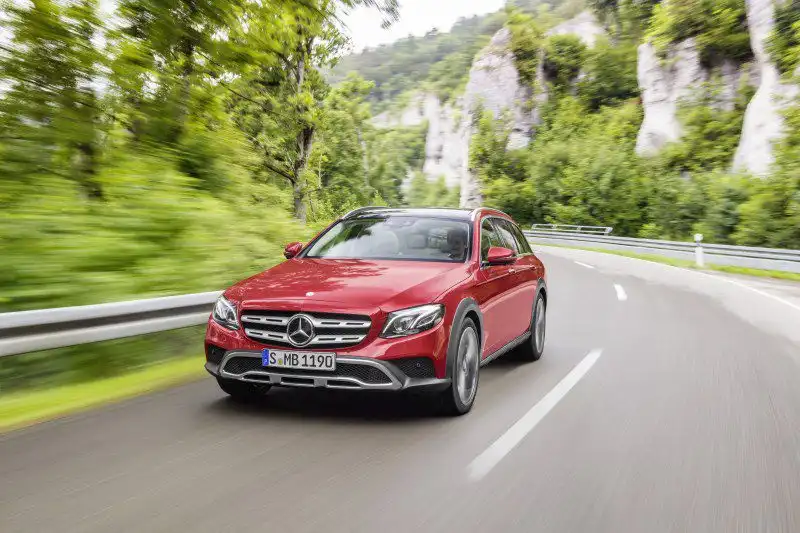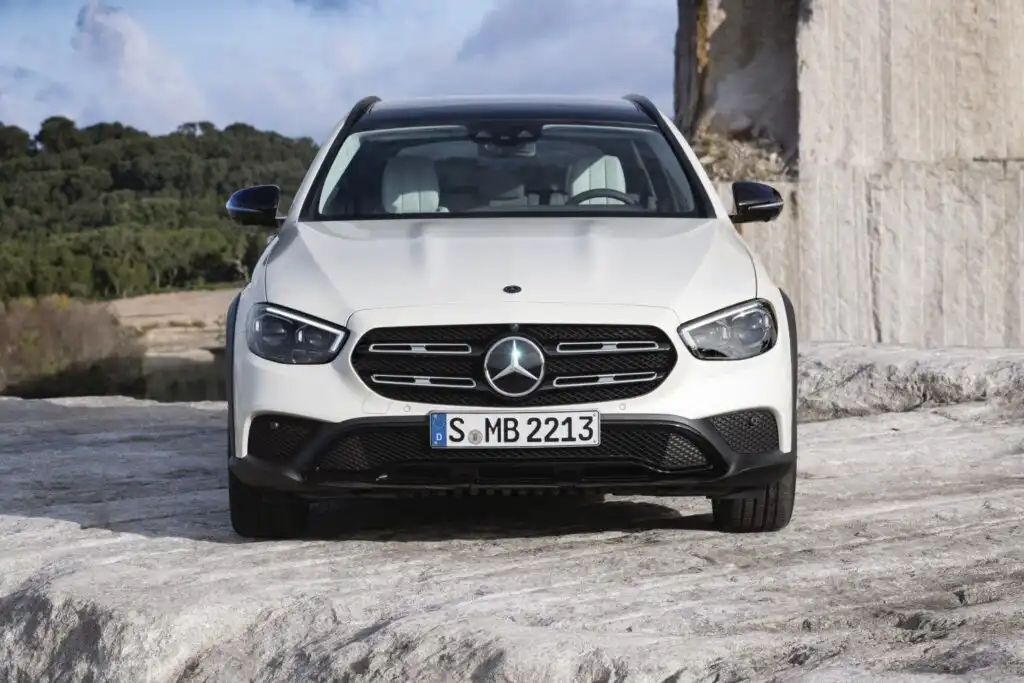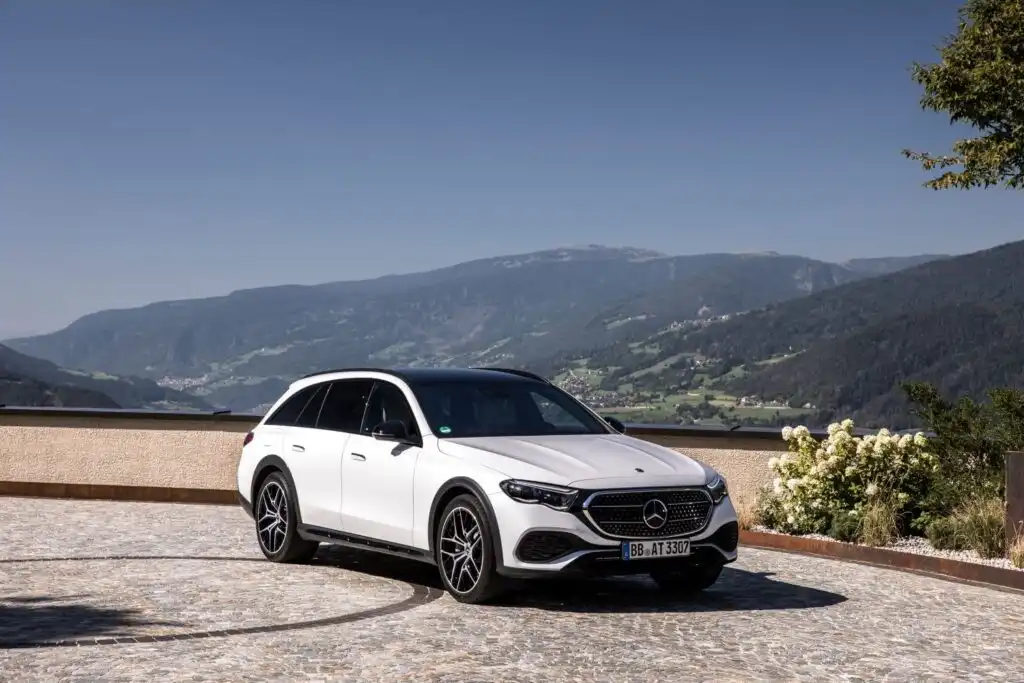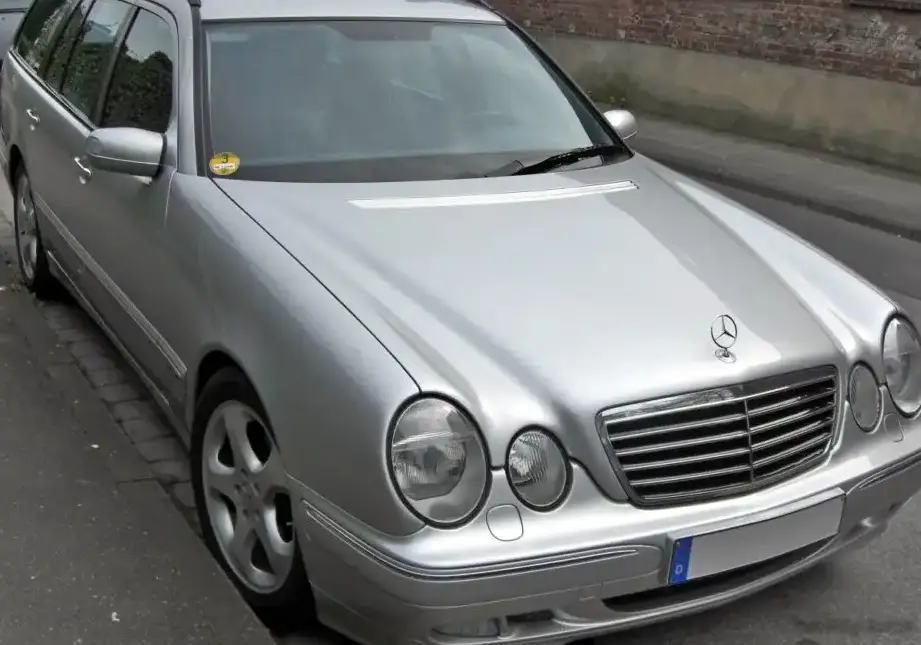
The Mercedes-Benz E 55 T-modell, part of the S210 series facelift produced from November 1999 to January 2002, represented the pinnacle of performance within the E-Class wagon lineup. Positioned as the high-performance variant, it combined the practicality of a station wagon (estate) with the potent power of Mercedes-AMG’s naturally aspirated V8 engine. This model occupied the premium segment, offering a unique blend of luxury, space, and exhilarating performance not found in the more common E 200, E 320, or even the diesel-powered E 300 TDI models. The S210 facelift brought updated styling and improved features compared to the pre-1999 models, solidifying the E 55 T-modell’s status as a desirable and capable vehicle.
| Brand | Mercedes-Benz |
| Model | E-Class |
| Generation | E-Class T-modell (S210, facelift 1999) |
| Type | AMG E 55 V8 (354 Hp) 4MATIC Automatic |
| Start of production | November 1999 |
| End of production | January 2002 |
| Powertrain Architecture | Internal Combustion Engine |
| Body type | Station wagon (estate) |
| Seats | 5 |
| Doors | 5 |
| Fuel consumption (urban) | 18.5 l/100 km (12.7 US mpg, 15.3 UK mpg, 5.4 km/l) |
| Fuel consumption (extra urban) | 9.9 l/100 km (23.8 US mpg, 28.5 UK mpg, 10.1 km/l) |
| Fuel consumption (combined) | 13 l/100 km (18.1 US mpg, 21.7 UK mpg, 7.7 km/l) |
| Fuel Type | Petrol (Gasoline) |
| Acceleration 0-100 km/h | 6.2 sec |
| Acceleration 0-62 mph | 6.2 sec |
| Acceleration 0-60 mph | 5.9 sec |
| Maximum speed | 250 km/h (155.34 mph) – Electronically limited |
| Weight-to-power ratio | 5.3 kg/Hp, 190.3 Hp/tonne |
| Weight-to-torque ratio | 3.5 kg/Nm, 284.9 Nm/tonne |
| Power | 354 Hp @ 5500 rpm |
| Power per litre | 65.1 Hp/l |
| Torque | 530 Nm @ 3000 rpm (390.91 lb.-ft. @ 3000 rpm) |
| Engine layout | Front, Longitudinal |
| Engine Model/Code | M 113 E 55 |
| Engine displacement | 5439 cm3 (331.91 cu. in.) |
| Number of cylinders | 8 |
| Engine configuration | V-engine |
| Cylinder Bore | 97 mm (3.82 in.) |
| Piston Stroke | 92 mm (3.62 in.) |
| Compression ratio | 10.5:1 |
| Number of valves per cylinder | 3 |
| Fuel injection system | Multi-port manifold injection |
| Engine aspiration | Naturally aspirated |
| Valvetrain | SOHC |
| Engine oil capacity | 8 l (8.45 US qt, 7.04 UK qt) |
| Coolant capacity | 11 l (11.62 US qt, 9.68 UK qt) |
| Kerb Weight | 1860 kg (4100.6 lbs) |
| Max. weight | 2410 kg (5313.14 lbs) |
| Max load | 550 kg (1212.54 lbs) |
| Trunk (boot) space – minimum | 600 l (21.19 cu. ft.) |
| Trunk (boot) space – maximum | 1920 l (67.8 cu. ft.) |
| Fuel tank capacity | 70 l (18.49 US gal, 15.4 UK gal) |
| Length | 4839 mm (190.51 in.) |
| Width | 1799 mm (70.83 in.) |
| Height | 1477 mm (58.15 in.) |
| Wheelbase | 2833 mm (111.54 in.) |
| Front track | 1560 mm (61.42 in.) |
| Rear track | 1543 mm (60.75 in.) |
| Drivetrain Architecture | All wheel drive (4×4) |
| Number of gears | 5 |
| Gearbox type | Automatic transmission |
| Front suspension | Double wishbone |
| Rear suspension | Hydro-pneumatic element, Independent multi-link suspension |
| Front brakes | Ventilated discs |
| Rear brakes | Disc |
| Assisting systems | ABS (Anti-lock braking system) |
| Steering type | Steering rack and pinion |
| Power steering | Hydraulic |
| Front tire size | 235/40 R18 |
| Rear tire size | 265/35 R18 |
| Front wheel rim size | 8J x 18 |
| Rear wheel rim size | 9J x 18 |
Powertrain & Engine Architecture
The heart of the E 55 T-modell was the M113 E 55 engine, a 5.4-liter naturally aspirated V8. This engine, a hallmark of Mercedes-AMG engineering, featured a cast iron block with aluminum cylinder heads. It utilized a short-block design for increased rigidity and reduced weight. The engine employed multi-port fuel injection, delivering fuel directly into the intake ports, and a single overhead camshaft (SOHC) design per cylinder bank. This configuration, while simpler than dual overhead cam designs, allowed for a compact engine bay and robust reliability. The M113 was known for its smooth power delivery and distinctive exhaust note. The engine produced 354 horsepower at 5500 rpm and 530 Nm (390.91 lb-ft) of torque at 3000 rpm. Paired with the engine was a five-speed automatic transmission, specifically tuned by AMG for quicker shifts and improved responsiveness. This transmission was crucial for managing the engine’s substantial power output and delivering it effectively to all four wheels via the 4MATIC all-wheel-drive system.
Driving Characteristics
The E 55 T-modell offered a unique driving experience. While it retained the comfort and refinement expected of a Mercedes-Benz, the AMG engine provided a significant performance boost. Acceleration from 0 to 60 mph was achieved in approximately 5.9 seconds, and the car was electronically limited to a top speed of 250 km/h (155 mph). The 4MATIC all-wheel-drive system provided excellent traction, particularly in inclement weather, making the E 55 a capable year-round vehicle. Compared to the standard E-Class wagons with smaller engines, the E 55 felt significantly more powerful and responsive. The automatic transmission, while not as engaging as a manual, offered smooth and predictable shifts. The gear ratios were optimized for both acceleration and highway cruising. Compared to the E 430 wagon, the E 55 offered a more aggressive power delivery and a more sporting driving feel. The increased torque of the E 55 also made it more capable of towing.
Equipment & Trim Levels
The E 55 T-modell came standard with a comprehensive list of features, reflecting its premium positioning. Interior appointments included leather upholstery, wood trim, and automatic climate control. Standard equipment also included power-adjustable front seats with memory function, a premium sound system, and a sunroof. The 4MATIC all-wheel-drive system was, of course, standard. Optional extras included heated seats, a navigation system, and upgraded leather options. The exterior featured AMG-specific body styling, including unique front and rear bumpers, side skirts, and wheels. The interior trim was typically a combination of dark wood and leather, creating a luxurious and sporty atmosphere.
Chassis & Braking
The E 55 T-modell featured a robust chassis designed to handle the engine’s power. The front suspension utilized a double wishbone design, while the rear suspension employed a hydro-pneumatic element, independent multi-link setup. This combination provided a comfortable ride while maintaining good handling characteristics. Braking duties were handled by ventilated discs at all four corners, providing ample stopping power. An Anti-lock Braking System (ABS) was standard, enhancing safety and control. The E 55 also featured a hydraulic power steering system, offering precise and responsive steering feel. Compared to lower-spec E-Class wagons, the E 55 often featured thicker stabilizer bars to reduce body roll during cornering.
Market Reception & Comparison
The E 55 T-modell was generally well-received by automotive critics. It was praised for its powerful engine, comfortable ride, and spacious interior. However, some critics noted that the fuel economy was relatively poor, especially considering the vehicle’s size and weight. Compared to other high-performance wagons of the time, such as the BMW M5 Touring (not officially sold in the US during this generation), the E 55 offered a more refined and luxurious experience. The E 55 also offered a significant performance advantage over the standard E-Class wagons, making it a compelling choice for buyers seeking a blend of practicality and performance. Fuel economy figures of 13 l/100 km (18.1 US mpg) combined were typical for a vehicle of this size and performance.
Legacy
The M113 engine, found in the E 55 T-modell, is generally considered to be a reliable and durable powerplant. With proper maintenance, these engines can last for many years and accumulate high mileage. The five-speed automatic transmission is also known for its robustness. Today, the E 55 T-modell is a sought-after vehicle among enthusiasts, particularly those looking for a unique and capable classic wagon. Values have been steadily increasing in recent years, reflecting the car’s rarity and desirability. While maintenance costs can be higher than for more common vehicles, the E 55 T-modell offers a rewarding ownership experience for those who appreciate its blend of performance, luxury, and practicality.