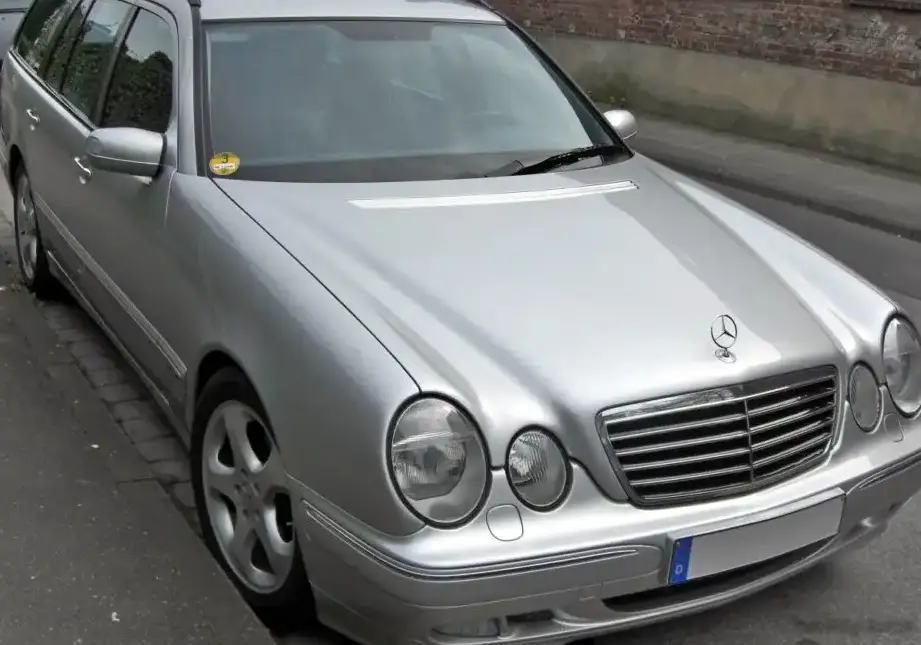
The Mercedes-Benz E-Class T-modell (S210) facelift, specifically the E 200 Kompressor variant produced from July 1999 to June 2000, represented a compelling blend of practicality and performance within the mid-size luxury wagon segment. Positioned as a mid-range offering in the S210 lineup, it aimed to provide a more accessible entry point to the E-Class estate while still delivering the brand’s renowned comfort and build quality. This model benefited from the 1999 facelift, which included revised styling cues, updated interior appointments, and refinements to the engine range. It was primarily marketed in Europe, where the station wagon (estate) body style held significant popularity.
Technical Specifications
| Brand | Mercedes-Benz |
| Model | E-Class |
| Generation | E-Class T-modell (S210, facelift 1999) |
| Type (Engine) | E 200 Kompressor (192 Hp) |
| Start of production | July, 1999 |
| End of production | June, 2000 |
| Powertrain Architecture | Internal Combustion engine |
| Body type | Station wagon (estate) |
| Seats | 5 |
| Doors | 5 |
| Fuel consumption (urban) | 14 l/100 km (16.8 US mpg, 20.2 UK mpg, 7.1 km/l) |
| Fuel consumption (extra urban) | 7.6 l/100 km (30.9 US mpg, 37.2 UK mpg, 13.2 km/l) |
| Fuel consumption (combined) | 10 l/100 km (23.5 US mpg, 28.2 UK mpg, 10 km/l) |
| Fuel Type | Petrol (Gasoline) |
| Acceleration 0 – 100 km/h | 9.9 sec |
| Acceleration 0 – 62 mph | 9.9 sec |
| Acceleration 0 – 60 mph | 9.4 sec |
| Maximum speed | 223 km/h (138.57 mph) |
| Weight-to-power ratio | 8.4 kg/Hp, 118.5 Hp/tonne |
| Weight-to-torque ratio | 6 kg/Nm, 166.7 Nm/tonne |
| Power | 192 Hp @ 5300 rpm |
| Power per litre | 96.1 Hp/l |
| Torque | 270 Nm @ 2500-4800 rpm (199.14 lb.-ft. @ 2500-4800 rpm) |
| Engine layout | Front, Longitudinal |
| Engine Model/Code | M 111 E 20 ML / 111.947 |
| Engine displacement | 1998 cm3 (121.93 cu. in.) |
| Number of cylinders | 4 |
| Engine configuration | Inline |
| Cylinder Bore | 89.9 mm (3.54 in.) |
| Piston Stroke | 78.7 mm (3.1 in.) |
| Compression ratio | 8.5:1 |
| Number of valves per cylinder | 4 |
| Fuel injection system | Multi-port manifold injection |
| Engine aspiration | Supercharger, Intercooler |
| Valvetrain | DOHC |
| Engine oil capacity | 5.5 l (5.81 US qt | 4.84 UK qt) |
| Coolant | 8.5 l (8.98 US qt | 7.48 UK qt) |
| Kerb Weight | 1620 kg (3571.49 lbs.) |
| Max. weight | 2200 kg (4850.17 lbs.) |
| Max load | 580 kg (1278.68 lbs.) |
| Trunk (boot) space – minimum | 600 l (21.19 cu. ft.) |
| Fuel tank capacity | 70 l (18.49 US gal | 15.4 UK gal) |
| Length | 4839 mm (190.51 in.) |
| Width | 1799 mm (70.83 in.) |
| Height | 1505 mm (59.25 in.) |
| Wheelbase | 2833 mm (111.54 in.) |
| Front track | 1534 mm (60.39 in.) |
| Rear (Back) track | 1538 mm (60.55 in.) |
| Drivetrain Architecture | The Internal combustion engine (ICE) drives the rear wheels of the vehicle. |
| Drive wheel | Rear wheel drive |
| Number of gears and type of gearbox | 6 gears, manual transmission |
| Front suspension | Double wishbone |
| Rear suspension | Hydro-pneumatic element, Independent multi-link suspension |
| Front brakes | Ventilated discs |
| Rear brakes | Disc |
| Assisting systems | ABS (Anti-lock braking system) |
| Steering type | Steering rack and pinion |
| Power steering | Hydraulic Steering |
| Tires size | 215/65 R16 |
| Wheel rims size | 7.5J x 16 |
Powertrain & Engine Architecture
The heart of the E 200 Kompressor was the M111 E 20 ML engine, a 1.998-liter inline-four cylinder powerplant. This engine was notable for its mechanically driven supercharger (Kompressor in Mercedes terminology), which provided increased torque at lower engine speeds, improving responsiveness and driveability. The M111 engine family was known for its robust construction and relatively simple design, contributing to its longevity. Fuel delivery was handled by a multi-port fuel injection system, and the engine featured a double overhead camshaft (DOHC) valvetrain with four valves per cylinder. The supercharger, coupled with an intercooler, boosted output to 192 horsepower at 5300 rpm and 270 Nm (199 lb-ft) of torque between 2500 and 4800 rpm. The standard transmission for this variant was a 6-speed manual gearbox, offering precise control and engaging driving experience.
Driving Characteristics
The E 200 Kompressor offered a balanced driving experience. The supercharger noticeably improved low-end and mid-range acceleration compared to naturally aspirated versions of the E-Class. While not a sports car, the 0-60 mph time of around 9.4 seconds was respectable for the era and body style. The 6-speed manual transmission allowed drivers to fully exploit the engine’s powerband. Compared to the more powerful E 280 or E 320 models, the E 200 Kompressor prioritized fuel efficiency and a more relaxed driving style. The rear-wheel drive configuration provided a traditional Mercedes-Benz feel, with predictable handling and good balance.
Equipment & Trim Levels
The E 200 Kompressor T-modell typically came equipped with a solid base level of features, including automatic climate control, power windows and locks, and a high-quality audio system. Interior upholstery was generally cloth, with leather options available as an upgrade. Standard dashboard appointments included wood trim and a multi-function steering wheel. Optional extras included a sunroof, upgraded audio systems, navigation, and parking assistance features. The T-modell designation meant a spacious cargo area, making it ideal for families or those needing to transport larger items.
Chassis & Braking
The S210 E-Class featured a double wishbone front suspension and an independent multi-link rear suspension, providing a comfortable and controlled ride. The rear suspension utilized a hydro-pneumatic element, further enhancing ride quality. Braking duties were handled by ventilated discs at the front and solid discs at the rear, with ABS (Anti-lock Braking System) as standard. The steering was a rack and pinion system with hydraulic power assistance, offering precise and responsive steering feel. The standard tire size was 215/65 R16, mounted on 7.5J x 16 alloy wheels.
Market Reception & Comparison
The E 200 Kompressor T-modell was generally well-received by automotive critics as a practical and efficient option within the E-Class range. It offered a good balance of performance, comfort, and fuel economy. Compared to the larger-engined E-Class variants, it was considered a more sensible choice for everyday driving, particularly for those prioritizing fuel efficiency. The supercharged engine provided a noticeable performance boost over the naturally aspirated E 200, making it a more appealing option for drivers who wanted a bit more power. Reliability was generally good, typical of Mercedes-Benz engineering of the period.
Legacy
The M111 engine family, including the E 200 Kompressor variant, has proven to be remarkably durable. Well-maintained examples continue to be found on the road today. The supercharger, while requiring periodic maintenance, is generally reliable. In the used car market, the E 200 Kompressor T-modell represents a relatively affordable entry point into Mercedes-Benz ownership, offering a blend of luxury, practicality, and reliability. Its enduring appeal lies in its comfortable ride, spacious interior, and the distinctive character of the supercharged engine.