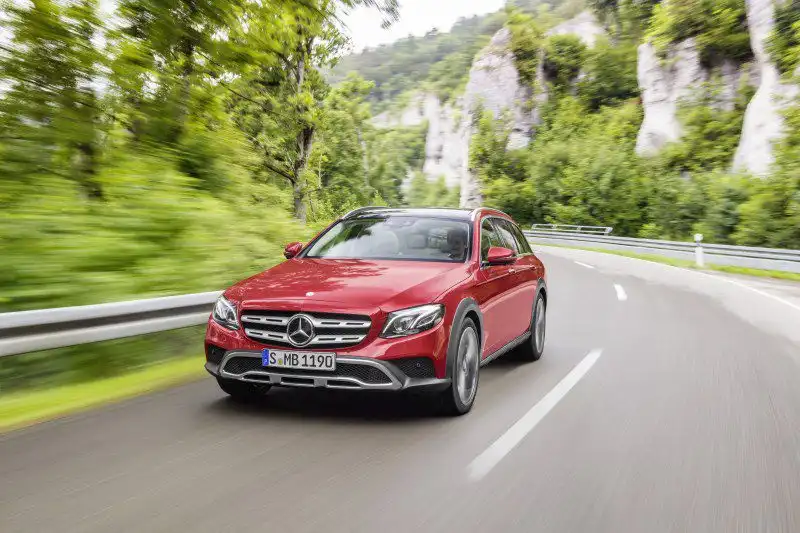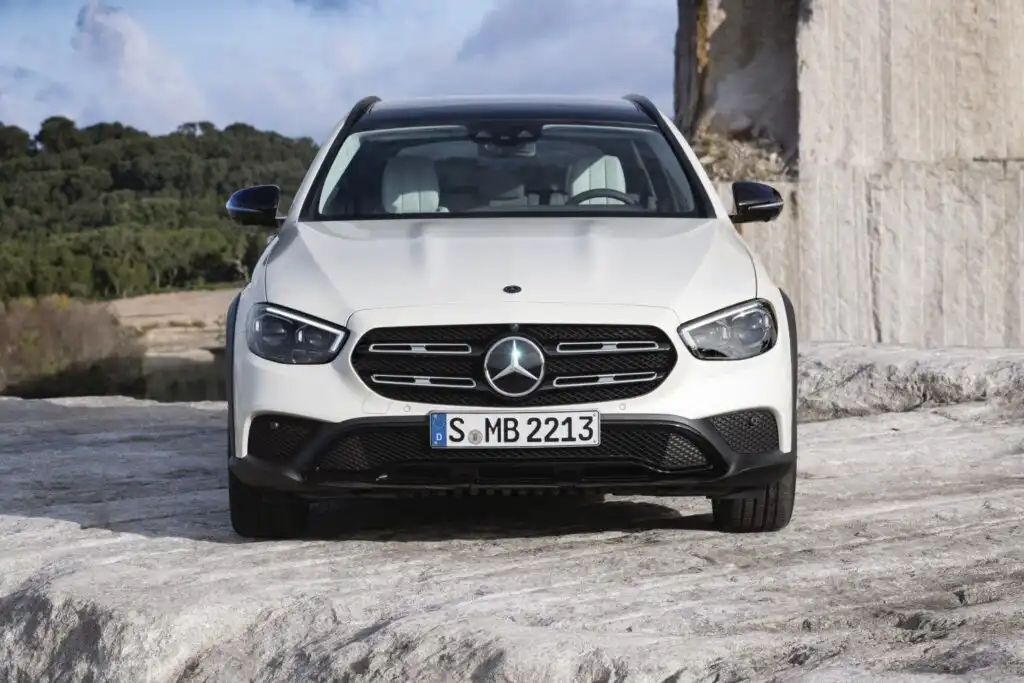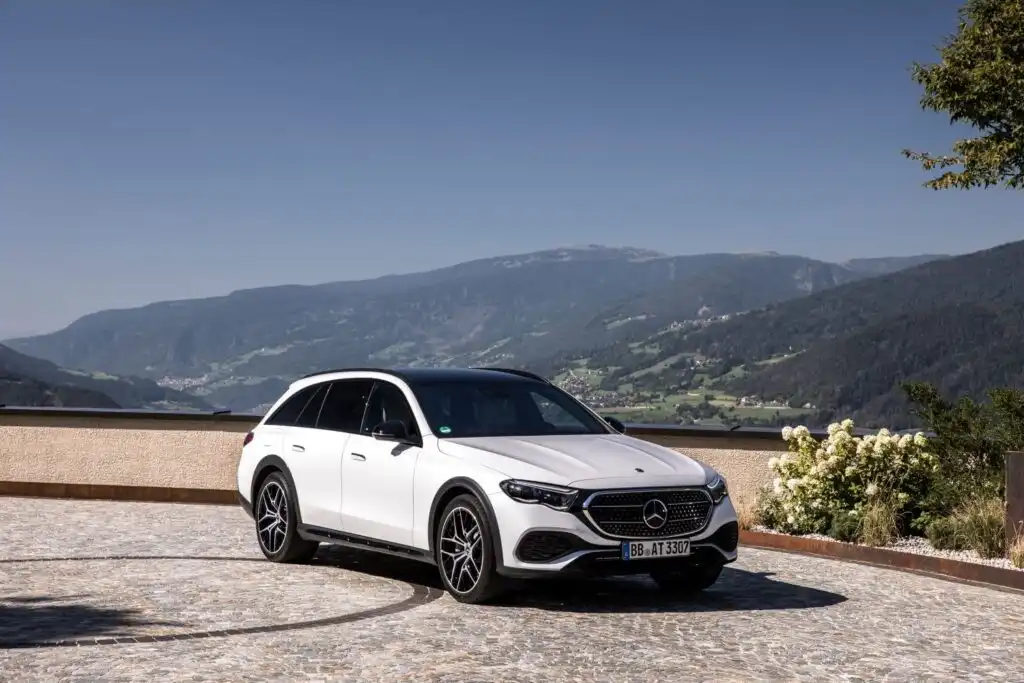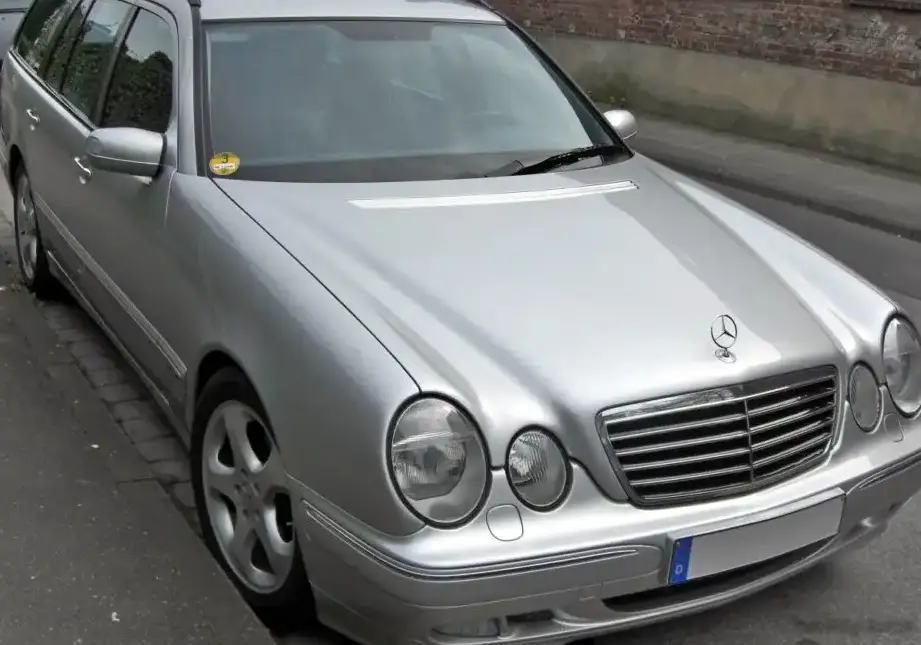
The Mercedes-Benz E-Class T-modell (S210) facelift, specifically the E 270 CDI Automatic produced between 1999 and 2002, represented a significant offering in the premium wagon segment. This variant, powered by a 2.7-liter five-cylinder turbodiesel engine paired with a five-speed automatic transmission, aimed to deliver a blend of practicality, comfort, and fuel efficiency characteristic of the E-Class line. It occupied a mid-range position within the S210 T-modell lineup, positioned above the smaller displacement diesel options and below the more powerful E 320 CDI and petrol variants.
Technical Specifications
| Brand | Mercedes-Benz |
| Model | E-Class |
| Generation | E-Class T-modell (S210, facelift 1999) |
| Type (Engine) | E 270 CDI (170 Hp) Automatic |
| Start of production | February, 1999 |
| End of production | December, 2002 |
| Powertrain Architecture | Internal Combustion engine |
| Body type | Station wagon (estate) |
| Seats | 5 |
| Doors | 5 |
| Fuel consumption (urban) | 9.8 l/100 km (24 US mpg, 28.8 UK mpg, 10.2 km/l) |
| Fuel consumption (extra urban) | 5.9 l/100 km (39.9 US mpg, 47.9 UK mpg, 16.9 km/l) |
| Fuel consumption (combined) | 7.3 l/100 km (32.2 US mpg, 38.7 UK mpg, 13.7 km/l) |
| Fuel Type | Diesel |
| Acceleration 0 – 100 km/h | 9.8 sec |
| Acceleration 0 – 62 mph | 9.8 sec |
| Acceleration 0 – 60 mph | 9.3 sec |
| Maximum speed | 212 km/h (131.73 mph) |
| Emission standard | Euro 3 |
| Weight-to-power ratio | 10.2 kg/Hp, 98.3 Hp/tonne |
| Weight-to-torque ratio | 4.7 kg/Nm, 213.9 Nm/tonne |
| Power | 170 Hp @ 4200 rpm |
| Power per litre | 63.3 Hp/l |
| Torque | 370 Nm @ 1600 rpm (272.9 lb.-ft. @ 1600 rpm) |
| Engine layout | Front, Longitudinal |
| Engine Model/Code | OM 612 DE 27 LA/612.961 |
| Engine displacement | 2685 cm3 (163.85 cu. in.) |
| Number of cylinders | 5 |
| Engine configuration | Inline |
| Cylinder Bore | 88 mm (3.46 in.) |
| Piston Stroke | 88.3 mm (3.48 in.) |
| Compression ratio | 18:1 |
| Number of valves per cylinder | 4 |
| Fuel injection system | Diesel Commonrail |
| Engine aspiration | Turbocharger, Intercooler |
| Valvetrain | DOHC |
| Engine oil capacity | 7 l (7.4 US qt | 6.16 UK qt) |
| Coolant | 10.6 l (11.2 US qt | 9.33 UK qt) |
| Kerb Weight | 1730 kg (3814 lbs.) |
| Max. weight | 2310 kg (5092.68 lbs.) |
| Max load | 580 kg (1278.68 lbs.) |
| Trunk (boot) space – minimum | 600 l (21.19 cu. ft.) |
| Trunk (boot) space – maximum | 1975 l (69.75 cu. ft.) |
| Fuel tank capacity | 70 l (18.49 US gal | 15.4 UK gal) |
| Length | 4839 mm (190.51 in.) |
| Width | 1799 mm (70.83 in.) |
| Height | 1505 mm (59.25 in.) |
| Wheelbase | 2833 mm (111.54 in.) |
| Front track | 1534 mm (60.39 in.) |
| Rear (Back) track | 1538 mm (60.55 in.) |
| Drag coefficient (Cd) | 0.33 |
| Drivetrain Architecture | The Internal combustion engine (ICE) drives the rear wheels of the vehicle. |
| Drive wheel | Rear wheel drive |
| Number of gears and type of gearbox | 5 gears, automatic transmission |
| Front suspension | Double wishbone |
| Rear suspension | Hydro-pneumatic element, Independent multi-link suspension |
| Front brakes | Ventilated discs |
| Rear brakes | Disc |
| Assisting systems | ABS (Anti-lock braking system) |
| Steering type | Steering rack and pinion |
| Power steering | Hydraulic Steering |
| Tires size | 215/55 R16 |
| Wheel rims size | 7.5J x 16 |
INTRODUCTION
The S210 E-Class T-modell, introduced in 1996 and receiving a significant facelift in 1999, was Mercedes-Benz’s offering in the premium estate car market. The E 270 CDI Automatic, launched with the facelift, combined the practicality of a wagon with the refinement expected of a Mercedes-Benz. It was built on the 1HX0/A3 platform, shared with the E-Class sedan and coupe. This variant aimed to appeal to buyers seeking a comfortable, spacious, and fuel-efficient vehicle for family use or carrying substantial loads. The facelift brought revised styling, improved safety features, and updated engine options, solidifying the S210’s position as a desirable estate car.
Powertrain & Engine Architecture
The heart of the E 270 CDI was the OM 612 DE 27 LA engine, a 2.7-liter inline five-cylinder diesel. This engine utilized a sophisticated common rail direct injection system, delivering fuel at extremely high pressure for improved combustion efficiency and reduced emissions. The engine code 612.961 identifies this specific iteration. The engine featured a single turbocharger with an intercooler, boosting power and torque. The valvetrain employed a double overhead camshaft (DOHC) design with four valves per cylinder, optimizing gas flow. Paired with this engine was a five-speed automatic transmission, designed for smooth and comfortable gear changes. This transmission wasn’t known for its sportiness, prioritizing refinement and ease of use over rapid shifts.
Driving Characteristics
The E 270 CDI Automatic offered a relaxed and comfortable driving experience. With 170 horsepower and 370 Nm (272.9 lb-ft) of torque, acceleration was adequate, reaching 0-60 mph in approximately 9.3 seconds. However, it wasn’t a particularly sporty vehicle. The automatic transmission, while smooth, could feel somewhat sluggish, especially during overtaking maneuvers. The gear ratios were geared towards fuel efficiency and cruising comfort rather than outright performance. Compared to the E 320 CDI, the E 270 CDI offered less power and acceleration, but it provided better fuel economy. Manual transmission versions, while available in other E-Class models, were not commonly paired with the 270 CDI engine, making the automatic the predominant choice.
Equipment & Trim Levels
The E 270 CDI Automatic typically came well-equipped, reflecting its position as a premium vehicle. Standard features included automatic climate control, power windows and mirrors, a multi-function steering wheel, and a high-quality audio system. Interior upholstery was typically cloth or leatherette, with leather being an optional upgrade. Optional extras included a sunroof, navigation system, heated seats, and upgraded audio systems. The dashboard layout was typical of the W210 facelift, featuring a clean and functional design. Trim levels varied depending on the market, but generally offered a range of options to personalize the vehicle.
Chassis & Braking
The S210 T-modell featured a double wishbone front suspension and an independent multi-link rear suspension, providing a comfortable and controlled ride. The rear suspension often incorporated a hydro-pneumatic element for self-leveling, particularly useful when carrying heavy loads. Braking duties were handled by ventilated discs at the front and solid discs at the rear. Anti-lock braking system (ABS) was standard. The E 270 CDI, due to its weight, benefited from the stability provided by the well-tuned suspension, offering a secure feel even when fully loaded. Stabilizer bars were fitted front and rear to reduce body roll during cornering.
Market Reception & Comparison
The E 270 CDI Automatic was generally well-received by critics, praised for its comfortable ride, spacious interior, and fuel efficiency. However, some reviewers noted the lack of outright performance compared to petrol-powered E-Class models. Compared to the E 320 CDI, the E 270 CDI offered a more affordable entry point into the E-Class wagon range, while still providing a respectable level of refinement and practicality. Fuel economy was a key selling point, with the E 270 CDI achieving around 32.2 US mpg in combined driving. Reliability was generally good, although the complex common rail injection system could require occasional maintenance.
Legacy
The OM 612 engine family, including the 270 CDI variant, proved to be relatively durable, with many examples still on the road today. However, like all diesel engines of this era, they are susceptible to wear and tear on components such as the turbocharger, fuel injectors, and glow plugs. The five-speed automatic transmission, while reliable, can sometimes exhibit issues with harsh shifting as it ages. In the used car market, the E 270 CDI T-modell remains a popular choice for those seeking a practical and comfortable estate car with a reputation for durability. Its blend of space, comfort, and fuel efficiency continues to appeal to buyers looking for a well-rounded vehicle.