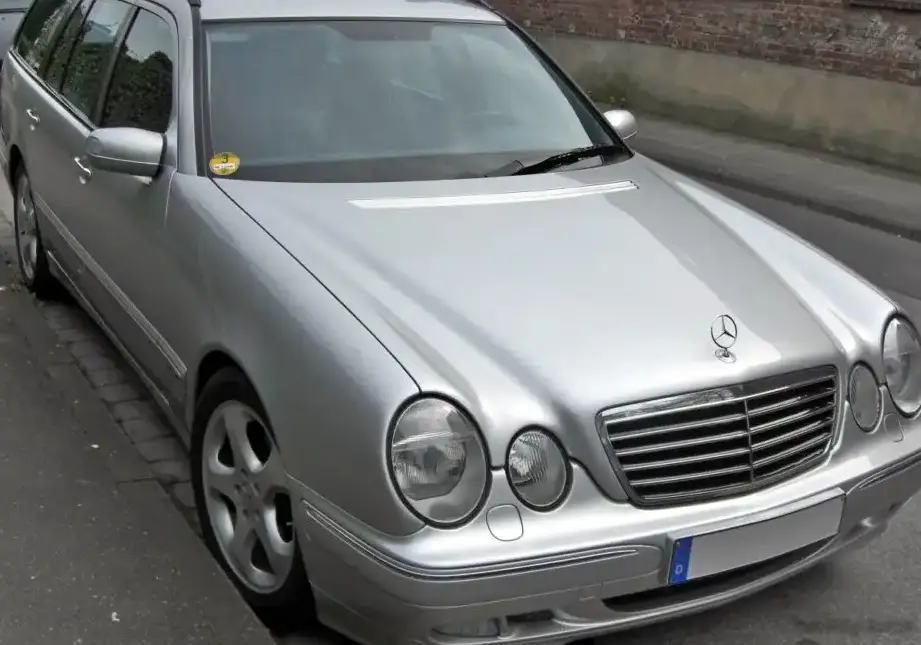
The Mercedes-Benz E 320 T-modell, part of the S210 series and specifically the facelifted version produced from July 1999 to December 2002, represented a compelling blend of luxury, practicality, and performance within the E-Class range. Positioned as a mid-to-upper tier offering, the E 320 wagon catered to buyers seeking a spacious and refined vehicle capable of both comfortable long-distance travel and substantial cargo hauling. It occupied a space between the more economical E 240 and the high-performance E 55 AMG variants, offering a balanced experience for the discerning driver. The S210 platform, known for its robust build quality and advanced engineering, provided a solid foundation for this versatile estate car.
Technical Specifications
| Brand | Mercedes-Benz |
| Model | E-class |
| Generation | E-class T-modell (S210, facelift 1999) |
| Type (Engine) | E 320 (224 Hp) Automatic |
| Start of production | July, 1999 |
| End of production | December, 2002 |
| Powertrain Architecture | Internal Combustion engine |
| Body type | Station wagon (estate) |
| Seats | 5 |
| Doors | 5 |
| Fuel consumption (urban) | 15.5 l/100 km (15.2 US mpg, 18.2 UK mpg, 6.5 km/l) |
| Fuel consumption (extra urban) | 7.9 l/100 km (29.8 US mpg, 35.8 UK mpg, 12.7 km/l) |
| Fuel consumption (combined) | 10.6 l/100 km (22.2 US mpg, 26.6 UK mpg, 9.4 km/l) |
| Fuel Type | Petrol (Gasoline) |
| Acceleration 0 – 100 km/h | 8.7 sec |
| Acceleration 0 – 62 mph | 8.7 sec |
| Acceleration 0 – 60 mph | 8.3 sec |
| Maximum speed | 230 km/h (142.92 mph) |
| Weight-to-power ratio | 8.1 kg/Hp, 123.8 Hp/tonne |
| Weight-to-torque ratio | 5.7 kg/Nm, 174 Nm/tonne |
| Power | 224 Hp @ 5600 rpm |
| Power per litre | 70 Hp/l |
| Torque | 315 Nm @ 3000-4800 rpm (232.33 lb.-ft. @ 3000-4800 rpm) |
| Engine layout | Front, Longitudinal |
| Engine Model/Code | M 112 E 32 / 112.941 |
| Engine displacement | 3199 cm3 (195.21 cu. in.) |
| Number of cylinders | 6 |
| Engine configuration | V-engine |
| Cylinder Bore | 89.9 mm (3.54 in.) |
| Piston Stroke | 84 mm (3.31 in.) |
| Compression ratio | 10:1 |
| Number of valves per cylinder | 3 |
| Fuel injection system | Multi-port manifold injection |
| Engine aspiration | Naturally aspirated engine |
| Valvetrain | SOHC |
| Engine oil capacity | 8 l (8.45 US qt | 7.04 UK qt) |
| Coolant | 10 l (10.57 US qt | 8.8 UK qt) |
| Kerb Weight | 1810 kg (3990.37 lbs.) |
| Max. weight | 2360 kg (5202.91 lbs.) |
| Max load | 550 kg (1212.54 lbs.) |
| Trunk (boot) space – minimum | 600 l (21.19 cu. ft.) |
| Trunk (boot) space – maximum | 1920 l (67.8 cu. ft.) |
| Fuel tank capacity | 70 l (18.49 US gal | 15.4 UK gal) |
| Length | 4839 mm (190.51 in.) |
| Width | 1799 mm (70.83 in.) |
| Height | 1505 mm (59.25 in.) |
| Wheelbase | 2833 mm (111.54 in.) |
| Front track | 1534 mm (60.39 in.) |
| Rear (Back) track | 1538 mm (60.55 in.) |
| Drag coefficient (Cd) | 0.34 |
| Drivetrain Architecture | The Internal combustion engine (ICE) drives the rear wheels of the vehicle. |
| Drive wheel | Rear wheel drive |
| Number of gears and type of gearbox | 5 gears, automatic transmission |
| Front suspension | Double wishbone |
| Rear suspension | Hydro-pneumatic element, Independent multi-link suspension |
| Front brakes | Ventilated discs |
| Rear brakes | Disc |
| Assisting systems | ABS (Anti-lock braking system) |
| Steering type | Steering rack and pinion |
| Power steering | Hydraulic Steering |
| Tires size | 215/55 R16 |
| Wheel rims size | 7.5J x 16 |
Powertrain & Engine Architecture
The heart of the E 320 T-modell was the M112 E 32 engine, a 3.2-liter naturally aspirated V6. This engine, part of Mercedes-Benz’s modular V-engine family, featured all-aluminum construction, three valves per cylinder (two intake, one exhaust), and a single overhead camshaft (SOHC) design. The M112 utilized a multi-port fuel injection system, delivering precise fuel metering for optimal combustion. The engine’s code, 112.941, identifies specific variations within the M112 family. Paired with this engine was a five-speed automatic transmission, offering smooth and refined gear changes. This transmission was designed for comfort and efficiency, prioritizing a relaxed driving experience over outright sportiness. The transmission’s gear ratios were tuned to complement the engine’s torque curve, providing adequate acceleration without excessive engine revving.
Driving Characteristics
The E 320 T-modell with the automatic transmission delivered a comfortable and composed driving experience. While not as overtly sporty as some of its rivals or even the higher-output E-Class variants, it offered ample power for everyday driving and highway cruising. Acceleration from 0-60 mph took approximately 8.3 seconds, and the car could reach a top speed of 142.92 mph. The automatic transmission, while smooth, did result in a slight reduction in acceleration compared to the available manual transmission. The engine’s torque peak, available from 3000-4800 rpm, provided strong mid-range pull, making overtaking maneuvers effortless. The suspension, tuned for comfort, absorbed bumps and imperfections in the road effectively, contributing to a refined ride quality.
Equipment & Trim Levels
The E 320 T-modell came standard with a generous array of features, reflecting its position as a premium vehicle. Standard equipment typically included leather upholstery, automatic climate control, power-adjustable front seats, a premium sound system, and alloy wheels. Optional extras included a sunroof, navigation system, upgraded sound system, and various driver assistance features. Interior trim options allowed buyers to personalize the cabin to their preferences. The dashboard layout was typical of Mercedes-Benz at the time, emphasizing functionality and a sense of understated elegance.
Chassis & Braking
The S210 chassis featured a double wishbone front suspension and an independent multi-link rear suspension, providing a comfortable and controlled ride. The rear suspension incorporated a hydro-pneumatic element, further enhancing ride quality. Braking duties were handled by ventilated discs at the front and solid discs at the rear, coupled with an Anti-lock Braking System (ABS) for enhanced safety. The steering was a rack-and-pinion system with hydraulic power assistance, offering precise and responsive steering feel.
Market Reception & Comparison
The E 320 T-modell was generally well-received by automotive critics, who praised its spaciousness, refinement, and build quality. Compared to the E 240, the E 320 offered a significant performance upgrade, while remaining more affordable than the E 55 AMG. Fuel economy was reasonable for a vehicle of its size and performance, averaging around 22.2 US mpg in combined driving. However, some critics noted that the automatic transmission could feel slightly sluggish at times. Reliability was generally good, although maintenance costs could be higher than those of some competitors due to the vehicle’s complex engineering.
Legacy
The Mercedes-Benz E 320 T-modell (S210) has proven to be a durable and reliable vehicle, with many examples still on the road today. The M112 engine is known for its longevity and relatively straightforward maintenance. In the used car market, these wagons are sought after by enthusiasts who appreciate their blend of luxury, practicality, and classic Mercedes-Benz styling. While not as common as the sedan version, the E 320 T-modell remains a desirable and well-regarded estate car, representing a high point in Mercedes-Benz’s wagon tradition.