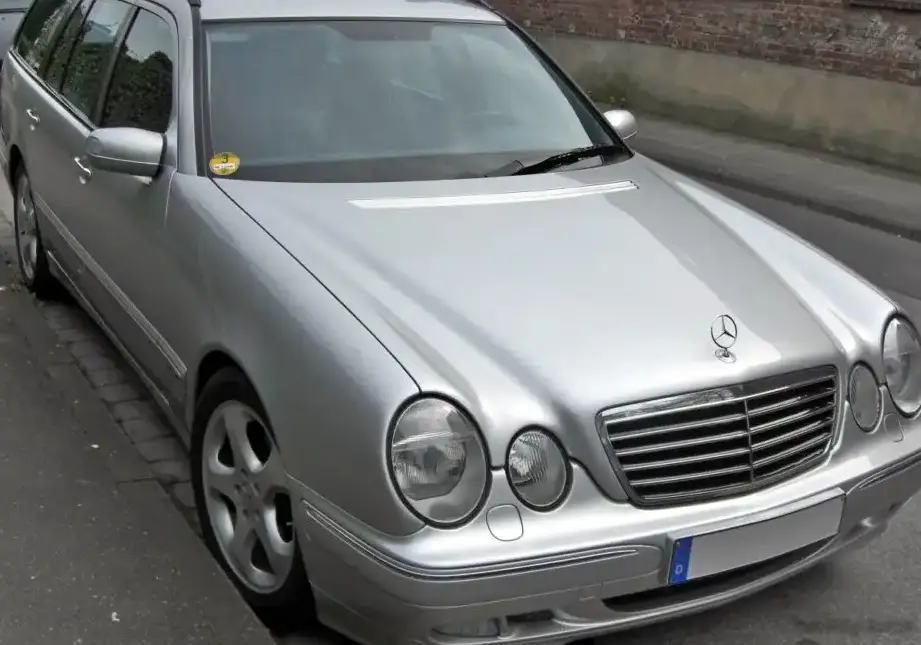
The Mercedes-Benz E 320 CDI T-modell, part of the S210 facelift series produced from February 1999 to December 2002, represented a compelling blend of luxury, practicality, and diesel efficiency within the E-Class range. This variant, a station wagon (estate) powered by a 3.2-liter inline-six cylinder diesel engine, occupied a mid-to-upper position in the S210 lineup, offering a more refined and powerful alternative to the base E 220 CDI and E 270 CDI models. It was primarily marketed in Europe, where demand for diesel-powered wagons remained strong, and offered a sophisticated option for families and those requiring substantial cargo space without sacrificing Mercedes-Benz’s renowned comfort and build quality.
Technical Specifications
| Brand | Mercedes-Benz |
| Model | E-class |
| Generation | E-class T-modell (S210, facelift 1999) |
| Type (Engine) | E 320 CDI (197 Hp) Automatic |
| Start of production | February, 1999 |
| End of production | December, 2002 |
| Powertrain Architecture | Internal Combustion engine |
| Body type | Station wagon (estate) |
| Seats | 5 |
| Doors | 5 |
| Fuel consumption (urban) | 11.3 l/100 km (20.8 US mpg, 25 UK mpg, 8.8 km/l) |
| Fuel consumption (extra urban) | 5.9 l/100 km (39.9 US mpg, 47.9 UK mpg, 16.9 km/l) |
| Fuel consumption (combined) | 7.9 l/100 km (29.8 US mpg, 35.8 UK mpg, 12.7 km/l) |
| Fuel Type | Diesel |
| Acceleration 0 – 100 km/h | 8.8 sec |
| Acceleration 0 – 62 mph | 8.8 sec |
| Acceleration 0 – 60 mph | 8.4 sec |
| Maximum speed | 227 km/h (141.05 mph) |
| Weight-to-power ratio | 7.8 kg/Hp, 127.9 Hp/tonne |
| Weight-to-torque ratio | 3.3 kg/Nm, 305.2 Nm/tonne |
| Power | 197 Hp @ 4200 rpm |
| Power per litre | 61.1 Hp/l |
| Torque | 470 Nm @ 1800 rpm (346.65 lb.-ft. @ 1800 rpm) |
| Engine layout | Front, Longitudinal |
| Engine Model/Code | OM 613 DE 32 LA / 613.961 |
| Engine displacement | 3222 cm3 (196.62 cu. in.) |
| Number of cylinders | 6 |
| Engine configuration | Inline |
| Cylinder Bore | 88 mm (3.46 in.) |
| Piston Stroke | 88.34 mm (3.48 in.) |
| Compression ratio | 18:1 |
| Number of valves per cylinder | 4 |
| Fuel injection system | Diesel Commonrail |
| Engine aspiration | Turbocharger, Intercooler |
| Valvetrain | DOHC |
| Engine oil capacity | 7.5 l (7.93 US qt | 6.6 UK qt) |
| Coolant | 15.5 l (16.38 US qt | 13.64 UK qt) |
| Kerb Weight | 1540 kg (3395.12 lbs.) |
| Max. weight | 2320 kg (5114.72 lbs.) |
| Max load | 780 kg (1719.61 lbs.) |
| Trunk (boot) space – minimum | 600 l (21.19 cu. ft.) |
| Trunk (boot) space – maximum | 1975 l (69.75 cu. ft.) |
| Fuel tank capacity | 70 l (18.49 US gal | 15.4 UK gal) |
| Length | 4839 mm (190.51 in.) |
| Width | 1799 mm (70.83 in.) |
| Height | 1505 mm (59.25 in.) |
| Wheelbase | 2833 mm (111.54 in.) |
| Front track | 1534 mm (60.39 in.) |
| Rear (Back) track | 1538 mm (60.55 in.) |
| Drag coefficient (Cd) | 0.31 |
| Drivetrain Architecture | The Internal combustion engine (ICE) drives the rear wheels of the vehicle. |
| Drive wheel | Rear wheel drive |
| Number of gears and type of gearbox | 5 gears, automatic transmission |
| Front suspension | Double wishbone |
| Rear suspension | Hydro-pneumatic element, Independent multi-link suspension |
| Front brakes | Ventilated discs |
| Rear brakes | Disc |
| Assisting systems | ABS (Anti-lock braking system) |
| Steering type | Steering rack and pinion |
| Power steering | Hydraulic Steering |
| Tires size | 215/55 R16 |
| Wheel rims size | 7.5J x 16 |
Powertrain & Engine Architecture
The heart of the E 320 CDI T-modell was the OM 613 DE 32 LA engine, a 3.2-liter inline-six cylinder diesel. This engine was a significant evolution of Mercedes-Benz’s diesel technology, featuring common rail direct injection, a turbocharger with an intercooler, and a double overhead camshaft (DOHC) valvetrain. The common rail system, operating at extremely high pressures, allowed for precise fuel metering and optimized combustion, resulting in improved power, efficiency, and reduced emissions. The engine produced 197 horsepower at 4200 rpm and a substantial 470 Nm (346.65 lb-ft) of torque at just 1800 rpm. This torque output was a key characteristic, providing strong pulling power and effortless cruising. The engine’s robust construction and advanced technologies contributed to its longevity and reliability. The transmission was a five-speed automatic, designed to smoothly deliver power and enhance the driving experience. While not offering the sportiness of a manual gearbox, the automatic transmission was well-suited to the E 320 CDI’s character, prioritizing comfort and ease of use.
Driving Characteristics
The E 320 CDI T-modell offered a refined and comfortable driving experience. The abundant torque from the diesel engine meant that strong acceleration was available from low engine speeds, making overtaking and merging onto highways effortless. While the 0-60 mph time of around 8.4 seconds wasn’t particularly quick by modern standards, it was more than adequate for most drivers. The automatic transmission shifted smoothly and predictably, contributing to a relaxed driving style. Compared to the lower-powered E 220 CDI and E 270 CDI models, the E 320 CDI provided a noticeable performance boost, particularly when fully loaded or towing. However, it didn’t match the responsiveness of the gasoline-powered E 320 or E 430 variants. The suspension, featuring a double wishbone front setup and an independent multi-link rear with a hydro-pneumatic element, provided a comfortable ride, absorbing bumps and imperfections in the road effectively.
Equipment & Trim Levels
The E 320 CDI T-modell typically came well-equipped, reflecting its position as a premium vehicle. Standard features included automatic climate control, power windows and locks, a high-quality audio system, and leather upholstery. Optional extras included a sunroof, navigation system, upgraded audio systems, and various driver assistance features. Interior trim levels varied, with options for wood or aluminum accents. The T-modell designation meant a spacious and versatile cargo area, with a minimum of 600 liters (21.19 cu. ft.) of space behind the rear seats, expanding to a substantial 1975 liters (69.75 cu. ft.) with the rear seats folded down.
Chassis & Braking
The S210 E-Class featured a robust chassis designed for both comfort and handling. The E 320 CDI utilized ventilated disc brakes at the front and solid discs at the rear, providing adequate stopping power. Anti-lock braking system (ABS) was standard, enhancing safety and control during emergency braking. The steering was a rack and pinion system with hydraulic power assistance, offering precise and responsive steering feel. The suspension setup, as mentioned previously, prioritized comfort, but also provided reasonable handling characteristics for a large station wagon.
Market Reception & Comparison
The E 320 CDI T-modell was generally well-received by automotive critics. It was praised for its powerful and efficient diesel engine, comfortable ride, and spacious interior. Fuel economy was a significant selling point, with combined fuel consumption figures around 7.9 l/100 km (29.8 US mpg). Compared to the E 270 CDI, the E 320 CDI offered a noticeable performance improvement, justifying the higher price tag for those seeking more power. However, some critics noted that the automatic transmission could feel slightly sluggish at times. Reliability was generally good, although diesel engines of this era could be susceptible to issues with the fuel injection system and turbocharger if not properly maintained.
Legacy
The OM 613 engine family, including the 3.2-liter variant found in the E 320 CDI, is known for its durability and longevity. Properly maintained examples can still be found on the road today, often with high mileage. In the used car market, the E 320 CDI T-modell remains a desirable option for those seeking a comfortable, practical, and fuel-efficient station wagon with a touch of luxury. While modern vehicles offer more advanced technology and features, the S210 E-Class continues to hold a special place for its classic Mercedes-Benz styling and robust engineering.