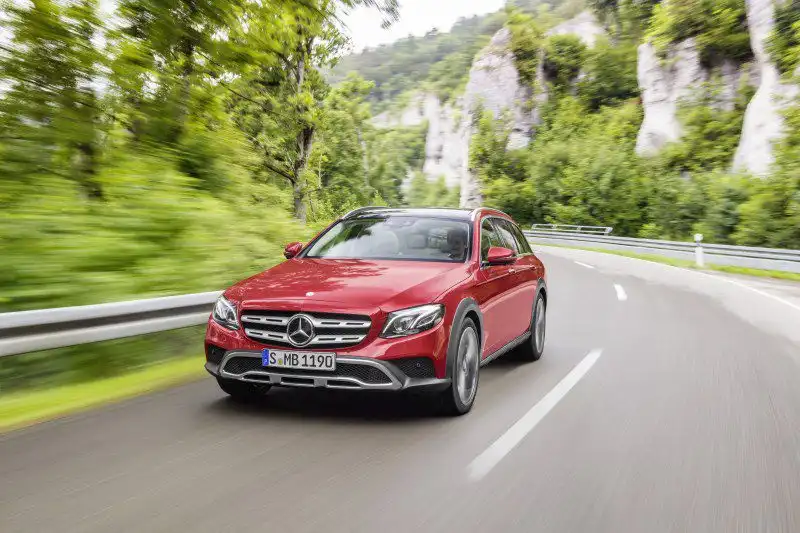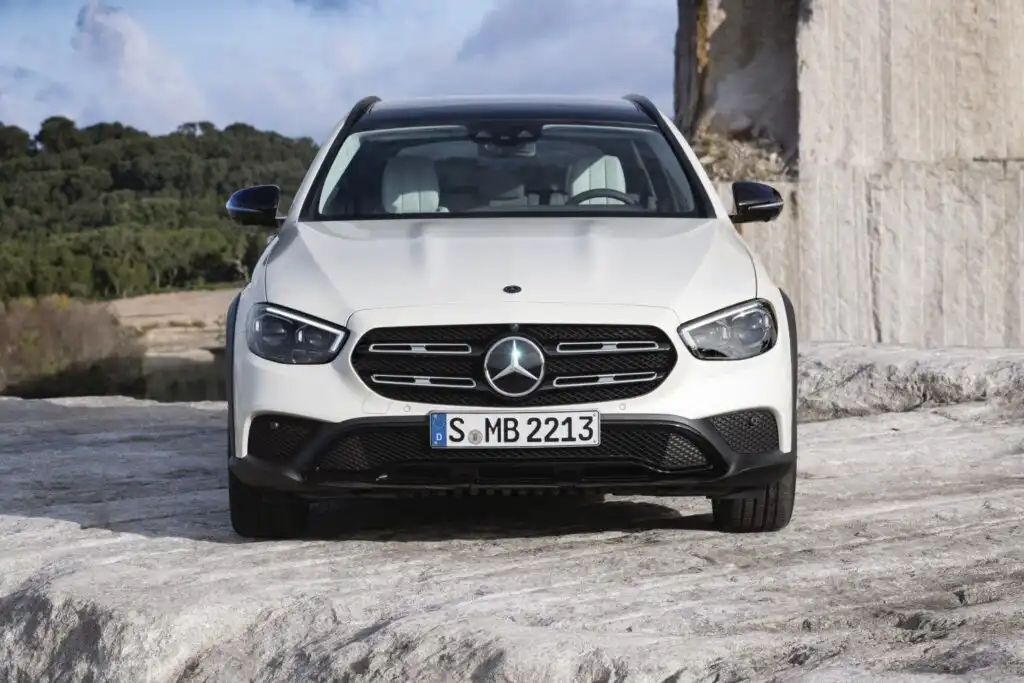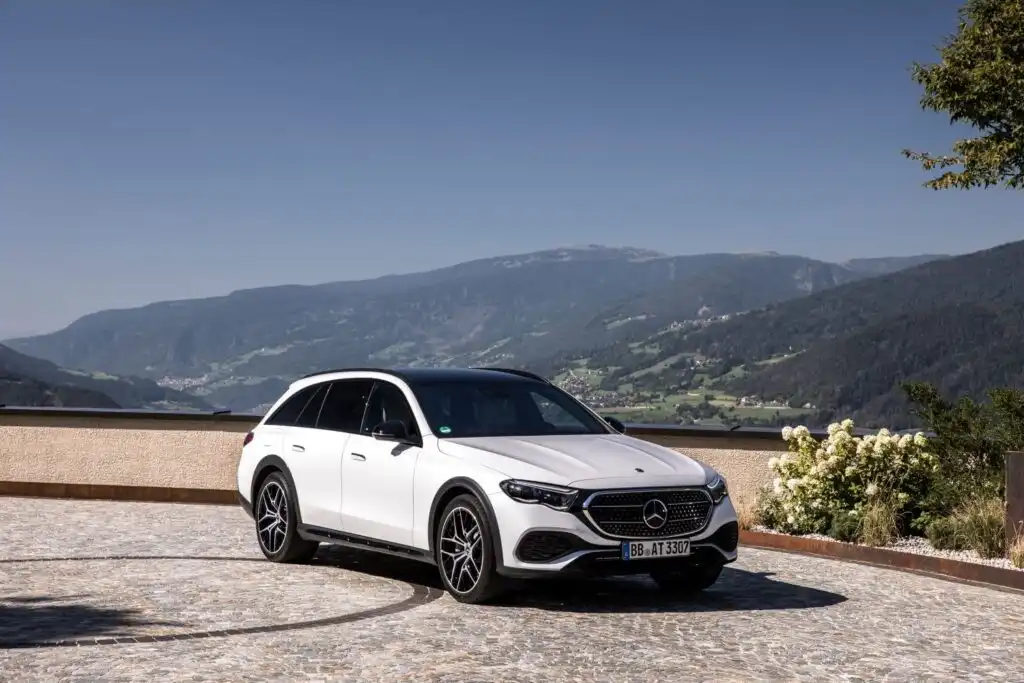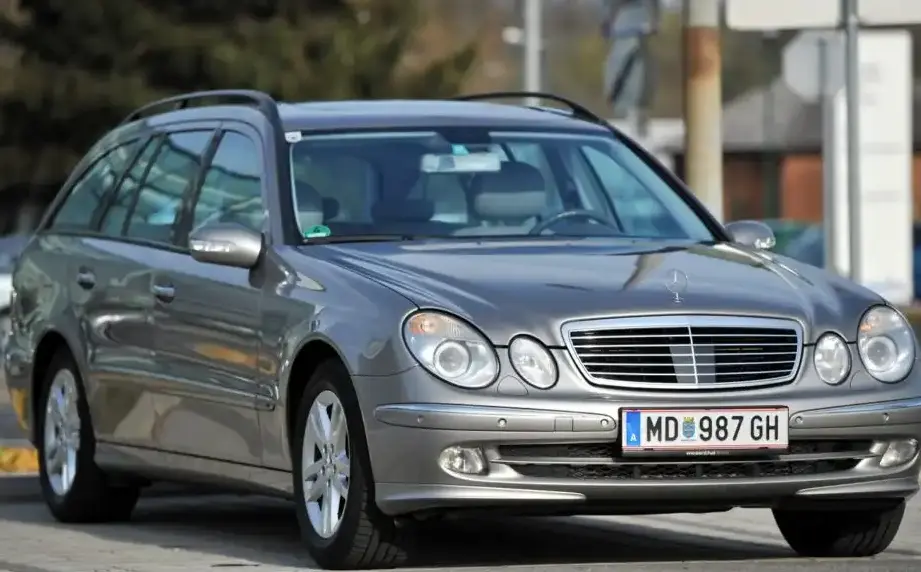
The Mercedes-Benz E-Class T-modell (S211) E 200 Kompressor, equipped with the 5G-TRONIC automatic transmission, was a popular variant of the second-generation E-Class estate produced between 2003 and 2006. Positioned as a mid-range offering within the S211 lineup, it aimed to balance practicality, comfort, and reasonable performance for buyers seeking a versatile luxury wagon. This model represented a key part of Mercedes-Benz’s strategy to offer a diverse range of E-Class options, catering to varying customer needs and preferences in the European market, where wagons held significant appeal.
Technical Specifications
| Brand | Mercedes-Benz |
| Model | E-Class |
| Generation | E-Class T-modell (S211) |
| Type (Engine) | E 200 Kompressor (163 Hp) 5G-TRONIC |
| Start of production | 2003 |
| End of production | 2006 |
| Powertrain Architecture | Internal Combustion engine |
| Body type | Station wagon (estate) |
| Seats | 5 |
| Doors | 5 |
| Fuel consumption (urban) | 13.3 l/100 km (17.7 US mpg, 21.2 UK mpg, 7.5 km/l) |
| Fuel consumption (extra urban) | 7 l/100 km (33.6 US mpg, 40.4 UK mpg, 14.3 km/l) |
| Fuel consumption (combined) | 9.4 l/100 km (25 US mpg, 30.1 UK mpg, 10.6 km/l) |
| Fuel Type | Petrol (Gasoline) |
| Acceleration 0 – 100 km/h | 10.6 sec |
| Acceleration 0 – 62 mph | 10.6 sec |
| Acceleration 0 – 60 mph | 10.1 sec |
| Maximum speed | 218 km/h (135.46 mph) |
| Weight-to-power ratio | 10.6 kg/Hp, 94.8 Hp/tonne |
| Weight-to-torque ratio | 7.2 kg/Nm, 139.5 Nm/tonne |
| Power | 163 Hp @ 5500 rpm |
| Power per litre | 90.8 Hp/l |
| Torque | 240 Nm @ 3000 rpm (177.01 lb.-ft. @ 3000 rpm) |
| Engine layout | Front, Longitudinal |
| Engine Model/Code | M 271.941 |
| Engine displacement | 1796 cm3 (109.6 cu. in.) |
| Number of cylinders | 4 |
| Engine configuration | Inline |
| Cylinder Bore | 82 mm (3.23 in.) |
| Piston Stroke | 85 mm (3.35 in.) |
| Compression ratio | 9.5:1 |
| Number of valves per cylinder | 4 |
| Fuel injection system | Multi-port manifold injection |
| Engine aspiration | Supercharger, Intercooler |
| Engine oil capacity | 5.5 l (5.81 US qt | 4.84 UK qt) |
| Coolant | 9.2 l (9.72 US qt | 8.09 UK qt) |
| Kerb Weight | 1720 kg (3791.95 lbs.) |
| Max. weight | 2295 kg (5059.61 lbs.) |
| Max load | 575 kg (1267.66 lbs.) |
| Trunk (boot) space – minimum | 690 l (24.37 cu. ft.) |
| Trunk (boot) space – maximum | 1950 l (68.86 cu. ft.) |
| Fuel tank capacity | 70 l (18.49 US gal | 15.4 UK gal) |
| Length | 4850 mm (190.94 in.) |
| Width | 1822 mm (71.73 in.) |
| Height | 1496 mm (58.9 in.) |
| Wheelbase | 2854 mm (112.36 in.) |
| Front track | 1559 mm (61.38 in.) |
| Rear (Back) track | 1552 mm (61.1 in.) |
| Drag coefficient (Cd) | 0.31 |
| Drivetrain Architecture | The Internal combustion engine (ICE) drives the rear wheels of the vehicle. |
| Drive wheel | Rear wheel drive |
| Number of gears and type of gearbox | 5 gears, automatic transmission |
| Front suspension | Coil spring |
| Rear suspension | Coil spring |
| Front brakes | Ventilated discs |
| Rear brakes | Disc |
| Assisting systems | ABS (Anti-lock braking system) |
| Steering type | Steering rack and pinion |
| Power steering | Hydraulic Steering |
| Tires size | 225/55 R16 |
| Wheel rims size | 7.5 J X 16 |
Powertrain & Engine Architecture
The E 200 Kompressor utilized the M271.941 engine, a 1.8-liter (1796 cc) inline-four cylinder powerplant. This engine was a significant departure from previous Mercedes-Benz four-cylinder designs, featuring all-aluminum construction for reduced weight. The “Kompressor” designation indicates the presence of a mechanically driven supercharger, providing increased torque at lower engine speeds. This supercharger, coupled with an intercooler, boosted output to 163 horsepower at 5500 rpm and 240 Nm (177 lb-ft) of torque at 3000 rpm. Fuel delivery was managed by a multi-port fuel injection system. The engine’s valvetrain employed four valves per cylinder, enhancing breathing and contributing to its overall efficiency. The 5G-TRONIC automatic transmission, a five-speed unit, was specifically tuned to complement the engine’s characteristics, offering smooth shifts and responsive performance.
Driving Characteristics
The E 200 Kompressor automatic offered a comfortable and refined driving experience. While not overtly sporty, the supercharger provided a noticeable boost in acceleration, making it feel more responsive than naturally aspirated alternatives. The 0-60 mph time of around 10.1 seconds was respectable for the era and vehicle class. The 5G-TRONIC transmission, while smooth, wasn’t particularly quick to downshift, which could be noticeable during overtaking maneuvers. Compared to the manual transmission version, the automatic offered greater convenience, especially in urban driving, but at the expense of some driver engagement and fuel economy. Higher-output E-Class variants, such as the E 240 or E 320, provided significantly more power and a sportier driving feel, but came at a higher price point.
Equipment & Trim Levels
The E 200 Kompressor T-modell typically came standard with features expected of a luxury estate car, including automatic climate control, power windows and mirrors, a multi-function steering wheel, and a high-quality audio system. Interior upholstery was generally cloth, with leather options available as an upgrade. Dashboard trim could be specified in wood or aluminum finishes. Optional extras included a sunroof, navigation system, heated seats, and parking sensors. The trim level could vary depending on the market, but generally, the E 200 Kompressor offered a good balance of features for its price.
Chassis & Braking
The S211 E-Class featured a fully independent suspension system, with coil springs and shock absorbers at all four corners. The front suspension utilized a three-link design, while the rear employed a multi-link setup, providing a comfortable ride and good handling characteristics. Braking duties were handled by ventilated discs at the front and solid discs at the rear, equipped with ABS (Anti-lock Braking System) as standard. The E 200 Kompressor’s weight of approximately 1720 kg (3792 lbs) meant that the braking system was adequately sized for its performance capabilities.
Market Reception & Comparison
The E 200 Kompressor T-modell was generally well-received by automotive critics as a practical and comfortable family car. Its fuel economy, averaging around 25 mpg combined, was considered reasonable for its class. However, some reviewers noted that the automatic transmission could feel slightly sluggish at times. Compared to the diesel-powered E 220 CDI, the E 200 Kompressor offered less fuel economy but a smoother and quieter engine. The E 200 Kompressor provided a more affordable entry point into the E-Class estate range, making it an attractive option for buyers who didn’t require the extra performance of the higher-spec models.
Legacy
The M271 engine, in general, proved to be a relatively reliable powerplant, although early versions were known to experience issues with balance shaft sprocket wear, which could lead to engine noise. The 5G-TRONIC transmission is also generally durable, but regular fluid changes are crucial for maintaining its longevity. Today, the E 200 Kompressor T-modell represents a good value proposition in the used car market, offering a blend of luxury, practicality, and reasonable running costs. Well-maintained examples are still relatively common and can provide years of reliable service, making it a popular choice for those seeking a classic Mercedes-Benz estate.