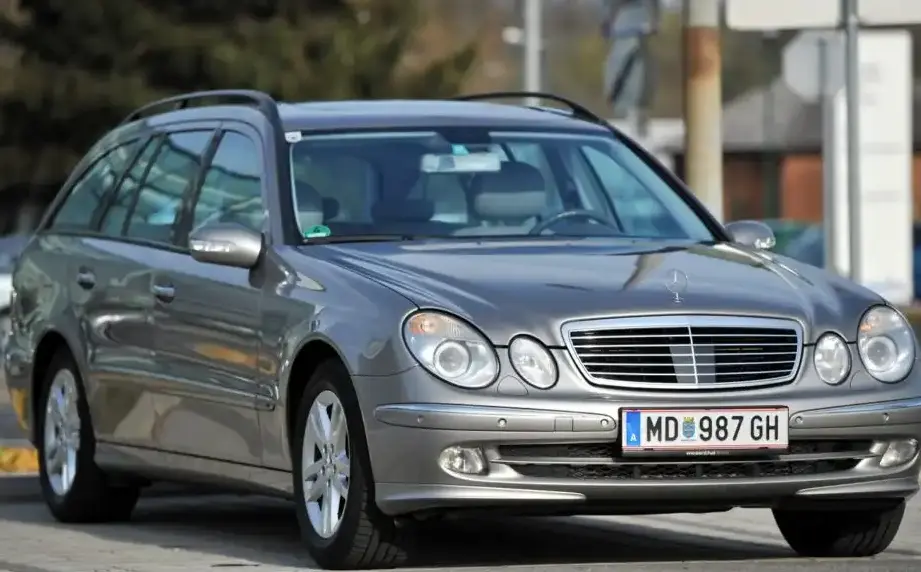
The Mercedes-Benz E-Class T-modell (S211) E 240, produced between 2003 and 2006, represented a compelling blend of practicality and luxury within the mid-size executive wagon segment. Positioned as a mid-range offering in the S211 series, which spanned from 2003 to 2009, the E 240 utilized a naturally aspirated 2.6-liter V6 engine paired with Mercedes’ 5G-TRONIC automatic transmission. This configuration aimed to provide a comfortable and refined driving experience, appealing to buyers prioritizing ease of use and spaciousness over outright performance. The S211 generation itself was a significant evolution of the E-Class, building upon the success of the W210 and introducing a more modern aesthetic and improved technology.
Technical Specifications
| Brand | Mercedes-Benz |
| Model | E-Class |
| Generation | E-Class T-modell (S211) |
| Type (Engine) | E 240 (177 Hp) 5G-TRONIC |
| Start of production | 2003 |
| End of production | 2006 |
| Powertrain Architecture | Internal Combustion engine |
| Body type | Station wagon (estate) |
| Seats | 5 |
| Doors | 5 |
| Fuel consumption (urban) | 15.9 l/100 km (14.8 US mpg, 17.8 UK mpg, 6.3 km/l) |
| Fuel consumption (extra urban) | 8 l/100 km (29.4 US mpg, 35.3 UK mpg, 12.5 km/l) |
| Fuel consumption (combined) | 10.9 l/100 km (21.6 US mpg, 25.9 UK mpg, 9.2 km/l) |
| Fuel Type | Petrol (Gasoline) |
| Acceleration 0 – 100 km/h | 10.1 sec |
| Acceleration 0 – 62 mph | 10.1 sec |
| Acceleration 0 – 60 mph | 9.6 sec |
| Maximum speed | 220 km/h (136.7 mph) |
| Weight-to-power ratio | 9.7 kg/Hp |
| Weight-to-torque ratio | 7.2 kg/Nm |
| Power | 177 Hp @ 5700 rpm |
| Torque | 240 Nm @ 4500 rpm (177.01 lb.-ft. @ 4500 rpm) |
| Engine layout | Front, Longitudinal |
| Engine Model/Code | M 112.913 |
| Engine displacement | 2597 cm3 (158.48 cu. in.) |
| Number of cylinders | 6 |
| Engine configuration | V-engine |
| Cylinder Bore | 89.9 mm (3.54 in.) |
| Piston Stroke | 68.2 mm (2.69 in.) |
| Compression ratio | 10.5:1 |
| Number of valves per cylinder | 3 |
| Fuel injection system | Multi-port manifold injection |
| Engine aspiration | Naturally aspirated engine |
| Valvetrain | OHC |
| Engine oil capacity | 8 l (8.45 US qt | 7.04 UK qt) |
| Coolant | 10 l (10.57 US qt | 8.8 UK qt) |
| Kerb Weight | 1720 kg (3791.95 lbs.) |
| Max. weight | 2295 kg (5059.61 lbs.) |
| Max load | 575 kg (1267.66 lbs.) |
| Trunk (boot) space – minimum | 690 l (24.37 cu. ft.) |
| Trunk (boot) space – maximum | 1950 l (68.86 cu. ft.) |
| Fuel tank capacity | 70 l (18.49 US gal | 15.4 UK gal) |
| Length | 4850 mm (190.94 in.) |
| Width | 1822 mm (71.73 in.) |
| Height | 1496 mm (58.9 in.) |
| Wheelbase | 2854 mm (112.36 in.) |
| Front track | 1559 mm (61.38 in.) |
| Rear (Back) track | 1552 mm (61.1 in.) |
| Drag coefficient (Cd) | 0.30 |
| Drivetrain Architecture | Rear wheel drive |
| Number of gears and type of gearbox | 5 gears, automatic transmission |
| Front suspension | Coil spring |
| Rear suspension | Coil spring |
| Front brakes | Ventilated discs |
| Rear brakes | Disc |
| Assisting systems | ABS (Anti-lock braking system) |
| Steering type | Steering rack and pinion |
| Power steering | Hydraulic Steering |
| Tires size | 225/55 R16 |
| Wheel rims size | 7.5 J X 16 |
Powertrain & Engine Architecture
The heart of the E 240 T-modell was the M112.913 engine, a 2.6-liter naturally aspirated V6. This engine belonged to the M112 family, known for its smooth operation and relatively simple design. It featured a three-valve-per-cylinder configuration (two intake, one exhaust) and multi-port fuel injection. The engine produced 177 horsepower at 5700 rpm and 240 Nm (177 lb-ft) of torque at 4500 rpm. The 5G-TRONIC automatic transmission, a five-speed unit, was specifically tuned to complement the engine’s characteristics, prioritizing smooth shifts and fuel efficiency. Unlike some of its competitors, the E 240 did not offer a manual transmission option.
Driving Characteristics
The E 240 T-modell, with its automatic transmission and moderate power output, delivered a comfortable and relaxed driving experience. Acceleration from 0 to 60 mph took around 9.6 seconds, and top speed was limited to 136.7 mph. While not particularly sporty, the engine provided adequate power for everyday driving and highway cruising. The automatic transmission, while smooth, could feel somewhat hesitant during quick overtaking maneuvers. Compared to the more powerful E 320 or the diesel-powered E 270 CDI, the E 240 offered less outright performance but better fuel economy. The gear ratios were optimized for fuel efficiency rather than rapid acceleration.
Equipment & Trim Levels
The E 240 T-modell came standard with a respectable array of features, including automatic climate control, power windows and locks, a multi-function steering wheel, and an audio system. Upholstery was typically cloth, with leather options available as an upgrade. Optional extras included a sunroof, navigation system, premium sound system, and heated seats. The interior design was typical of Mercedes-Benz at the time – understated elegance with a focus on quality materials and build. Trim levels were relatively simple, with most options being added individually rather than bundled into distinct packages.
Chassis & Braking
The S211 E-Class featured a fully independent suspension system, with coil springs and shock absorbers at all four corners. The E 240 utilized a standard suspension setup, designed for comfort rather than aggressive handling. Braking duties were handled by ventilated discs at the front and solid discs at the rear, equipped with ABS (Anti-lock Braking System). The steering was a hydraulic power-assisted rack and pinion system, providing a reasonably direct and responsive feel. The wagon’s weight, around 3792 lbs, influenced the suspension tuning and braking performance.
Market Reception & Comparison
The E 240 T-modell was generally well-received by critics as a practical and comfortable family wagon. However, some reviewers noted its lack of sporting pretensions and the relatively slow acceleration compared to its more powerful siblings. Fuel economy was considered reasonable for its class, averaging around 21.6 US mpg in combined driving. Compared to the E 320, the E 240 offered a lower price point but sacrificed performance. The E 270 CDI, with its diesel engine, provided superior fuel economy and comparable torque but lacked the smoothness of the V6 gasoline engine.
Legacy
The M112 engine family, including the M112.913 found in the E 240, is generally considered reliable, although preventative maintenance is crucial. Common issues include oil leaks and occasional problems with the ignition system. The 5G-TRONIC transmission is also generally durable, but fluid changes are essential to prevent premature wear. Today, the E 240 T-modell represents an affordable entry point into the Mercedes-Benz wagon world. Well-maintained examples are still relatively common on the used car market, offering a blend of practicality, comfort, and German engineering. Its relatively simple design compared to newer models makes it a potentially attractive option for DIY mechanics.