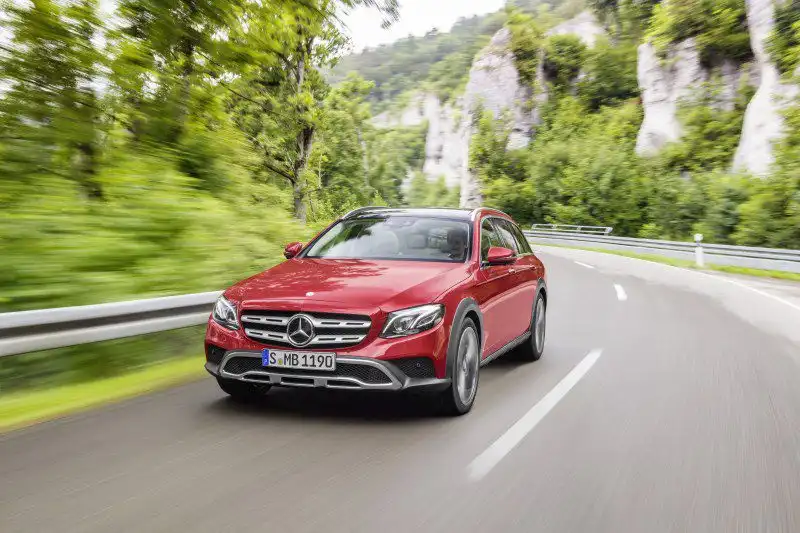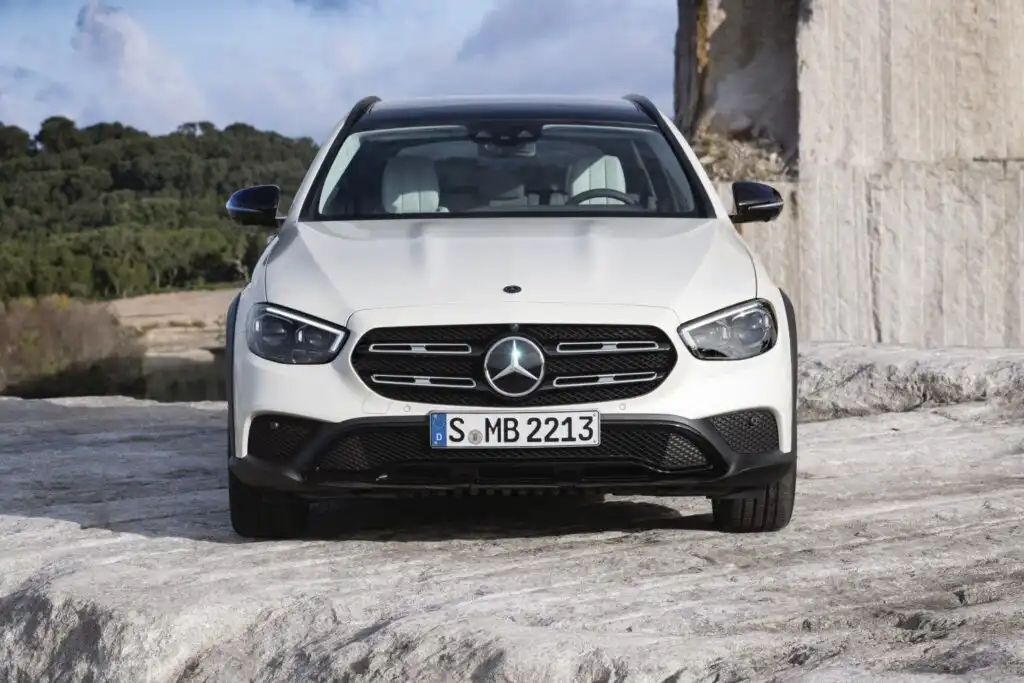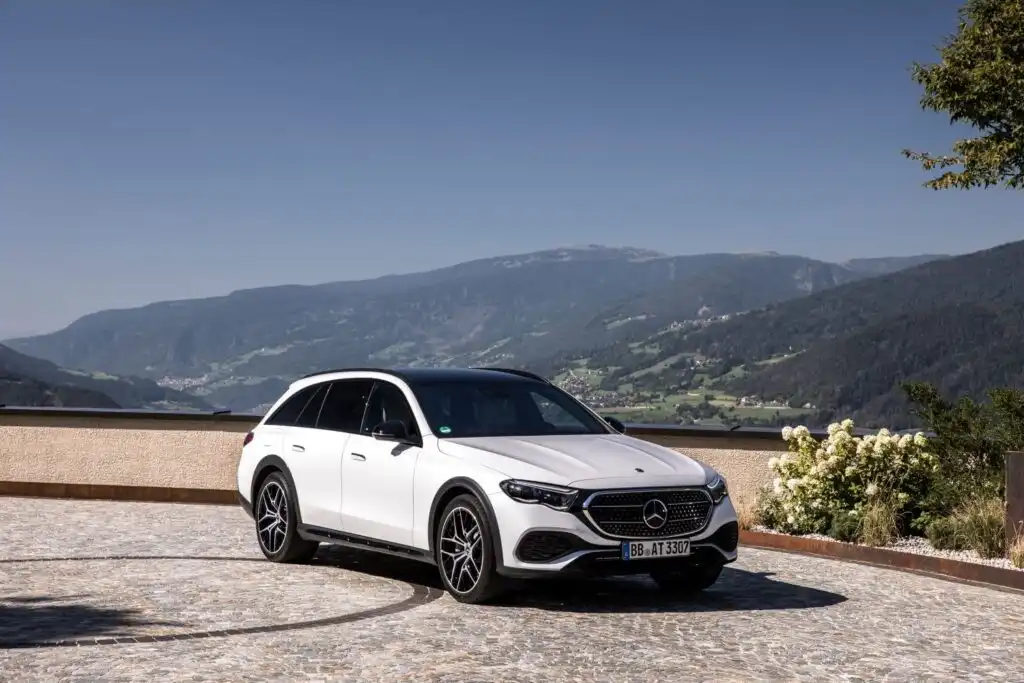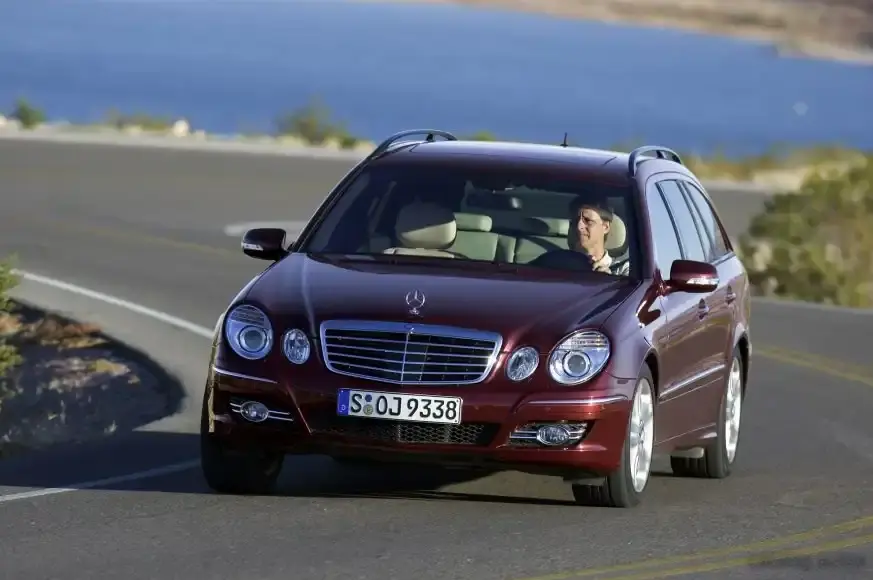
The Mercedes-Benz E-Class T-modell (S211) facelift, specifically the E 200 CDI variant with the 5G-TRONIC automatic transmission, was produced from 2006 to 2009. This model represented a practical, fuel-efficient option within the broader E-Class range, catering to buyers seeking the versatility of a station wagon (estate) without sacrificing the luxury and refinement associated with the Mercedes-Benz brand. Positioned as a mid-range offering, it slotted below the more powerful E 320 CDI and petrol-powered variants, and above the base E 180 CDI. The S211 facelift brought styling updates and technological improvements over the pre-2006 models, enhancing its appeal in the European market where estate cars remained highly popular.
Technical Specifications
| Brand | Mercedes-Benz |
| Model | E-Class |
| Generation | E-Class T-modell (S211, facelift 2006) |
| Type (Engine) | E 200 CDI (136 Hp) 5G-TRONIC |
| Start of production | 2006 |
| End of production | 2009 |
| Powertrain Architecture | Internal Combustion engine |
| Body type | Station wagon (estate) |
| Seats | 5 |
| Doors | 5 |
| Fuel consumption (urban) | 9.5-10.1 l/100 km (24.8 – 23.3 US mpg) |
| Fuel consumption (extra urban) | 5.7-6.1 l/100 km (41.3 – 38.6 US mpg) |
| Fuel consumption (combined) | 7.1-7.5 l/100 km (33.1 – 31.4 US mpg) |
| CO2 emissions | 187-199 g/km |
| Fuel Type | Diesel |
| Acceleration 0 – 100 km/h | 10.7 sec |
| Acceleration 0 – 62 mph | 10.7 sec |
| Acceleration 0 – 60 mph | 10.2 sec |
| Maximum speed | 200 km/h (124.27 mph) |
| Emission standard | Euro 4 |
| Weight-to-power ratio | 12.8 kg/Hp |
| Weight-to-torque ratio | 5.1 kg/Nm |
| Power | 136 Hp @ 3800 rpm |
| Torque | 340 Nm @ 1800-2600 rpm (250.77 lb.-ft. @ 1800-2600 rpm) |
| Engine layout | Front, Longitudinal |
| Engine Model/Code | OM 646.952 |
| Engine displacement | 2148 cm3 (131.08 cu. in.) |
| Number of cylinders | 4 |
| Engine configuration | Inline |
| Cylinder Bore | 88 mm (3.46 in.) |
| Piston Stroke | 88.3 mm (3.48 in.) |
| Compression ratio | 17.5:1 |
| Number of valves per cylinder | 4 |
| Fuel injection system | Diesel Commonrail |
| Engine aspiration | Turbocharger, Intercooler |
| Valvetrain | DOHC |
| Engine oil capacity | 6.5 l (6.87 US qt | 5.72 UK qt) |
| Coolant capacity | 10.2 l (10.78 US qt | 8.97 UK qt) |
| Kerb Weight | 1735 kg (3825.02 lbs.) |
| Max. weight | 2360 kg (5202.91 lbs.) |
| Max load | 625 kg (1377.89 lbs.) |
| Trunk (boot) space – minimum | 690 l (24.37 cu. ft.) |
| Trunk (boot) space – maximum | 1950 l (68.86 cu. ft.) |
| Fuel tank capacity | 70 l (18.49 US gal | 15.4 UK gal) |
| Max. roof load | 100 kg (220.46 lbs.) |
| Permitted trailer load with brakes (12%) | 1900 kg (4188.78 lbs.) |
| Permitted trailer load without brakes | 750 kg (1653.47 lbs.) |
| Length | 4888 mm (192.44 in.) |
| Width | 1822 mm (71.73 in.) |
| Width including mirrors | 2063 mm (81.22 in.) |
| Height | 1506 mm (59.29 in.) |
| Wheelbase | 2854 mm (112.36 in.) |
| Front track | 1559 mm (61.38 in.) |
| Rear track | 1552 mm (61.1 in.) |
| Front overhang | 869 mm (34.21 in.) |
| Rear overhang | 1165 mm (45.87 in.) |
| Drag coefficient (Cd) | 0.31 |
| Minimum turning circle | 11.4 m (37.4 ft.) |
| Drivetrain Architecture | Rear wheel drive |
| Number of gears and type of gearbox | 5 gears, automatic transmission |
| Front suspension | Double wishbone, Transverse stabilizer |
| Rear suspension | Independent multi-link suspension, Air suspension, Transverse stabilizer |
| Front brakes | Ventilated discs |
| Rear brakes | Disc |
| Assisting systems | ABS (Anti-lock braking system) |
| Steering type | Steering rack and pinion |
| Power steering | Hydraulic Steering |
| Tires size | 255/55 R16 |
| Wheel rims size | 7.5J X 16 |
Powertrain & Engine Architecture
The E 200 CDI T-modell was powered by the OM 646.952, a 2.1-liter inline-four cylinder diesel engine. This engine was a mainstay of the Mercedes-Benz lineup during the mid-2000s, known for its robust construction and relatively good fuel economy. The OM 646 featured a common rail direct injection system, delivering fuel at extremely high pressures for optimized combustion. A turbocharger with an intercooler further enhanced performance, boosting power output to 136 horsepower at 3800 rpm and 340 Nm (250.77 lb-ft) of torque between 1800 and 2600 rpm. The engine employed a double overhead camshaft (DOHC) valvetrain with four valves per cylinder, contributing to its efficiency and power delivery. The 5G-TRONIC automatic transmission, a five-speed torque converter automatic, was specifically calibrated to work with the characteristics of the diesel engine, prioritizing smooth shifts and fuel efficiency.
Driving Characteristics
The E 200 CDI T-modell, with its 136 hp and automatic transmission, offered a comfortable and relaxed driving experience. Acceleration was adequate for everyday driving, with a 0-100 km/h (0-62 mph) time of around 10.7 seconds. However, it wasn’t designed for sporty performance. Compared to the more powerful E 320 CDI or the manual transmission versions of the E 200 CDI, this variant felt noticeably slower, particularly during overtaking maneuvers. The 5G-TRONIC transmission, while smooth, could sometimes feel hesitant when downshifting. The gear ratios were optimized for fuel economy rather than outright acceleration. The focus was on providing a refined and effortless cruising experience, making it well-suited for long journeys.
Equipment & Trim Levels
The E 200 CDI T-modell typically came standard with a respectable level of equipment, including automatic climate control, power windows, central locking, and an audio system. Interior upholstery was usually a fabric or a combination of fabric and leatherette. Optional extras included leather seats, a sunroof, navigation system, parking sensors, and upgraded audio systems. Trim levels varied slightly depending on the market, but generally, the E 200 CDI offered a good balance of features for its price point. The estate body style itself added to the practicality, with a generous cargo capacity of 690 liters (24.37 cu. ft.) with the rear seats up, expanding to 1950 liters (68.86 cu. ft.) with the seats folded down.
Chassis & Braking
The S211 E-Class featured a double wishbone front suspension and an independent multi-link rear suspension. The E 200 CDI often came equipped with rear disc brakes, although some earlier models may have had rear drum brakes. Anti-lock Braking System (ABS) was standard. The suspension was tuned for comfort, providing a smooth ride over most road surfaces. Some models were equipped with air suspension on the rear axle, further enhancing ride quality and allowing for self-leveling when carrying heavy loads. Stabilizer bars were fitted to both the front and rear axles to reduce body roll during cornering.
Market Reception & Comparison
The E 200 CDI T-modell was generally well-received by critics as a practical and fuel-efficient option within the E-Class range. It was praised for its comfortable ride, spacious interior, and generous cargo capacity. However, some reviewers noted that the performance was somewhat underwhelming compared to the more powerful variants. Compared to the E 320 CDI, the E 200 CDI offered significantly lower running costs but lacked the same level of performance. The manual transmission E 200 CDI provided a more engaging driving experience, but the automatic version appealed to buyers prioritizing convenience and ease of use. Fuel economy was a key selling point, with combined fuel consumption figures ranging from 7.1 to 7.5 liters per 100 kilometers (33.1 – 31.4 US mpg).
Legacy
The OM 646 engine, found in the E 200 CDI, is generally considered a reliable unit, although it’s not without its potential issues. Common problems can include injector failures, turbocharger wear, and issues with the swirl motors. The 5G-TRONIC transmission is also generally reliable, but regular fluid changes are crucial for maintaining its longevity. Today, the E 200 CDI T-modell represents a relatively affordable entry point into Mercedes-Benz ownership. Well-maintained examples are still relatively common on the used car market, offering a blend of practicality, comfort, and fuel efficiency. Its enduring appeal lies in its ability to provide a refined and comfortable driving experience without breaking the bank.