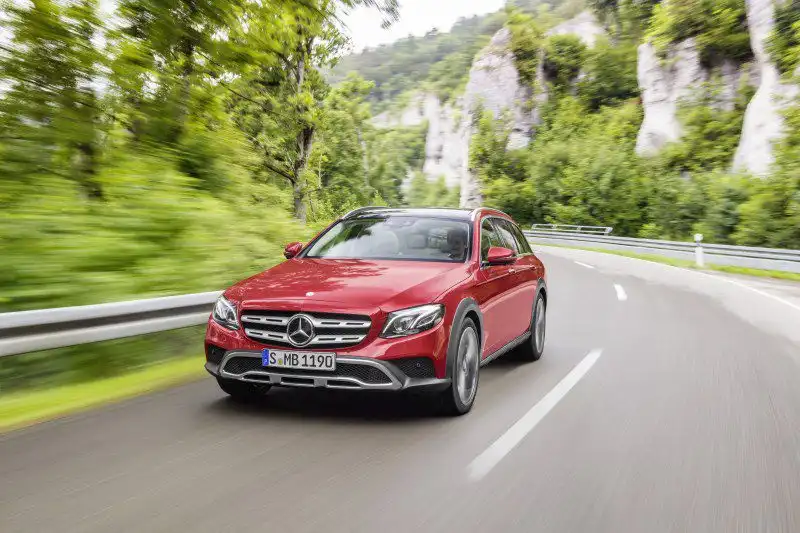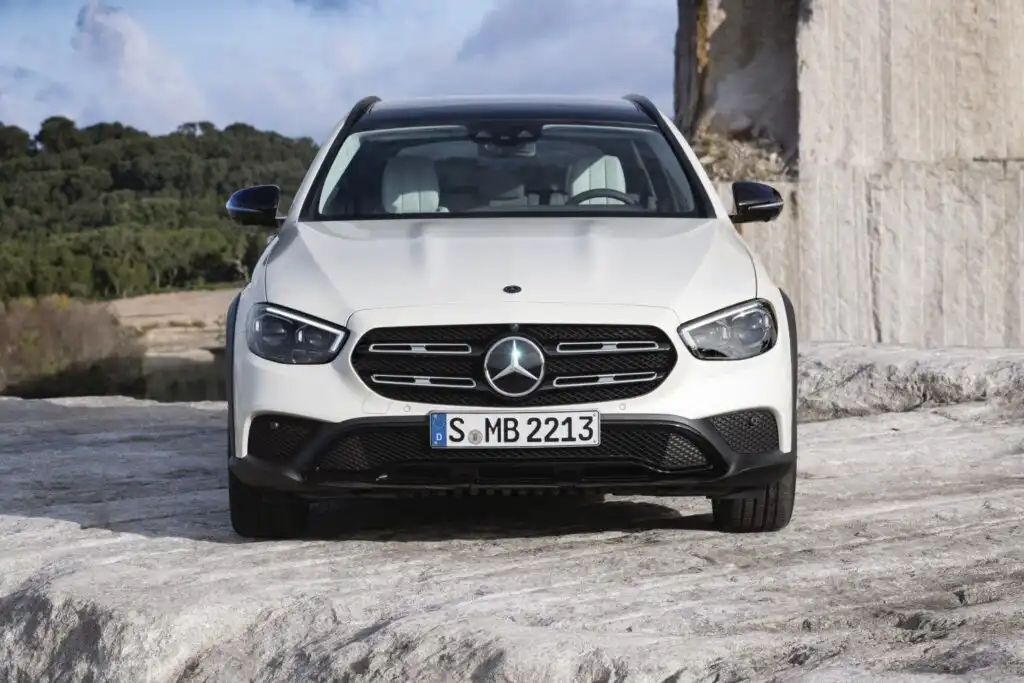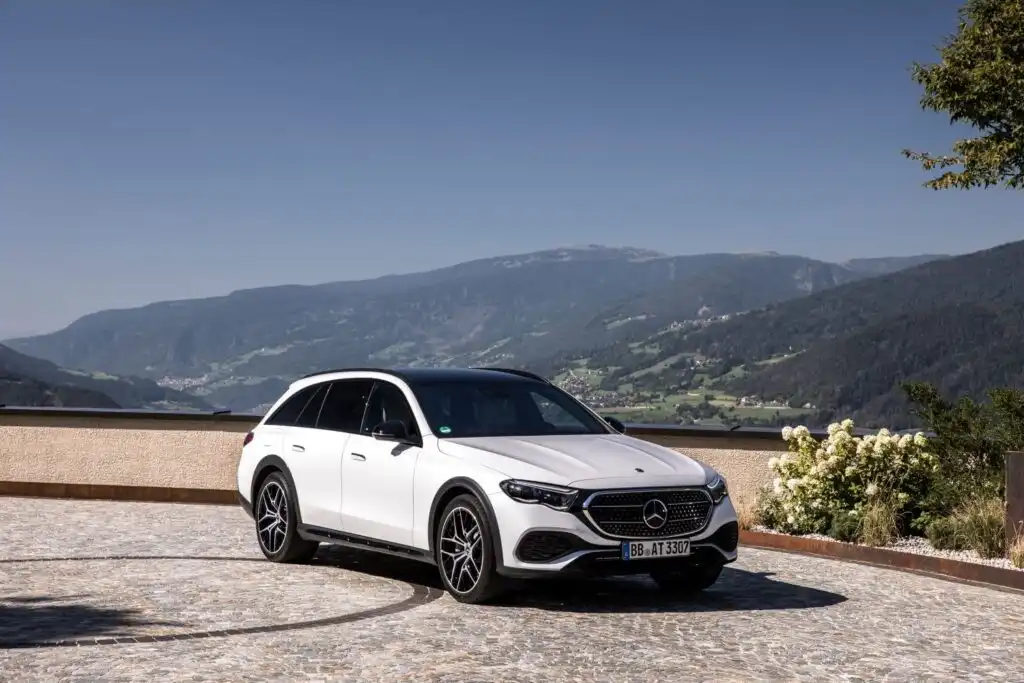
The Mercedes-Benz E-Class T-modell (S212) E 250 CDI BlueEFFICIENCY, produced from February 2011 to January 2013, represented a compelling blend of practicality, efficiency, and luxury within the E-Class range. Positioned as a mid-range offering in the T-modell (estate) body style, this variant catered to buyers seeking a spacious and refined vehicle with strong fuel economy and respectable performance. It was part of the S212 series, the third generation of E-Class estates, known for its elegant design and advanced engineering. The “BlueEFFICIENCY” designation signified Mercedes-Benz’s efforts to optimize fuel consumption and reduce emissions through various technological enhancements.
Technical Specifications
| Brand | Mercedes-Benz |
| Model | E-Class |
| Generation | E-Class T-modell (S212) |
| Type | E 250 CDI BlueEFFICIENCY (204 Hp) Start & Stop |
| Start of production | February, 2011 |
| End of production | January, 2013 |
| Powertrain Architecture | Internal Combustion engine |
| Body type | Station wagon (estate) |
| Seats | 5 |
| Doors | 5 |
| Fuel consumption (urban) | 6.5-6.6 l/100 km (36.2 – 35.6 US mpg, 43.5 – 42.8 UK mpg, 15.4 – 15.2 km/l) |
| Fuel consumption (extra urban) | 4.4-4.6 l/100 km (53.5 – 51.1 US mpg, 64.2 – 61.4 UK mpg, 22.7 – 21.7 km/l) |
| Fuel consumption (combined) | 5.2-5.4 l/100 km (45.2 – 43.6 US mpg, 54.3 – 52.3 UK mpg, 19.2 – 18.5 km/l) |
| CO2 emissions | 136-141 g/km |
| Fuel Type | Diesel |
| Acceleration 0 – 100 km/h | 7.8 sec |
| Acceleration 0 – 62 mph | 7.8 sec |
| Acceleration 0 – 60 mph | 7.4 sec |
| Maximum speed | 232 km/h (144.16 mph) |
| Emission standard | Euro 5 |
| Weight-to-power ratio | 8.7 kg/Hp, 115.3 Hp/tonne |
| Weight-to-torque ratio | 3.5 kg/Nm, 282.5 Nm/tonne |
| Power | 204 Hp @ 4200 rpm |
| Power per litre | 95.2 Hp/l |
| Torque | 500 Nm @ 1600-1800 rpm (368.78 lb.-ft. @ 1600-1800 rpm) |
| Engine layout | Front, Longitudinal |
| Engine Model/Code | OM 651.924 |
| Engine displacement | 2143 cm3 (130.77 cu. in.) |
| Number of cylinders | 4 |
| Engine configuration | Inline |
| Cylinder Bore | 83 mm (3.27 in.) |
| Piston Stroke | 99 mm (3.9 in.) |
| Compression ratio | 16.2:1 |
| Number of valves per cylinder | 4 |
| Fuel injection system | Diesel Commonrail |
| Engine aspiration | BiTurbo, Intercooler |
| Valvetrain | DOHC |
| Engine oil capacity | 6.5 l (6.87 US qt | 5.72 UK qt) |
| Coolant | 9 l (9.51 US qt | 7.92 UK qt) |
| Kerb Weight | 1770 kg (3902.18 lbs.) |
| Max. weight | 2440 kg (5379.28 lbs.) |
| Max load | 670 kg (1477.1 lbs.) |
| Trunk (boot) space – minimum | 695 l (24.54 cu. ft.) |
| Trunk (boot) space – maximum | 1950 l (68.86 cu. ft.) |
| Fuel tank capacity | 59 l (15.59 US gal | 12.98 UK gal) |
| Max. roof load | 100 kg (220.46 lbs.) |
| Permitted trailer load with brakes (12%) | 1900 kg (4188.78 lbs.) |
| Permitted trailer load without brakes | 750 kg (1653.47 lbs.) |
| Permitted towbar download | 84 kg (185.19 lbs.) |
| Length | 4895 mm (192.72 in.) |
| Width | 1854 mm (72.99 in.) |
| Width including mirrors | 2071 mm (81.54 in.) |
| Height | 1512 mm (59.53 in.) |
| Wheelbase | 2874 mm (113.15 in.) |
| Front track | 1585 mm (62.4 in.) |
| Rear track | 1604 mm (63.15 in.) |
| Front overhang | 841 mm (33.11 in.) |
| Rear overhang | 1180 mm (46.46 in.) |
| Drag coefficient (Cd) | 0.29 |
| Minimum turning circle | 11.25 m (36.91 ft.) |
| Drivetrain Architecture | Rear wheel drive |
| Number of gears | 6 |
| Type of gearbox | Manual transmission |
| Front suspension | Coil spring, Independent multi-link suspension, Transverse stabilizer, Air Suspension – Optional |
| Rear suspension | Independent multi-link suspension, Air suspension, Transverse stabilizer |
| Front brakes | Ventilated discs, 322 mm |
| Rear brakes | Disc, 300 mm |
Powertrain & Engine Architecture
The E 250 CDI BlueEFFICIENCY was powered by the OM651.924, a 2.1-liter inline-four cylinder diesel engine. This engine was a cornerstone of Mercedes-Benz’s diesel offerings, known for its robust construction and efficiency. It featured a sophisticated common-rail direct injection system, delivering fuel at extremely high pressure for optimized combustion. The engine employed a bi-turbocharger setup – a smaller turbocharger for quick response at low engine speeds and a larger turbocharger for increased power at higher RPMs. An intercooler further enhanced performance by cooling the compressed intake air. The engine boasted a high compression ratio of 16.2:1, contributing to its thermal efficiency. The 6-speed manual transmission was standard, providing precise gear changes and contributing to the vehicle’s overall fuel economy. The Start & Stop system automatically shut off the engine when the vehicle was stationary, further reducing fuel consumption and emissions.
Driving Characteristics
The E 250 CDI T-modell offered a comfortable and refined driving experience. While not overtly sporty, the 204 horsepower and 368 lb-ft of torque provided ample power for everyday driving and long-distance cruising. Acceleration from 0-60 mph took approximately 7.4 seconds, making it competitive within its class. The manual transmission allowed for driver engagement, while the well-tuned suspension provided a smooth ride. Compared to higher-output E-Class variants like the E 350, the E 250 CDI prioritized fuel efficiency over outright performance. The gear ratios were optimized for fuel economy, meaning the engine sometimes felt slightly strained when accelerating hard in higher gears. However, the abundant low-end torque made it a capable and relaxed highway cruiser.
Equipment & Trim Levels
The E 250 CDI BlueEFFICIENCY T-modell came standard with a comprehensive array of features, including automatic climate control, power windows and mirrors, a multi-function steering wheel, and a high-quality audio system. Interior upholstery typically consisted of fabric or Artico leatherette. Optional extras included leather upholstery, a sunroof, navigation system, parking sensors, and advanced driver-assistance systems like lane keeping assist and blind spot monitoring. Trim levels were relatively streamlined, with most customization options available as individual add-ons rather than distinct packages.
Chassis & Braking
The S212 E-Class T-modell featured a robust chassis with a multi-link independent suspension at both the front and rear. This suspension design provided excellent ride comfort and handling characteristics. The front suspension incorporated coil springs, while the rear suspension often included optional air suspension for adjustable ride height and improved comfort. Braking duties were handled by ventilated discs at the front and solid discs at the rear. Anti-lock braking system (ABS) was standard, ensuring safe and controlled stopping power. The steering system was a hydraulic power-assisted rack and pinion setup, providing precise and responsive steering feel.
Market Reception & Comparison
The E 250 CDI BlueEFFICIENCY T-modell was well-received by critics for its combination of practicality, efficiency, and refinement. It was praised for its spacious interior, comfortable ride, and strong fuel economy. Compared to the E 350 T-modell, the E 250 CDI offered a more affordable entry point into the E-Class estate range, while still providing a premium driving experience. The diesel engine’s fuel economy was a significant advantage, particularly for drivers who covered long distances. However, some critics noted that the engine lacked the outright performance of its gasoline-powered counterparts.
Legacy
The OM651 engine family, including the OM651.924 found in the E 250 CDI, has proven to be remarkably durable and reliable. With proper maintenance, these engines can easily exceed 200,000 miles. The E 250 CDI T-modell remains a popular choice in the used car market, particularly for buyers seeking a practical and fuel-efficient estate car. Common maintenance items include regular oil changes, filter replacements, and occasional attention to the diesel particulate filter (DPF). The S212 E-Class T-modell, in general, is regarded as a well-built and reliable vehicle, making the E 250 CDI a sensible and rewarding purchase for discerning buyers.