Technical Specifications
| Brand | Mercedes-Benz |
| Model | E-Class |
| Generation | E-Class T-modell (S212) |
| Type | E 350 CDI BlueEFFICIENCY V6 (231 Hp) 7G-TRONIC |
| Start of production | November, 2009 |
| End of production | July, 2010 |
| Powertrain Architecture | Internal Combustion engine |
| Body type | Station wagon (estate) |
| Seats | 5 |
| Doors | 5 |
| Fuel consumption (urban) | 8.9-9.4 l/100 km (26.4 – 25 US mpg) |
| Fuel consumption (extra urban) | 5.9-6.1 l/100 km (39.9 – 38.6 US mpg) |
| Fuel consumption (combined) | 7-7.3 l/100 km (33.6 – 32.2 US mpg) |
| CO2 emissions | 185-192 g/km |
| Fuel Type | Diesel |
| Acceleration 0 – 100 km/h | 7.2 sec |
| Acceleration 0 – 62 mph | 7.2 sec |
| Acceleration 0 – 60 mph | 6.8 sec |
| Maximum speed | 240 km/h (149.13 mph) |
| Emission standard | Euro 5 |
| Weight-to-power ratio | 8 kg/Hp |
| Weight-to-torque ratio | 3.4 kg/Nm |
| Power | 231 Hp @ 3800 rpm |
| Torque | 540 Nm @ 1600-2400 rpm (398.28 lb.-ft. @ 1600-2400 rpm) |
| Engine layout | Front, Longitudinal |
| Engine Model/Code | OM 642.850 |
| Engine displacement | 2987 cm3 (182.28 cu. in.) |
| Number of cylinders | 6 |
| Engine configuration | V-engine |
| Cylinder Bore | 83 mm (3.27 in.) |
| Piston Stroke | 92 mm (3.62 in.) |
| Compression ratio | 15.5:1 |
| Number of valves per cylinder | 4 |
| Fuel injection system | Diesel Commonrail |
| Engine aspiration | Turbocharger, Intercooler |
| Valvetrain | DOHC |
| Engine oil capacity | 8 l (8.45 US qt | 7.04 UK qt) |
| Kerb Weight | 1850 kg (4078.55 lbs.) |
| Max. weight | 2500 kg (5511.56 lbs.) |
| Max load | 650 kg (1433 lbs.) |
| Trunk (boot) space – minimum | 695 l (24.54 cu. ft.) |
| Trunk (boot) space – maximum | 1950 l (68.86 cu. ft.) |
| Fuel tank capacity | 80 l (21.13 US gal | 17.6 UK gal) |
| Max. roof load | 100 kg (220.46 lbs.) |
| Permitted trailer load with brakes (12%) | 2100 kg (4629.71 lbs.) |
| Permitted trailer load without brakes | 750 kg (1653.47 lbs.) |
| Permitted towbar download | 84 kg (185.19 lbs.) |
| Length | 4895 mm (192.72 in.) |
| Width | 1854 mm (72.99 in.) |
| Width including mirrors | 2071 mm (81.54 in.) |
| Height | 1512 mm (59.53 in.) |
| Wheelbase | 2874 mm (113.15 in.) |
| Front track | 1585 mm (62.4 in.) |
| Rear track | 1604 mm (63.15 in.) |
| Front overhang | 841 mm (33.11 in.) |
| Rear overhang | 1180 mm (46.46 in.) |
| Drag coefficient (Cd) | 0.30 |
| Minimum turning circle | 11.25 m (36.91 ft.) |
| Drivetrain Architecture | Rear wheel drive |
| Number of gears and type of gearbox | 7 gears, automatic transmission G-TRONIC |
| Front suspension | Coil spring, Independent multi-link suspension, Transverse stabilizer, Air Suspension – Optional |
| Rear suspension | Independent multi-link suspension, Air suspension, Transverse stabilizer |
| Front brakes | Ventilated discs, 322 mm |
| Rear brakes | Ventilated discs, 300 mm |
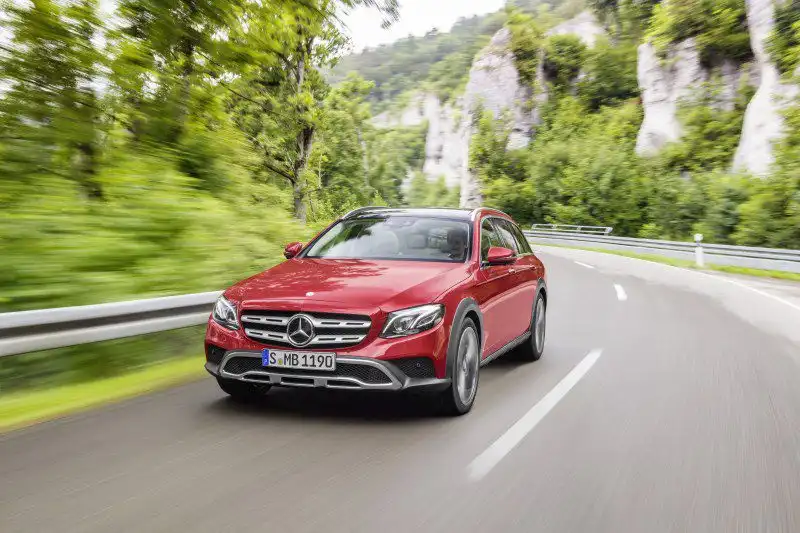
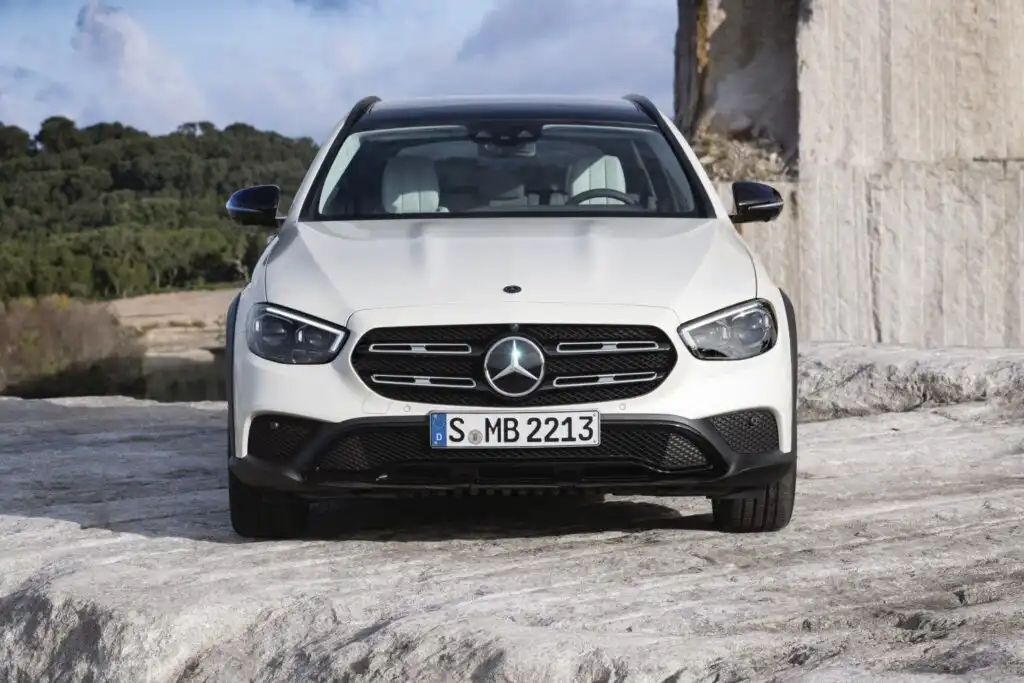
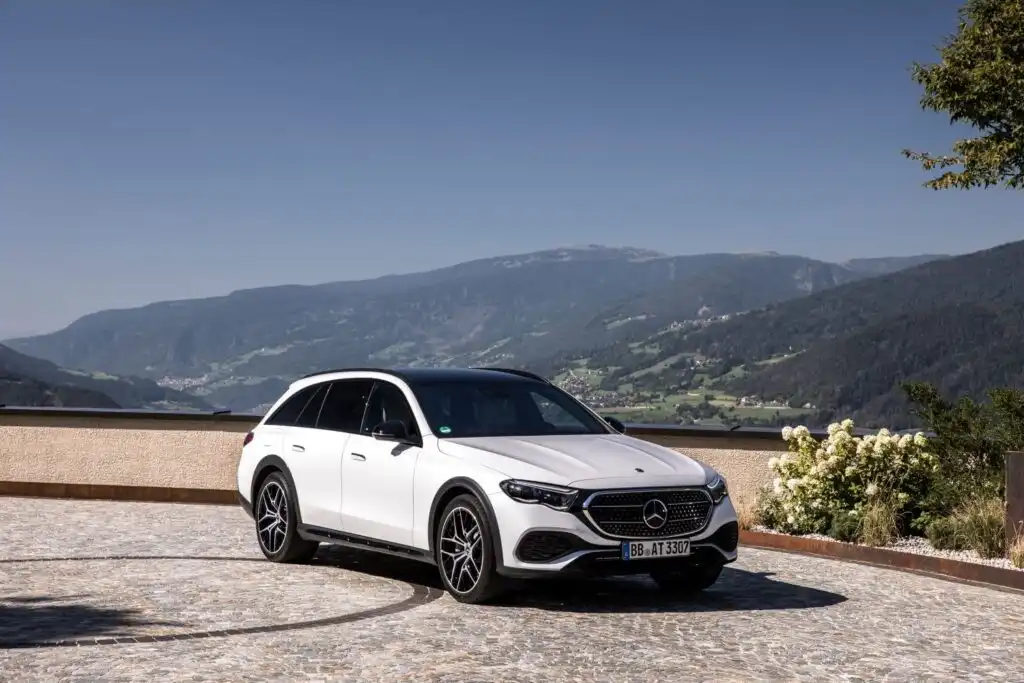
The Mercedes-Benz E-Class T-modell (S212) E 350 CDI BlueEFFICIENCY, produced from November 2009 to July 2010, represents a compelling blend of practicality, performance, and efficiency within the fifth generation of the E-Class estate (wagon) range. Positioned as a mid-to-upper trim level, this variant offered a sophisticated alternative to the standard E-Class models, appealing to buyers seeking a luxurious and capable vehicle for both daily commuting and long-distance travel. It was built on the W212 platform, sharing its underpinnings with the E-Class sedan but distinguished by its extended cargo area and versatile interior configuration. This model aimed to provide a premium experience, combining the comfort expected of a Mercedes-Benz with the utility of a station wagon.
Powertrain & Engine Architecture
The heart of the E 350 CDI BlueEFFICIENCY is the OM 642.850 3.0-liter V6 turbodiesel engine. This engine is a hallmark of Mercedes-Benz diesel technology, known for its robust construction and refined operation. It features a common rail direct injection system, delivering fuel at extremely high pressure for optimized combustion and reduced emissions. The engine utilizes a variable geometry turbocharger (VGT) and an intercooler to enhance power and torque across a broad RPM range. The DOHC (Double Overhead Camshaft) valvetrain, with four valves per cylinder, further contributes to the engine’s efficiency and performance. Paired with this engine is the 7G-TRONIC seven-speed automatic transmission, a sophisticated unit that provides smooth and responsive gear changes. This transmission was known for its ability to adapt to driving conditions and optimize fuel economy. The 7G-TRONIC also featured a manual shift mode for drivers who preferred more control.
Driving Characteristics
The E 350 CDI BlueEFFICIENCY offered a refined and comfortable driving experience. The 540 Nm (398 lb-ft) of torque, available from a low 1600 rpm, provided strong acceleration and effortless cruising. While not a sports car, the 7.2-second 0-62 mph acceleration time was respectable for a large station wagon. The 7G-TRONIC transmission played a crucial role in delivering power smoothly and efficiently. Compared to the E 350 gasoline variants, the CDI offered significantly better fuel economy and a more relaxed driving style. Against higher-output E-Class models like the E 500, the E 350 CDI prioritized efficiency and torque over outright horsepower. The automatic transmission, while convenient, didn’t offer the same level of driver engagement as a manual gearbox.
Equipment & Trim Levels
The E 350 CDI BlueEFFICIENCY came standard with a comprehensive array of features, reflecting its position as a premium vehicle. These included leather upholstery, automatic climate control, a high-quality audio system, and a host of safety features such as ABS, ESP, and multiple airbags. Optional extras included a navigation system, a panoramic sunroof, adaptive cruise control, and premium sound systems. Interior trim options allowed for customization, with choices in wood veneers and aluminum accents. The BlueEFFICIENCY designation indicated the inclusion of fuel-saving technologies, such as optimized aerodynamics and low-rolling-resistance tires.
Chassis & Braking
The S212 E-Class T-modell featured a sophisticated chassis design, incorporating a multi-link independent suspension at both the front and rear. This setup provided a comfortable ride and precise handling. Many models were equipped with optional air suspension, which further enhanced ride quality and allowed for adjustable ride height. The braking system consisted of ventilated disc brakes on all four wheels, providing ample stopping power. ABS (Anti-lock Braking System) and ESP (Electronic Stability Program) were standard features, enhancing safety and control in various driving conditions.
Market Reception & Comparison
The E 350 CDI BlueEFFICIENCY was generally well-received by automotive critics. It was praised for its fuel efficiency, comfortable ride, and spacious interior. The diesel engine was noted for its refinement and strong performance. Compared to other E-Class variants, the CDI offered a compelling balance of economy and practicality. While some critics found the automatic transmission to be slightly less engaging than a manual, its smoothness and efficiency were widely appreciated. In terms of reliability, the OM 642 engine proved to be durable, although maintenance costs could be higher than those of gasoline engines due to the complexity of the diesel injection system.
Legacy
The Mercedes-Benz E 350 CDI BlueEFFICIENCY T-modell (S212) remains a desirable used car today, particularly for those seeking a practical and luxurious estate. The OM 642 engine, when properly maintained, is known for its longevity. However, potential buyers should be aware of the potential for higher maintenance costs associated with the diesel injection system and particulate filter. The S212 E-Class, in general, is considered a well-built and reliable vehicle, and the E 350 CDI BlueEFFICIENCY represents a particularly appealing option for those who prioritize fuel efficiency and a comfortable driving experience.