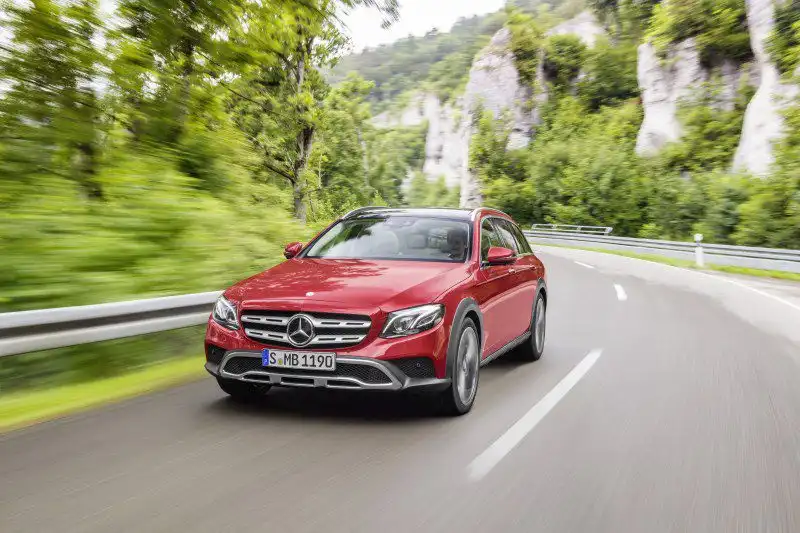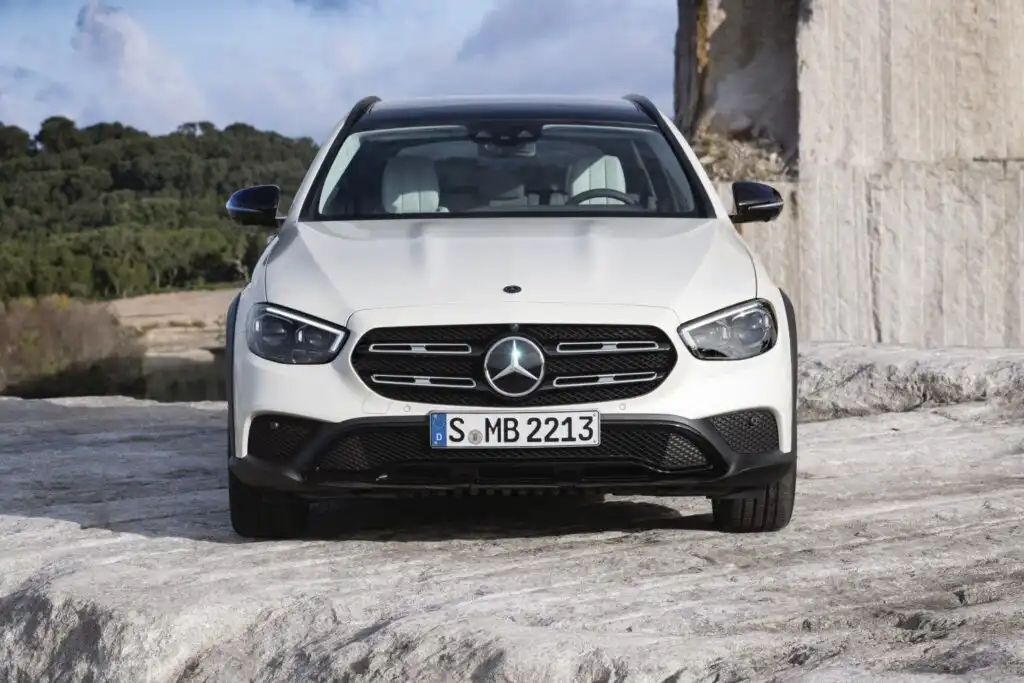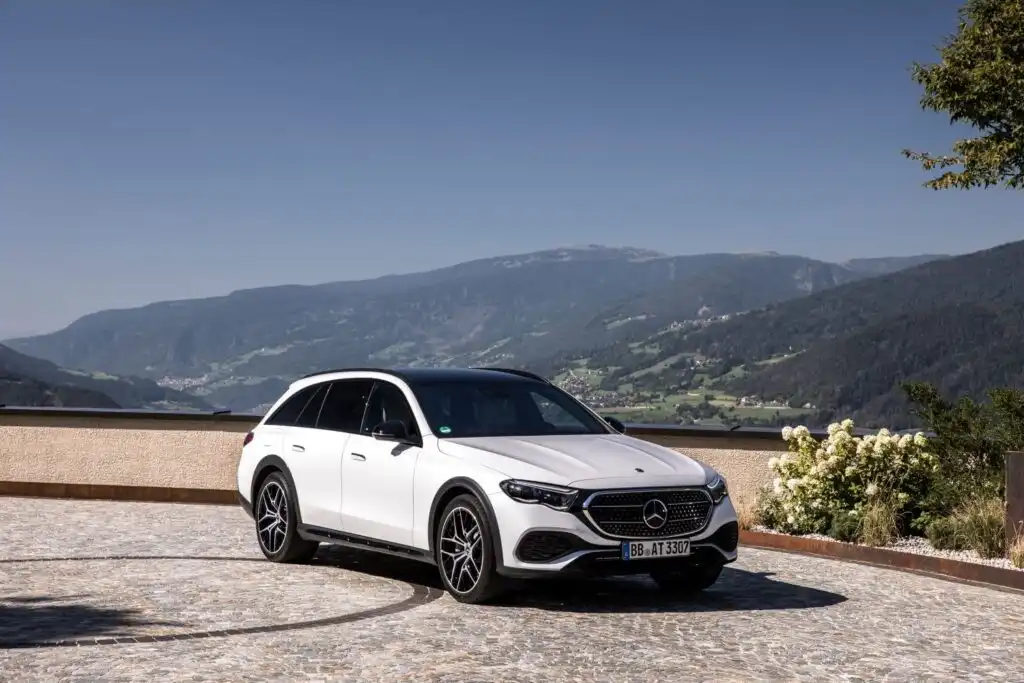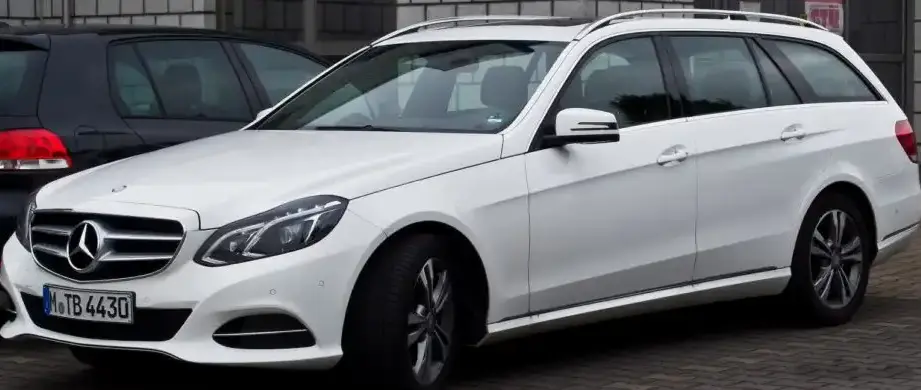
The Mercedes-Benz E-Class T-modell (S212 facelift), specifically the E 200 CDI variant producing 136 horsepower, was a popular choice in the European market from April 2013 to July 2014. Positioned as an entry-level diesel option within the S212 wagon range, it offered a blend of practicality, fuel efficiency, and the prestige associated with the E-Class nameplate. This model represented a mid-cycle refresh of the S212 generation, incorporating styling updates and revised technology while retaining the core characteristics of the estate car. It competed directly with other premium wagons like the Audi A6 Avant and BMW 5 Series Touring.
Technical Specifications
| Brand | Mercedes-Benz |
| Model | E-Class |
| Generation | E-Class T-modell (S212, facelift 2013) |
| Type (Engine) | E 200 CDI (136 Hp) |
| Start of production | April, 2013 |
| End of production | July, 2014 |
| Powertrain Architecture | Internal Combustion engine |
| Body type | Station wagon (estate) |
| Seats | 5 |
| Doors | 5 |
| Fuel consumption (urban) | 6.2-6.4 l/100 km (37.9 – 36.8 US mpg, 45.6 – 44.1 UK mpg, 16.1 – 15.6 km/l) |
| Fuel consumption (extra urban) | 4.5-4.8 l/100 km (52.3 – 49 US mpg, 62.8 – 58.9 UK mpg, 22.2 – 20.8 km/l) |
| Fuel consumption (combined) | 5.2-5.4 l/100 km (45.2 – 43.6 US mpg, 54.3 – 52.3 UK mpg, 19.2 – 18.5 km/l) |
| CO2 emissions | 135-141 g/km |
| Fuel Type | Diesel |
| Acceleration 0 – 100 km/h | 10.9 sec |
| Acceleration 0 – 62 mph | 10.9 sec |
| Acceleration 0 – 60 mph | 10.4 sec |
| Maximum speed | 205 km/h (127.38 mph) |
| Emission standard | Euro 5 |
| Weight-to-power ratio | 13 kg/Hp, 76.8 Hp/tonne |
| Weight-to-torque ratio | 4.9 kg/Nm, 203.4 Nm/tonne |
| Power | 136 Hp @ 2800-4600 rpm |
| Power per litre | 63.5 Hp/l |
| Torque | 360 Nm @ 1600-2600 rpm (265.52 lb.-ft. @ 1600-2600 rpm) |
| Engine layout | Front, Longitudinal |
| Engine Model/Code | OM 651.925 |
| Engine displacement | 2143 cm3 (130.77 cu. in.) |
| Number of cylinders | 4 |
| Engine configuration | Inline |
| Cylinder Bore | 83 mm (3.27 in.) |
| Piston Stroke | 99 mm (3.9 in.) |
| Compression ratio | 16.2:1 |
| Number of valves per cylinder | 4 |
| Fuel injection system | Diesel Commonrail |
| Engine aspiration | Turbocharger, Intercooler |
| Valvetrain | DOHC |
| Engine oil capacity | 6.5 l (6.87 US qt | 5.72 UK qt) |
| Coolant | 10 l (10.57 US qt | 8.8 UK qt) |
| Kerb Weight | 1770 kg (3902.18 lbs.) |
| Max. weight | 2440 kg (5379.28 lbs.) |
| Max load | 670 kg (1477.1 lbs.) |
| Trunk (boot) space – minimum | 695 l (24.54 cu. ft.) |
| Trunk (boot) space – maximum | 1950 l (68.86 cu. ft.) |
| Fuel tank capacity | 59 l (15.59 US gal | 12.98 UK gal) |
| Max. roof load | 100 kg (220.46 lbs.) |
| Permitted trailer load with brakes (12%) | 1900 kg (4188.78 lbs.) |
| Permitted trailer load without brakes | 750 kg (1653.47 lbs.) |
| Permitted towbar download | 84 kg (185.19 lbs.) |
| Length | 4905 mm (193.11 in.) |
| Width | 1854 mm (72.99 in.) |
| Width including mirrors | 2071 mm (81.54 in.) |
| Height | 1507 mm (59.33 in.) |
| Wheelbase | 2874 mm (113.15 in.) |
| Front track | 1583 mm (62.32 in.) |
| Rear track | 1604 mm (63.15 in.) |
| Front overhang | 849 mm (33.43 in.) |
| Rear overhang | 1182 mm (46.54 in.) |
| Drag coefficient (Cd) | 0.29 |
| Minimum turning circle | 11.28 m (37.01 ft.) |
| Drivetrain Architecture | Rear wheel drive |
| Number of gears | 6 |
| Type of gearbox | Manual transmission |
INTRODUCTION
The S212 generation Mercedes-Benz E-Class T-modell, introduced in 2009, represented the wagon (estate) variant of the popular E-Class. The 2013 facelift brought with it revised styling, updated safety features, and more efficient engine options. The E 200 CDI, powered by the OM 651.925 2.1-liter four-cylinder diesel engine, was a key component of the lineup, offering a balance between fuel economy and acceptable performance for everyday driving. This variant was particularly popular in Europe, where diesel engines and wagons are highly favored. It served as a practical and refined option for families and individuals needing ample cargo space and long-distance comfort.
Powertrain & Engine Architecture
The heart of the E 200 CDI is the OM 651.925, a 2.143-liter inline-four cylinder diesel engine. This engine is a common-rail direct injection diesel, meaning fuel is injected directly into the combustion chamber at extremely high pressure. This contributes to improved combustion efficiency and reduced emissions. The engine utilizes a turbocharger with an intercooler to boost power output. The valvetrain is a Double Overhead Camshaft (DOHC) design with four valves per cylinder, optimizing airflow for enhanced performance. The engine produces 136 horsepower at 2800-4600 rpm and 360 Nm (265.52 lb-ft) of torque between 1600-2600 rpm. The E 200 CDI was typically paired with a 6-speed manual transmission, although a 5-speed automatic transmission was also available, albeit less common. The automatic transmission offered smoother shifts but at the expense of some fuel economy and responsiveness.
Driving Characteristics
The E 200 CDI with the manual transmission offered a reasonably engaging driving experience. While not a performance-oriented model, the 360 Nm of torque provided adequate pulling power for overtaking and highway cruising. Acceleration from 0-100 km/h (0-62 mph) took around 10.9 seconds. The automatic transmission, while convenient, dulled the responsiveness somewhat, with noticeable delays in downshifts. The suspension, tuned for comfort, provided a smooth ride, absorbing bumps and imperfections in the road effectively. The rear-wheel-drive configuration offered balanced handling, although it could become unsettled on slippery surfaces. Overall, the E 200 CDI prioritized comfort and efficiency over outright performance.
Equipment & Trim Levels
The E 200 CDI T-modell typically came equipped with a respectable level of standard features. These included automatic climate control, a multi-function steering wheel, power windows and mirrors, and a basic audio system. Higher trim levels offered options such as leather upholstery, a more advanced infotainment system with navigation, parking sensors, and a panoramic sunroof. The interior design was typical of Mercedes-Benz, emphasizing quality materials and a refined aesthetic. The wagon’s rear seats could be folded down to create a large, flat cargo area, maximizing practicality.
Chassis & Braking
The S212 E-Class T-modell utilized a multi-link independent suspension system at both the front and rear, providing a comfortable and controlled ride. The front suspension featured coil springs, while the rear could be equipped with optional air suspension for even greater ride comfort and load leveling. Braking duties were handled by ventilated discs at the front and solid discs at the rear. Anti-lock Braking System (ABS) was standard, ensuring safe and controlled stopping power. The steering was a rack-and-pinion system with power assistance, offering precise and responsive steering feel.
Market Reception & Comparison
The E 200 CDI T-modell was generally well-received by automotive critics. It was praised for its fuel efficiency, comfortable ride, and spacious interior. However, some reviewers noted that the engine lacked the refinement and power of its larger six-cylinder counterparts. Compared to the E 250 CDI, which offered significantly more power, the E 200 CDI was more affordable and fuel-efficient, making it a popular choice for budget-conscious buyers. Against competitors like the Audi A6 Avant and BMW 5 Series Touring, the E 200 CDI offered a compelling combination of luxury, practicality, and fuel economy.
Legacy
The OM 651 engine family, including the 2.1-liter variant found in the E 200 CDI, has proven to be remarkably durable and reliable. Properly maintained examples continue to provide years of service. On the used car market, the E 200 CDI T-modell represents a good value proposition, offering a comfortable and practical wagon at a relatively affordable price. However, potential buyers should be aware of the potential for diesel particulate filter (DPF) issues, particularly on vehicles that have primarily been used for short trips. Regular servicing and the use of high-quality diesel fuel are essential for maintaining the longevity of this powertrain.