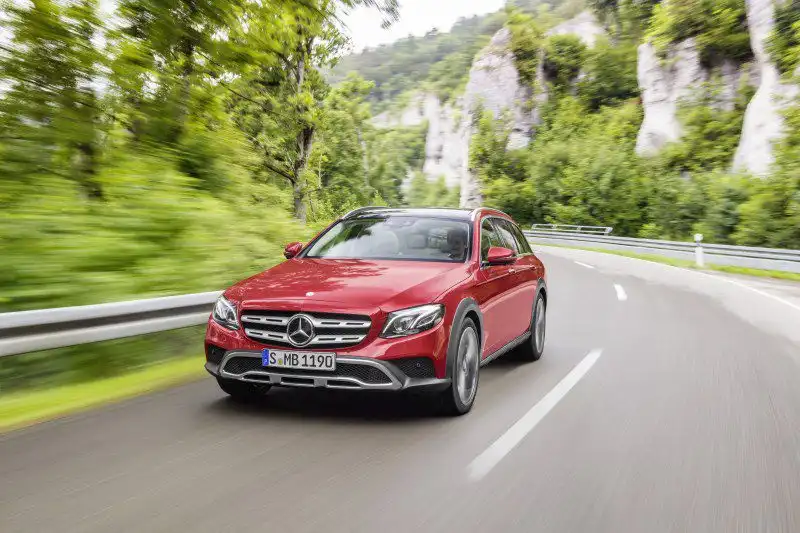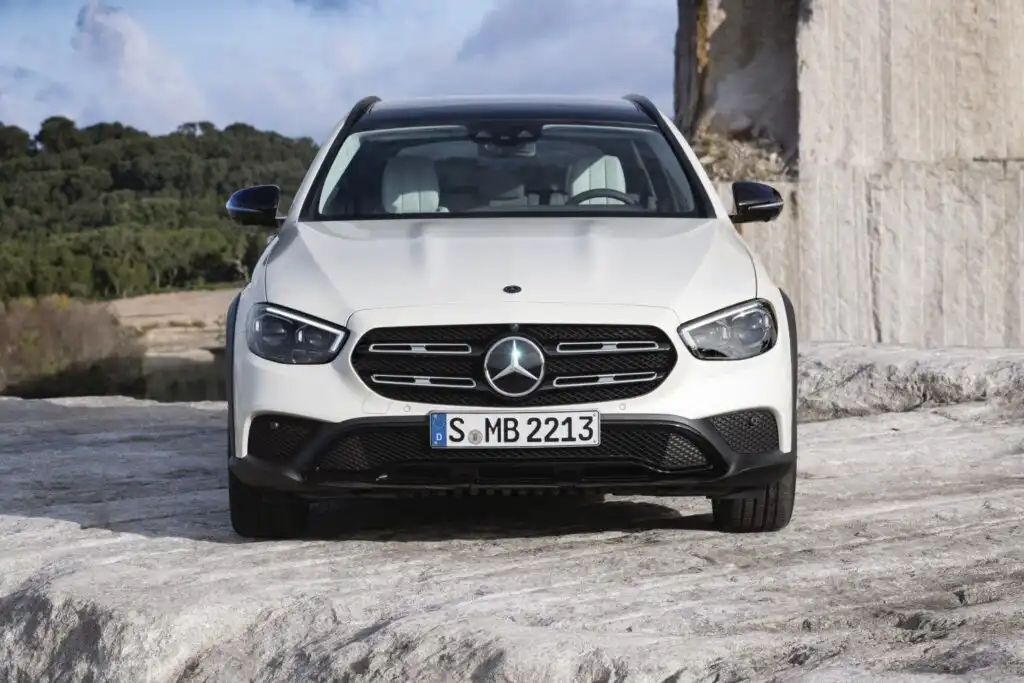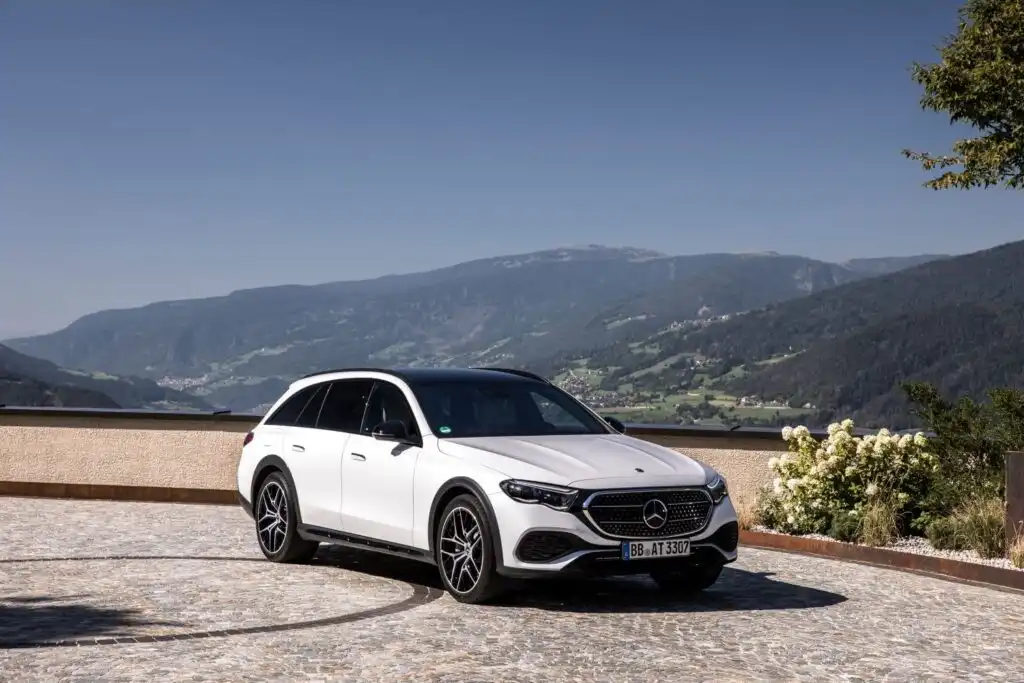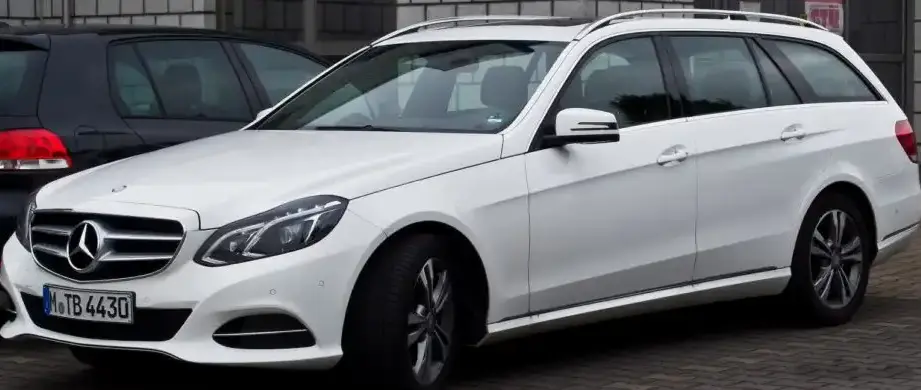
The Mercedes-Benz E 200 CDI T-modell, part of the S212 facelift series produced from April 2013 to July 2014, represented a compelling blend of practicality, efficiency, and luxury within the mid-size executive wagon segment. Positioned as a diesel-powered variant of the popular E-Class estate, the E 200 CDI offered a balance between running costs and respectable performance, appealing to buyers prioritizing fuel economy and long-distance comfort. This model sat within the broader S212 range, offering a more economical alternative to the higher-powered E 250 CDI and petrol-fueled E 200/250 variants. It was a key offering in European markets where diesel estates were highly favored.
| Brand | Mercedes-Benz |
| Model | E-Class |
| Generation | E-Class T-modell (S212, facelift 2013) |
| Type | E 200 CDI (136 Hp) 7G-TRONIC PLUS |
| Start of production | April, 2013 |
| End of production | July, 2014 |
| Powertrain Architecture | Internal Combustion engine |
| Body type | Station wagon (estate) |
| Seats | 5 |
| Doors | 5 |
| Fuel consumption (urban) | 6.4-6.5 l/100 km (36.8 – 36.2 US mpg) |
| Fuel consumption (extra urban) | 4.6-4.8 l/100 km (51.1 – 49 US mpg) |
| Fuel consumption (combined) | 5.3-5.4 l/100 km (44.4 – 43.6 US mpg) |
| CO2 emissions | 137-141 g/km |
| Fuel Type | Diesel |
| Acceleration 0 – 100 km/h | 10.1 sec |
| Acceleration 0 – 62 mph | 10.1 sec |
| Acceleration 0 – 60 mph | 9.6 sec |
| Maximum speed | 203 km/h (126.14 mph) |
| Emission standard | Euro 5 |
| Weight-to-power ratio | 13 kg/Hp, 76.8 Hp/tonne |
| Weight-to-torque ratio | 4.9 kg/Nm, 203.4 Nm/tonne |
| Power | 136 Hp @ 2800-4600 rpm |
| Torque | 360 Nm @ 1600-2600 rpm (265.52 lb.-ft. @ 1600-2600 rpm) |
| Engine layout | Front, Longitudinal |
| Engine Model/Code | OM 651.925 |
| Engine displacement | 2143 cm3 (130.77 cu. in.) |
| Number of cylinders | 4 |
| Engine configuration | Inline |
| Cylinder Bore | 83 mm (3.27 in.) |
| Piston Stroke | 99 mm (3.9 in.) |
| Compression ratio | 16.2:1 |
| Number of valves per cylinder | 4 |
| Fuel injection system | Diesel Commonrail |
| Engine aspiration | Turbocharger, Intercooler |
| Valvetrain | DOHC |
| Engine oil capacity | 6.5 l (6.87 US qt | 5.72 UK qt) |
| Coolant capacity | 10 l (10.57 US qt | 8.8 UK qt) |
| Kerb Weight | 1770 kg (3902.18 lbs.) |
| Max. weight | 2440 kg (5379.28 lbs.) |
| Max load | 670 kg (1477.1 lbs.) |
| Trunk (boot) space – minimum | 695 l (24.54 cu. ft.) |
| Trunk (boot) space – maximum | 1950 l (68.86 cu. ft.) |
| Fuel tank capacity | 59 l (15.59 US gal | 12.98 UK gal) |
| Max. roof load | 100 kg (220.46 lbs.) |
| Permitted trailer load with brakes (12%) | 1900 kg (4188.78 lbs.) |
| Permitted trailer load without brakes | 750 kg (1653.47 lbs.) |
| Permitted towbar download | 84 kg (185.19 lbs.) |
| Length | 4905 mm (193.11 in.) |
| Width | 1854 mm (72.99 in.) |
| Width including mirrors | 2071 mm (81.54 in.) |
| Height | 1507 mm (59.33 in.) |
| Wheelbase | 2874 mm (113.15 in.) |
| Front track | 1583 mm (62.32 in.) |
| Rear track | 1604 mm (63.15 in.) |
| Front overhang | 849 mm (33.43 in.) |
| Rear overhang | 1182 mm (46.54 in.) |
| Drag coefficient (Cd) | 0.29 |
| Minimum turning circle | 11.28 m (37.01 ft.) |
| Drivetrain | Rear wheel drive |
| Number of gears | 7 |
| Gearbox type | Automatic transmission G-TRONIC PLUS |
Powertrain & Engine Architecture
The E 200 CDI T-modell was powered by the OM 651.925, a 2.1-liter inline-four cylinder diesel engine. This engine was a mainstay of the Mercedes-Benz lineup, known for its durability and efficiency. It featured a common rail direct injection system, delivering fuel at extremely high pressure for optimized combustion. A turbocharger with an intercooler further enhanced performance, boosting power and torque. The engine utilized a double overhead camshaft (DOHC) valvetrain with four valves per cylinder, contributing to its relatively high specific output. The 7G-TRONIC PLUS automatic transmission, a seven-speed unit, was standard. This transmission was lauded for its smooth shifts and ability to keep the engine in its optimal power band. The transmission’s gear ratios were tuned for both fuel efficiency and comfortable cruising, prioritizing relaxed highway driving over outright acceleration.
Driving Characteristics
The E 200 CDI T-modell, with its 136 horsepower and 360 Nm (265 lb-ft) of torque, offered a composed and refined driving experience. While not particularly sporty, it provided sufficient power for everyday driving and long-distance journeys, even when fully loaded. Acceleration from 0-60 mph took around 9.6 seconds, and top speed was limited to 203 km/h (126 mph). Compared to the more powerful E 250 CDI, the E 200 CDI felt noticeably less urgent, particularly during overtaking maneuvers. However, the 7G-TRONIC PLUS transmission helped to mitigate this, providing quick downshifts when needed. The automatic transmission’s programming favored economy, resulting in higher gear selections at lower speeds. The focus was on minimizing fuel consumption rather than maximizing performance.
Equipment & Trim Levels
The E 200 CDI T-modell typically came well-equipped, reflecting its position as a premium estate car. Standard features included automatic climate control, a multi-function steering wheel, and an audio system with Bluetooth connectivity. Upholstery was generally a high-quality cloth, with leather options available as an upgrade. Optional extras included a panoramic sunroof, navigation system, premium sound system, and various driver assistance features such as parking assist and lane keeping assist. Trim levels varied depending on the market, but generally offered packages that bundled together popular options. The interior design was typical of Mercedes-Benz, emphasizing luxury and comfort with high-quality materials and a well-laid-out dashboard.
Chassis & Braking
The S212 E-Class estate featured a sophisticated chassis design. The front suspension utilized a multi-link independent setup with coil springs, while the rear suspension also employed a multi-link independent design. Many models were equipped with optional air suspension on the rear axle, providing a smoother ride and the ability to adjust ride height. Braking duties were handled by ventilated discs at the front and solid discs at the rear. Anti-lock braking system (ABS) and electronic stability control (ESP) were standard safety features. The suspension tuning prioritized comfort and stability, making the E 200 CDI T-modell a pleasant vehicle to drive on both smooth highways and winding roads.
Market Reception & Comparison
The E 200 CDI T-modell was generally well-received by automotive critics. It was praised for its fuel efficiency, comfortable ride, and spacious interior. However, some reviewers noted that the engine lacked the punch of its more powerful siblings. Compared to the E 250 CDI, the E 200 CDI offered lower running costs but at the expense of performance. Against competitors such as the Audi A6 Avant and BMW 5 Series Touring, the E 200 CDI held its own in terms of refinement and practicality, although some rivals offered a more engaging driving experience. Fuel economy was a key selling point, with the E 200 CDI achieving combined figures of around 5.3-5.4 l/100 km (44.4-43.6 US mpg).
Legacy
The OM 651 engine, found in the E 200 CDI, has proven to be remarkably durable and reliable. Properly maintained examples continue to provide dependable service today. The 7G-TRONIC PLUS transmission is also known for its longevity. In the used car market, the E 200 CDI T-modell represents a good value proposition for buyers seeking a practical, comfortable, and fuel-efficient estate car. While not the most exciting vehicle to drive, it offers a compelling combination of qualities that have ensured its continued popularity. Common issues are typically related to wear and tear items such as suspension components and brake pads, rather than major mechanical failures. The availability of spare parts remains good, making maintenance relatively straightforward.