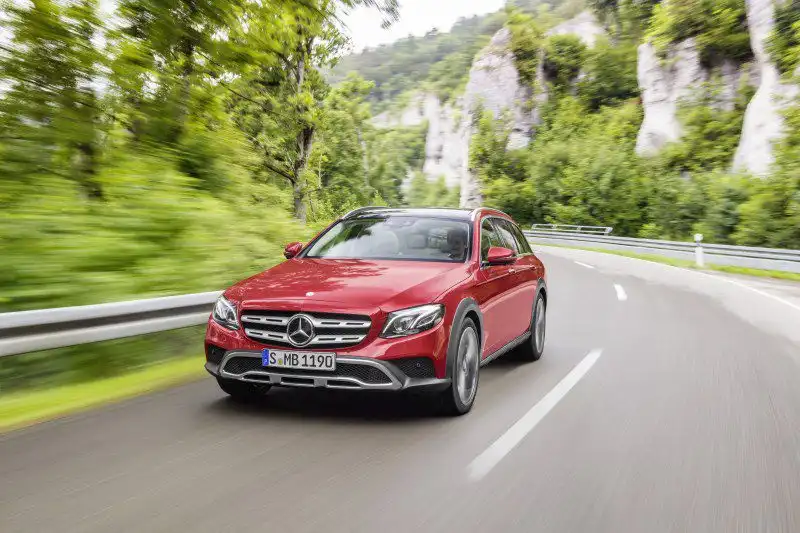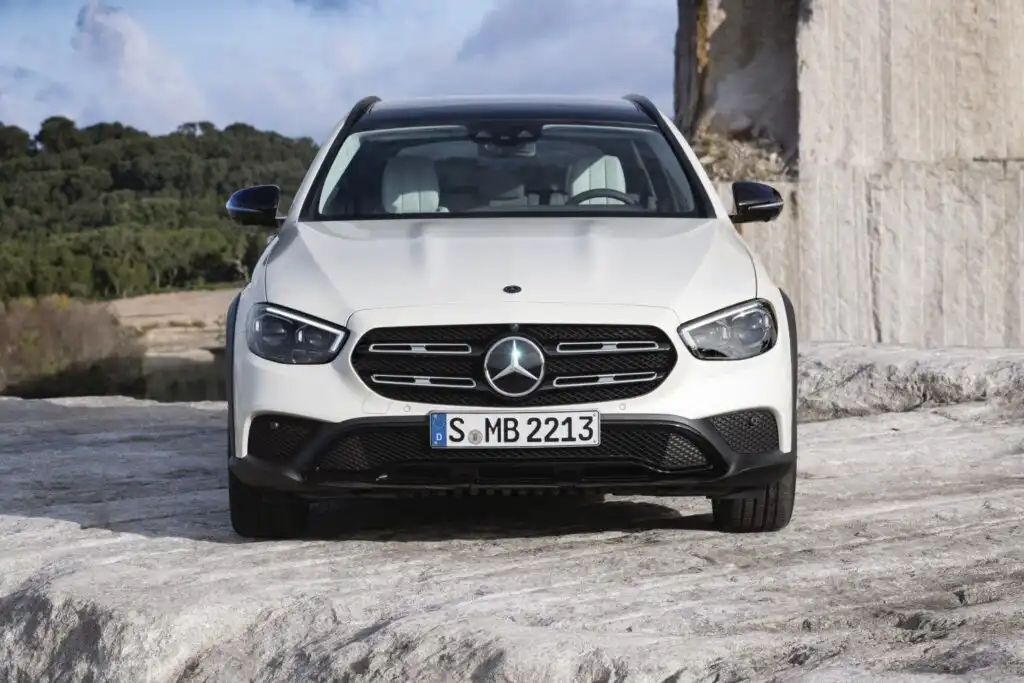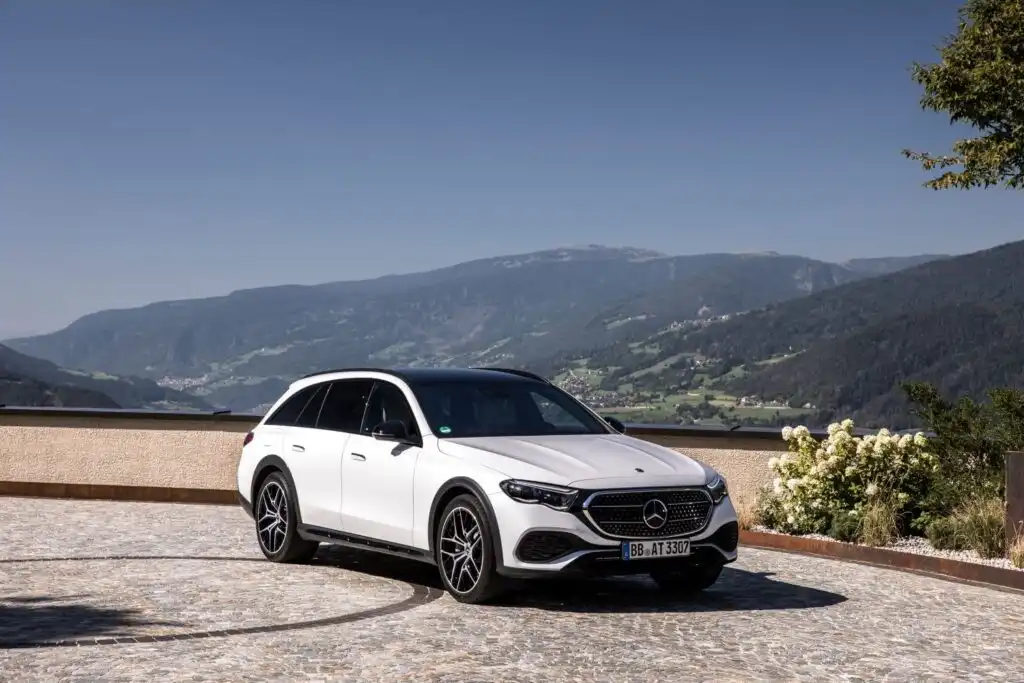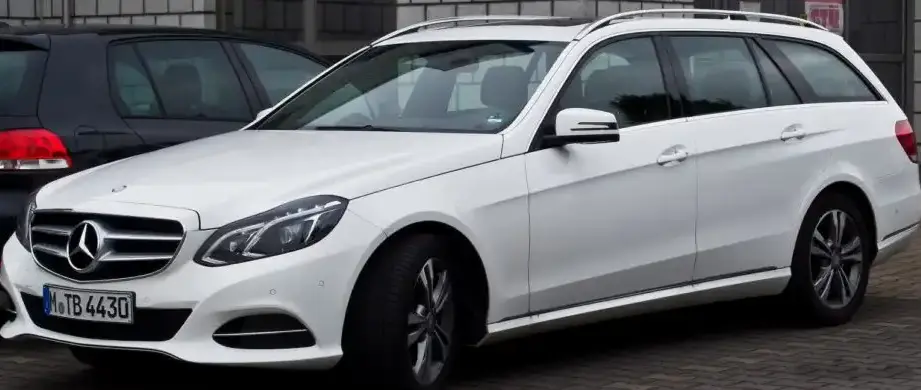
The Mercedes-Benz E 300 BlueTEC HYBRID T-modell (S212, facelift) represents a compelling blend of diesel efficiency, hybrid technology, and the practicality of a station wagon. Produced from April 2013 to April 2016, this variant occupied a mid-to-upper position within the S212 E-Class range, appealing to buyers seeking reduced running costs without sacrificing the luxury and refinement expected from the Mercedes-Benz brand. It was positioned as a more economical alternative to the gasoline-powered E 350, while offering a more sophisticated and powerful option than the base E 250 diesel. The “T-modell” designation signifies the estate (wagon) body style, popular in European markets for its versatility.
Technical Specifications
| Brand | Mercedes-Benz |
| Model | E-class |
| Generation | E-class T-modell (S212, facelift 2013) |
| Type (Engine) | E 300 BlueTEC (204 Hp) HYBRID 7G-TRONIC PLUS |
| Start of production | April, 2013 |
| End of production | April, 2016 |
| Powertrain Architecture | FHEV (Full Hybrid Electric Vehicle) |
| Body type | Station wagon (estate) |
| Seats | 5 |
| Doors | 5 |
| Fuel consumption (economy) – urban (NEDC) | 4.1-4.5 l/100 km (57.4 – 52.3 US mpg, 68.9 – 62.8 UK mpg, 24.4 – 22.2 km/l) |
| Fuel consumption (economy) – extra urban (NEDC) | 4.1-4.6 l/100 km (57.4 – 51.1 US mpg, 68.9 – 61.4 UK mpg, 24.4 – 21.7 km/l) |
| Fuel consumption (economy) – combined (NEDC) | 4.1-4.5 l/100 km (57.4 – 52.3 US mpg, 68.9 – 62.8 UK mpg, 24.4 – 22.2 km/l) |
| CO2 emissions (NEDC) | 109-119 g/km |
| Fuel Type | Diesel |
| Acceleration 0 – 100 km/h | 7.8 sec |
| Acceleration 0 – 62 mph | 7.8 sec |
| Acceleration 0 – 60 mph | 7.4 sec |
| Maximum speed | 232 km/h (144.16 mph) |
| Emission standard | Euro 5 |
| Weight-to-power ratio | 9.2 kg/Hp, 108.5 Hp/tonne |
| Weight-to-torque ratio | 3.8 kg/Nm, 266 Nm/tonne |
| Gross battery capacity | 0.8 kWh |
| Battery technology | Lithium-ion (Li-Ion) |
| Battery location | Under the front hood |
| Electric motor power | 27 Hp @ 1000 rpm |
| Electric motor Torque | 250 Nm (184.39 lb.-ft.) |
| Electric motor location | Between the combustion engine and the transmission |
| Power | 204 Hp @ 4200 rpm |
| Torque | 500 Nm @ 1600-1800 rpm (368.78 lb.-ft. @ 1600-1800 rpm) |
| Engine layout | Front, Longitudinal |
| Engine Model/Code | OM 651.924 |
| Engine displacement | 2143 cm3 (130.77 cu. in.) |
| Number of cylinders | 4 |
| Engine configuration | Inline |
| Cylinder Bore | 83 mm (3.27 in.) |
| Piston Stroke | 99 mm (3.9 in.) |
| Compression ratio | 16.2:1 |
| Number of valves per cylinder | 4 |
| Fuel injection system | Diesel Commonrail |
| Engine aspiration | BiTurbo, Intercooler |
| Valvetrain | DOHC |
| Engine oil capacity | 6.5 l (6.87 US qt | 5.72 UK qt) |
| Coolant | 10 l (10.57 US qt | 8.8 UK qt) |
| Kerb Weight | 1880 kg (4144.69 lbs.) |
| Max. weight | 2550 kg (5621.79 lbs.) |
| Max load | 670 kg (1477.1 lbs.) |
| Trunk (boot) space – minimum | 650 l (22.95 cu. ft.) |
| Trunk (boot) space – maximum | 1905 l (67.27 cu. ft.) |
| Fuel tank capacity | 59 l (15.59 US gal | 12.98 UK gal) |
| Max. roof load | 100 kg (220.46 lbs.) |
| Permitted trailer load with brakes (12%) | 300 kg (661.39 lbs.) |
| Permitted trailer load without brakes | 300 kg (661.39 lbs.) |
| Length | 4905 mm (193.11 in.) |
| Width | 1854 mm (72.99 in.) |
| Width including mirrors | 2071 mm (81.54 in.) |
| Height | 1507 mm (59.33 in.) |
| Wheelbase | 2874 mm (113.15 in.) |
| Front track | 1583 mm (62.32 in.) |
| Rear (Back) track | 1604 mm (63.15 in.) |
| Front overhang | 849 mm (33.43 in.) |
| Rear overhang | 1182 mm (46.54 in.) |
| Drag coefficient (Cd) | 0.29 |
| Minimum turning circle (turning diameter) | 11.28 m (37.01 ft.) |
| Drivetrain Architecture | The Internal combustion engine (ICE) and electric motor drive the rear wheels of the car with the ability to work in full electric or mixed mode. |
| Drive wheel | Rear wheel drive |
| Number of gears and type of gearbox | 7 gears, automatic transmission G-TRONIC PLUS |
| Front suspension | Coil spring, Independent multi-link suspension, Transverse stabilizer, Air Suspension – Optional |
| Rear suspension | Independent multi-link suspension, Air suspension, Transverse stabilizer |
| Front brakes | Ventilated discs |
| Rear brakes | Ventilated discs |
| Assisting systems | ABS (Anti-lock braking system) |
| Steering type | Steering rack and pinion |
| Power steering | Electric Steering |
| Tires size | 225/55 R16 |
| Wheel rims size | 7.5J x 16 |
Powertrain & Engine Architecture
At the heart of the E 300 BlueTEC HYBRID lies the OM 651.924 2.1-liter inline-four cylinder diesel engine. This engine is a highly refined unit, featuring common-rail direct injection and a sophisticated bi-turbocharger system. The two-stage turbocharging – a smaller turbo for quick response and a larger turbo for peak power – contributes to the engine’s strong torque output of 500 Nm (368.78 lb.-ft.) available from 1600-1800 rpm. The engine also incorporates a particulate filter to reduce emissions. The hybrid system adds a 27 hp electric motor, integrated between the engine and the 7G-TRONIC PLUS seven-speed automatic transmission. This allows for electric-only driving at low speeds and provides a boost during acceleration. The lithium-ion battery, with a gross capacity of 0.8 kWh, is located under the front hood. The 7G-TRONIC PLUS transmission is known for its smooth and efficient gear changes, further enhancing the driving experience.
Driving Characteristics
The E 300 BlueTEC HYBRID offers a refined and comfortable driving experience. The combination of the diesel engine and electric motor delivers strong acceleration, with a 0-60 mph time of around 7.4 seconds. The electric motor fills in the gaps in torque delivery, resulting in a smooth and linear power delivery. The 7G-TRONIC PLUS transmission is well-matched to the engine, providing seamless gear changes. While not as sporty as the E 350, the hybrid offers a more relaxed and efficient driving style. The hybrid system allows for short distances of electric-only driving, reducing fuel consumption and emissions in urban environments. Compared to the standard E 300 diesel, the hybrid version offers improved fuel economy and reduced emissions, albeit with a slightly higher initial cost.
Equipment & Trim Levels
The E 300 BlueTEC HYBRID T-modell typically came well-equipped, reflecting its position in the E-Class lineup. Standard features included automatic climate control, a high-quality audio system, leather upholstery, and a suite of safety features such as ABS, ESP, and multiple airbags. Optional extras included features like a panoramic sunroof, advanced navigation system, premium sound system, and various driver assistance systems like lane keeping assist and adaptive cruise control. Interior trim options varied, with choices in wood veneers and aluminum accents. The T-modell benefited from the spaciousness expected of a station wagon, offering ample cargo capacity with the rear seats up or folded down.
Chassis & Braking
The E 300 BlueTEC HYBRID utilizes a sophisticated suspension system designed for comfort and handling. The front suspension features a multi-link setup with coil springs, while the rear suspension employs an independent multi-link design. Air suspension was available as an option, providing an even more comfortable ride and the ability to adjust the ride height. The braking system consists of ventilated discs on all four wheels, providing ample stopping power. ABS (Anti-lock Braking System) and ESP (Electronic Stability Program) are standard features, enhancing safety and control.
Market Reception & Comparison
The E 300 BlueTEC HYBRID was generally well-received by automotive critics. It was praised for its fuel efficiency, refined driving experience, and spacious interior. However, some critics noted that the hybrid system added complexity and weight, and the performance was not as exhilarating as some of the more powerful E-Class models. Compared to the E 250 diesel, the hybrid offered improved fuel economy and a more refined driving experience. Compared to the E 350 gasoline model, the hybrid provided significantly better fuel economy, but at the expense of some performance. The hybrid’s higher price point was also a consideration for some buyers.
Legacy
The Mercedes-Benz E 300 BlueTEC HYBRID T-modell represents an important step in Mercedes-Benz’s development of hybrid technology. The OM 651 diesel engine proved to be a reliable and durable unit, and the 7G-TRONIC PLUS transmission is known for its longevity. While the hybrid system adds some complexity, it has generally proven to be reliable as well. On the used car market, these models are sought after by buyers looking for a fuel-efficient and luxurious station wagon. Maintenance costs can be slightly higher than for the standard diesel models due to the hybrid components, but the overall reliability is generally good. The E 300 BlueTEC HYBRID remains a compelling option for those seeking a blend of practicality, efficiency, and luxury.