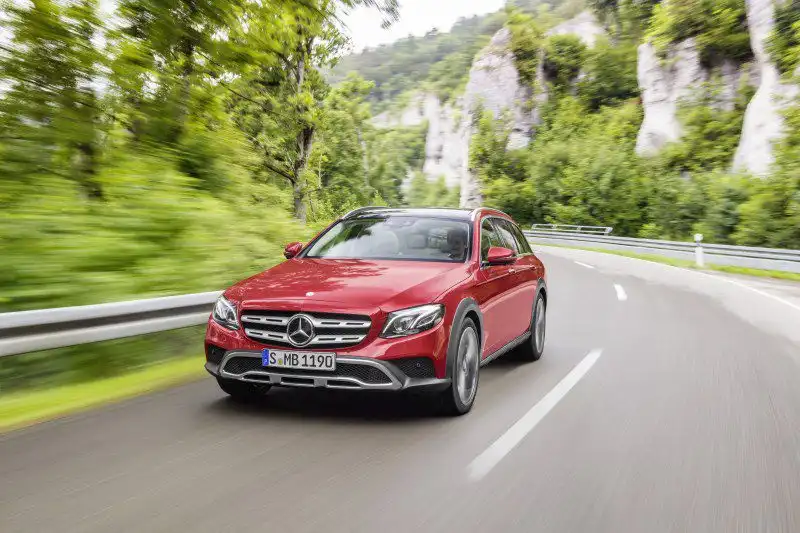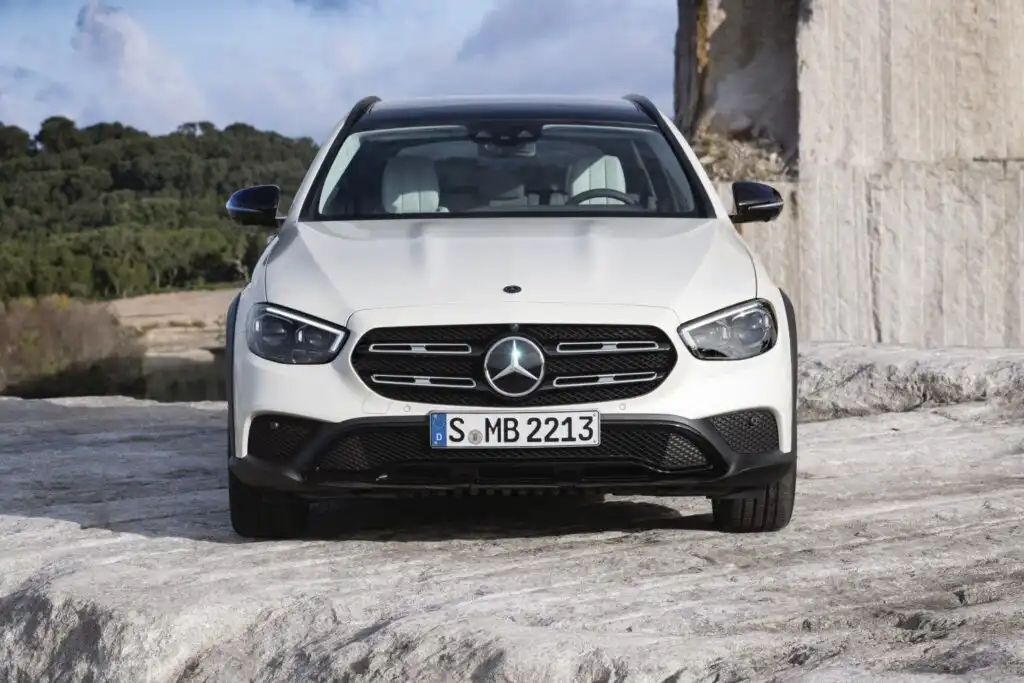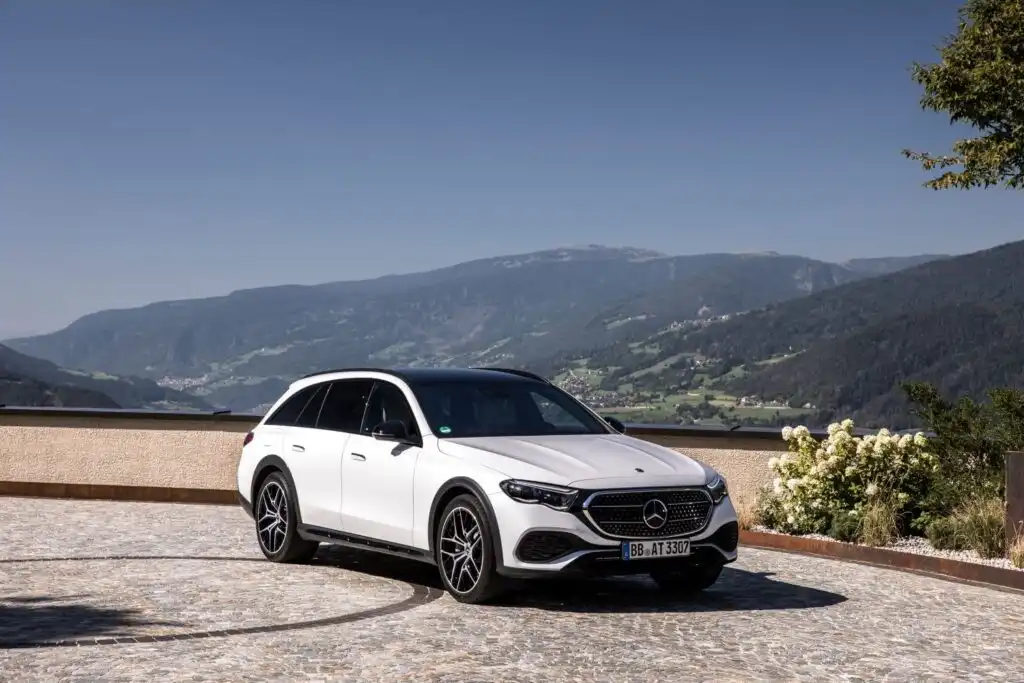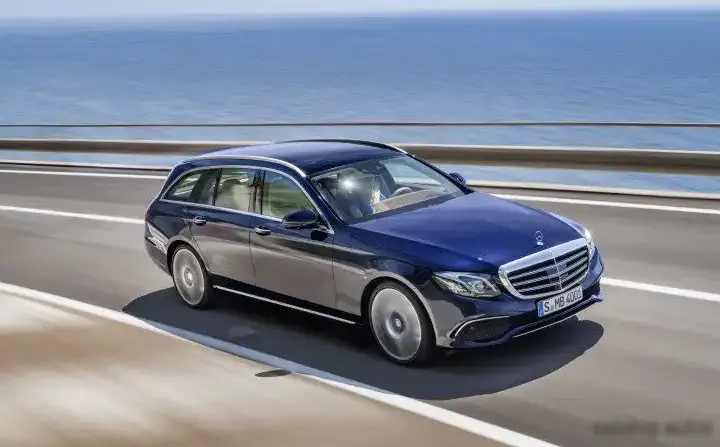
The Mercedes-Benz E-Class T-modell (S213) E 200 9G-TRONIC, produced from February 2016 to 2019, represents a compelling entry point into the premium mid-size wagon segment. Positioned as a core model within the S213 series – the fifth generation of the E-Class estate – the E 200 offered a balance of efficiency, comfort, and practicality for buyers prioritizing a refined driving experience over outright performance. It served as a more accessible alternative to the higher-performance E 300 and E 43 AMG variants, and a more sophisticated option than the base diesel models. This variant was primarily marketed in Europe and other regions where wagons maintain significant popularity, offering a luxurious and versatile vehicle for families and individuals alike.
Technical Specifications
| Brand | Mercedes-Benz |
| Model | E-class |
| Generation | E-class T-modell (S213) |
| Type (Engine) | E 200 (184 Hp) 9G-TRONIC |
| Start of production | February, 2016 |
| End of production | 2019 |
| Powertrain Architecture | Internal Combustion engine |
| Body type | Station wagon (estate) |
| Seats | 5 |
| Doors | 5 |
| Fuel consumption (urban) | 8.2-7.8 l/100 km (28.7 – 30.2 US mpg, 34.4 – 36.2 UK mpg, 12.2 – 12.8 km/l) |
| Fuel consumption (extra urban) | 5.6-5.2 l/100 km (42 – 45.2 US mpg, 50.4 – 54.3 UK mpg, 17.9 – 19.2 km/l) |
| Fuel consumption (combined) | 6.6-6.2 l/100 km (35.6 – 37.9 US mpg, 42.8 – 45.6 UK mpg, 15.2 – 16.1 km/l) |
| CO2 emissions | 149-138 g/km |
| Fuel Type | Petrol (Gasoline) |
| Acceleration 0 – 100 km/h | 8.1 sec |
| Acceleration 0 – 62 mph | 8.1 sec |
| Acceleration 0 – 60 mph | 7.7 sec |
| Maximum speed | 231 km/h (143.54 mph) |
| Emission standard | Euro 6 |
| Weight-to-power ratio | 8.9 kg/Hp, 112.9 Hp/tonne |
| Weight-to-torque ratio | 5.4 kg/Nm, 184 Nm/tonne |
| Power | 184 Hp @ 5500 rpm |
| Power per litre | 92.4 Hp/l |
| Torque | 300 Nm @ 1200-4000 rpm (221.27 lb.-ft. @ 1200-4000 rpm) |
| Engine layout | Front, Longitudinal |
| Engine Model/Code | M 274.920 |
| Engine displacement | 1991 cm3 (121.5 cu. in.) |
| Number of cylinders | 4 |
| Engine configuration | Inline |
| Compression ratio | 9.8:1 |
| Fuel injection system | Direct injection |
| Engine aspiration | Turbocharger, Intercooler |
| Engine oil capacity | 7 l (7.4 US qt | 6.16 UK qt) |
| Coolant | 12 l (12.68 US qt | 10.56 UK qt) |
| Kerb Weight | 1630 kg (3593.53 lbs.) |
| Max. weight | 2375 kg (5235.98 lbs.) |
| Max load | 745 kg (1642.44 lbs.) |
| Trunk (boot) space – minimum | 640 l (22.6 cu. ft.) |
| Trunk (boot) space – maximum | 1820 l (64.27 cu. ft.) |
| Fuel tank capacity | 50 l (13.21 US gal | 11 UK gal) |
| Max. roof load | 100 kg (220.46 lbs.) |
| Permitted trailer load with brakes (12%) | 2100 kg (4629.71 lbs.) |
| Permitted trailer load without brakes | 750 kg (1653.47 lbs.) |
| Length | 4933 mm (194.21 in.) |
| Width | 1852 mm (72.91 in.) |
| Width including mirrors | 2065 mm (81.3 in.) |
| Height | 1475 mm (58.07 in.) |
| Wheelbase | 2939 mm (115.71 in.) |
| Front track | 1600 mm (62.99 in.) |
| Rear (Back) track | 1609 mm (63.35 in.) |
| Front overhang | 841 mm (33.11 in.) |
| Rear overhang | 1153 mm (45.39 in.) |
| Drag coefficient (Cd) | 0.28 |
| Minimum turning circle (turning diameter) | 11.6 m (38.06 ft.) |
| Drivetrain Architecture | The Internal combustion engine (ICE) drives the rear wheels of the vehicle. |
| Drive wheel | Rear wheel drive |
| Number of gears and type of gearbox | 9 gears, automatic transmission G-TRONIC |
| Front suspension | Independent multi-link suspension |
| Rear suspension | Independent multi-link suspension |
| Front brakes | Ventilated discs |
| Rear brakes | Ventilated discs |
| Assisting systems | ABS (Anti-lock braking system) |
| Steering type | Steering rack and pinion |
| Power steering | Electric Steering |
| Tires size | 225/55 R17 |
| Wheel rims size | 17 |
Powertrain & Engine Architecture
The E 200 T-modell utilizes the M274.920 2.0-liter inline-four cylinder gasoline engine. This engine is a key component of Mercedes-Benz’s modular engine family, known for its efficiency and refinement. It features direct fuel injection, a single turbocharger with an intercooler, and variable valve timing. The engine produces 184 horsepower at 5,500 rpm and 300 Nm (221 lb-ft) of torque between 1,200 and 4,000 rpm. This broad torque curve, coupled with the 9G-TRONIC automatic transmission, provides smooth and responsive acceleration. The 9G-TRONIC transmission, a nine-speed automatic, is a crucial element of the E 200’s efficiency and driving experience. Its close gear ratios allow the engine to operate within its optimal efficiency range more frequently, contributing to improved fuel economy.
Driving Characteristics
The E 200 9G-TRONIC offers a comfortable and composed driving experience. While not designed for outright speed, the engine provides adequate power for everyday driving and highway cruising. Acceleration from 0 to 60 mph takes approximately 7.7 seconds. The 9G-TRONIC transmission shifts smoothly and efficiently, minimizing noticeable gear changes. Compared to the more powerful E 300, the E 200 feels less urgent in acceleration, but the difference is often negligible in typical driving scenarios. The automatic transmission’s programming prioritizes fuel efficiency, sometimes resulting in slightly hesitant responses during quick overtaking maneuvers. However, utilizing the transmission’s manual shift mode provides more control over gear selection.
Equipment & Trim Levels
The E 200 T-modell came standard with a generous array of features, reflecting Mercedes-Benz’s commitment to luxury and technology. Standard equipment typically included automatic climate control, a high-resolution infotainment system with a central display screen, power-adjustable front seats, and a leather-wrapped steering wheel. Safety features such as ABS, electronic stability control, and multiple airbags were also standard. Optional extras included features like a panoramic sunroof, premium audio systems, advanced driver-assistance systems (such as adaptive cruise control and lane-keeping assist), and upgraded interior trim materials. Interior upholstery options ranged from fabric to leather, with various color choices available.
Chassis & Braking
The S213 E-Class T-modell features a sophisticated chassis design focused on ride comfort and handling balance. Both front and rear suspensions utilize a multi-link independent suspension system, providing a smooth and controlled ride. The E 200 typically came equipped with ventilated disc brakes on all four wheels, providing ample stopping power. ABS (Anti-lock Braking System) and electronic stability control are standard safety features. The suspension tuning is geared towards comfort, prioritizing a smooth ride over sporty handling.
Market Reception & Comparison
The E 200 T-modell was generally well-received by automotive critics, who praised its comfortable ride, refined interior, and fuel efficiency. It was often seen as a sensible choice for buyers who prioritized practicality and comfort over outright performance. Compared to the E 300, the E 200 offered a more affordable entry point into the E-Class range, but at the expense of some performance. Fuel economy was a strong point for the E 200, with combined fuel consumption figures ranging from 6.2 to 6.6 liters per 100 kilometers (35.6 to 37.9 US mpg). Reliability has been generally good, with few widespread issues reported.
Legacy
The Mercedes-Benz E-Class T-modell (S213) E 200 9G-TRONIC remains a popular choice in the used car market. Its combination of luxury, practicality, and fuel efficiency continues to appeal to buyers seeking a premium wagon. The M274 engine, while not without its potential maintenance needs (such as timing chain wear in some cases), has proven to be generally reliable when properly maintained. The 9G-TRONIC transmission is also considered a robust and dependable unit. The E 200 represents a well-rounded and sophisticated option within the S213 E-Class lineup, offering a compelling blend of comfort, efficiency, and practicality.