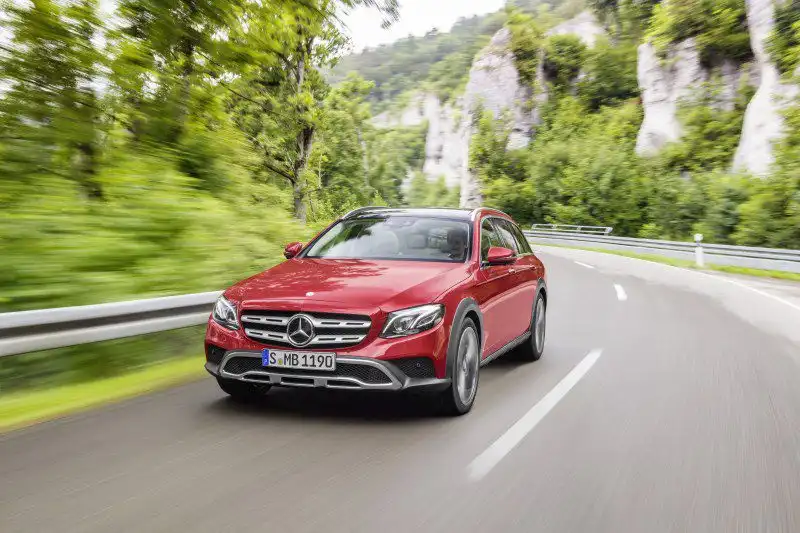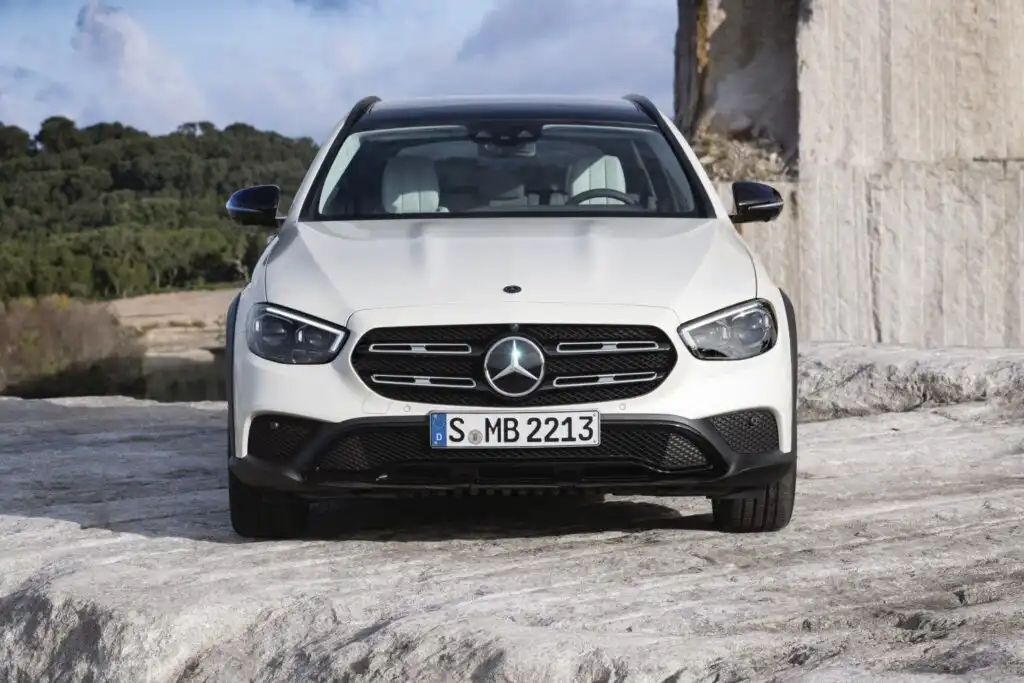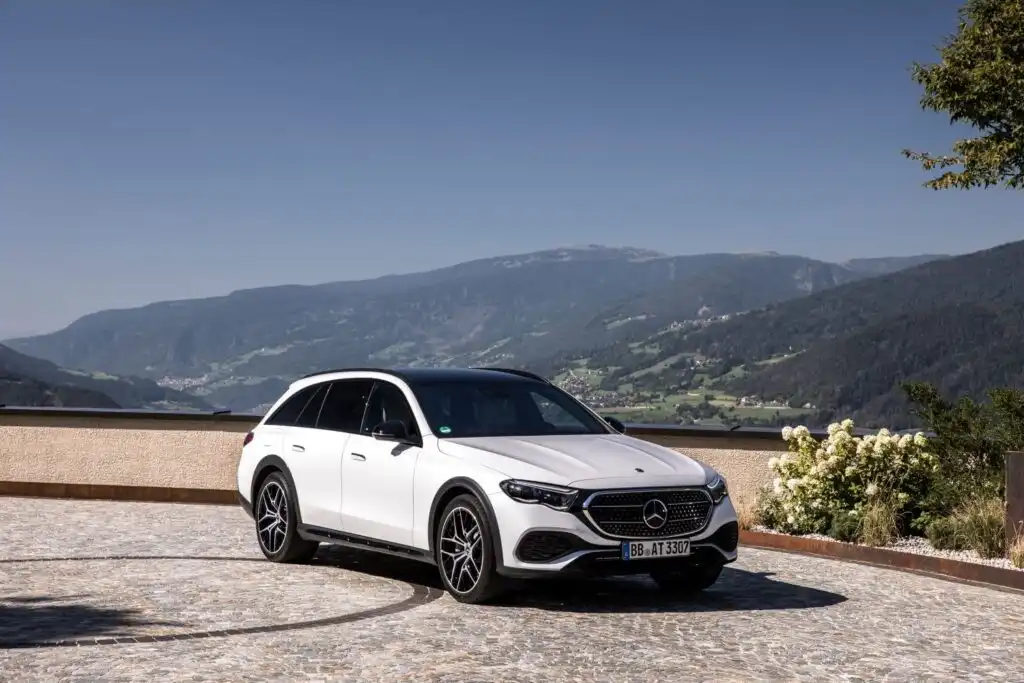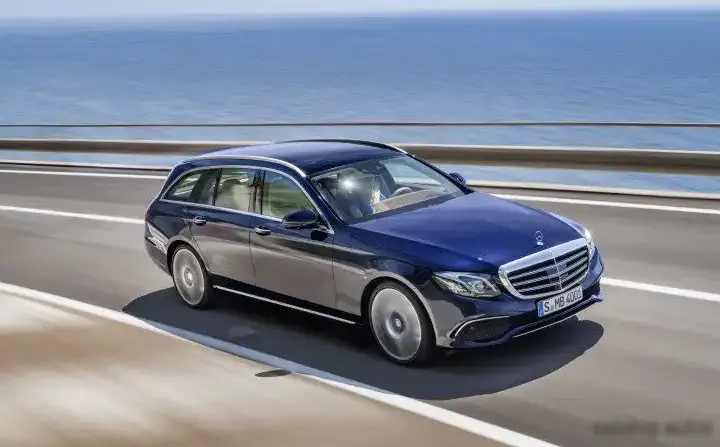
The Mercedes-Benz E 300d T-modell (S213), produced from February 2018 to 2020, represents a compelling blend of practicality, performance, and luxury within the E-Class wagon lineup. Positioned as a mid-range offering, it catered to buyers seeking a refined estate car with strong diesel power and the convenience of an automatic transmission. This variant occupied a space between the more economical E 220d models and the higher-performance E 400d, offering a balance of fuel efficiency and spirited driving. The S213 generation E-Class T-modell, built on the W213 platform, aimed to modernize the traditional Mercedes-Benz estate, incorporating advanced technology and a more contemporary design language.
Technical Specifications
| Brand | Mercedes-Benz |
| Model | E-class |
| Generation | E-class T-modell (S213) |
| Type (Engine) | E 300d (245 Hp) 9G-TRONIC |
| Start of production | February, 2018 |
| End of production | 2020 |
| Powertrain Architecture | Internal Combustion engine |
| Body type | Station wagon (estate) |
| Seats | 5 |
| Doors | 5 |
| Fuel consumption at Low speed (WLTP) | 6.1 l/100 km (38.6 US mpg, 46.3 UK mpg, 16.4 km/l) |
| Fuel consumption at very high speed (WLTP) | 7 l/100 km (33.6 US mpg, 40.4 UK mpg, 14.3 km/l) |
| CO2 emissions (WLTP) | 159-184 g/km |
| Fuel consumption (economy) – urban | 6.0-6.5 l/100 km (39.2 – 36.2 US mpg, 47.1 – 43.5 UK mpg, 16.7 – 15.4 km/l) |
| Fuel consumption (economy) – extra urban | 4.5-4.9 l/100 km (52.3 – 48 US mpg, 62.8 – 57.6 UK mpg, 22.2 – 20.4 km/l) |
| Fuel consumption (economy) – combined | 5.1-5.4 l/100 km (46.1 – 43.6 US mpg, 55.4 – 52.3 UK mpg, 19.6 – 18.5 km/l) |
| CO2 emissions | 134-144 g/km |
| Fuel Type | Diesel |
| Acceleration 0 – 100 km/h | 6.5 sec |
| Acceleration 0 – 62 mph | 6.5 sec |
| Acceleration 0 – 60 mph | 6.2 sec |
| Maximum speed | 250 km/h (155.34 mph) |
| Emission standard | Euro 6d-TEMP-EVAP-ISC |
| Weight-to-power ratio | 7.2 kg/Hp, 138.8 Hp/tonne |
| Weight-to-torque ratio | 3.5 kg/Nm, 283.3 Nm/tonne |
| Power | 245 Hp |
| Power per litre | 125.6 Hp/l |
| Torque | 500 Nm @ 1600-2400 rpm (368.78 lb.-ft. @ 1600-2400 rpm) |
| Engine layout | Front, Longitudinal |
| Engine Model/Code | OM 654.920 |
| Engine displacement | 1950 cm3 (119 cu. in.) |
| Number of cylinders | 4 |
| Engine configuration | Inline |
| Number of valves per cylinder | 4 |
| Fuel injection system | Diesel Commonrail |
| Engine aspiration | Turbocharger, Intercooler |
| Engine oil capacity | 6.3 l (6.66 US qt | 5.54 UK qt) |
| Coolant | 12.5 l (13.21 US qt | 11 UK qt) |
| Kerb Weight | 1765 kg (3891.16 lbs.) |
| Max. weight | 2495 kg (5500.53 lbs.) |
| Max load | 730 kg (1609.37 lbs.) |
| Trunk (boot) space – minimum | 640 l (22.6 cu. ft.) |
| Trunk (boot) space – maximum | 1820 l (64.27 cu. ft.) |
| Fuel tank capacity | 50 l (13.21 US gal | 11 UK gal) |
| Permitted trailer load with brakes (12%) | 2100 kg (4629.71 lbs.) |
| Length | 4933 mm (194.21 in.) |
| Width | 1852 mm (72.91 in.) |
| Height | 1475 mm (58.07 in.) |
| Wheelbase | 2939 mm (115.71 in.) |
| Front track | 1600 mm (62.99 in.) |
| Front overhang | 841 mm (33.11 in.) |
| Rear overhang | 1153 mm (45.39 in.) |
| Ride height (ground clearance) | 112 mm (4.41 in.) |
| Approach angle | 14.8° |
| Departure angle | 16.7° |
| Ramp-over (brakeover) angle | 11.3° |
| Drivetrain Architecture | The Internal combustion engine (ICE) drives the rear wheels of the vehicle. |
| Drive wheel | Rear wheel drive |
| Number of gears and type of gearbox | 9 gears, automatic transmission G-TRONIC |
| Front suspension | Independent multi-link suspension |
| Rear suspension | Independent multi-link suspension |
| Front brakes | Ventilated discs |
| Rear brakes | Ventilated discs |
Powertrain & Engine Architecture
The E 300d T-modell is powered by the OM 654.920, a 2.0-liter inline-four cylinder diesel engine. This engine is a key component of Mercedes-Benz’s modular engine family, known for its lightweight construction and efficiency. The OM 654 utilizes a steel piston block with aluminum cylinder heads, contributing to its reduced weight. It employs a two-stage turbocharging system with a variable geometry turbine (VGT) to optimize boost across the engine’s operating range. Fuel is delivered via a common rail direct injection system operating at extremely high pressures (up to 2,700 bar) for precise fuel atomization and efficient combustion. The engine also features a closed-loop exhaust gas recirculation (EGR) system and a diesel particulate filter (DPF) to meet stringent Euro 6d-TEMP emission standards. The 9G-TRONIC nine-speed automatic transmission is standard, offering smooth and efficient gear changes. This transmission is known for its wide gear ratio spread, allowing for both relaxed cruising at highway speeds and responsive acceleration.
Driving Characteristics
The E 300d T-modell delivers a refined and comfortable driving experience. The 245 horsepower and 500 Nm (368 lb-ft) of torque provide ample power for everyday driving and effortless highway cruising. Acceleration from 0 to 60 mph takes approximately 6.2 seconds. The 9G-TRONIC transmission is well-tuned, providing seamless shifts and contributing to the car’s overall smoothness. Compared to the E 220d, the E 300d offers noticeably more power and a more relaxed feel, particularly when fully loaded or tackling inclines. While not as overtly sporty as the E 400d, the E 300d provides a satisfying balance of performance and efficiency. The rear-wheel drive configuration contributes to balanced handling, although it can be less confident in slippery conditions compared to all-wheel drive variants.
Equipment & Trim Levels
The E 300d T-modell typically came well-equipped as standard. Features included automatic climate control, a high-resolution infotainment system with a central display screen, Mercedes-Benz’s MBUX voice control system, and a suite of safety features such as adaptive cruise control, lane keeping assist, and automatic emergency braking. Interior upholstery was typically Artico leather (a high-quality synthetic leather), with options for genuine leather upgrades. Common optional extras included a panoramic sunroof, premium sound system, heated and ventilated front seats, and a head-up display. Trim levels varied slightly depending on the market, but generally offered packages that bundled together popular options.
Chassis & Braking
The S213 E-Class T-modell utilizes an independent multi-link suspension system at both the front and rear axles, providing a comfortable and controlled ride. The suspension is tuned to prioritize comfort, but still offers good body control in corners. The E 300d typically featured ventilated disc brakes on all four wheels, providing ample stopping power. Anti-lock braking system (ABS), electronic stability control (ESC), and traction control were standard safety features. The steering system is a direct-steer system, offering precise and responsive steering feel.
Market Reception & Comparison
The E 300d T-modell was generally well-received by automotive critics. It was praised for its refined engine, comfortable ride, spacious interior, and practical wagon body style. Compared to the E 220d, the E 300d offered a significant performance upgrade without a substantial penalty in fuel economy. Against competitors such as the Audi A6 Avant and BMW 5 Series Touring, the E 300d was considered a strong contender, offering a compelling combination of luxury, performance, and practicality. Fuel economy figures were competitive for its class, typically achieving around 46 mpg on the combined cycle.
Legacy
The OM 654 engine family has proven to be remarkably reliable, and the E 300d T-modell is generally considered a durable and well-built vehicle. On the used car market, these models hold their value reasonably well, particularly those with lower mileage and a full service history. The 9G-TRONIC transmission has also proven to be reliable, although regular fluid changes are essential for long-term durability. The S213 E-Class T-modell, and the E 300d variant in particular, represents a high point in the evolution of the Mercedes-Benz estate car, offering a sophisticated and practical solution for buyers seeking a premium wagon.