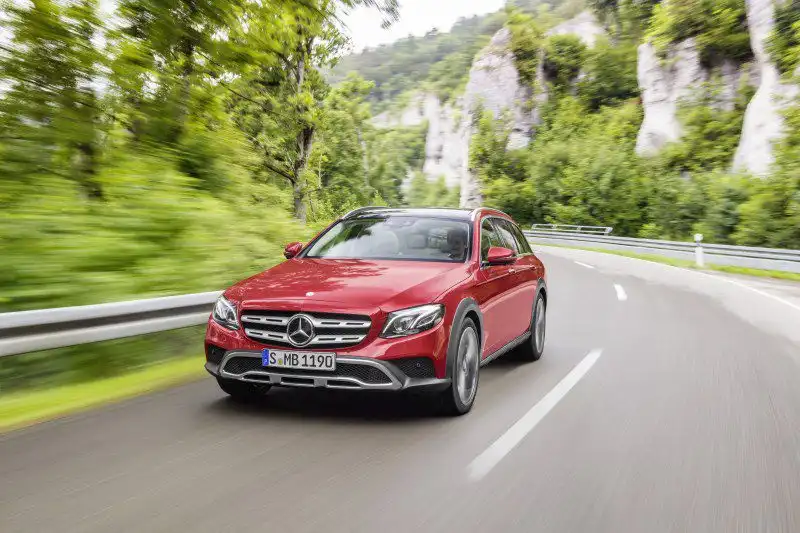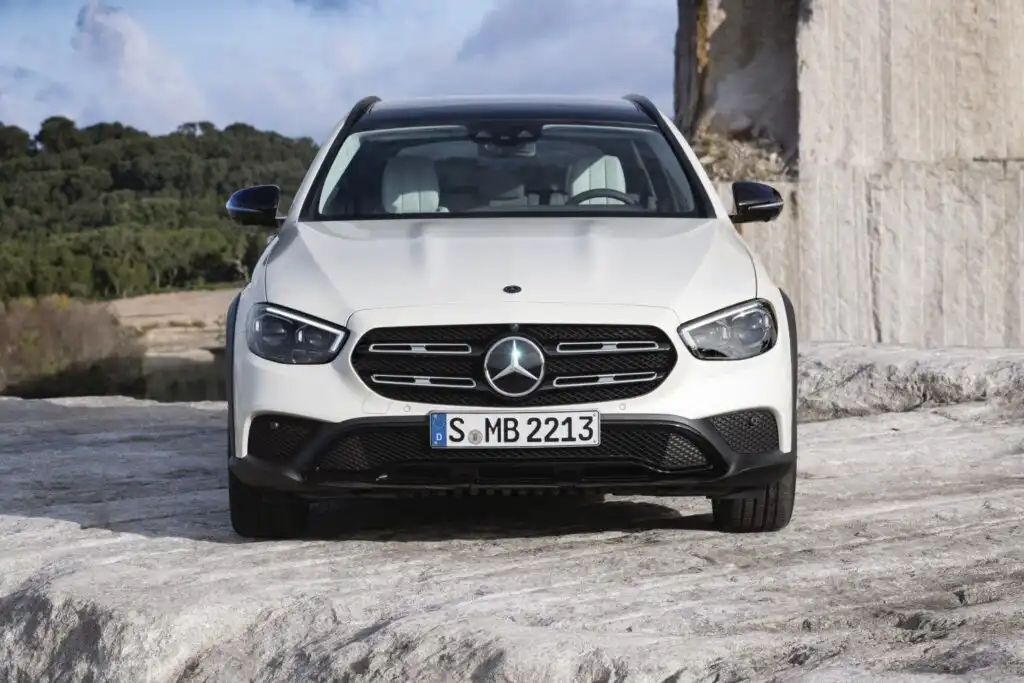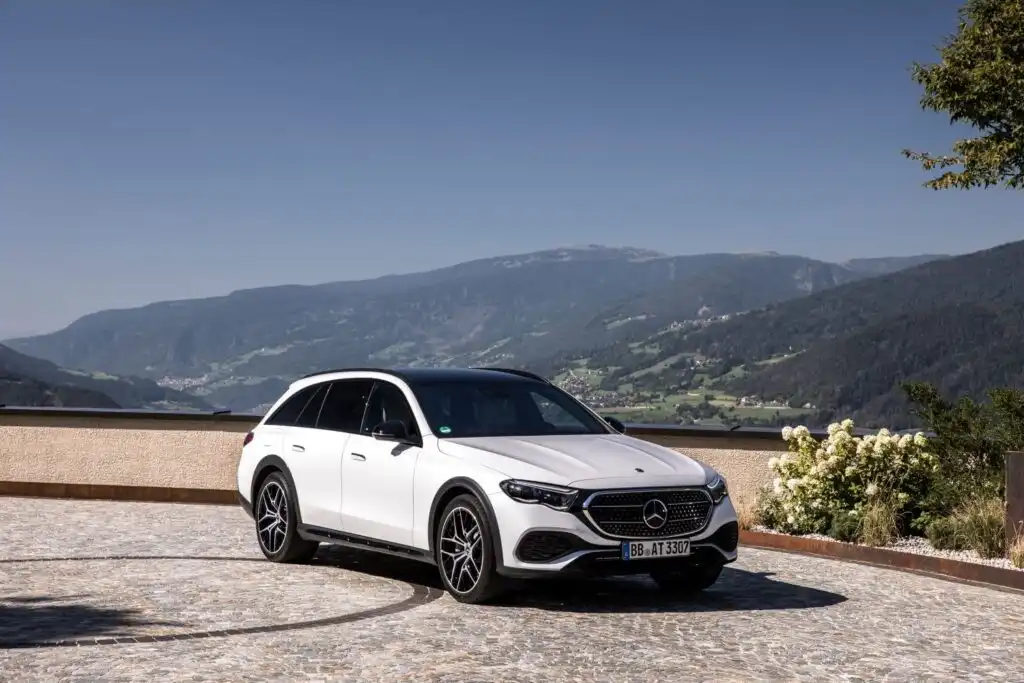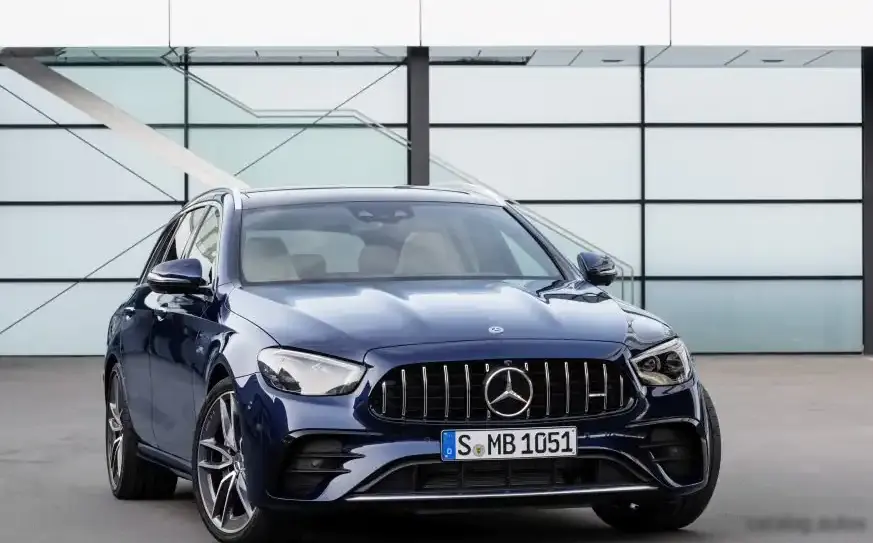
The Mercedes-Benz E-Class T-modell (S213 facelift) E 300 EQ Boost, produced from 2020 to 2023, represents a sophisticated blend of performance, efficiency, and practicality within the E-Class range. This variant, positioned as a mid-to-upper trim level, combines a 2.0-liter turbocharged inline-four engine with a 48-volt mild hybrid system and a 9G-TRONIC automatic transmission. It caters to buyers seeking a refined driving experience with enhanced fuel economy and the versatility of a station wagon (estate) body style. The S213 facelift brought updated styling, improved technology, and refined powertrain options to the fifth generation of the E-Class estate.
Technical Specifications
| Brand | Mercedes-Benz |
| Model | E-Class |
| Generation | E-Class T-modell (S213, facelift 2020) |
| Type | E 300 (258 Hp) EQ Boost 9G-TRONIC |
| Start of production | 2020 |
| End of production | 2023 |
| Powertrain Architecture | MHEV (Mild Hybrid Electric Vehicle) |
| Body type | Station wagon (estate) |
| Seats | 5 |
| Doors | 5 |
| Fuel consumption (urban) | 9.1-9.5 l/100 km (25.8 – 24.8 US mpg) |
| Fuel consumption (extra urban) | 5.6-6.1 l/100 km (42 – 38.6 US mpg) |
| Fuel consumption (combined) | 6.9-7.3 l/100 km (34.1 – 32.2 US mpg) |
| CO2 emissions | 158-168 g/km |
| Fuel Type | Petrol (Gasoline) |
| Acceleration 0 – 100 km/h | 6.3 sec |
| Acceleration 0 – 62 mph | 6.3 sec |
| Acceleration 0 – 60 mph | 6 sec (Calculated) |
| Maximum speed | 250 km/h (155.34 mph), Electronically limited |
| Emission standard | EURO 6d-ISC-FCM |
| Weight-to-power ratio | 6.7 kg/Hp, 148.3 Hp/tonne |
| Weight-to-torque ratio | 4.7 kg/Nm, 212.6 Nm/tonne |
| Battery voltage | 48 V |
| Electric motor power | 14 Hp |
| Electric motor location | Front, Longitudinal |
| Power | 258 Hp |
| Power per litre | 129.6 Hp/l |
| Torque | 370 Nm @ 1650-4000 rpm (272.9 lb.-ft. @ 1650-4000 rpm) |
| Engine layout | Front, Longitudinal |
| Engine Model/Code | M 264 |
| Engine displacement | 1991 cm3 (121.5 cu. in.) |
| Number of cylinders | 4 |
| Engine configuration | Inline |
| Number of valves per cylinder | 4 |
| Fuel injection system | Direct injection |
| Engine aspiration | Twin-scroll turbo, Intercooler |
| Valvetrain | DOHC |
| Engine oil capacity | 6.6 l (6.97 US qt | 5.81 UK qt) |
| Kerb Weight | 1740 kg (3836.04 lbs.) |
| Max. weight | 2495 kg (5500.53 lbs.) |
| Max load | 755 kg (1664.49 lbs.) |
| Trunk (boot) space – minimum | 640 l (22.6 cu. ft.) |
| Trunk (boot) space – maximum | 1820 l (64.27 cu. ft.) |
| Fuel tank capacity | 66 l (17.44 US gal | 14.52 UK gal) |
| Permitted trailer load with brakes (12%) | 2100 kg (4629.71 lbs.) |
| Permitted trailer load without brakes | 750 kg (1653.47 lbs.) |
| Length | 4945 mm (194.69 in.) |
| Width | 1852 mm (72.91 in.) |
| Width including mirrors | 2065 mm (81.3 in.) |
| Height | 1460 mm (57.48 in.) |
| Wheelbase | 2939 mm (115.71 in.) |
| Front track | 1604 mm (63.15 in.) |
| Rear track | 1613 mm (63.5 in.) |
| Front overhang | 853 mm (33.58 in.) |
| Rear overhang | 1153 mm (45.39 in.) |
| Drivetrain Architecture | Rear wheel drive. MHEV. ICE and electric motor drive rear wheels. |
| Number of gears and type of gearbox | 9 gears, automatic transmission G-TRONIC |
| Front brakes | Ventilated discs |
| Rear brakes | Ventilated discs |
Powertrain & Engine Architecture
The heart of the E 300 EQ Boost is the M 264 2.0-liter inline-four engine. This engine utilizes direct fuel injection and a twin-scroll turbocharger to deliver a responsive and efficient driving experience. The M 264 engine is known for its advanced features, including CAMTRONIC variable valve timing and an aluminum engine block. The “EQ Boost” component refers to the integrated 48-volt mild hybrid system. This system incorporates a belt-driven starter-generator (BSG) that provides several functions: it enables a smoother and quieter start/stop operation, allows for regenerative braking to recoup energy, and provides a temporary power boost of up to 14 horsepower during acceleration. The 9G-TRONIC nine-speed automatic transmission is standard, offering smooth and efficient gear changes. This transmission is designed to optimize fuel economy and provide a comfortable driving experience.
Driving Characteristics
The E 300 EQ Boost offers a refined and comfortable driving experience. The 258 horsepower and 370 Nm (272.9 lb-ft) of torque provide ample power for everyday driving and confident overtaking maneuvers. The mild hybrid system contributes to a seamless power delivery, with the electric boost filling in any turbo lag. While not as overtly sporty as the E 450 or AMG variants, the E 300 offers a balanced blend of performance and efficiency. The 9G-TRONIC transmission is well-tuned, providing smooth shifts and keeping the engine in its optimal power band. The rear-wheel drive configuration contributes to a balanced chassis and predictable handling.
Equipment & Trim Levels
The E 300 EQ Boost typically came well-equipped as standard. Common features included Mercedes-Benz User Experience (MBUX) infotainment system with a large touchscreen display, leather upholstery, heated front seats, automatic climate control, and a suite of advanced driver-assistance systems such as adaptive cruise control, lane-keeping assist, and automatic emergency braking. Optional extras included a panoramic sunroof, premium sound system, head-up display, and various interior trim options. The specific trim level (e.g., Premium, Luxury) determined the level of standard equipment and available options.
Chassis & Braking
The S213 E-Class T-modell features a multi-link independent suspension at all four corners, providing a comfortable ride and good handling characteristics. The suspension is tuned to balance comfort and control, making it suitable for both long-distance cruising and spirited driving. The E 300 EQ Boost typically came equipped with ventilated disc brakes on all four wheels, providing ample stopping power. Anti-lock braking system (ABS), electronic stability control (ESC), and brake assist were standard safety features.
Market Reception & Comparison
The E 300 EQ Boost was generally well-received by automotive critics. It was praised for its refined driving experience, fuel efficiency, and comfortable interior. Compared to the higher-output E 450, the E 300 offered a more affordable entry point into the E-Class range without sacrificing too much performance. The mild hybrid system was also seen as a positive feature, contributing to improved fuel economy and a smoother driving experience. Against competitors like the BMW 5 Series Touring and Audi A6 Avant, the E 300 EQ Boost held its own in terms of performance, luxury, and technology.
Legacy
The M 264 engine, coupled with the 9G-TRONIC transmission, has proven to be a reliable powertrain combination. While the mild hybrid system adds some complexity, it has generally been trouble-free. On the used car market, the E 300 EQ Boost T-modell represents a compelling value proposition, offering a blend of luxury, performance, and practicality at a reasonable price point. Regular maintenance, including oil changes and adherence to the manufacturer’s recommended service intervals, is crucial for ensuring the long-term reliability of this vehicle.