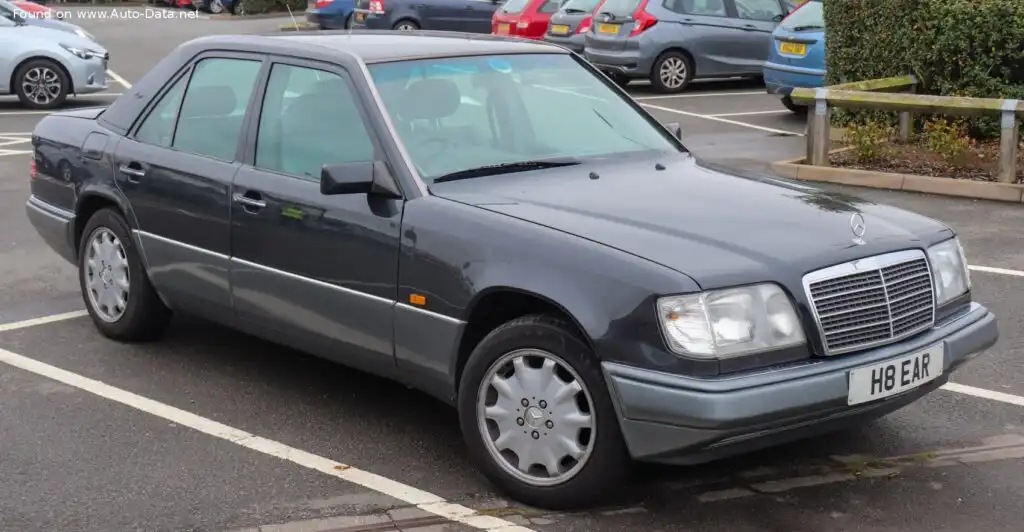
The Mercedes-Benz E-Class (W124) E 200 D, produced between 1993 and 1995, represented a fuel-efficient and durable entry point into the mid-size luxury sedan segment. Positioned as a diesel-powered variant within the extensive W124 range, it catered to buyers prioritizing economy and longevity over outright performance. The W124 platform, launched in 1985, was a significant step forward for Mercedes-Benz, known for its robust build quality, advanced engineering, and focus on passenger safety. The E 200 D specifically aimed at the European market, where diesel engines held a strong preference due to fuel costs and taxation policies. This model offered a practical and reliable transportation solution, albeit with modest power output.
Technical Specifications
| Brand | Mercedes-Benz |
| Model | E-Class |
| Generation | E-Class (W124) |
| Type (Engine) | E 200 D (75 Hp) |
| Start of production | 1993 |
| End of production | 1995 |
| Powertrain Architecture | Internal Combustion engine |
| Body type | Sedan |
| Seats | 5 |
| Doors | 4 |
| Fuel consumption (combined) | 6.7 l/100 km (35.1 US mpg, 42.2 UK mpg, 14.9 km/l) |
| Fuel Type | Diesel |
| Acceleration 0 – 100 km/h | 18.5 sec |
| Acceleration 0 – 62 mph | 18.5 sec |
| Acceleration 0 – 60 mph | 17.6 sec |
| Maximum speed | 160 km/h (99.42 mph) |
| Weight-to-power ratio | 19.1 kg/Hp, 52.4 Hp/tonne |
| Weight-to-torque ratio | 11.3 kg/Nm, 88.1 Nm/tonne |
| Power | 75 Hp @ 4600 rpm |
| Power per litre | 37.6 Hp/l |
| Torque | 126 Nm @ 2700 rpm (92.93 lb.-ft. @ 2700 rpm) |
| Engine layout | Front, Longitudinal |
| Engine Model/Code | OM 601 D 20 |
| Engine displacement | 1997 cm3 (121.86 cu. in.) |
| Number of cylinders | 4 |
| Engine configuration | Inline |
| Cylinder Bore | 87 mm (3.43 in.) |
| Piston Stroke | 84 mm (3.31 in.) |
| Compression ratio | 22:1 |
| Number of valves per cylinder | 2 |
| Fuel injection system | Precombustion chamber injection |
| Engine aspiration | Naturally aspirated engine |
| Valvetrain | OHC |
| Engine oil capacity | 6.5 l (6.87 US qt | 5.72 UK qt) |
| Coolant | 8.5 l (8.98 US qt | 7.48 UK qt) |
| Kerb Weight | 1430 kg (3152.61 lbs.) |
| Max. weight | 1930 kg (4254.92 lbs.) |
| Max load | 500 kg (1102.31 lbs.) |
| Trunk (boot) space – minimum | 520 l (18.36 cu. ft.) |
| Fuel tank capacity | 70 l (18.49 US gal | 15.4 UK gal) |
| Length | 4740 mm (186.61 in.) |
| Width | 1740 mm (68.5 in.) |
| Height | 1425 mm (56.1 in.) |
| Wheelbase | 2800 mm (110.24 in.) |
| Front track | 1501 mm (59.09 in.) |
| Rear (Back) track | 1491 mm (58.7 in.) |
| Drivetrain Architecture | The Internal combustion engine (ICE) drives the rear wheels of the vehicle. |
| Drive wheel | Rear wheel drive |
| Number of gears and type of gearbox | 5 gears, manual transmission |
| Front suspension | Wishbone |
| Rear suspension | Coil spring |
| Front brakes | Disc |
| Rear brakes | Disc |
| Assisting systems | ABS (Anti-lock braking system) |
| Power steering | Hydraulic Steering |
| Tires size | 185/65 R15 |
Powertrain & Engine Architecture
The E 200 D was powered by the OM 601 D 20, a 2.0-liter inline-four diesel engine. This engine was a cornerstone of Mercedes-Benz’s diesel offerings during the period, known for its durability and relatively simple design. It utilized precombustion chamber injection, a system where fuel is injected into a small pre-chamber connected to the main combustion chamber, promoting more complete combustion and reducing engine noise. The engine featured an overhead camshaft (OHC) valvetrain operating two valves per cylinder. The 5-speed manual transmission was standard, providing a relatively deep gearing to maximize fuel efficiency and manage the engine’s limited power. The engine’s robust construction and relatively low stress levels contributed to its reputation for longevity, with many examples exceeding high mileage with proper maintenance.
Driving Characteristics
The E 200 D’s driving experience was defined by its relaxed pace and focus on fuel economy. With only 75 horsepower, acceleration was leisurely, taking approximately 18.5 seconds to reach 62 mph. The manual transmission, while offering driver control, required frequent shifting to maintain momentum, especially when encountering hills or overtaking. The gearing was optimized for efficiency, meaning the engine operated at lower RPMs during cruising, contributing to its quiet operation. Compared to the more powerful E 220 or E 280 models, the E 200 D lacked the punch for spirited driving, but it offered a smooth and comfortable ride, typical of the W124 chassis. The rear-wheel drive configuration provided predictable handling, although it wasn’t particularly sporty.
Equipment & Trim Levels
The E 200 D typically came with a fairly basic level of equipment, reflecting its position as the entry-level model. Standard features included power steering, central locking, and a basic stereo system. Interior upholstery was typically cloth, although leather was available as an option. Dashboard configuration was functional and straightforward, prioritizing usability over luxury. Optional extras included air conditioning, electric windows, a sunroof, and upgraded audio systems. The trim level was generally consistent, with minor variations depending on the specific market and customer preferences. The focus was on providing a comfortable and practical interior rather than lavish appointments.
Chassis & Braking
The W124 chassis was renowned for its robust construction and excellent ride quality. The E 200 D featured a wishbone front suspension and a coil spring rear suspension, providing a comfortable and controlled ride. Braking was handled by disc brakes on all four wheels, supplemented by an Anti-lock Braking System (ABS) for improved stopping power and stability. The suspension was tuned for comfort rather than sporty handling, prioritizing a smooth ride over sharp cornering. The relatively light weight of the diesel engine compared to the gasoline counterparts contributed to balanced handling characteristics.
Market Reception & Comparison
The E 200 D was well-received in markets where diesel fuel was affordable and fuel economy was a primary concern. Critics praised its durability and low running costs, but acknowledged its modest performance. Compared to the gasoline-powered E 200 or E 220 models, the E 200 D offered significantly better fuel economy but considerably less power. The E 200 D was often seen as a sensible and practical choice for those prioritizing reliability and economy over driving excitement. Its lower price point also made it an attractive option for budget-conscious buyers.
Legacy
The OM 601 engine, as found in the E 200 D, has earned a reputation for exceptional longevity. Many examples remain on the road today, having accumulated hundreds of thousands of miles with proper maintenance. The W124 platform as a whole is highly regarded by enthusiasts for its build quality and timeless design. In the used car market, the E 200 D is often sought after by those looking for a reliable and affordable classic Mercedes-Benz. While not a performance icon, it represents a significant chapter in Mercedes-Benz’s history, showcasing their commitment to engineering excellence and durability. Its simplicity and robust construction make it a relatively easy vehicle to maintain and repair, further contributing to its enduring appeal.