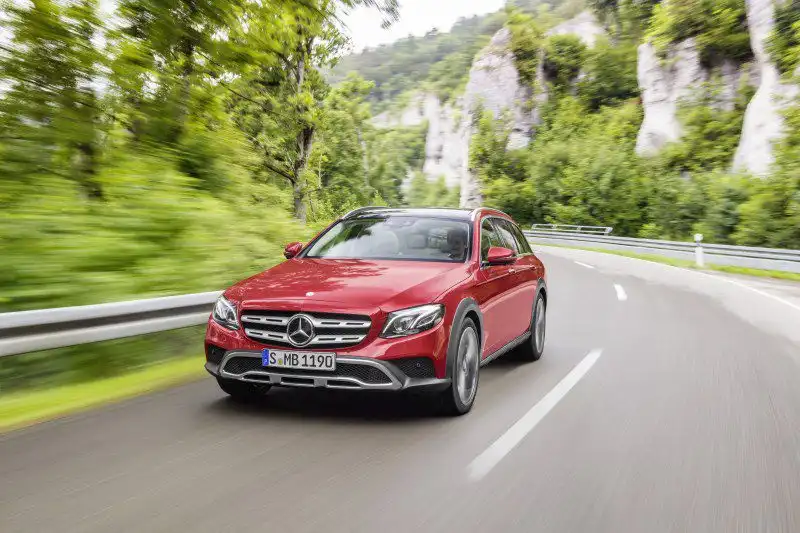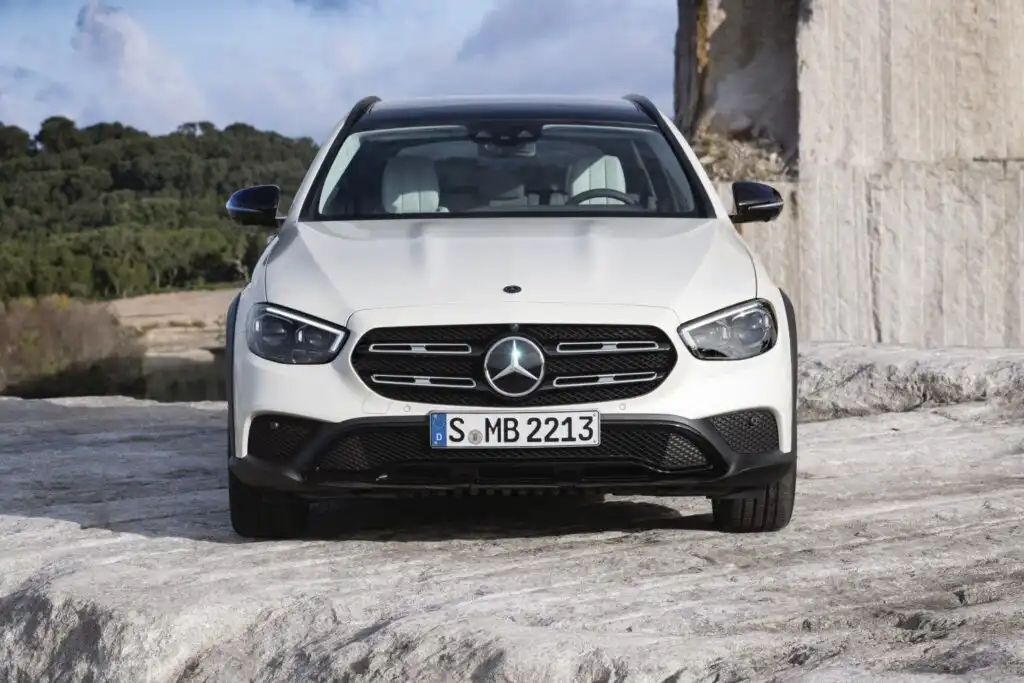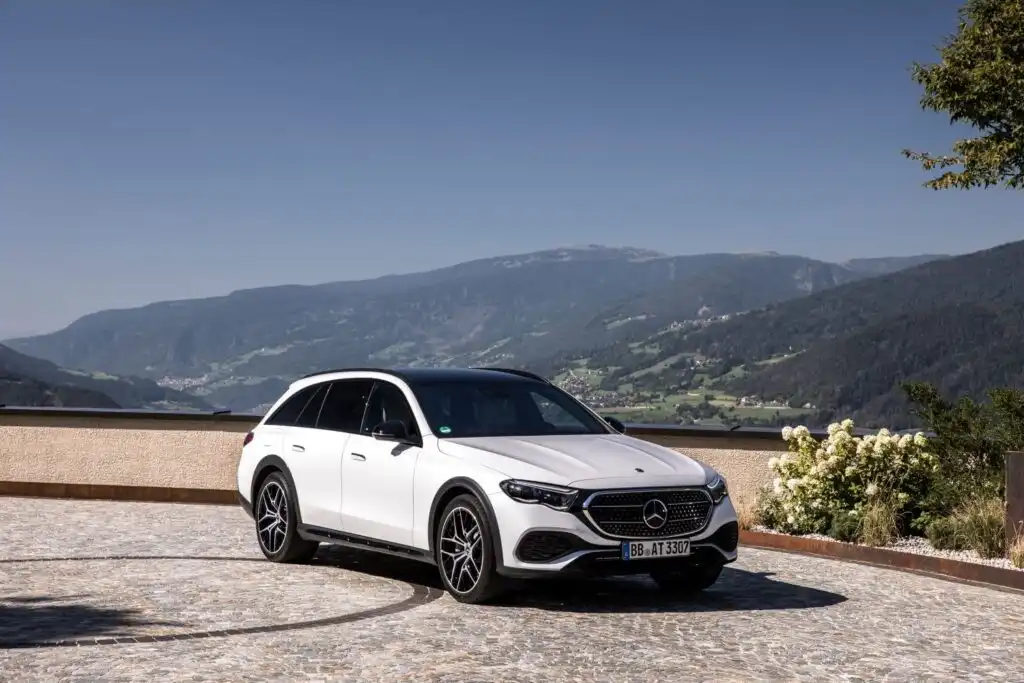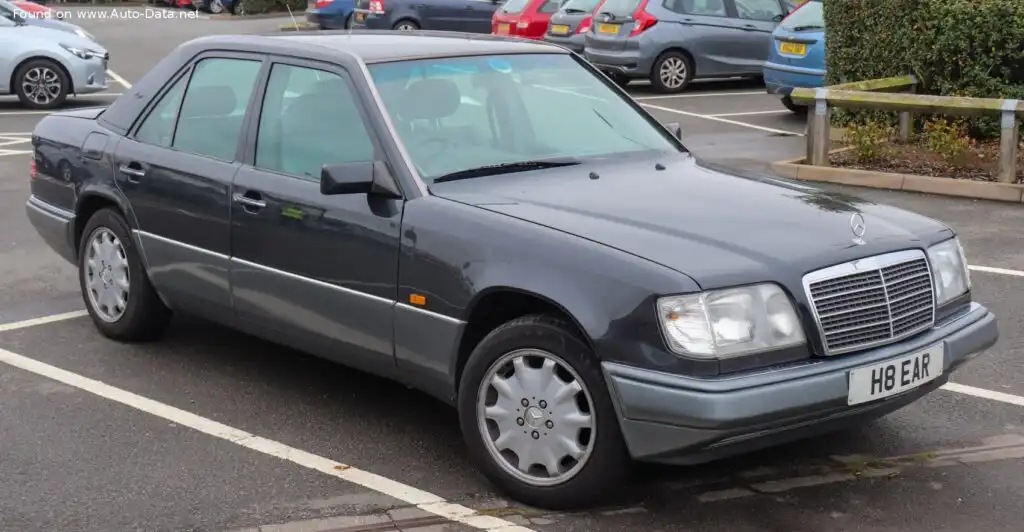
The Mercedes-Benz E 300 4MATIC, produced between July 1993 and April 1995, represents a compelling blend of luxury and all-weather capability within the W124 E-Class range. Positioned as a mid-to-upper trim level, it offered a significant step up in performance from the base E 220 models while remaining more accessible than the high-performance E 320 or the more exclusive E 420. This variant combined a 3.0-liter inline-six engine with a four-speed automatic transmission and Mercedes-Benz’s 4MATIC all-wheel-drive system, appealing to buyers seeking a refined driving experience with enhanced traction and stability. The W124 generation, renowned for its robust build quality and engineering, cemented Mercedes-Benz’s reputation for durable and sophisticated automobiles.
Technical Specifications
| Brand | Mercedes-Benz |
| Model | E-class |
| Generation | E-class (W124) |
| Type | E 300 (180 Hp) 4MATIC Automatic |
| Start of production | July, 1993 |
| End of production | April, 1995 |
| Powertrain Architecture | Internal Combustion engine |
| Body type | Sedan |
| Seats | 5 |
| Doors | 4 |
| Fuel consumption (urban) | 13.8 l/100 km (17 US mpg, 20.5 UK mpg) |
| Fuel consumption (extra urban) | 9.1 l/100 km (25.8 US mpg, 31 UK mpg) |
| Fuel Type | Petrol (Gasoline) |
| Acceleration 0 – 100 km/h | 9.1 sec |
| Acceleration 0 – 62 mph | 9.1 sec |
| Acceleration 0 – 60 mph | 8.6 sec |
| Maximum speed | 217 km/h (134.84 mph) |
| Weight-to-power ratio | 8.7 kg/Hp |
| Weight-to-torque ratio | 6.2 kg/Nm |
| Power | 180 Hp @ 5700 rpm |
| Power per litre | 60.8 Hp/l |
| Torque | 255 Nm @ 4400 rpm (188.08 lb.-ft. @ 4400 rpm) |
| Engine layout | Front, Longitudinal |
| Engine Model/Code | M 103 E 30 / 103.985 |
| Engine displacement | 2960 cm3 (180.63 cu. in.) |
| Number of cylinders | 6 |
| Engine configuration | Inline |
| Cylinder Bore | 88.5 mm (3.48 in.) |
| Piston Stroke | 80.2 mm (3.16 in.) |
| Compression ratio | 9.2:1 |
| Number of valves per cylinder | 2 |
| Fuel injection system | Multi-port manifold injection |
| Engine aspiration | Naturally aspirated engine |
| Valvetrain | SOHC |
| Engine oil capacity | 6.5 l (6.87 US qt | 5.72 UK qt) |
| Coolant | 9 l (9.51 US qt | 7.92 UK qt) |
| Kerb Weight | 1570 kg (3461.26 lbs.) |
| Max. weight | 2135 kg (4706.87 lbs.) |
| Max load | 565 kg (1245.61 lbs.) |
| Trunk (boot) space – minimum | 520 l (18.36 cu. ft.) |
| Fuel tank capacity | 70 l (18.49 US gal | 15.4 UK gal) |
| Length | 4740 mm (186.61 in.) |
| Width | 1740 mm (68.5 in.) |
| Height | 1452 mm (57.17 in.) |
| Wheelbase | 2800 mm (110.24 in.) |
| Front track | 1497 mm (58.94 in.) |
| Rear (Back) track | 1485 mm (58.46 in.) |
| Drivetrain Architecture | The Internal combustion engine (ICE) drives the rear wheels permanently, and the front wheels are driven through an electrically or mechanically operated clutch if necessary. |
| Drive wheel | All wheel drive (4×4) |
| Number of gears and type of gearbox | 4 gears, automatic transmission |
| Front suspension | Wishbone |
| Rear suspension | Independent multi-link suspension, Coil spring |
| Front brakes | Ventilated discs |
| Rear brakes | Disc |
| Assisting systems | ABS (Anti-lock braking system) |
| Steering type | Cone worm with recirculation balls |
| Power steering | Hydraulic Steering |
| Tires size | Front wheel tires: 195/65 R15Rear wheel tires: 195/65 R15 |
| Wheel rims size | Front wheel rims: 6.5J x 15Rear wheel rims: 6.5J x 15 |
Powertrain & Engine Architecture
The heart of the E 300 4MATIC is the M103 E 30 inline-six engine. This 2,960cc (180.6 cubic inch) powerplant is a naturally aspirated, single overhead camshaft (SOHC) design, known for its smoothness and durability. It utilizes Bosch multi-port fuel injection, delivering a respectable 180 horsepower at 5,700 rpm and 255 Nm (188 lb-ft) of torque at 4,400 rpm. The engine’s robust construction and relatively simple design contributed to its longevity. The four-speed automatic transmission, a common unit in Mercedes-Benz vehicles of the era, was designed for smooth shifts and comfortable cruising. While not particularly sporty, it provided adequate performance for everyday driving. The 4MATIC system employs a viscous coupling to distribute power between the rear and front axles, providing enhanced traction in slippery conditions. The system is primarily rear-wheel drive, engaging the front wheels only when rear wheel slip is detected.
Driving Characteristics
The E 300 4MATIC offered a refined and comfortable driving experience. The inline-six engine provided ample power for highway cruising and passing maneuvers, although it wasn’t as responsive as the higher-output engines found in the E 320. The automatic transmission, while smooth, could feel somewhat sluggish compared to the available manual transmission. The 4MATIC system significantly improved traction, particularly in inclement weather, making the E 300 4MATIC a capable all-season vehicle. The gear ratios were optimized for fuel efficiency and comfortable cruising rather than outright acceleration. Compared to the rear-wheel-drive E 300, the 4MATIC version felt slightly heavier and less agile, but the added stability and confidence in adverse conditions were often considered worthwhile trade-offs.
Equipment & Trim Levels
The E 300 4MATIC typically came standard with features such as power windows, power locks, central locking, and a sunroof. Interior upholstery was typically cloth, with leather options available as an upgrade. The dashboard layout was functional and well-designed, with clear instrumentation and logically placed controls. Optional extras included automatic climate control, heated seats, a premium sound system, and upgraded wheels. The level of equipment varied depending on the specific market and individual customer preferences. The wood trim and overall interior ambiance reflected Mercedes-Benz’s commitment to luxury and refinement.
Chassis & Braking
The W124 E-Class featured a robust chassis with independent suspension all around. The front suspension utilized wishbones, while the rear employed a multi-link setup with coil springs. This configuration provided a comfortable ride and good handling characteristics. The E 300 4MATIC was equipped with ventilated disc brakes at the front and solid disc brakes at the rear. Anti-lock braking system (ABS) was standard, enhancing safety and control during emergency braking. The steering was a recirculating ball system with hydraulic power assistance, providing a balanced feel and reasonable responsiveness.
Market Reception & Comparison
The E 300 4MATIC was generally well-received by automotive critics. It was praised for its comfortable ride, refined engine, and all-weather capability. However, some critics noted that the automatic transmission could feel sluggish and that the 4MATIC system added some weight, slightly impacting handling. Compared to the rear-wheel-drive E 300, the 4MATIC version offered superior traction and stability, making it a popular choice in regions with harsh winters. Fuel economy was reasonable for a vehicle of its size and class, although it wasn’t as efficient as the smaller E 220 models. Reliability was a strong point, with the M103 engine and 4MATIC system proving to be durable and long-lasting.
Legacy
The Mercedes-Benz E 300 4MATIC (W124) has earned a reputation as a durable and reliable classic. The M103 engine is known for its longevity, and the 4MATIC system has proven to be robust and dependable. Today, well-maintained examples are sought after by enthusiasts and collectors. While parts availability can be a concern, the W124’s robust construction and relatively simple design make it a relatively easy vehicle to maintain. The E 300 4MATIC represents a high point in Mercedes-Benz engineering, offering a blend of luxury, performance, and all-weather capability that remains appealing even decades after its production ended. Its enduring quality and timeless design ensure its continued presence on roads and in the hearts of automotive enthusiasts.