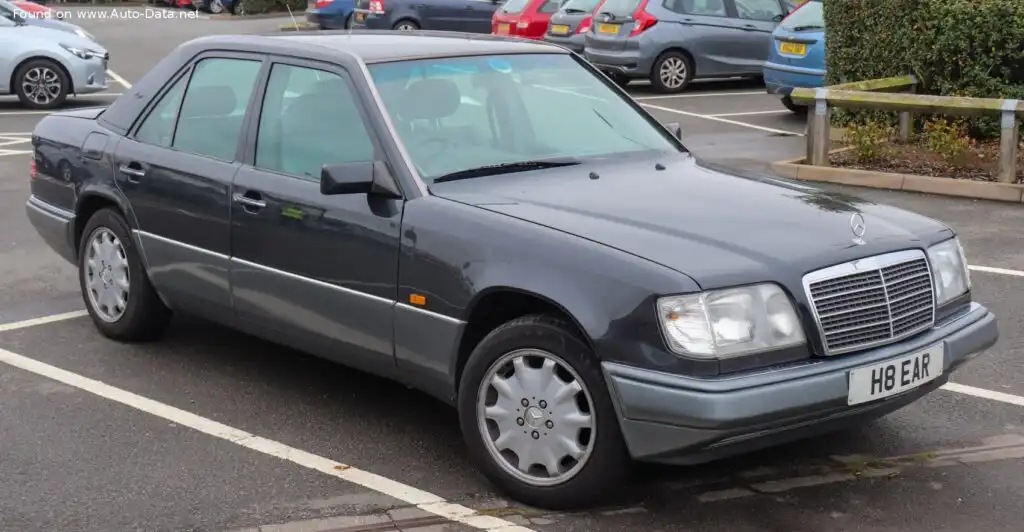
The Mercedes-Benz E 500, produced between July 1993 and April 1995, represented the pinnacle of performance for the W124 E-Class sedan. Positioned as the flagship variant, it was a relatively late addition to the W124 lineup, intended to compete with rivals offering larger displacement engines. The E 500 was a response to market demand for a truly high-performance E-Class, and it utilized the potent M119 V8 engine previously found in the top-of-the-line 500E model. Its limited production run and substantial price tag made it an exclusive offering, appealing to buyers seeking a blend of luxury, performance, and engineering prestige. The W124 platform, known for its robust build quality and advanced engineering, provided a solid foundation for this powerful sedan.
Technical Specifications
| Brand | Mercedes-Benz |
| Model | E-class |
| Generation | E-class (W124) |
| Type (Engine) | E 500 V8 (320 Hp) Automatic |
| Start of production | July, 1993 |
| End of production | April, 1995 |
| Powertrain Architecture | Internal Combustion engine |
| Body type | Sedan |
| Seats | 5 |
| Doors | 4 |
| Fuel consumption (combined) | 13 l/100 km (18.1 US mpg, 21.7 UK mpg, 7.7 km/l) |
| Fuel Type | Petrol (Gasoline) |
| Acceleration 0 – 100 km/h | 6.1 sec |
| Acceleration 0 – 62 mph | 6.1 sec |
| Acceleration 0 – 60 mph | 5.8 sec |
| Maximum speed | 250 km/h (155.34 mph), Electronically limited |
| Weight-to-power ratio | 5.3 kg/Hp, 187.1 Hp/tonne |
| Weight-to-torque ratio | 3.6 kg/Nm, 274.9 Nm/tonne |
| Power | 320 Hp @ 5600 rpm |
| Power per litre | 64.3 Hp/l |
| Torque | 470 Nm @ 3900 rpm (346.65 lb.-ft. @ 3900 rpm) |
| Engine layout | Front, Longitudinal |
| Engine Model/Code | M 119.974 |
| Engine displacement | 4973 cm3 (303.47 cu. in.) |
| Number of cylinders | 8 |
| Engine configuration | V-engine |
| Cylinder Bore | 96.5 mm (3.8 in.) |
| Piston Stroke | 85 mm (3.35 in.) |
| Compression ratio | 10:1 |
| Number of valves per cylinder | 4 |
| Fuel injection system | Multi-port manifold injection |
| Engine aspiration | Naturally aspirated engine |
| Valvetrain | DOHC |
| Engine oil capacity | 8 l (8.45 US qt | 7.04 UK qt) |
| Coolant | 15.5 l (16.38 US qt | 13.64 UK qt) |
| Kerb Weight | 1710 kg (3769.9 lbs.) |
| Max. weight | 2160 kg (4761.98 lbs.) |
| Max load | 450 kg (992.08 lbs.) |
| Trunk (boot) space – minimum | 485 l (17.13 cu. ft.) |
| Fuel tank capacity | 90 l (23.78 US gal | 19.8 UK gal) |
| Length | 4750 mm (187.01 in.) |
| Width | 1796 mm (70.71 in.) |
| Height | 1408 mm (55.43 in.) |
| Wheelbase | 2800 mm (110.24 in.) |
| Front track | 1538 mm (60.55 in.) |
| Rear (Back) track | 1529 mm (60.2 in.) |
| Drivetrain Architecture | The Internal combustion engine (ICE) drives the rear wheels of the vehicle. |
| Drive wheel | Rear wheel drive |
| Number of gears and type of gearbox | 4 gears, automatic transmission |
| Front suspension | Spring Strut, Coil spring, Wishbone |
| Rear suspension | Hydro-pneumatic element, Independent multi-link suspension, Coil spring |
| Front brakes | Ventilated discs |
| Rear brakes | Ventilated discs |
| Assisting systems | ABS (Anti-lock braking system) |
| Steering type | Cone worm with recirculation balls |
| Power steering | Hydraulic Steering |
| Tires size | 225/55 ZR16 |
Powertrain & Engine Architecture
The heart of the E 500 was the M119.974 5.0-liter V8 engine. This engine, a naturally aspirated powerplant, produced 320 horsepower at 5600 rpm and 347 lb-ft of torque at 3900 rpm. It featured a cast-iron block with aluminum cylinder heads, dual overhead camshafts (DOHC), and four valves per cylinder. The M119 engine was known for its smoothness and robust construction. Fuel delivery was handled by a Bosch multi-port fuel injection system, ensuring precise fuel metering for optimal performance and efficiency. The engine’s 10:1 compression ratio contributed to its strong power output. Paired with the engine was a four-speed automatic transmission, specifically designed to handle the V8’s substantial torque. This transmission, while not as sophisticated as some later automatics, provided smooth and reliable shifting, prioritizing comfortable cruising over outright performance.
Driving Characteristics
The E 500 offered a distinctly different driving experience compared to other W124 variants. The 5.0-liter V8 provided effortless acceleration, with a 0-60 mph time of around 5.8 seconds – remarkably quick for a sedan of its size and era. The automatic transmission, while smooth, did result in some power loss compared to a manual transmission. However, the convenience and ease of use were highly valued by the target audience. The gear ratios were tuned for a balance of acceleration and highway cruising, providing ample power for overtaking maneuvers. The E 500 felt significantly more planted and stable than the four-cylinder or inline-six models, thanks to its increased weight and the more balanced weight distribution afforded by the V8 engine. The suspension, while retaining the W124’s comfortable ride quality, was slightly firmer to manage the increased power and weight.
Equipment & Trim Levels
The E 500 was generously equipped, reflecting its status as the range-topping model. Standard features included leather upholstery, power-adjustable front seats with memory function, automatic climate control, a premium sound system, and power windows and locks. Wood trim adorned the interior, adding a touch of luxury. Optional extras included a sunroof, upgraded sound systems, and various cosmetic enhancements. The E 500 typically featured a unique exterior trim package, often including polished alloy wheels and subtle badging to distinguish it from other E-Class models. The interior color schemes were typically more refined and luxurious than those offered on lower trims.
Chassis & Braking
The E 500 utilized the W124’s robust chassis, but with some modifications to accommodate the V8 engine and increased power. The suspension featured coil springs and shock absorbers, with a multi-link independent rear suspension providing a comfortable and controlled ride. The braking system consisted of ventilated disc brakes on all four wheels, coupled with an Anti-lock Braking System (ABS) for enhanced safety. The E 500’s increased weight necessitated a slightly stiffer suspension setup compared to other W124 models, improving handling and stability. The steering was a recirculating ball system with hydraulic power assistance, providing a good balance of feel and ease of use.
Market Reception & Comparison
The E 500 was generally well-received by automotive critics, who praised its powerful engine, luxurious interior, and refined driving experience. However, its high price tag limited its appeal to a relatively small segment of the market. Compared to the E 320 or E 280 models, the E 500 offered significantly more performance but at a considerable cost. Fuel economy was also lower, averaging around 18.1 US mpg. Reliability was generally good, benefiting from the W124’s reputation for build quality, but maintenance costs were higher due to the complexity of the V8 engine and its associated systems. The E 500 was often compared to rivals such as the BMW 540i and the Lexus LS 400, offering a similar blend of luxury and performance.
Legacy
Today, the Mercedes-Benz E 500 (W124) is considered a desirable classic car, particularly among enthusiasts who appreciate its unique combination of performance, luxury, and engineering. The M119 V8 engine is known for its durability and is often regarded as one of Mercedes-Benz’s finest engines. Well-maintained examples command a premium in the used car market. While maintenance can be expensive, the E 500 offers a rewarding ownership experience for those willing to invest in its upkeep. Its limited production run and distinctive character have cemented its place as a significant model in the W124 lineage, representing the ultimate expression of performance for this iconic Mercedes-Benz generation.