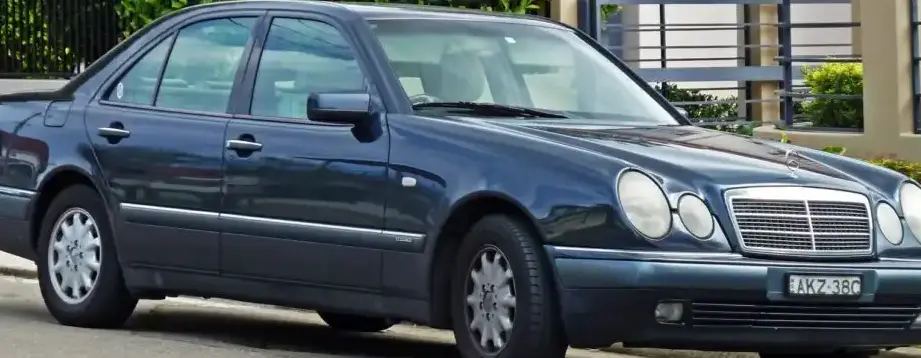
The Mercedes-Benz E 200 D, produced between April 1996 and July 1998, was a variant of the W210 E-Class, representing an entry-level diesel option within the third generation of the E-Class lineage. Positioned as a fuel-efficient and practical sedan, the E 200 D aimed to provide the renowned Mercedes-Benz comfort and build quality to a broader customer base. It served as a key model in the European market, where diesel engines held significant popularity due to favorable taxation and fuel economy. This model was not officially sold in the United States, as the W210 E-Class offered in North America featured different engine options.
Technical Specifications
| Brand | Mercedes-Benz |
| Model | E-class |
| Generation | E-class (W210) |
| Type (Engine) | E 200 D (88 Hp) |
| Start of production | April, 1996 |
| End of production | July, 1998 |
| Powertrain Architecture | Internal Combustion engine |
| Body type | Sedan |
| Seats | 5 |
| Doors | 4 |
| Fuel consumption (urban) | 10.1 l/100 km (23.3 US mpg, 28 UK mpg, 9.9 km/l) |
| Fuel consumption (extra urban) | 6.1 l/100 km (38.6 US mpg, 46.3 UK mpg, 16.4 km/l) |
| Fuel consumption (combined) | 7.6 l/100 km (30.9 US mpg, 37.2 UK mpg, 13.2 km/l) |
| Fuel Type | Diesel |
| Maximum speed | 177 km/h (109.98 mph) |
| Weight-to-power ratio | 16.5 kg/Hp, 60.7 Hp/tonne |
| Weight-to-torque ratio | 10.7 kg/Nm, 93.1 Nm/tonne |
| Power | 88 Hp @ 5000 rpm |
| Power per litre | 44.1 Hp/l |
| Torque | 135 Nm @ 2000-4650 rpm (99.57 lb.-ft. @ 2000-4650 rpm) |
| Engine layout | Front, Longitudinal |
| Engine Model/Code | OM 604 D 20 / 604.917 |
| Engine displacement | 1997 cm3 (121.86 cu. in.) |
| Number of cylinders | 4 |
| Engine configuration | Inline |
| Cylinder Bore | 87 mm (3.43 in.) |
| Piston Stroke | 84 mm (3.31 in.) |
| Compression ratio | 22:1 |
| Number of valves per cylinder | 4 |
| Fuel injection system | Precombustion chamber injection |
| Engine aspiration | Naturally aspirated engine |
| Valvetrain | DOHC |
| Engine oil capacity | 6.5 l (6.87 US qt | 5.72 UK qt) |
| Coolant | 8 l (8.45 US qt | 7.04 UK qt) |
| Kerb Weight | 1450 kg (3196.7 lbs.) |
| Max. weight | 1950 kg (4299.01 lbs.) |
| Max load | 500 kg (1102.31 lbs.) |
| Fuel tank capacity | 65 l (17.17 US gal | 14.3 UK gal) |
| Length | 4795 mm (188.78 in.) |
| Width | 1799 mm (70.83 in.) |
| Height | 1436 mm (56.54 in.) |
| Wheelbase | 2833 mm (111.54 in.) |
| Front track | 1542 mm (60.71 in.) |
| Rear track | 1536 mm (60.47 in.) |
| Drivetrain Architecture | Rear wheel drive |
| Number of gears and type of gearbox | 5 gears, manual transmission |
| Front suspension | Double wishbone |
| Rear suspension | Independent multi-link suspension |
| Front brakes | Ventilated discs |
| Rear brakes | Disc |
| Steering type | Steering rack and pinion |
| Power steering | Hydraulic Steering |
| Tires size | Front wheel tires: 195/65 R15Rear wheel tires: 195/65 R15 |
| Wheel rims size | Front wheel rims: 6.5J x 15Rear wheel rims: 6.5J x 15 |
Powertrain & Engine Architecture
The E 200 D was powered by the OM 604 D 20 engine, a 2.0-liter inline-four cylinder diesel. This engine utilized precombustion chamber injection, a system common in Mercedes-Benz diesels of the era. This system involved injecting fuel into a small precombustion chamber connected to the main cylinder, promoting more complete combustion and reducing engine noise. The OM 604 featured a double overhead camshaft (DOHC) valvetrain, contributing to improved breathing and efficiency. The engine produced 88 horsepower at 5000 rpm and 135 Nm (99.57 lb-ft) of torque between 2000 and 4650 rpm. The engine’s relatively high compression ratio of 22:1 was typical for diesel engines, maximizing efficiency. The standard transmission was a 5-speed manual, although an optional 4-speed automatic transmission was available.
Driving Characteristics
The E 200 D, with its 88 horsepower, offered modest performance. Acceleration was adequate for everyday driving, but it wasn’t designed for spirited performance. The focus was on fuel economy and relaxed cruising. The manual transmission allowed for better control and efficiency, while the optional automatic provided convenience, albeit at the expense of some responsiveness. Compared to the more powerful E 220 CDI or E 300 models, the E 200 D felt noticeably slower. However, its torque delivery was relatively strong at lower engine speeds, making it suitable for navigating city traffic and climbing hills. The gear ratios in the manual transmission were geared towards maximizing fuel efficiency rather than outright acceleration.
Equipment & Trim Levels
The E 200 D typically came with a fairly standard level of equipment for a Mercedes-Benz of the mid-1990s. This included power windows, central locking, and an anti-theft alarm system. Interior upholstery was typically cloth, although leather was available as an option. The dashboard layout was typical of the W210, featuring a straightforward design with clearly marked gauges. Optional extras included air conditioning, a sunroof, and upgraded audio systems. The E 200 D was often seen as a more practical and affordable entry point into the E-Class range, foregoing some of the luxury features found in higher-trim models.
Chassis & Braking
The W210 E-Class featured a robust chassis with a double wishbone front suspension and an independent multi-link rear suspension. This setup provided a comfortable ride and good handling characteristics. The E 200 D, being a lighter variant, benefited from this well-engineered suspension. Braking was handled by ventilated discs at the front and solid discs at the rear. Hydraulic power steering was standard, providing a responsive and precise steering feel. The tires were typically 195/65 R15, offering a good balance of comfort and grip.
Market Reception & Comparison
The E 200 D was generally well-received in the European market as a practical and economical option. Critics praised its fuel efficiency and comfortable ride. However, some noted its lack of outright performance compared to other E-Class models. Compared to the gasoline-powered E 200, the E 200 D offered significantly better fuel economy but less power. The E 220 CDI, a later diesel variant, provided more power and torque but at a higher price point. The E 200 D’s reliability was generally good, typical of Mercedes-Benz vehicles of the era, but maintenance costs could be relatively high due to the complexity of the diesel engine and its fuel injection system.
Legacy
The OM 604 engine family, including the D 20 variant, is known for its durability and longevity. Properly maintained examples of the E 200 D can still be found on the road today. While not a particularly sought-after model by collectors, it represents a solid and reliable entry point into classic Mercedes-Benz ownership. The E 200 D’s fuel efficiency and relatively simple mechanical design make it an appealing option for those seeking a classic car that is practical and affordable to run. In the used car market, prices for well-maintained E 200 D models remain relatively stable, reflecting their reputation for reliability and build quality.