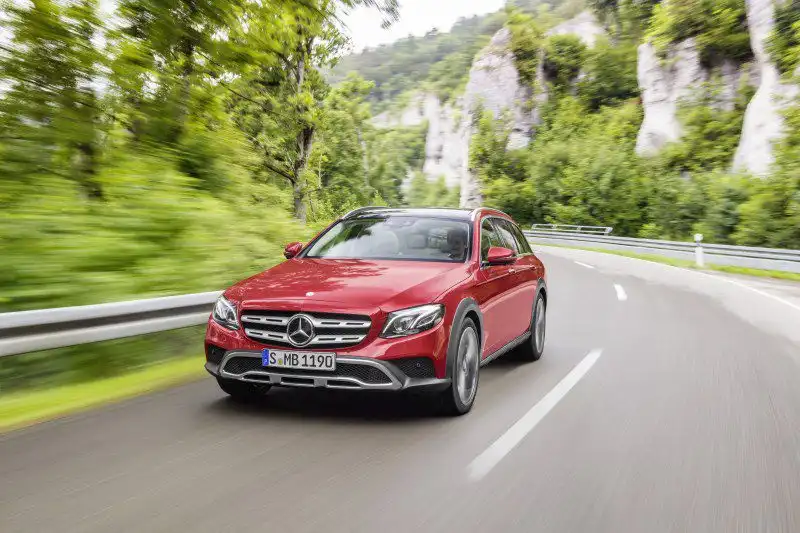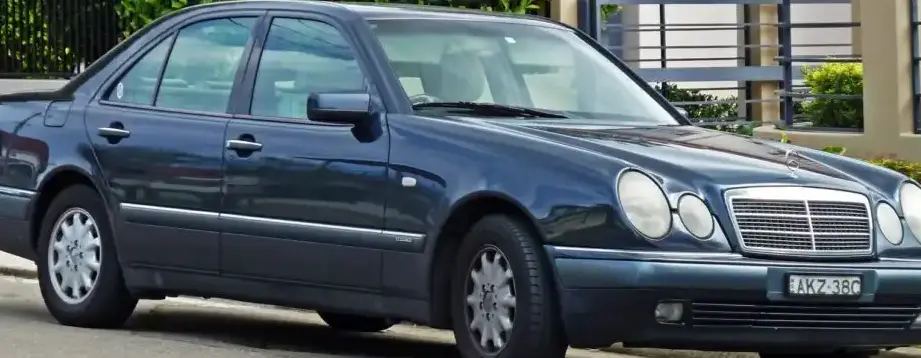
The Mercedes-Benz E 220 D, produced between November 1994 and June 1999, was a key variant within the W210 E-Class range. Positioned as an entry-level diesel offering, it aimed to provide the renowned Mercedes-Benz comfort and build quality with improved fuel economy. This model was primarily targeted at European markets where diesel engines held a significant share of the passenger car segment, offering a practical and economical alternative to the gasoline-powered E-Class models. The W210 generation represented a significant departure in styling for Mercedes-Benz, adopting a more contemporary and aerodynamic design compared to its predecessor, the W124.
Technical Specifications
| Brand | Mercedes-Benz |
| Model | E-class |
| Generation | E-class (W210) |
| Type (Engine) | E 220 D (95 Hp) |
| Start of production | November, 1994 |
| End of production | June, 1999 |
| Powertrain Architecture | Internal Combustion engine |
| Body type | Sedan |
| Seats | 5 |
| Doors | 4 |
| Fuel consumption (urban) | 8.3 l/100 km (28.3 US mpg) |
| Fuel consumption (extra urban) | 5.0 l/100 km (47 US mpg) |
| Fuel Type | Diesel |
| Acceleration 0 – 100 km/h | 17 sec |
| Acceleration 0 – 62 mph | 17 sec |
| Acceleration 0 – 60 mph | 16.2 sec |
| Maximum speed | 180 km/h (111.85 mph) |
| Weight-to-power ratio | 15.4 kg/Hp |
| Weight-to-torque ratio | 9.7 kg/Nm |
| Power | 95 Hp @ 5000 rpm |
| Power per litre | 44.1 Hp/l |
| Torque | 150 Nm @ 3100-4500 rpm (110.63 lb.-ft.) |
| Engine layout | Front, Longitudinal |
| Engine Model/Code | OM 604 D 22 / 604.910 |
| Engine displacement | 2155 cm3 (131.51 cu. in.) |
| Number of cylinders | 4 |
| Engine configuration | Inline |
| Cylinder Bore | 89 mm (3.5 in.) |
| Piston Stroke | 86.6 mm (3.41 in.) |
| Compression ratio | 22:1 |
| Number of valves per cylinder | 4 |
| Fuel injection system | Precombustion chamber injection |
| Engine aspiration | Naturally aspirated engine |
| Valvetrain | DOHC |
| Engine oil capacity | 6.5 l (6.87 US qt | 5.72 UK qt) |
| Coolant | 8.5 l (8.98 US qt | 7.48 UK qt) |
| Kerb Weight | 1460 kg (3218.75 lbs.) |
| Max. weight | 1960 kg (4321.06 lbs.) |
| Max load | 500 kg (1102.31 lbs.) |
| Fuel tank capacity | 65 l (17.17 US gal | 14.3 UK gal) |
| Length | 4795 mm (188.78 in.) |
| Width | 1799 mm (70.83 in.) |
| Height | 1436 mm (56.54 in.) |
| Wheelbase | 2833 mm (111.54 in.) |
| Front track | 1542 mm (60.71 in.) |
| Rear track | 1536 mm (60.47 in.) |
| Drivetrain Architecture | Rear wheel drive |
| Number of gears | 5 gears, manual transmission |
| Front suspension | Double wishbone |
| Rear suspension | Independent multi-link spring suspension with stabilizer |
| Front brakes | Ventilated discs |
| Rear brakes | Disc |
| Assisting systems | ABS (Anti-lock braking system) |
| Steering type | Steering rack and pinion |
| Power steering | Hydraulic Steering |
| Tires size | Front wheel tires: 195/65 R15Rear wheel tires: 195/65 R15 |
| Wheel rims size | Front wheel rims: 195/65 15Rear wheel rims: 6.5J x 15 |
Powertrain & Engine Architecture
The E 220 D was powered by the OM 604 D 22 engine, a 2.2-liter inline-four diesel. This engine utilized a precombustion chamber injection system, a common technology in diesel engines of the era. This system involved injecting fuel into a small precombustion chamber connected to the main cylinder, where it was partially ignited before entering the main combustion chamber. This improved combustion efficiency and reduced engine noise. The engine featured a double overhead camshaft (DOHC) valvetrain, contributing to improved breathing and power delivery. The 5-speed manual transmission was standard, offering a relatively long gearing aimed at maximizing fuel economy. The engine’s relatively low compression ratio of 22:1, while high for a gasoline engine, was typical for indirect injection diesels of the time.
Driving Characteristics
The E 220 D with the manual transmission offered a practical, if not particularly exhilarating, driving experience. With 95 horsepower and 150 Nm (110 lb-ft) of torque, acceleration was modest, taking around 17 seconds to reach 62 mph (100 km/h). The long gearing emphasized fuel efficiency over outright performance. The engine was relatively quiet for a diesel of its age, but lacked the refinement of more modern common-rail diesel engines. The manual transmission provided precise shifts, but the long throws could feel somewhat dated. Compared to the more powerful E 280 or E 320 models, the E 220 D prioritized economy and practicality over performance. It also differed significantly from the E 220 CDI which came later, utilizing common rail direct injection and offering substantially more power and refinement.
Equipment & Trim Levels
The E 220 D typically came with a reasonable level of standard equipment, reflecting Mercedes-Benz’s commitment to comfort and quality. This included power windows, central locking, and a basic audio system. Interior upholstery was typically cloth, although leather was available as an option. Air conditioning was a popular option, as was a sunroof. Higher trim levels offered features such as automatic climate control, upgraded audio systems, and wood trim. The dashboard layout was typical of the W210 generation, featuring a straightforward design with clearly labeled controls. Safety features included ABS anti-lock brakes and airbags.
Chassis & Braking
The W210 E-Class featured a double wishbone front suspension and an independent multi-link rear suspension, providing a comfortable and controlled ride. The E 220 D, being a lower-spec model, typically featured ventilated disc brakes at the front and solid discs at the rear. The braking system was assisted by ABS, enhancing safety and stability. Stabilizer bars were fitted to both the front and rear axles to reduce body roll during cornering. The suspension was tuned for comfort, prioritizing a smooth ride over sporty handling.
Market Reception & Comparison
The E 220 D was well-received in European markets as a practical and economical option within the E-Class range. Critics praised its fuel efficiency and comfortable ride, but noted its relatively modest performance. Compared to the gasoline-powered E 220, the diesel offered significantly better fuel economy, but at the expense of performance and refinement. The E 220 D was also positioned below the more powerful E 300 Diesel in terms of performance and price. Its main competitors included the BMW 525tds and the Audi A6 2.5 TDI.
Legacy
The OM 604 engine, found in the E 220 D, is known for its durability and reliability. While not without its quirks, such as potential issues with the precombustion chambers and glow plugs, the engine is generally considered to be robust and long-lasting. Today, the W210 E 220 D can be found in the used car market at relatively affordable prices. It remains a popular choice for those seeking a comfortable and economical classic Mercedes-Benz. However, potential buyers should be aware of the age-related issues common to vehicles of this era, such as corrosion and wear and tear on suspension components. The E 220 D represents a significant chapter in Mercedes-Benz history, showcasing the brand’s commitment to quality and innovation during the 1990s.