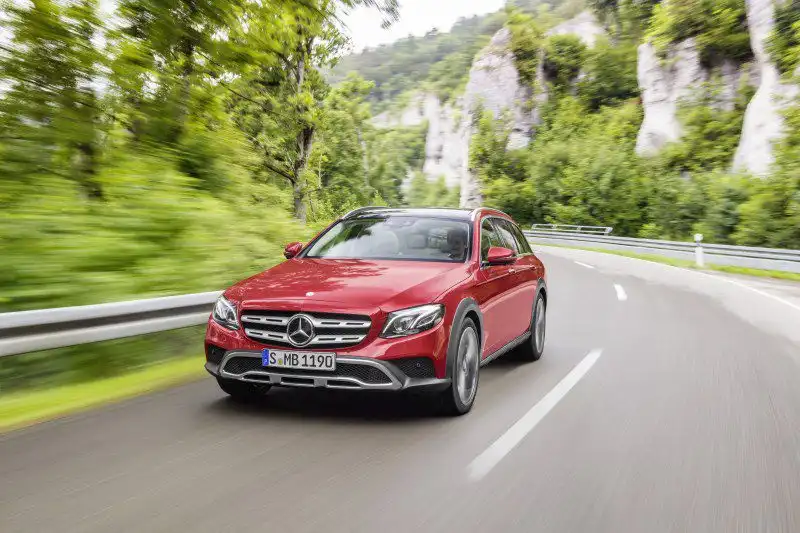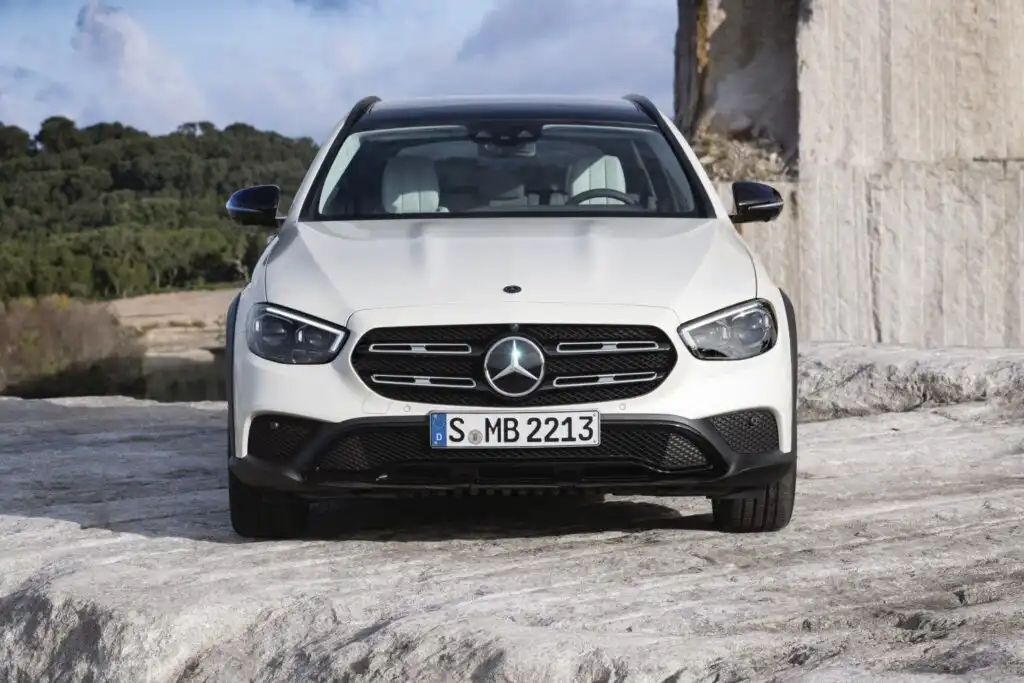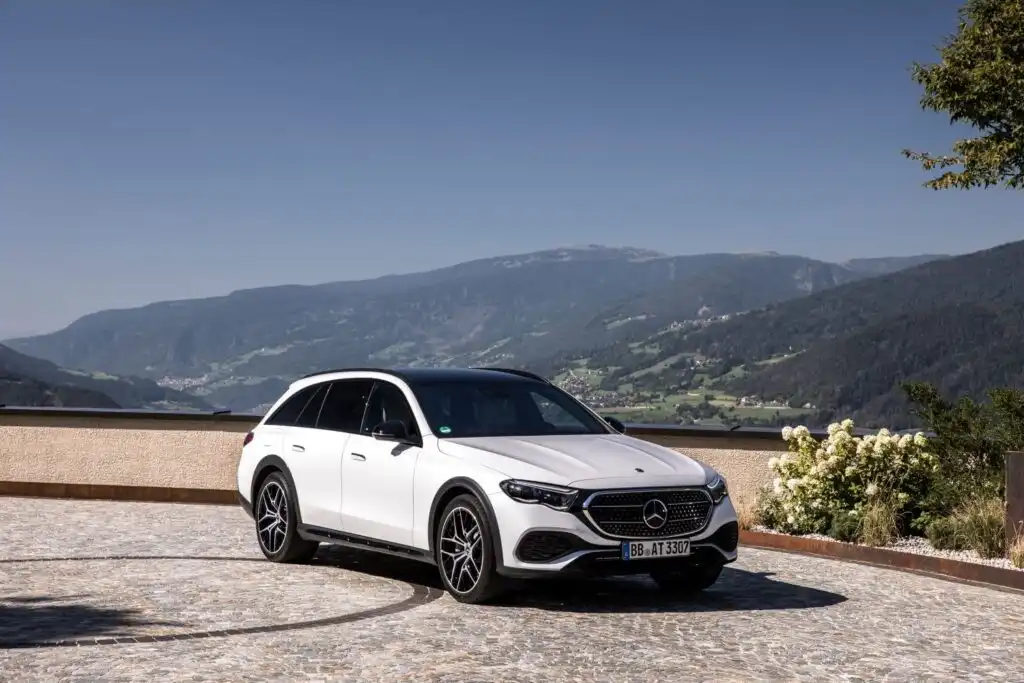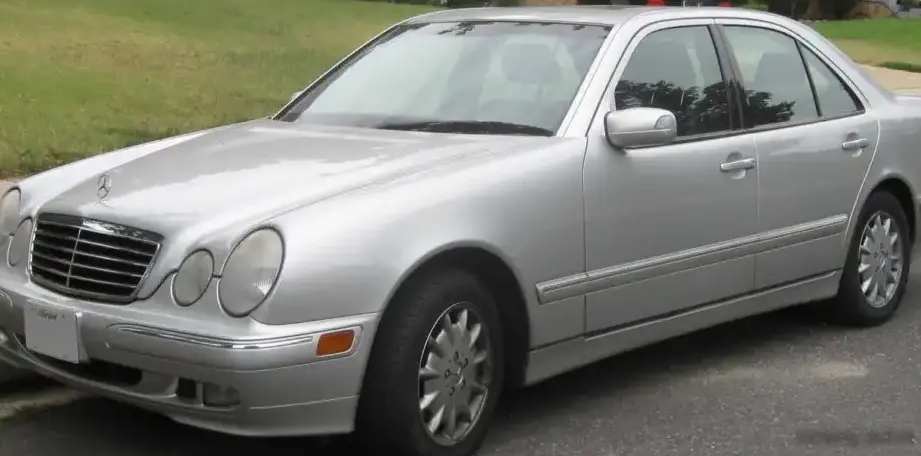
The Mercedes-Benz E 200 CDI, produced from July 1999 to March 2002, was a key variant within the facelifted W210 E-Class range. This model represented Mercedes-Benz’s entry into the diesel-powered E-Class market with a focus on fuel efficiency and comfortable cruising. Positioned as a more economical alternative to the gasoline-powered E 200 and E 230 models, and below the more powerful E 320 CDI, the E 200 CDI aimed to appeal to buyers prioritizing practicality and lower running costs. It was primarily sold in Europe, where diesel engines held a significant market share, and offered a blend of luxury and efficiency characteristic of the E-Class.
| Brand | Mercedes-Benz |
| Model | E-Class |
| Generation | E-Class (W210, facelift 1999) |
| Type (Engine) | E 200 CDI (116 Hp) Automatic |
| Start of production | July, 1999 |
| End of production | March, 2002 |
| Powertrain Architecture | Internal Combustion engine |
| Body type | Sedan |
| Seats | 5 |
| Doors | 4 |
| Fuel consumption (urban) | 9.1 l/100 km (25.8 US mpg, 31 UK mpg, 11 km/l) |
| Fuel consumption (extra urban) | 5.3 l/100 km (44.4 US mpg, 53.3 UK mpg, 18.9 km/l) |
| Fuel consumption (combined) | 6.7 l/100 km (35.1 US mpg, 42.2 UK mpg, 14.9 km/l) |
| Fuel Type | Diesel |
| Acceleration 0 – 100 km/h | 12.5 sec |
| Acceleration 0 – 62 mph | 12.5 sec |
| Acceleration 0 – 60 mph | 11.9 sec |
| Maximum speed | 197 km/h (122.41 mph) |
| Weight-to-power ratio | 13.7 kg/Hp, 73 Hp/tonne |
| Weight-to-torque ratio | 6.4 kg/Nm, 157.2 Nm/tonne |
| Power | 116 Hp @ 4200 rpm |
| Power per litre | 54 Hp/l |
| Torque | 250 Nm @ 1400 rpm (184.39 lb.-ft. @ 1400 rpm) |
| Engine layout | Front, Longitudinal |
| Engine Model/Code | OM 611 DE 22 LA LR / 611.961 |
| Engine displacement | 2148 cm3 (131.08 cu. in.) |
| Number of cylinders | 4 |
| Engine configuration | Inline |
| Cylinder Bore | 88 mm (3.46 in.) |
| Piston Stroke | 88.4 mm (3.48 in.) |
| Compression ratio | 18:1 |
| Number of valves per cylinder | 4 |
| Fuel injection system | Diesel Commonrail |
| Engine aspiration | Turbocharger, Intercooler |
| Valvetrain | DOHC |
| Engine oil capacity | 6 l (6.34 US qt | 5.28 UK qt) |
| Coolant | 8 l (8.45 US qt | 7.04 UK qt) |
| Kerb Weight | 1590 kg (3505.35 lbs.) |
| Max. weight | 2090 kg (4607.66 lbs.) |
| Max load | 500 kg (1102.31 lbs.) |
| Trunk (boot) space – minimum | 520 l (18.36 cu. ft.) |
| Fuel tank capacity | 65 l (17.17 US gal | 14.3 UK gal) |
| Length | 4818 mm (189.69 in.) |
| Width | 1799 mm (70.83 in.) |
| Height | 1440 mm (56.69 in.) |
| Wheelbase | 2833 mm (111.54 in.) |
| Front track | 1542 mm (60.71 in.) |
| Rear (Back) track | 1536 mm (60.47 in.) |
| Drag coefficient (Cd) | 0.27 |
| Drivetrain Architecture | The Internal combustion engine (ICE) drives the rear wheels of the vehicle. |
| Drive wheel | Rear wheel drive |
| Number of gears and type of gearbox | 5 gears, automatic transmission |
| Front suspension | Double wishbone |
| Rear suspension | Independent multi-link spring suspension with stabilizer |
| Front brakes | Ventilated discs |
| Rear brakes | Disc |
| Assisting systems | ABS (Anti-lock braking system) |
| Steering type | Steering rack and pinion |
| Power steering | Hydraulic Steering |
| Tires size | 205/65 R15 |
| Wheel rims size | 7J x 15 |
Powertrain & Engine Architecture
The E 200 CDI was powered by the OM 611 DE 22 LA LR engine, a 2.2-liter inline-four cylinder diesel. This engine was a significant step forward for Mercedes-Benz, incorporating common rail direct injection technology. The common rail system, operating at extremely high pressures, allowed for finer control over fuel delivery, resulting in improved combustion efficiency, reduced noise, and lower emissions. The engine featured a turbocharger with an intercooler, boosting power output to 116 horsepower at 4200 rpm and 250 Nm (184 lb-ft) of torque at a low 1400 rpm. The engine’s robust bottom end and relatively flat torque curve made it well-suited for relaxed highway cruising. The 5-speed automatic transmission, a standard feature, was designed to provide smooth and comfortable gear changes, prioritizing ease of use over outright performance. This transmission was electronically controlled, adapting shift points based on driving conditions and throttle input.
Driving Characteristics
The E 200 CDI Automatic offered a comfortable and refined driving experience, albeit not a particularly sporty one. Acceleration from 0 to 60 mph took around 11.9 seconds, and top speed was limited to 197 km/h (122 mph). The automatic transmission, while smooth, did contribute to a slight loss of responsiveness compared to the available manual transmission. The emphasis was on fuel economy and effortless cruising. The torque-rich diesel engine provided ample power for everyday driving situations, and the automatic transmission minimized driver fatigue. Compared to the more powerful E 320 CDI, the E 200 CDI felt noticeably slower, particularly during overtaking maneuvers. However, it offered a significant improvement in fuel economy, making it a more practical choice for high-mileage drivers.
Equipment & Trim Levels
The E 200 CDI typically came equipped with a respectable level of standard features, reflecting the E-Class’s position as a luxury vehicle. Standard equipment included automatic climate control, power windows and mirrors, central locking, and an audio system. Interior upholstery was typically cloth, although leather options were available. The dashboard layout was consistent with other W210 E-Class models, featuring a classic Mercedes-Benz design with wood trim accents. Optional extras included a sunroof, upgraded audio systems, heated seats, and parking sensors. The E 200 CDI was often seen as a base model, with buyers opting for higher trims like the E 230 or E 320 if they desired more luxurious features or higher performance.
Chassis & Braking
The E 200 CDI utilized a double wishbone front suspension and an independent multi-link rear suspension, providing a comfortable and controlled ride. The suspension was tuned for comfort rather than outright sportiness. Braking duties were handled by ventilated discs at the front and solid discs at the rear. Anti-lock braking system (ABS) was standard, enhancing safety and stability during hard braking. The E 200 CDI’s weight of approximately 1590 kg (3505 lbs) was relatively moderate for a vehicle of its size, contributing to its manageable handling characteristics. Stabilizer bars were fitted to both the front and rear axles to reduce body roll during cornering.
Market Reception & Comparison
The E 200 CDI was generally well-received by critics as a practical and economical option within the E-Class range. Its fuel efficiency was a major selling point, particularly in Europe where diesel fuel was significantly cheaper than gasoline. However, some reviewers noted its relatively modest performance compared to the gasoline-powered models. Compared to the E 230, the E 200 CDI offered lower running costs but sacrificed some performance and refinement. Against the E 320 CDI, it provided a more affordable entry point into the E-Class diesel lineup, but lacked the higher power output and more luxurious features. The E 200 CDI’s reliability was generally good, although, like all vehicles of this era, it was susceptible to age-related issues.
Legacy
The OM 611 engine family, including the version used in the E 200 CDI, proved to be remarkably durable and reliable. Many examples of this engine are still in service today, having accumulated high mileage. The E 200 CDI, while not the most sought-after E-Class variant, has developed a reputation as a dependable and economical classic. On the used car market, these models are typically priced lower than their more powerful counterparts, making them an attractive option for budget-conscious buyers seeking a comfortable and well-built luxury sedan. The E 200 CDI represents a pivotal moment in Mercedes-Benz’s diesel engine development, showcasing the benefits of common rail technology and paving the way for future generations of efficient and refined diesel engines.