Technical Specifications
| Brand | Mercedes-Benz |
| Model | E-class |
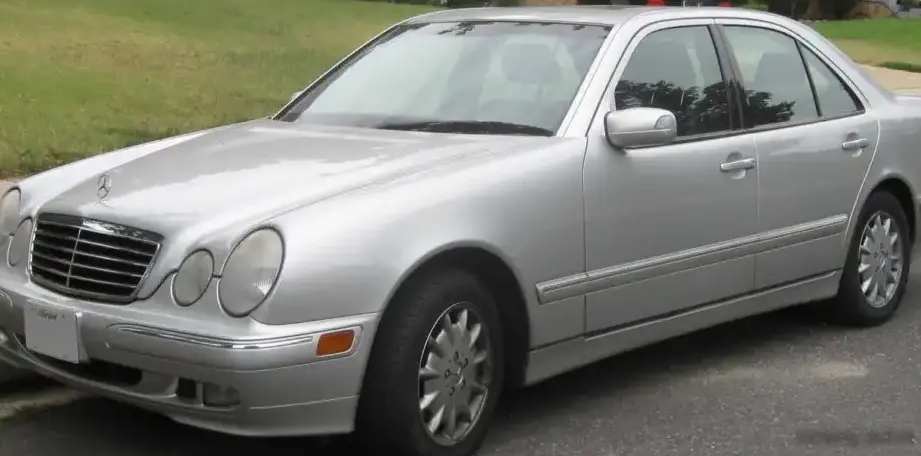
| Generation | E-class (W210, facelift 1999) |
| Type (Engine) | E 240 2.6 V6 (170 Hp) Automatic |
| Start of production | November, 1999 |
| End of production | February, 2002 |
| Powertrain Architecture | Internal Combustion engine |
| Body type | Sedan |
| Seats | 5 |
| Doors | 4 |
| Fuel consumption (urban) | 15.2 l/100 km (15.5 US mpg, 18.6 UK mpg, 6.6 km/l) |
| Fuel consumption (extra urban) | 7.4 l/100 km (31.8 US mpg, 38.2 UK mpg, 13.5 km/l) |
| Fuel consumption (combined) | 10.3 l/100 km (22.8 US mpg, 27.4 UK mpg, 9.7 km/l) |
| Fuel Type | Petrol (Gasoline) |
| Acceleration 0 – 100 km/h | 10 sec |
| Acceleration 0 – 62 mph | 10 sec |
| Acceleration 0 – 60 mph | 9.5 sec |
| Maximum speed | 226 km/h (140.43 mph) |
| Weight-to-power ratio | 9.4 kg/Hp, 106.9 Hp/tonne |
| Weight-to-torque ratio | 6.6 kg/Nm, 150.9 Nm/tonne |
| Power | 170 Hp @ 5700 rpm |
| Power per litre | 65.5 Hp/l |
| Torque | 240 Nm @ 4500 rpm (177.01 lb.-ft. @ 4500 rpm) |
| Engine layout | Front, Longitudinal |
| Engine Model/Code | M 112 E 26 / 112.914 |
| Engine displacement | 2597 cm3 (158.48 cu. in.) |
| Number of cylinders | 6 |
| Engine configuration | V-engine |
| Cylinder Bore | 89.9 mm (3.54 in.) |
| Piston Stroke | 68.2 mm (2.69 in.) |
| Compression ratio | 10.5:1 |
| Number of valves per cylinder | 3 |
| Fuel injection system | Multi-port manifold injection |
| Engine aspiration | Naturally aspirated engine |
| Valvetrain | SOHC |
| Engine oil capacity | 8 l (8.45 US qt | 7.04 UK qt) |
| Coolant | 10 l (10.57 US qt | 8.8 UK qt) |
| Kerb Weight | 1590 kg (3505.35 lbs.) |
| Max. weight | 2090 kg (4607.66 lbs.) |
| Max load | 500 kg (1102.31 lbs.) |
| Trunk (boot) space – minimum | 520 l (18.36 cu. ft.) |
| Fuel tank capacity | 65 l (17.17 US gal | 14.3 UK gal) |
| Length | 4818 mm (189.69 in.) |
| Width | 1799 mm (70.83 in.) |
| Height | 1440 mm (56.69 in.) |
| Wheelbase | 2833 mm (111.54 in.) |
| Front track | 1542 mm (60.71 in.) |
| Rear (Back) track | 1536 mm (60.47 in.) |
| Drag coefficient (Cd) | 0.28 |
| Drivetrain Architecture | The Internal combustion engine (ICE) drives the rear wheels of the vehicle. |
| Drive wheel | Rear wheel drive |
| Number of gears and type of gearbox | 5 gears, automatic transmission |
| Front suspension | Double wishbone |
| Rear suspension | Independent multi-link spring suspension with stabilizer |
| Front brakes | Ventilated discs |
| Rear brakes | Disc |
| Assisting systems | ABS (Anti-lock braking system) |
| Steering type | Steering rack and pinion |
| Power steering | Hydraulic Steering |
| Tires size | 205/65 R15 |
| Wheel rims size | 7J x 15 |
The Mercedes-Benz E 240 2.6 V6 Automatic, produced from November 1999 to February 2002, represents a significant iteration of the W210 E-Class following its 1999 facelift. Positioned as a mid-range offering within the E-Class lineup, it aimed to balance performance, comfort, and fuel efficiency for the discerning luxury car buyer. This variant occupied a space between the entry-level E 200 Kompressor and the more powerful E 320, offering a smooth and refined driving experience thanks to its V6 engine and automatic transmission. The W210 generation, known for its robust engineering and technological advancements, solidified Mercedes-Benz’s reputation for building durable and sophisticated automobiles.
Powertrain & Engine Architecture
The E 240’s heart is the M112 E 26 engine, a 2.6-liter naturally aspirated V6. This engine, part of Mercedes-Benz’s new generation of V6 powerplants introduced in the late 1990s, featured all-aluminum construction, a short-stroke design, and a single overhead camshaft (SOHC) per cylinder bank. The M112 utilized a multi-port fuel injection system, delivering fuel directly into the intake ports for efficient combustion. The engine produced 170 horsepower at 5700 rpm and 240 Nm (177 lb-ft) of torque at 4500 rpm. Paired with this engine was a 5-speed automatic transmission, offering smooth and refined gear changes. This transmission was designed for comfort and ease of use, prioritizing a relaxed driving experience over outright performance. The engine code 112.914 specifically identifies this configuration.
Driving Characteristics
The E 240 2.6 V6 Automatic delivered a comfortable and composed driving experience. While not a sports car, the engine provided adequate power for everyday driving and highway cruising. Acceleration from 0 to 60 mph took approximately 9.5 seconds, and the car had a top speed of 226 km/h (140 mph). The automatic transmission, while smooth, did contribute to a slight reduction in responsiveness compared to the available manual transmission. Gear ratios were optimized for fuel efficiency and comfortable cruising, rather than aggressive acceleration. The engine’s torque curve was relatively flat, providing usable power across a wide range of engine speeds. Compared to the E 320 with its larger engine, the E 240 offered a more economical option without sacrificing too much in terms of refinement.
Equipment & Trim Levels
The E 240 Automatic came standard with a respectable array of features, including automatic climate control, power windows and locks, a multi-function steering wheel, and a premium audio system. Interior upholstery typically consisted of cloth or leatherette, with leather being an optional upgrade. Common optional extras included a sunroof, heated seats, a navigation system, and upgraded audio options. The dashboard layout was typical of the W210 facelift, featuring a clean and functional design with wood trim accents. The overall ambiance was one of understated luxury and sophistication.
Chassis & Braking
The E 240 utilized a double wishbone suspension at the front and an independent multi-link spring suspension at the rear, providing a comfortable and controlled ride. Stabilizer bars were fitted to both axles to reduce body roll during cornering. The braking system consisted of ventilated discs at the front and solid discs at the rear, with ABS (Anti-lock Braking System) as standard. The suspension tuning was geared towards comfort and stability, rather than sporty handling. The car rode on 205/65 R15 tires mounted on 7J x 15 inch alloy wheels.
Market Reception & Comparison
The E 240 2.6 V6 Automatic was generally well-received by automotive critics. It was praised for its smooth engine, comfortable ride, and refined interior. However, some critics noted that the acceleration was not particularly brisk, and the automatic transmission could feel somewhat sluggish at times. In terms of fuel economy, the E 240 offered a reasonable compromise between performance and efficiency, achieving around 22.8 US mpg in combined driving. Compared to the E 200 Kompressor, the E 240 offered more power and a smoother driving experience, while the E 320 provided even greater performance but at a higher price point and with increased fuel consumption.
Legacy
The M112 engine family, including the 2.6-liter variant found in the E 240, is known for its durability and reliability. With proper maintenance, these engines can easily exceed 200,000 miles. The W210 E-Class, as a whole, has developed a reputation as a robust and long-lasting vehicle. Today, the E 240 2.6 V6 Automatic represents an affordable entry point into Mercedes-Benz ownership, offering a comfortable and reliable classic car experience. While parts availability is generally good, regular maintenance and attention to common W210 issues (such as suspension components and electrical systems) are essential to keep these cars running smoothly.