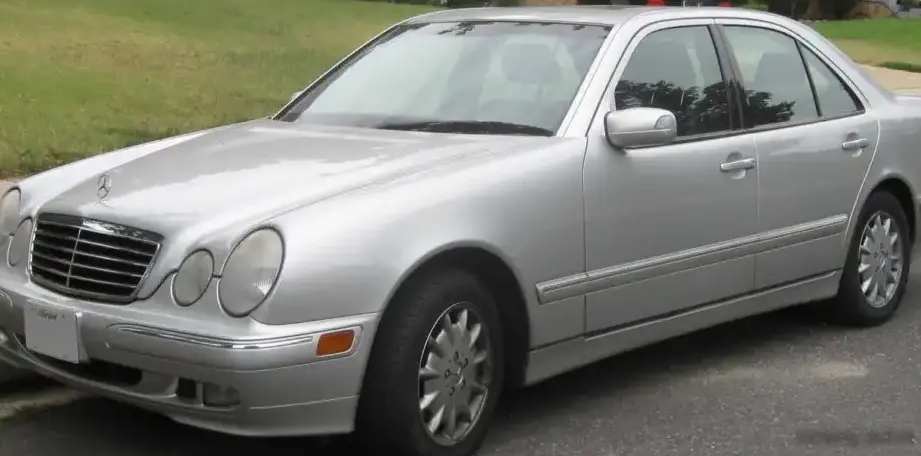
The Mercedes-Benz E 280, produced from July 1999 to February 2002, was a variant of the W210 E-Class following the 1999 facelift. Positioned as a mid-range offering within the E-Class lineup, it aimed to provide a balance between performance and comfort, appealing to buyers seeking a refined driving experience without the higher price tag of the flagship models like the E 430. This model represented a continuation of Mercedes-Benz’s commitment to luxury sedans, building upon the established reputation of the W210 platform for build quality and engineering. The E 280 was primarily marketed in Europe and North America, offering a compelling alternative to competitors like the BMW 5 Series and Audi A6.
Technical Specifications
| Brand | Mercedes-Benz |
| Model | E-class |
| Generation | E-class (W210, facelift 1999) |
| Type (Engine) | E 280 (204 Hp) Automatic |
| Start of production | July, 1999 |
| End of production | February, 2002 |
| Powertrain Architecture | Internal Combustion engine |
| Body type | Sedan |
| Seats | 5 |
| Doors | 4 |
| Fuel consumption (urban) | 15.7 l/100 km (15 US mpg, 18 UK mpg, 6.4 km/l) |
| Fuel consumption (extra urban) | 7.8 l/100 km (30.2 US mpg, 36.2 UK mpg, 12.8 km/l) |
| Fuel consumption (combined) | 10.7 l/100 km (22 US mpg, 26.4 UK mpg, 9.3 km/l) |
| Fuel Type | Petrol (Gasoline) |
| Acceleration 0 – 100 km/h | 9.1 sec |
| Acceleration 0 – 62 mph | 9.1 sec |
| Acceleration 0 – 60 mph | 8.6 sec |
| Maximum speed | 230 km/h (142.92 mph) |
| Weight-to-power ratio | 7.5 kg/Hp, 132.5 Hp/tonne |
| Weight-to-torque ratio | 5.7 kg/Nm, 175.3 Nm/tonne |
| Power | 204 Hp @ 5700 rpm |
| Power per litre | 72.9 Hp/l |
| Torque | 270 Nm @ 3000 rpm (199.14 lb.-ft. @ 3000 rpm) |
| Engine layout | Front, Longitudinal |
| Engine Model/Code | M 112 E 28 / 112.921 |
| Engine displacement | 2799 cm3 (170.81 cu. in.) |
| Number of cylinders | 6 |
| Engine configuration | V-engine |
| Cylinder Bore | 89.9 mm (3.54 in.) |
| Piston Stroke | 73.5 mm (2.89 in.) |
| Compression ratio | 10:1 |
| Number of valves per cylinder | 3 |
| Fuel injection system | Multi-port manifold injection |
| Engine aspiration | Naturally aspirated engine |
| Valvetrain | SOHC |
| Engine oil capacity | 8 l (8.45 US qt | 7.04 UK qt) |
| Coolant | 10 l (10.57 US qt | 8.8 UK qt) |
| Kerb Weight | 1540 kg (3395.12 lbs.) |
| Max. weight | 2070 kg (4563.57 lbs.) |
| Max load | 530 kg (1168.45 lbs.) |
| Trunk (boot) space – minimum | 520 l (18.36 cu. ft.) |
| Fuel tank capacity | 80 l (21.13 US gal | 17.6 UK gal) |
| Length | 4818 mm (189.69 in.) |
| Width | 1799 mm (70.83 in.) |
| Height | 1438 mm (56.61 in.) |
| Wheelbase | 2833 mm (111.54 in.) |
| Front track | 1534 mm (60.39 in.) |
| Rear (Back) track | 1528 mm (60.16 in.) |
| Drag coefficient (Cd) | 0.30 |
| Drivetrain Architecture | The Internal combustion engine (ICE) drives the rear wheels of the vehicle. |
| Drive wheel | Rear wheel drive |
| Number of gears and type of gearbox | 5 gears, automatic transmission |
| Front suspension | Double wishbone |
| Rear suspension | Independent multi-link spring suspension with stabilizer |
| Front brakes | Ventilated discs |
| Rear brakes | Disc |
| Assisting systems | ABS (Anti-lock braking system) |
| Steering type | Steering rack and pinion |
| Power steering | Hydraulic Steering |
| Tires size | 215/55 R16 |
| Wheel rims size | 7.5J x 16 |
Powertrain & Engine Architecture
The E 280 was powered by the M112 E 28 engine, a 2.8-liter naturally aspirated V6. This engine, part of Mercedes-Benz’s modular V6 and V8 engine family, featured a 60-degree V-angle and a single overhead camshaft (SOHC) design per cylinder bank. The M112 utilized a multi-port fuel injection system, delivering fuel directly into the intake ports. This engine produced 204 horsepower at 5700 rpm and 270 Nm (199 lb-ft) of torque at 3000 rpm. The engine’s construction incorporated an aluminum alloy block and cylinder heads, contributing to a relatively lightweight design. The five-speed automatic transmission (typically the 5G-Tronic) was standard, offering smooth shifts and a focus on comfort. This transmission was electronically controlled, adapting shift points based on driving conditions and throttle input.
Driving Characteristics
The E 280 Automatic offered a comfortable and refined driving experience. While not overtly sporty, the 2.8-liter V6 provided adequate power for everyday driving and highway cruising. Acceleration from 0 to 60 mph took approximately 8.6 seconds, and the car had a top speed of 230 km/h (143 mph). The automatic transmission, while smooth, did result in some power loss compared to the available manual transmission. Gear ratios were tuned for fuel efficiency and relaxed cruising, rather than aggressive acceleration. Compared to the more powerful E 430, the E 280 felt less urgent, but it offered a more balanced and economical driving experience. Compared to the diesel variants, the E 280 provided a smoother, quieter ride, albeit with lower fuel economy.
Equipment & Trim Levels
The E 280 typically came standard with features such as automatic climate control, power windows and locks, a premium sound system, and leather upholstery. Standard safety features included ABS, traction control, and multiple airbags. Optional extras included a sunroof, navigation system, upgraded sound system, and various interior trim options. The interior design was typical of Mercedes-Benz at the time, emphasizing luxury and comfort with high-quality materials and a well-appointed dashboard. Trim levels were relatively limited, with most customization options available through individual selections rather than distinct packages.
Chassis & Braking
The W210 E-Class featured a double wishbone front suspension and an independent multi-link rear suspension, providing a comfortable and controlled ride. The E 280 typically came equipped with ventilated disc brakes at the front and solid disc brakes at the rear. ABS (Anti-lock Braking System) was standard, enhancing braking performance and stability. The steering was a hydraulic power-assisted rack and pinion system, offering precise and responsive handling. Stabilizer bars were fitted to both the front and rear axles to reduce body roll during cornering.
Market Reception & Comparison
The E 280 was generally well-received by automotive critics as a capable and comfortable luxury sedan. It was praised for its refined engine, smooth transmission, and high-quality interior. However, some critics noted that its performance was not as exhilarating as some of its competitors, particularly the BMW 5 Series. Fuel economy was considered average for its class. In terms of reliability, the M112 engine proved to be relatively robust, although maintenance costs could be higher than some other brands. Compared to the E 320, the E 280 offered a lower entry price, making it more accessible to a wider range of buyers.
Legacy
The Mercedes-Benz E 280 (W210) has become a popular choice among enthusiasts and collectors seeking a well-built and reliable classic Mercedes-Benz. The M112 engine is known for its durability and relatively straightforward maintenance. While finding parts can sometimes be a challenge, the E 280 remains a relatively affordable entry point into the world of classic Mercedes-Benz ownership. Today, well-maintained examples command reasonable prices in the used car market, and the car continues to be appreciated for its timeless design and comfortable driving experience.