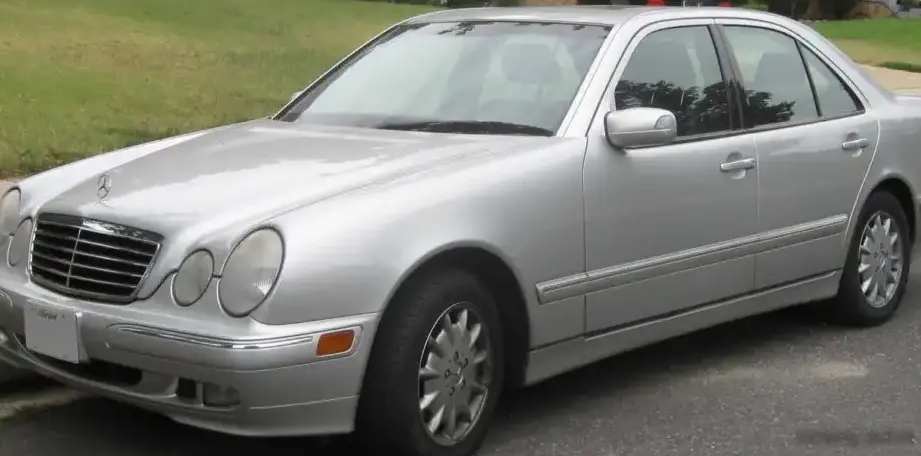
The Mercedes-Benz E 430, part of the W210 E-Class facelift introduced in July 1999 and continuing through March 2002, represented a significant step up in performance and luxury within the mid-size executive car segment. Positioned as a premium offering, the E 430 featured a naturally aspirated 4.3-liter V8 engine paired exclusively with a five-speed automatic transmission. This combination aimed to deliver a blend of effortless power and refined comfort, appealing to buyers seeking a more dynamic driving experience than the four and six-cylinder models. The W210 facelift, often referred to as the “post-facelift” or “Series II” model, addressed many of the criticisms leveled at the earlier W210s, improving build quality and addressing minor mechanical issues.
Technical Specifications
| Brand | Mercedes-Benz |
| Model | E-class |
| Generation | E-class (W210, facelift 1999) |
| Type (Engine) | E 430 V8 (279 Hp) Automatic |
| Start of production | July, 1999 |
| End of production | March, 2002 |
| Powertrain Architecture | Internal Combustion engine |
| Body type | Sedan |
| Seats | 5 |
| Doors | 4 |
| Fuel consumption (urban) | 15.7 l/100 km (15 US mpg, 18 UK mpg, 6.4 km/l) |
| Fuel consumption (extra urban) | 8 l/100 km (29.4 US mpg, 35.3 UK mpg, 12.5 km/l) |
| Fuel consumption (combined) | 10.8 l/100 km (21.8 US mpg, 26.2 UK mpg, 9.3 km/l) |
| Fuel Type | Petrol (Gasoline) |
| Acceleration 0 – 100 km/h | 6.6 sec |
| Acceleration 0 – 62 mph | 6.6 sec |
| Acceleration 0 – 60 mph | 6.3 sec |
| Maximum speed | 250 km/h (155.34 mph), Electronically limited |
| Weight-to-power ratio | 6 kg/Hp, 166.1 Hp/tonne |
| Weight-to-torque ratio | 4.2 kg/Nm, 238.1 Nm/tonne |
| Power | 279 Hp @ 5750 rpm |
| Power per litre | 65.4 Hp/l |
| Torque | 400 Nm @ 3000 rpm (295.02 lb.-ft. @ 3000 rpm) |
| Engine layout | Front, Longitudinal |
| Engine Model/Code | M 113 E 43 / 113.940 |
| Engine displacement | 4266 cm3 (260.33 cu. in.) |
| Number of cylinders | 8 |
| Engine configuration | V-engine |
| Cylinder Bore | 89.9 mm (3.54 in.) |
| Piston Stroke | 84 mm (3.31 in.) |
| Compression ratio | 10:1 |
| Number of valves per cylinder | 3 |
| Fuel injection system | Multi-port manifold injection |
| Engine aspiration | Naturally aspirated engine |
| Valvetrain | SOHC |
| Engine oil capacity | 8 l (8.45 US qt | 7.04 UK qt) |
| Coolant | 11 l (11.62 US qt | 9.68 UK qt) |
| Kerb Weight | 1680 kg (3703.77 lbs.) |
| Max. weight | 2210 kg (4872.22 lbs.) |
| Max load | 530 kg (1168.45 lbs.) |
| Trunk (boot) space – minimum | 520 l (18.36 cu. ft.) |
| Fuel tank capacity | 80 l (21.13 US gal | 17.6 UK gal) |
| Length | 4818 mm (189.69 in.) |
| Width | 1799 mm (70.83 in.) |
| Height | 1443 mm (56.81 in.) |
| Wheelbase | 2833 mm (111.54 in.) |
| Front track | 1542 mm (60.71 in.) |
| Rear (Back) track | 1536 mm (60.47 in.) |
| Drag coefficient (Cd) | 0.29 |
| Drivetrain Architecture | The Internal combustion engine (ICE) drives the rear wheels of the vehicle. |
| Drive wheel | Rear wheel drive |
| Number of gears and type of gearbox | 5 gears, automatic transmission |
| Front suspension | Double wishbone |
| Rear suspension | Independent multi-link spring suspension with stabilizer |
| Front brakes | Ventilated discs |
| Rear brakes | Disc |
| Assisting systems | ABS (Anti-lock braking system) |
| Steering type | Steering rack and pinion |
| Power steering | Hydraulic Steering |
| Tires size | 235/45 R17 |
| Wheel rims size | 7.5J x 17 |
Powertrain & Engine Architecture
The heart of the E 430 is the M113 E 43 engine, a 4.3-liter (4266 cc) naturally aspirated V8. This engine, a cornerstone of Mercedes-Benz’s V8 offerings in the late 1990s and early 2000s, features a cast-iron block and aluminum cylinder heads. It utilizes a SOHC (Single Overhead Cam) valvetrain with three valves per cylinder (two intake, one exhaust). Fuel delivery is managed by a multi-port fuel injection system, providing precise fuel metering for optimal combustion. The M113 is known for its smooth power delivery and robust construction. The five-speed automatic transmission (typically the 722.6) was specifically calibrated to handle the V8’s torque output. This transmission featured a torque converter lockup clutch to improve fuel efficiency at cruising speeds. The transmission’s shift points were designed for a balance of performance and comfort, prioritizing smooth transitions over aggressive downshifts.
Driving Characteristics
The E 430 Automatic offered a distinctly different driving experience compared to the four and six-cylinder W210 models. The V8 provided ample torque throughout the rev range, resulting in effortless acceleration. While the 6.6-second 0-60 mph time wasn’t groundbreaking by modern standards, it was more than adequate for comfortable and confident highway cruising. The automatic transmission, while not as sporty as a manual, provided smooth and predictable shifts. Compared to the E 430 with a manual transmission (available in some markets), the automatic prioritized ease of use over outright performance. The gear ratios were tuned for relaxed cruising, and the transmission didn’t offer the same level of driver control. However, the automatic’s convenience and refinement appealed to a broader audience.
Equipment & Trim Levels
The E 430 typically came well-equipped, reflecting its position as a premium model. Standard features included leather upholstery, power-adjustable front seats with memory function, automatic climate control, a premium sound system, and wood trim throughout the interior. Optional extras included a sunroof, navigation system, heated seats, and upgraded leather options. The E 430’s interior was designed to provide a luxurious and comfortable environment, with a focus on high-quality materials and refined aesthetics.
Chassis & Braking
The E 430 utilized a double wishbone front suspension and an independent multi-link rear suspension, providing a comfortable and controlled ride. Stabilizer bars were fitted to both axles to reduce body roll during cornering. The braking system consisted of ventilated discs at the front and solid discs at the rear, coupled with ABS (Anti-lock Braking System) for enhanced safety. The suspension was tuned to balance comfort and handling, providing a stable and predictable driving experience.
Market Reception & Comparison
The E 430 was generally well-received by automotive critics, who praised its powerful engine, refined ride, and luxurious interior. However, some reviewers noted that the automatic transmission could feel slightly sluggish compared to the manual option. Compared to the E 320 (with its inline-six engine), the E 430 offered significantly more power and a more luxurious experience, but at a higher price point. The E 430 also offered better fuel economy than the range-topping E 55 AMG, while still providing a substantial performance upgrade over the lower-trim models.
Legacy
The M113 V8 engine, found in the E 430, is known for its durability and reliability. With proper maintenance, these engines can easily exceed 200,000 miles. The W210 E 430 has become a popular choice among enthusiasts seeking a classic Mercedes-Benz with a powerful and refined V8 engine. While maintenance costs can be higher than for the four and six-cylinder models, the E 430’s performance and luxury make it a rewarding ownership experience. Today, well-maintained examples command a premium in the used car market, appealing to collectors and enthusiasts alike.