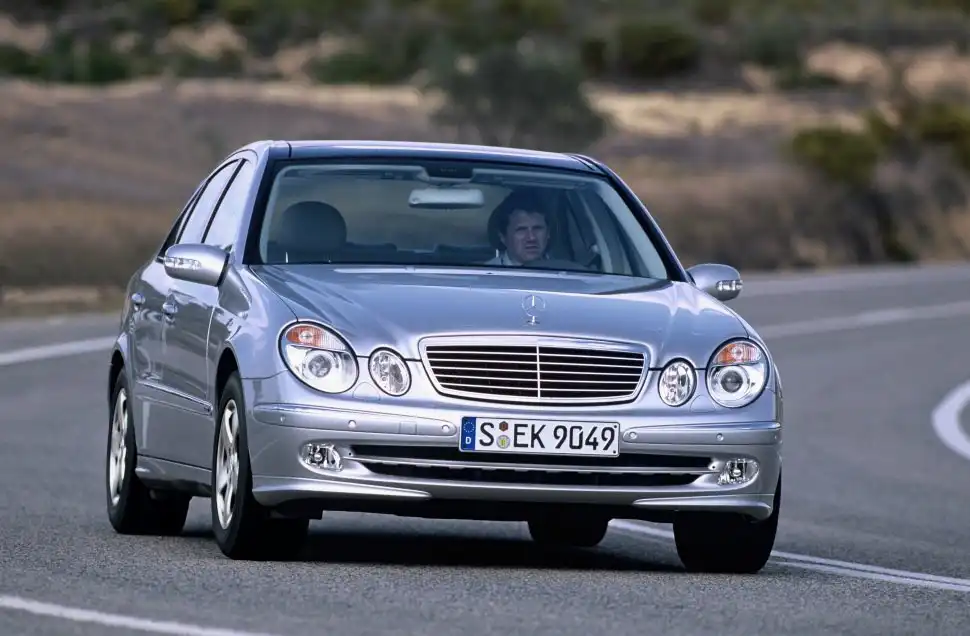
The Mercedes-Benz E 350 V6, produced between 2004 and 2006, was a key variant within the W211 E-Class generation. Positioned as a mid-range offering, it bridged the gap between the entry-level E 230 and the higher-performance E 500 models. This particular configuration – a 3.5-liter V6 engine paired with the 7G-TRONIC seven-speed automatic transmission – aimed to deliver a balance of refinement, performance, and fuel efficiency for the American luxury car buyer. The W211 E-Class, launched in 2002, represented a significant step forward for Mercedes-Benz in terms of technology and design, and the E 350 V6 exemplified many of these advancements.
Technical Specifications
| Brand | Mercedes-Benz |
| Model | E-class |
| Generation | E-class (W211) |
| Type (Engine) | E 350 V6 (272 Hp) 7G-TRONIC |
| Start of production | 2004 |
| End of production | 2006 |
| Powertrain Architecture | Internal Combustion engine |
| Body type | Sedan |
| Seats | 5 |
| Doors | 4 |
| Fuel consumption (urban) | 14 l/100 km (16.8 US mpg, 20.2 UK mpg, 7.1 km/l) |
| Fuel consumption (extra urban) | 7.2 l/100 km (32.7 US mpg, 39.2 UK mpg, 13.9 km/l) |
| Fuel consumption (combined) | 9.7 l/100 km (24.2 US mpg, 29.1 UK mpg, 10.3 km/l) |
| Fuel Type | Petrol (Gasoline) |
| Acceleration 0 – 100 km/h | 6.9 sec |
| Acceleration 0 – 62 mph | 6.9 sec |
| Acceleration 0 – 60 mph | 6.6 sec |
| Maximum speed | 250 km/h (155.34 mph) |
| Weight-to-power ratio | 6.2 kg/Hp, 161.9 Hp/tonne |
| Weight-to-torque ratio | 4.8 kg/Nm, 208.3 Nm/tonne |
| Power | 272 Hp @ 6000 rpm |
| Power per litre | 77.8 Hp/l |
| Torque | 350 Nm @ 2500 rpm (258.15 lb.-ft. @ 2500 rpm) |
| Engine layout | Front, Longitudinal |
| Engine Model/Code | M 272.964 |
| Engine displacement | 3498 cm3 (213.46 cu. in.) |
| Number of cylinders | 6 |
| Engine configuration | V-engine |
| Cylinder Bore | 92.9 mm (3.66 in.) |
| Piston Stroke | 86 mm (3.39 in.) |
| Compression ratio | 10.7:1 |
| Number of valves per cylinder | 4 |
| Fuel injection system | Multi-port manifold injection |
| Engine aspiration | Naturally aspirated engine |
| Engine oil capacity | 8 l (8.45 US qt | 7.04 UK qt) |
| Coolant | 10 l (10.57 US qt | 8.8 UK qt) |
| Kerb Weight | 1680 kg (3703.77 lbs.) |
| Max. weight | 2205 kg (4861.19 lbs.) |
| Max load | 525 kg (1157.43 lbs.) |
| Trunk (boot) space – minimum | 540 l (19.07 cu. ft.) |
| Fuel tank capacity | 80 l (21.13 US gal | 17.6 UK gal) |
| Permitted trailer load with brakes (12%) | 1900 kg (4188.78 lbs.) |
| Permitted trailer load without brakes | 750 kg (1653.47 lbs.) |
| Length | 4818 mm (189.69 in.) |
| Width | 1822 mm (71.73 in.) |
| Height | 1452 mm (57.17 in.) |
| Wheelbase | 2854 mm (112.36 in.) |
| Front track | 1577 mm (62.09 in.) |
| Rear (Back) track | 1570 mm (61.81 in.) |
| Drag coefficient (Cd) | 0.27 |
| Minimum turning circle (turning diameter) | 11.4 m (37.4 ft.) |
| Drivetrain Architecture | The Internal combustion engine (ICE) drives the rear wheels of the vehicle. |
| Drive wheel | Rear wheel drive |
| Number of gears and type of gearbox | 7 gears, automatic transmission G-TRONIC |
| Front suspension | Double wishbone |
| Rear suspension | Independent multi-link spring suspension with stabilizer |
| Front brakes | Ventilated discs |
| Rear brakes | Disc |
| Assisting systems | ABS (Anti-lock braking system) |
| Steering type | Steering rack and pinion |
| Power steering | Hydraulic Steering |
| Tires size | 225/55 R16 |
| Wheel rims size | 16 |
Powertrain & Engine Architecture
The heart of the E 350 V6 was the M272.964 3.5-liter naturally aspirated V6 engine. This engine was a significant departure from previous Mercedes-Benz V6 designs, featuring a compact 90-degree V-angle and all-aluminum construction. It utilized a three-valve-per-cylinder (two intake, one exhaust) design and a multi-port fuel injection system. The M272 engine was known for its smooth operation and relatively high specific output. The 7G-TRONIC transmission, a seven-speed automatic, was a key technological feature of the W211. It offered smoother shifts and improved fuel economy compared to the five-speed automatic it replaced. The transmission featured a torque converter lock-up clutch that engaged in multiple gears, further enhancing efficiency. The combination of the V6 engine and 7G-TRONIC provided a refined and responsive driving experience.
Driving Characteristics
The E 350 V6 offered a comfortable and composed ride. While not a sports sedan, the 272 horsepower and 258 lb-ft of torque provided adequate acceleration, with a 0-60 mph time of around 6.6 seconds. The 7G-TRONIC transmission contributed to smooth and seamless gear changes, making for relaxed cruising. Compared to the E 230, the E 350 offered noticeably more power and a more effortless driving experience. However, it lacked the outright performance of the E 500, which featured a larger V8 engine. The automatic transmission, while refined, didn’t offer the same level of driver engagement as the available six-speed manual transmission.
Equipment & Trim Levels
The E 350 V6 typically came standard with features such as leather upholstery, automatic climate control, power-adjustable front seats, and a premium sound system. Optional extras included a sunroof, navigation system, upgraded audio, and various driver-assistance features. Trim levels varied depending on the market, but generally, the E 350 offered a higher level of standard equipment than the base E 230. The interior design was characterized by Mercedes-Benz’s traditional emphasis on luxury and craftsmanship, with high-quality materials and a well-appointed cabin.
Chassis & Braking
The W211 E-Class featured a double wishbone front suspension and an independent multi-link rear suspension, providing a comfortable and controlled ride. The E 350 V6 typically came equipped with ventilated disc brakes at the front and solid disc brakes at the rear. Anti-lock brakes (ABS) were standard, along with electronic stability control (ESP). The suspension was tuned to prioritize comfort, but still offered decent handling characteristics. The steering was hydraulic power-assisted, providing a balanced feel.
Market Reception & Comparison
The E 350 V6 was generally well-received by automotive critics. It was praised for its refined engine, smooth transmission, and comfortable ride. Fuel economy was considered reasonable for a vehicle in its class, averaging around 24 mpg combined. Compared to the E 230, the E 350 offered a significant performance upgrade without the higher price tag of the E 500. However, some critics noted that the styling of the W211 was somewhat conservative compared to its rivals. Reliability was generally good, although some owners reported issues with the electronic systems.
Legacy
The M272 engine proved to be a durable and reliable powerplant, and many E 350 V6 models remain on the road today. The 7G-TRONIC transmission also proved to be relatively robust, although regular maintenance is essential. In the used car market, the W211 E 350 V6 represents a good value proposition, offering a luxurious and well-equipped sedan at a reasonable price. However, potential buyers should be aware of the potential for age-related issues, such as worn suspension components and electronic malfunctions. The E 350 V6 remains a popular choice for those seeking a comfortable and reliable German luxury car.