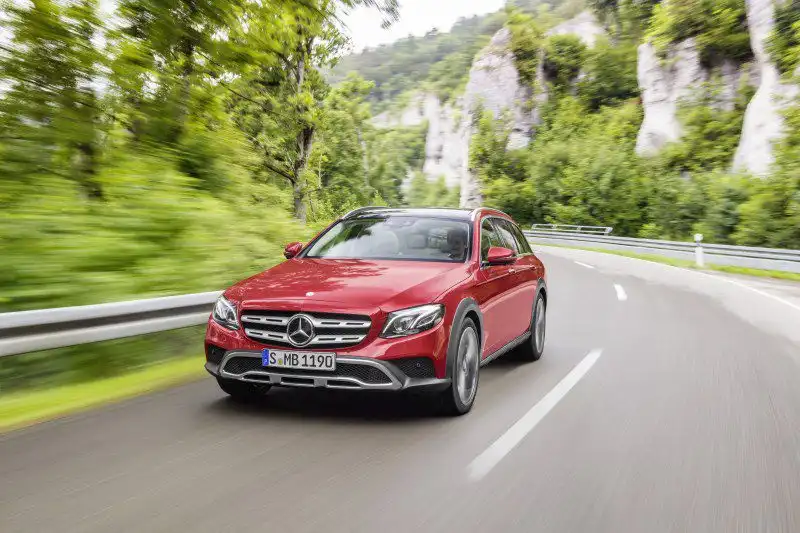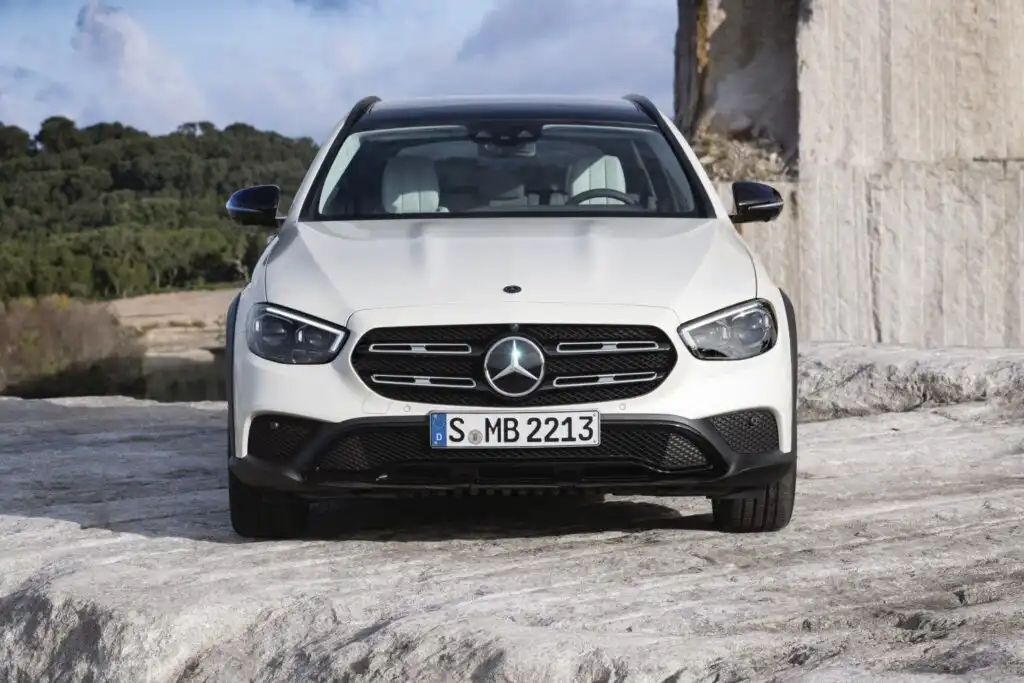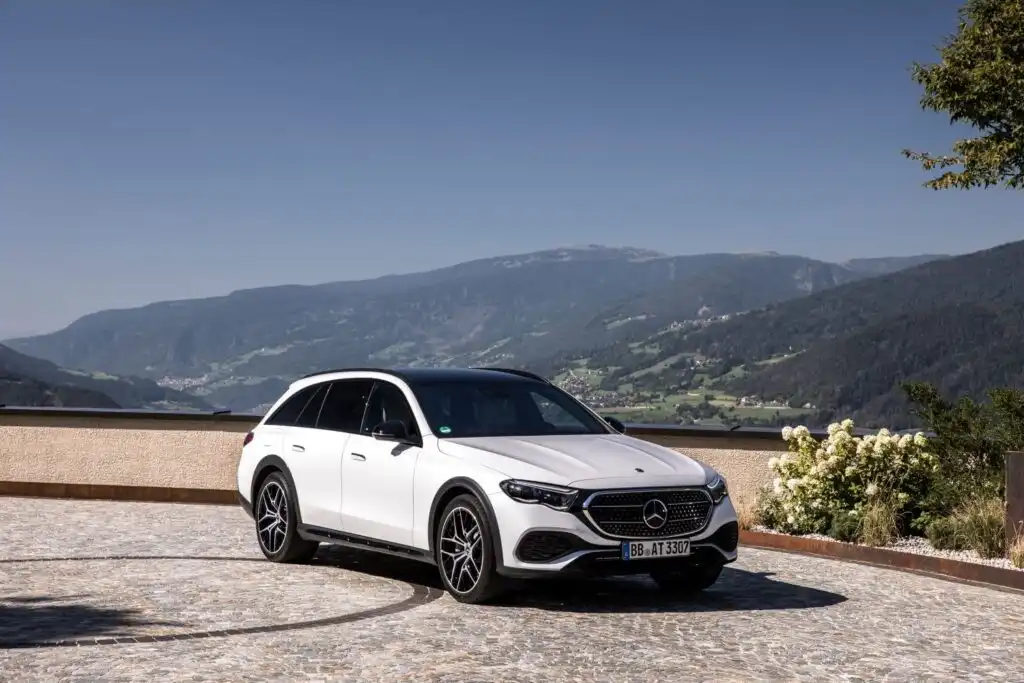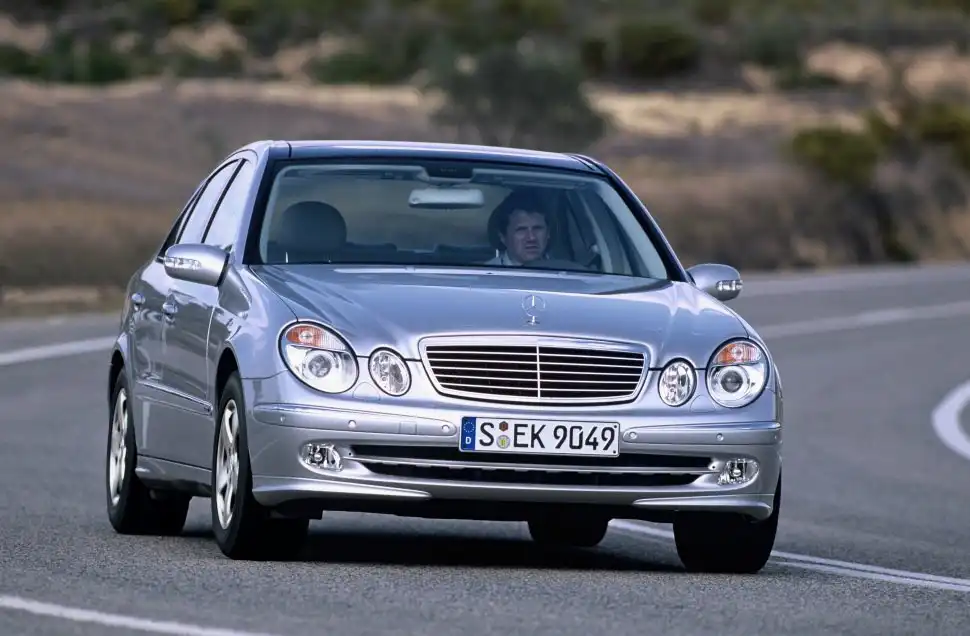
The Mercedes-Benz E-Class (W211) E 420 CDI V8, produced from June 2005 to May 2006, represented a high-performance diesel offering within the third generation (W211) E-Class lineup. Positioned as a premium variant, it combined a powerful V8 diesel engine with Mercedes’ 7G-TRONIC automatic transmission. This model aimed to deliver both luxury and substantial performance, appealing to buyers seeking a refined driving experience with strong acceleration and long-distance comfort. It was primarily sold in European markets where diesel engines held a significant market share, and to a lesser extent, in other regions where diesel luxury sedans were in demand.
Technical Specifications
| Brand | Mercedes-Benz |
| Model | E-class |
| Generation | E-class (W211) |
| Type (Engine) | E 420 CDI V8 (314 Hp) 7G-TRONIC |
| Start of production | June, 2005 |
| End of production | May, 2006 |
| Powertrain Architecture | Internal Combustion engine |
| Body type | Sedan |
| Seats | 5 |
| Doors | 4 |
| Fuel consumption (economy) – urban (NEDC) | 13.2 l/100 km (17.8 US mpg, 21.4 UK mpg, 7.6 km/l) |
| Fuel consumption (economy) – extra urban (NEDC) | 7 l/100 km (33.6 US mpg, 40.4 UK mpg, 14.3 km/l) |
| Fuel consumption (economy) – combined (NEDC) | 9.3 l/100 km (25.3 US mpg, 30.4 UK mpg, 10.8 km/l) |
| CO2 emissions (NEDC) | 246 g/km |
| Fuel Type | Diesel |
| Acceleration 0 – 100 km/h | 6.1 sec |
| Acceleration 0 – 62 mph | 6.1 sec |
| Acceleration 0 – 60 mph | 5.8 sec |
| Maximum speed | 250 km/h (155.34 mph), Electronically limited |
| Emission standard | Euro 4 |
| Weight-to-power ratio | 5.8 kg/Hp, 173 Hp/tonne |
| Weight-to-torque ratio | 2.5 kg/Nm, 402.2 Nm/tonne |
| Power | 314 Hp @ 3800 rpm |
| Power per litre | 78.6 Hp/l |
| Torque | 730 Nm @ 2000 rpm (538.42 lb.-ft. @ 2000 rpm) |
| Engine layout | Front, Longitudinal |
| Engine Model/Code | OM 629.910 |
| Engine displacement | 3996 cm3 (243.85 cu. in.) |
| Number of cylinders | 8 |
| Engine configuration | V-engine |
| Cylinder Bore | 86 mm (3.39 in.) |
| Piston Stroke | 86 mm (3.39 in.) |
| Compression ratio | 16.7:1 |
| Number of valves per cylinder | 4 |
| Fuel injection system | Diesel Commonrail |
| Engine aspiration | Turbocharger, Intercooler |
| Valvetrain | DOHC |
| Engine oil capacity | 11 l (11.62 US qt | 9.68 UK qt) |
| Coolant | 15.3 l (16.17 US qt | 13.46 UK qt) |
| Kerb Weight | 1815 kg (4001.39 lbs.) |
| Max. weight | 2415 kg (5324.16 lbs.) |
| Max load | 600 kg (1322.77 lbs.) |
| Trunk (boot) space – minimum | 530 l (18.72 cu. ft.) |
| Fuel tank capacity | 80 l (21.13 US gal | 17.6 UK gal) |
| Max. roof load | 100 kg (220.46 lbs.) |
| Permitted trailer load with brakes (12%) | 1900 kg (4188.78 lbs.) |
| Permitted trailer load without brakes | 750 kg (1653.47 lbs.) |
| Length | 4818 mm (189.69 in.) |
| Width | 1822 mm (71.73 in.) |
| Width including mirrors | 1990 mm (78.35 in.) |
| Height | 1431 mm (56.34 in.) |
| Wheelbase | 2854 mm (112.36 in.) |
| Front track | 1567 mm (61.69 in.) |
| Rear (Back) track | 1560 mm (61.42 in.) |
| Front overhang | 831 mm (32.72 in.) |
| Rear overhang | 1133 mm (44.61 in.) |
| Drag coefficient (Cd) | 0.28 |
| Minimum turning circle (turning diameter) | 11.4 m (37.4 ft.) |
| Drivetrain Architecture | The Internal combustion engine (ICE) drives the rear wheels of the vehicle. |
| Drive wheel | Rear wheel drive |
| Number of gears and type of gearbox | 7 gears, automatic transmission G-TRONIC |
| Front suspension | Double wishbone, Transverse stabilizer, Air suspension |
| Rear suspension | Independent multi-link suspension, Air suspension, Transverse stabilizer |
| Front brakes | Ventilated discs |
| Rear brakes | Ventilated discs |
| Assisting systems | ABS (Anti-lock braking system) |
| Steering type | Steering rack and pinion |
| Power steering | Hydraulic Steering |
| Tires size | 245/45 R17 |
| Wheel rims size | 8J x 17 |
Powertrain & Engine Architecture
The heart of the E 420 CDI was the OM 629.910, a 4.0-liter V8 diesel engine. This engine utilized a common rail direct injection system, delivering fuel at extremely high pressure for optimized combustion. The engine featured a single turbocharger with an intercooler to increase air density and boost power output. The double overhead camshaft (DOHC) valvetrain, with four valves per cylinder, further enhanced breathing and efficiency. The engine produced 314 horsepower at 3800 rpm and a substantial 730 Nm (538 lb-ft) of torque at just 2000 rpm. This torque peak, available at relatively low engine speeds, was a key characteristic of the engine, providing effortless acceleration and strong pulling power. The engine also incorporated a diesel particulate filter (DPF) to reduce emissions, meeting Euro 4 standards. The 7G-TRONIC automatic transmission, a seven-speed unit, was specifically chosen to handle the engine’s high torque output and provide smooth, efficient gear changes.
Driving Characteristics
The E 420 CDI V8 Automatic offered a distinctly different driving experience compared to other E-Class variants. The abundance of torque meant that the car felt remarkably quick in everyday driving situations, with strong acceleration in any gear. While not as overtly sporty as the gasoline-powered E 500, the E 420 CDI provided a more relaxed and refined driving experience. The 7G-TRONIC transmission contributed to this smoothness, offering seamless shifts and helping to keep the engine in its optimal power band. The gear ratios were tuned for both acceleration and fuel efficiency, allowing for comfortable cruising at highway speeds. Compared to the manual transmission options available on other E-Class models, the automatic version prioritized ease of use and comfort over outright driver engagement.
Equipment & Trim Levels
The E 420 CDI V8 typically came well-equipped, reflecting its position as a premium model. Standard features included leather upholstery, automatic climate control, a premium audio system, and power-adjustable front seats. Many examples were also fitted with optional extras such as a sunroof, navigation system, and parking sensors. The interior trim was generally finished in high-quality wood or aluminum, adding to the luxurious feel. The exterior styling was largely consistent with other W211 E-Class models, but the E 420 CDI often featured unique badging and alloy wheel designs.
Chassis & Braking
The E 420 CDI V8 utilized a sophisticated suspension system designed to provide both comfort and handling. The front suspension featured a double wishbone setup with a transverse stabilizer and air suspension, while the rear suspension employed an independent multi-link design, also with air suspension and a stabilizer bar. This air suspension system allowed for adjustable ride height and damping, enhancing ride quality and stability. The braking system consisted of ventilated discs on all four wheels, coupled with an anti-lock braking system (ABS) for improved stopping power and control. The hydraulic power steering provided precise and responsive steering feel.
Market Reception & Comparison
The E 420 CDI V8 was generally well-received by automotive critics, who praised its powerful engine, smooth transmission, and luxurious interior. However, some reviewers noted that the car’s weight and size could make it feel less agile than some of its competitors. Compared to the E 320 CDI, the E 420 CDI offered significantly more power and performance, but at a higher price point. The E 420 CDI also provided better fuel economy than the gasoline-powered E 500, while delivering comparable acceleration. Reliability was generally good, although the complex diesel injection system and air suspension could require occasional maintenance.
Legacy
The Mercedes-Benz E-Class (W211) E 420 CDI V8 remains a desirable vehicle in the used car market, particularly for those seeking a powerful and refined diesel sedan. The OM 629 engine, while complex, is known for its durability when properly maintained. However, potential buyers should be aware of the potential maintenance costs associated with the diesel particulate filter, air suspension, and common rail injection system. The E 420 CDI V8 represents a unique combination of performance, luxury, and fuel efficiency, making it a compelling option for discerning drivers.