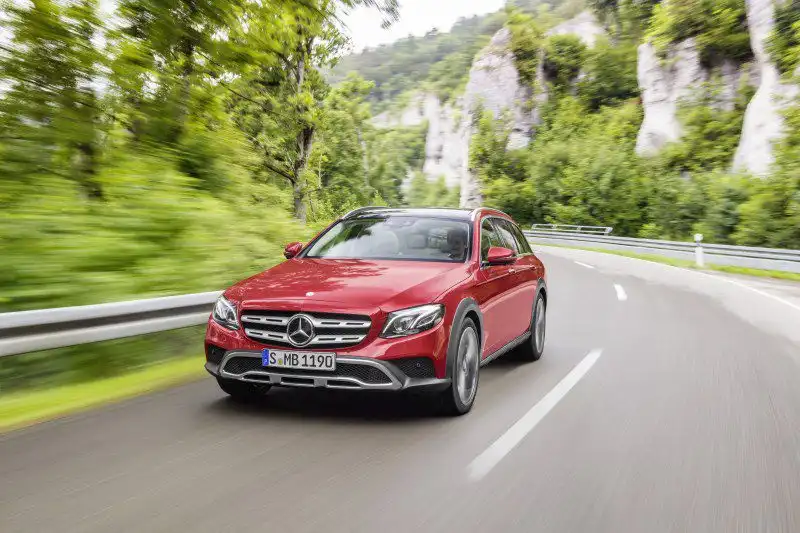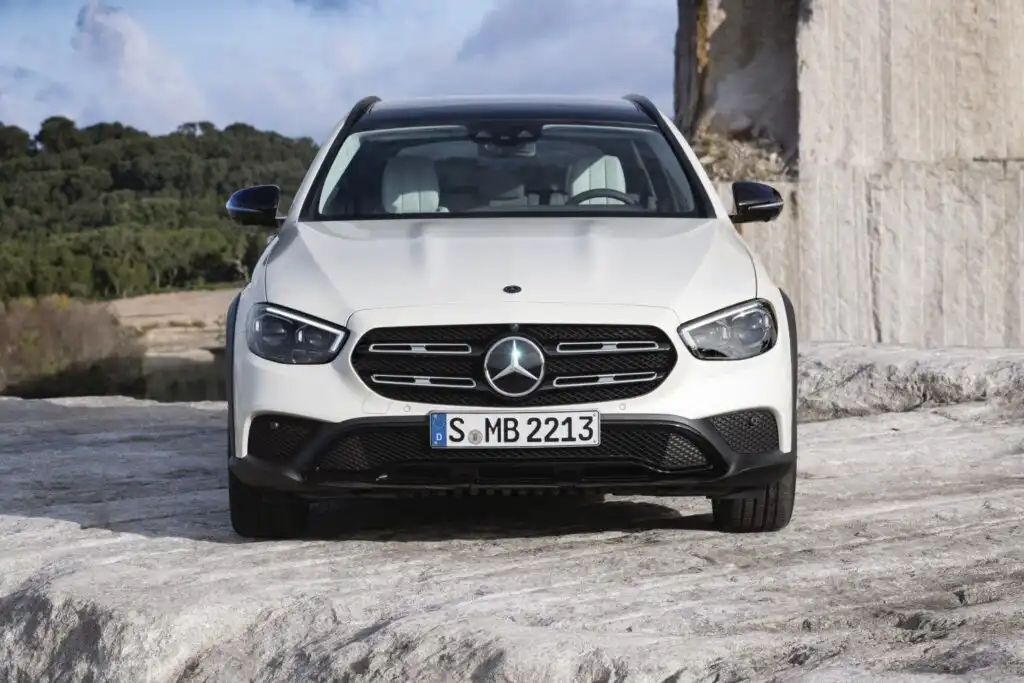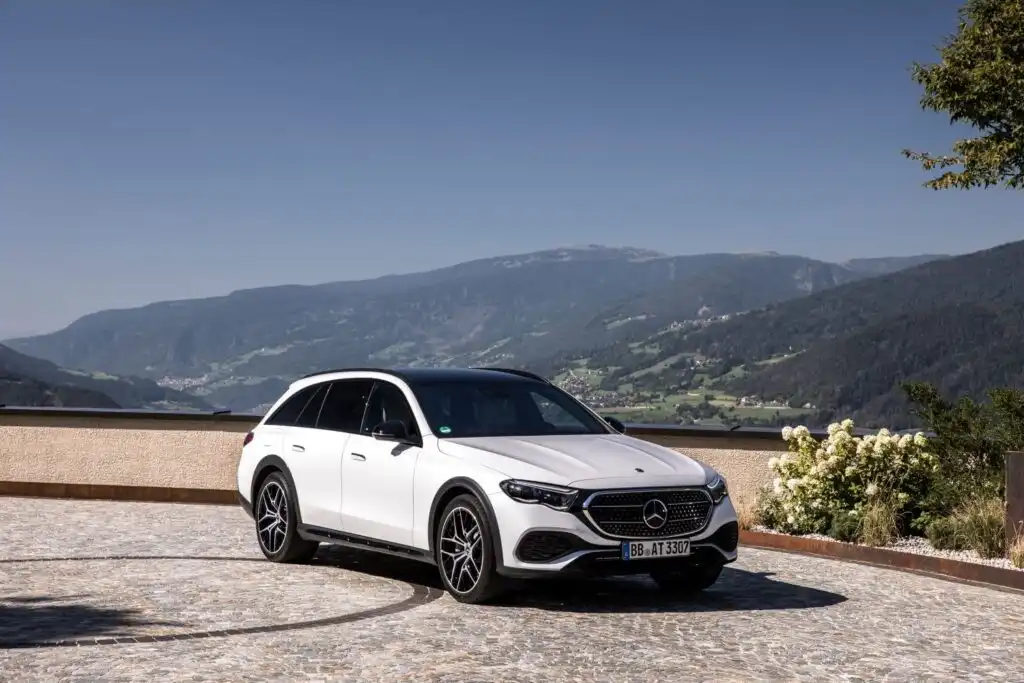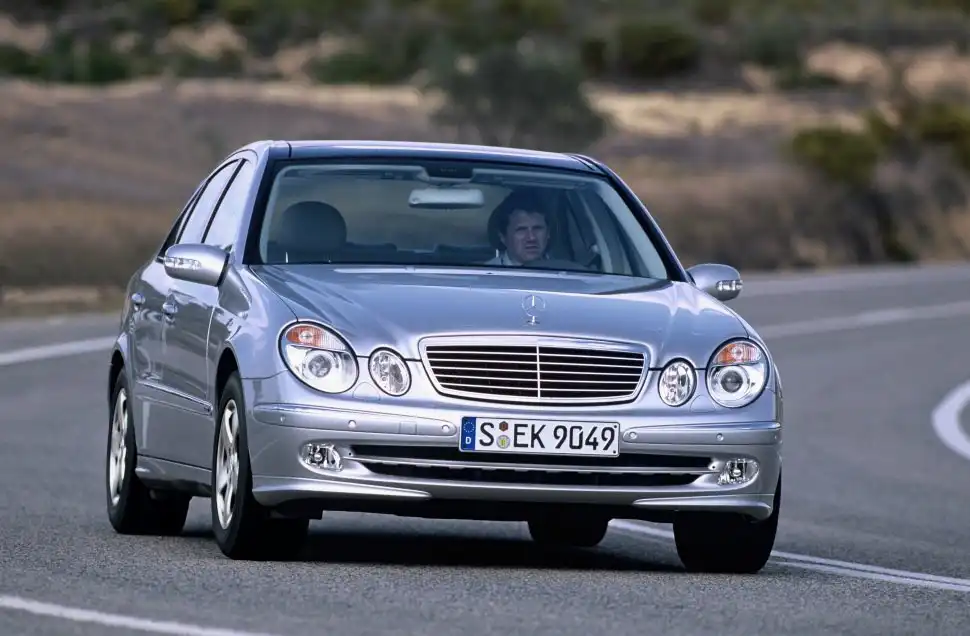
The Mercedes-Benz E 500, part of the W211 E-Class generation produced between 2002 and 2003, represented a high-performance variant within the lineup. Positioned as a premium offering, it featured a naturally aspirated 5.0-liter V8 engine paired with a 5G-TRONIC automatic transmission. This combination aimed to deliver a blend of luxury, performance, and refined driving experience, catering to buyers seeking a powerful and comfortable executive sedan. The W211 E-Class, launched in 2002, was a significant update to the E-Class line, introducing a more modern design and advanced technology compared to its predecessor (W208/W210).
Technical Specifications
| Brand | Mercedes-Benz |
| Model | E-class |
| Generation | E-class (W211) |
| Type (Engine) | E 500 V8 (306 Hp) 5G-TRONIC |
| Start of production | January, 2002 |
| End of production | August, 2003 |
| Powertrain Architecture | Internal Combustion engine |
| Body type | Sedan |
| Seats | 5 |
| Doors | 4 |
| Fuel consumption (economy) – urban (NEDC) | 16.9 l/100 km (13.9 US mpg, 16.7 UK mpg, 5.9 km/l) |
| Fuel consumption (economy) – extra urban (NEDC) | 8.4 l/100 km (28 US mpg, 33.6 UK mpg, 11.9 km/l) |
| Fuel consumption (economy) – combined (NEDC) | 11.5 l/100 km (20.5 US mpg, 24.6 UK mpg, 8.7 km/l) |
| CO2 emissions (NEDC) | 276 g/km |
| Fuel Type | Petrol (Gasoline) |
| Acceleration 0 – 100 km/h | 5.9 sec |
| Acceleration 0 – 62 mph | 5.9 sec |
| Acceleration 0 – 60 mph | 5.6 sec |
| Maximum speed | 250 km/h (155.34 mph), Electronically limited |
| Emission standard | Euro 4 |
| Weight-to-power ratio | 5.4 kg/Hp, 185.5 Hp/tonne |
| Weight-to-torque ratio | 3.6 kg/Nm, 278.8 Nm/tonne |
| Power | 306 Hp @ 5600 rpm |
| Power per litre | 61.6 Hp/l |
| Torque | 460 Nm @ 2700-4250 rpm (339.28 lb.-ft. @ 2700-4250 rpm) |
| Maximum engine speed | 6300 rpm |
| Engine layout | Front, Longitudinal |
| Engine Model/Code | M 113.967 |
| Engine displacement | 4966 cm3 (303.04 cu. in.) |
| Number of cylinders | 8 |
| Engine configuration | V-engine |
| Cylinder Bore | 97 mm (3.82 in.) |
| Piston Stroke | 84 mm (3.31 in.) |
| Compression ratio | 10:1 |
| Number of valves per cylinder | 3 |
| Fuel injection system | Multi-port manifold injection |
| Engine aspiration | Naturally aspirated engine |
| Valvetrain | SOHC |
| Engine oil capacity | 7.5 l (7.93 US qt | 6.6 UK qt) |
| Coolant | 11.3 l (11.94 US qt | 9.94 UK qt) |
| Kerb Weight | 1650 kg (3637.63 lbs.) |
| Max. weight | 2250 kg (4960.4 lbs.) |
| Max load | 600 kg (1322.77 lbs.) |
| Trunk (boot) space – minimum | 540 l (19.07 cu. ft.) |
| Fuel tank capacity | 80 l (21.13 US gal | 17.6 UK gal) |
| Max. roof load | 100 kg (220.46 lbs.) |
| Permitted trailer load with brakes (12%) | 1900 kg (4188.78 lbs.) |
| Permitted trailer load without brakes | 750 kg (1653.47 lbs.) |
| Length | 4818 mm (189.69 in.) |
| Width | 1822 mm (71.73 in.) |
| Width including mirrors | 1990 mm (78.35 in.) |
| Height | 1430 mm (56.3 in.) |
| Wheelbase | 2854 mm (112.36 in.) |
| Front track | 1559 mm (61.38 in.) |
| Rear (Back) track | 1552 mm (61.1 in.) |
| Front overhang | 831 mm (32.72 in.) |
| Rear overhang | 1133 mm (44.61 in.) |
| Ride height (ground clearance) | 138 mm (5.43 in.) |
| Drag coefficient (Cd) | 0.28 |
| Approach angle | 16.7° |
| Departure angle | 17° |
| Ramp-over (brakeover) angle | 12.4° |
| Drivetrain Architecture | The Internal combustion engine (ICE) drives the rear wheels of the vehicle. |
| Drive wheel | Rear wheel drive |
| Number of gears and type of gearbox | 5 gears, automatic transmission G-TRONIC |
| Front suspension | Double wishbone, Transverse stabilizer, Air suspension |
| Rear suspension | Independent multi-link suspension, Air suspension, Transverse stabilizer |
| Front brakes | Ventilated discs, 330×32 mm |
| Rear brakes | Ventilated discs, 300×22 mm |
| Assisting systems | ABS (Anti-lock braking system) |
| Steering type | Steering rack and pinion |
| Power steering | Hydraulic Steering |
| Tires size | 245/45 R17 |
| Wheel rims size | 8J x 17 |
Powertrain & Engine Architecture
The heart of the E 500 was the M113.967 4.966-liter (303.04 cubic inches) V8 engine. This engine featured a naturally aspirated configuration, utilizing multi-port fuel injection and a single overhead camshaft (SOHC) valvetrain with three valves per cylinder. The engine produced 306 horsepower at 5600 rpm and 460 Nm (339.28 lb-ft) of torque between 2700 and 4250 rpm. The engine’s design prioritized smooth power delivery and refinement over outright peak performance. The 5G-TRONIC automatic transmission, a five-speed unit, was specifically tuned to complement the V8’s characteristics. This transmission offered smooth shifts and adaptive shifting patterns, enhancing both comfort and responsiveness.
Driving Characteristics
The E 500 offered a distinctly different driving experience compared to other E-Class variants, such as the more fuel-efficient four-cylinder models or the performance-oriented AMG versions. The V8 engine provided strong acceleration, achieving 0-60 mph in approximately 5.6 seconds. The 5G-TRONIC transmission contributed to a relaxed cruising experience, with well-spaced gear ratios. While not as sporty as a manual transmission, the automatic offered convenient and refined shifts. The air suspension, standard on the E 500, further enhanced ride comfort, absorbing road imperfections effectively. However, the added weight of the V8 engine and transmission did impact handling agility compared to lighter E-Class models.
Equipment & Trim Levels
The E 500 was positioned as a luxury trim, and as such, came standard with a comprehensive list of features. These included leather upholstery, wood trim, automatic climate control, a premium sound system, and power-adjustable front seats with memory function. Optional extras included a sunroof, navigation system, and upgraded audio options. The interior design emphasized elegance and comfort, with high-quality materials and meticulous attention to detail. The E 500 also benefited from Mercedes-Benz’s advanced safety features, including ABS, traction control, and multiple airbags.
Chassis & Braking
The W211 E 500 utilized a double wishbone front suspension and an independent multi-link rear suspension, both incorporating a transverse stabilizer bar. The air suspension system, standard equipment, provided adjustable ride height and damping, enhancing both comfort and handling. The braking system consisted of ventilated discs on all four wheels, providing ample stopping power. Front brakes measured 330x32mm, while rear brakes were 300x22mm. The anti-lock braking system (ABS) further enhanced safety and control during emergency braking situations.
Market Reception & Comparison
The E 500 was generally well-received by automotive critics, who praised its powerful engine, refined ride, and luxurious interior. However, its fuel consumption was a common criticism, with combined fuel economy figures around 11.5 l/100 km (20.5 US mpg). Compared to the E 320 (with its smaller V6 engine), the E 500 offered significantly more power but at the expense of fuel efficiency. Against the more performance-focused AMG variants, the E 500 provided a more comfortable and refined driving experience, prioritizing luxury over outright track performance.
Legacy
The M113 V8 engine, used in the E 500, is known for its reliability and durability. While maintenance costs can be higher than those associated with smaller engines, the M113 is generally considered a robust and long-lasting powerplant. Today, the W211 E 500 remains a desirable classic, appealing to enthusiasts who appreciate its blend of luxury, performance, and German engineering. Well-maintained examples command a premium in the used car market, and the car continues to provide a comfortable and enjoyable driving experience.