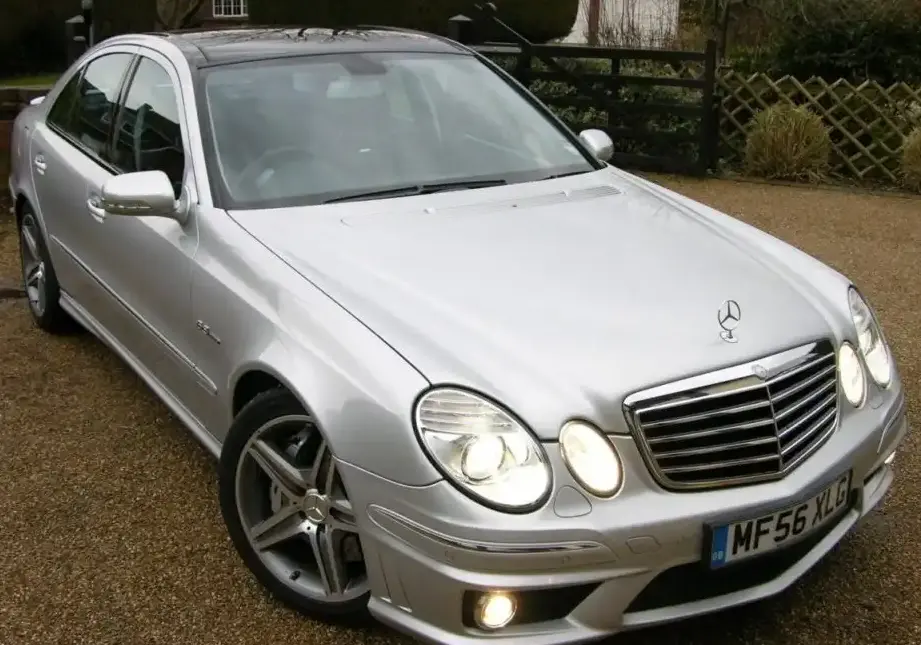
The Mercedes-Benz E-Class AMG E 63, specifically the W211 facelift model produced from 2006 to 2009, represents a high-performance iteration of the popular executive sedan. Positioned as the flagship of the W211 range, the E 63 offered a substantial increase in power and performance compared to other E-Class variants. It served as a direct competitor to the BMW M5 and Audi RS6, appealing to drivers seeking a blend of luxury, refinement, and exhilarating speed. This particular configuration paired a naturally aspirated 6.2-liter V8 engine with the 7G-TRONIC seven-speed automatic transmission, creating a potent and sophisticated driving experience.
Technical Specifications
| Brand | Mercedes-Benz |
| Model | E-Class |
| Generation | E-Class (W211, facelift 2006) |
| Type | AMG E 63 V8 (514 Hp) 7G-TRONIC |
| Start of production | 2006 |
| End of production | 2009 |
| Powertrain Architecture | Internal Combustion engine |
| Body type | Sedan |
| Seats | 5 |
| Doors | 4 |
| Fuel consumption (urban) | 22.3 l/100 km (10.5 US mpg, 12.7 UK mpg, 4.5 km/l) |
| Fuel consumption (extra urban) | 9.8 l/100 km (24 US mpg, 28.8 UK mpg, 10.2 km/l) |
| Fuel consumption (combined) | 14.3 l/100 km (16.4 US mpg, 19.8 UK mpg, 7 km/l) |
| CO2 emissions | 341 g/km |
| Fuel Type | Petrol (Gasoline) |
| Acceleration 0-100 km/h | 4.5 sec |
| Acceleration 0-60 mph | 4.3 sec |
| Maximum speed | 250 km/h (155.34 mph), electronically limited |
| Emission standard | Euro 4 |
| Weight-to-power ratio | 3.4 kg/Hp |
| Weight-to-torque ratio | 2.8 kg/Nm |
| Power | 514 Hp @ 6800 rpm |
| Torque | 630 Nm @ 5200 rpm (464.66 lb.-ft. @ 5200 rpm) |
| Engine layout | Front, Longitudinal |
| Engine Model/Code | M 156.982 |
| Engine displacement | 6208 cm3 (378.84 cu. in.) |
| Number of cylinders | 8 |
| Engine configuration | V-engine |
| Cylinder Bore | 102.2 mm (4.02 in.) |
| Piston Stroke | 94.6 mm (3.72 in.) |
| Compression ratio | 11.3:1 |
| Number of valves per cylinder | 4 |
| Fuel injection system | Multi-port manifold injection |
| Engine aspiration | Naturally aspirated |
| Valvetrain | DOHC |
| Engine oil capacity | 8.8 l (9.3 US qt, 7.74 UK qt) |
| Coolant capacity | 11.8 l (12.47 US qt, 10.38 UK qt) |
| Kerb Weight | 1765 kg (3891.16 lbs.) |
| Max. weight | 2365 kg (5213.93 lbs.) |
| Max load | 600 kg (1322.77 lbs.) |
| Trunk (boot) space (minimum) | 530 l (18.72 cu. ft.) |
| Fuel tank capacity | 80 l (21.13 US gal, 17.6 UK gal) |
| Length | 4881 mm (192.17 in.) |
| Width | 1822 mm (71.73 in.) |
| Height | 1465 mm (57.68 in.) |
| Wheelbase | 2854 mm (112.36 in.) |
| Front track | 1559 mm (61.38 in.) |
| Rear track | 1552 mm (61.1 in.) |
| Minimum turning circle | 11.4 m (37.4 ft.) |
| Drivetrain | Rear wheel drive |
| Number of gears | 7 |
| Gearbox type | Automatic transmission 7G-TRONIC |
| Front suspension | Independent multi-link, Transverse stabilizer, Air suspension |
| Rear suspension | Independent multi-link, Air suspension, Transverse stabilizer |
| Front brakes | Ventilated discs |
| Rear brakes | Ventilated discs |
| Tire size (front) | 245/40 R18 |
| Tire size (rear) | 265/35 R18 |
| Wheel rim size (front) | 8.5J x 18 |
| Wheel rim size (rear) | 9.5J x 18 |
INTRODUCTION
The W211 E-Class facelift, introduced in 2006, brought significant styling and technological updates to the model range. The AMG E 63, as the performance variant, benefited from these revisions while retaining its core identity as a powerful and luxurious sedan. Built on the 1HX0/A3 platform, the E 63 aimed to deliver a more refined and technologically advanced experience than its predecessor. The 2006-2009 model years represent the culmination of the W211’s development, offering a compelling package for discerning drivers.
Powertrain & Engine Architecture
The heart of the AMG E 63 is the M156.982 6.2-liter naturally aspirated V8 engine. This engine, a masterpiece of engineering, eschewed forced induction in favor of a large displacement and sophisticated valvetrain design. It featured a three-valve-per-cylinder configuration (two intake, one exhaust) and a high 11.3:1 compression ratio. Fuel delivery was handled by a multi-port fuel injection system, optimized for both power and efficiency. The engine produced 514 horsepower at 6800 rpm and a substantial 630 Nm (464.66 lb-ft) of torque at 5200 rpm. The 7G-TRONIC seven-speed automatic transmission, developed by Mercedes-Benz, was specifically tuned to handle the engine’s immense power. It offered smooth and responsive shifts, with the ability to manually select gears via steering wheel-mounted paddles. The transmission’s gear ratios were optimized for both acceleration and highway cruising.
Driving Characteristics
The AMG E 63 delivered a driving experience that was both exhilarating and refined. The naturally aspirated V8 provided a linear power delivery, with strong acceleration throughout the rev range. The 7G-TRONIC transmission contributed to this responsiveness, offering quick and precise shifts. While not as overtly aggressive as some of its competitors, the E 63 offered a more balanced and comfortable ride. Compared to the standard E-Class models, the AMG variant featured a stiffer suspension and larger brakes, enhancing handling and stopping power. Compared to a manual transmission equipped E-Class, the 7G-TRONIC offered slightly slower acceleration times, but provided greater convenience and ease of use, particularly in everyday driving situations. The electronically limited top speed of 250 km/h (155 mph) ensured a thrilling experience on the open road.
Equipment & Trim Levels
The AMG E 63 came standard with a comprehensive list of features, reflecting its position as the flagship model. Interior appointments included premium leather upholstery, AMG sport seats, and unique trim elements. Standard equipment also included a multi-function steering wheel, automatic climate control, and a high-end audio system. Optional extras included a panoramic sunroof, advanced navigation system, and a variety of driver assistance features. The exterior was distinguished by AMG-specific body styling, including a more aggressive front fascia, side skirts, and rear diffuser. Larger alloy wheels and high-performance tires completed the visual package.
Chassis & Braking
The E 63’s chassis was specifically tuned to handle the increased power and performance. The suspension featured stiffer springs and dampers, along with a larger diameter stabilizer bar, reducing body roll and improving handling. The braking system was upgraded with larger ventilated discs and multi-piston calipers, providing exceptional stopping power. The rear suspension utilized an air suspension system, offering adjustable ride height and improved comfort. The steering was a hydraulic rack and pinion system, providing precise and responsive control.
Market Reception & Comparison
The AMG E 63 was generally well-received by automotive critics, who praised its powerful engine, refined ride, and luxurious interior. However, some reviewers noted that its fuel economy was relatively poor, and its size could make it challenging to maneuver in tight spaces. Compared to the standard E-Class models, the E 63 offered a significant performance upgrade, but at a substantial price premium. Against its rivals, such as the BMW M5 and Audi RS6, the E 63 offered a unique blend of power, luxury, and refinement. While the M5 was often praised for its sharper handling, the E 63 provided a more comfortable and sophisticated driving experience.
Legacy
The M156 engine, found in the AMG E 63, is widely regarded as one of the finest naturally aspirated engines ever produced. Its robust construction and relatively simple design have contributed to its long-term reliability. While maintenance costs can be higher than those of more mainstream vehicles, the E 63 has proven to be a durable and rewarding ownership experience. On the used car market, the W211 AMG E 63 remains a desirable and sought-after vehicle, appealing to enthusiasts who appreciate its unique combination of performance, luxury, and heritage. Properly maintained examples continue to command strong prices, reflecting the enduring appeal of this iconic performance sedan.