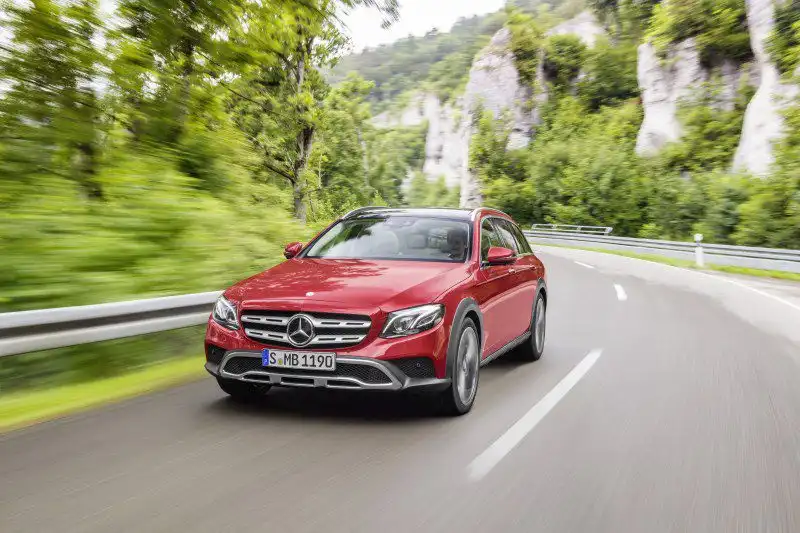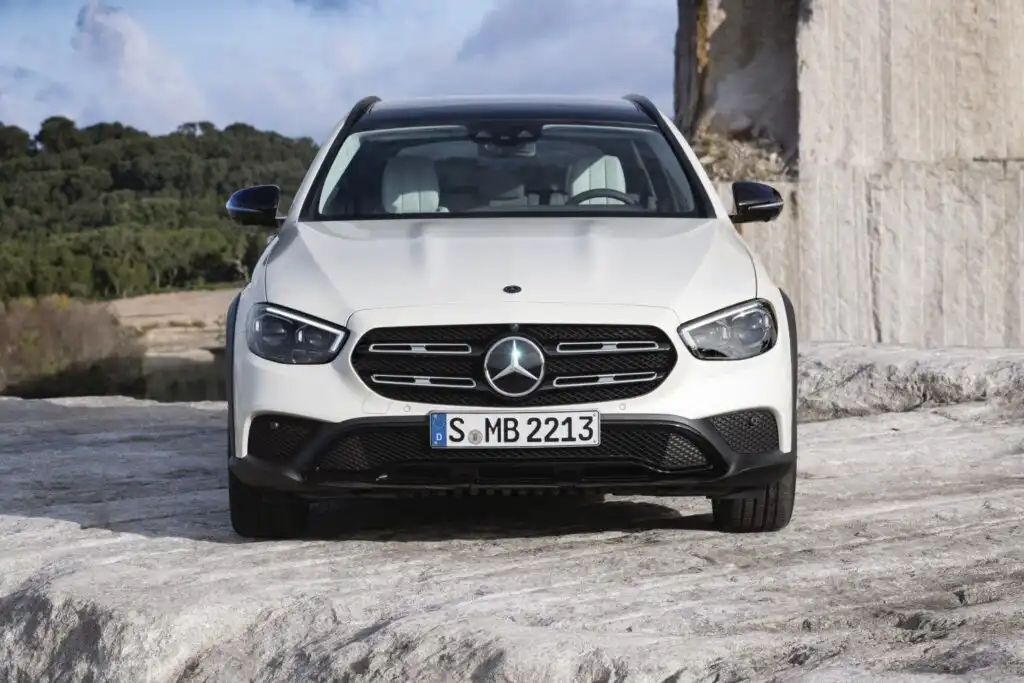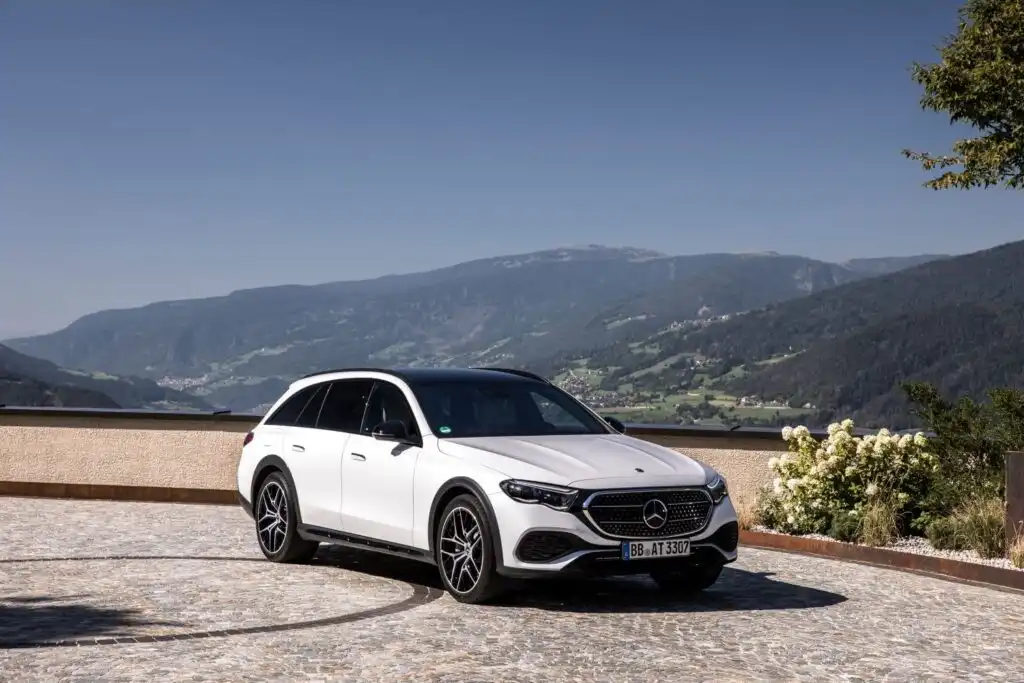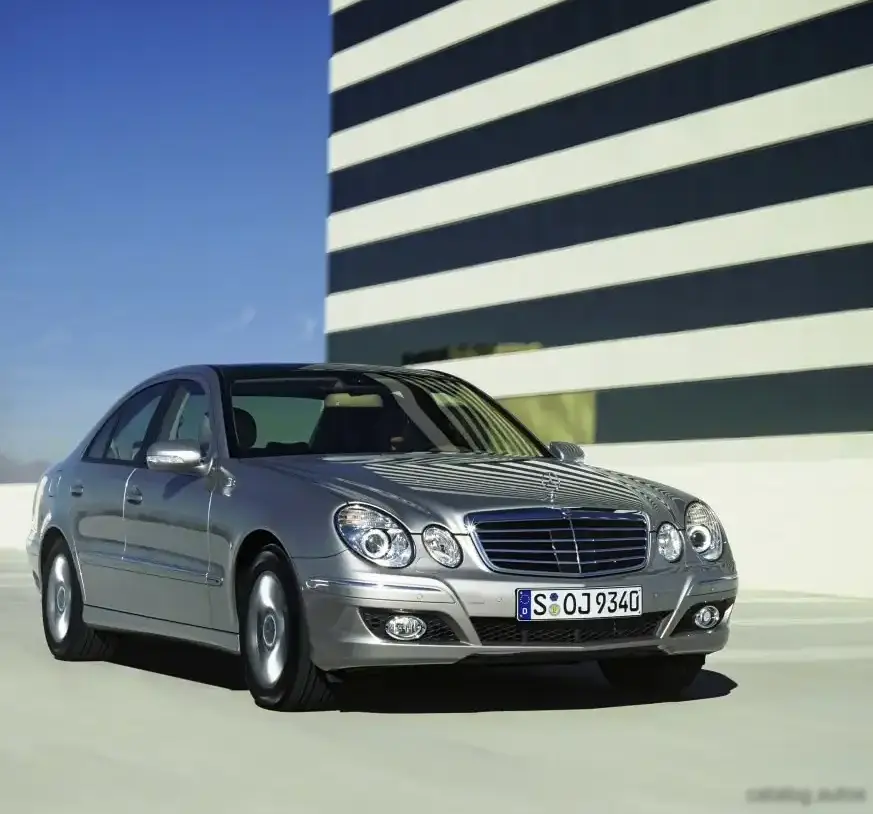
The Mercedes-Benz E 200 CDI, produced from 2006 to 2009 as part of the W211 facelift generation, represented a significant offering in the European executive car market. This variant, equipped with a 2.1-liter four-cylinder diesel engine producing 136 horsepower and paired with a 5G-TRONIC automatic transmission, aimed to balance fuel efficiency with comfortable, albeit not overtly sporty, performance. Positioned as a mid-range option within the W211 lineup, it served as a more economical alternative to the larger, more powerful E 280 CDI and E 320 CDI models, while offering a more refined experience than the base E 200 Kompressor.
Technical Specifications
| Brand | Mercedes-Benz |
| Model | E-class |
| Generation | E-class (W211, facelift 2006) |
| Type (Engine) | E 200 CDI (136 Hp) 5G-TRONIC |
| Start of production | 2006 |
| End of production | 2009 |
| Powertrain Architecture | Internal Combustion engine |
| Body type | Sedan |
| Seats | 5 |
| Doors | 4 |
| Fuel consumption (urban) | 9-9.8 l/100 km (26.1 – 24 US mpg) |
| Fuel consumption (extra urban) | 5.2-5.5 l/100 km (45.2 – 42.8 US mpg) |
| Fuel consumption (combined) | 6.5-7.1 l/100 km (36.2 – 33.1 US mpg) |
| CO2 emissions | 173-186 g/km |
| Fuel Type | Diesel |
| Acceleration 0 – 100 km/h | 9.9 sec |
| Acceleration 0 – 62 mph | 9.9 sec |
| Acceleration 0 – 60 mph | 9.4 sec |
| Maximum speed | 211 km/h (131.11 mph) |
| Emission standard | Euro 4 |
| Weight-to-power ratio | 11.3 kg/Hp |
| Weight-to-torque ratio | 4.5 kg/Nm |
| Power | 136 Hp @ 3800 rpm |
| Torque | 340 Nm @ 1800-2600 rpm (250.77 lb.-ft.) |
| Engine layout | Front, Longitudinal |
| Engine Model/Code | OM 646.952 |
| Engine displacement | 2148 cm3 (131.08 cu. in.) |
| Number of cylinders | 4 |
| Engine configuration | Inline |
| Cylinder Bore | 88 mm (3.46 in.) |
| Piston Stroke | 88.3 mm (3.48 in.) |
| Compression ratio | 17.5:1 |
| Number of valves per cylinder | 4 |
| Fuel injection system | Diesel Commonrail |
| Engine aspiration | Turbocharger, Intercooler |
| Valvetrain | DOHC |
| Engine oil capacity | 6.5 l (6.87 US qt | 5.72 UK qt) |
| Coolant capacity | 10.2 l (10.78 US qt | 8.97 UK qt) |
| Kerb Weight | 1540 kg (3395.12 lbs.) |
| Max. weight | 2140 kg (4717.89 lbs.) |
| Max load | 600 kg (1322.77 lbs.) |
| Trunk (boot) space (minimum) | 540 l (19.07 cu. ft.) |
| Fuel tank capacity | 65 l (17.17 US gal | 14.3 UK gal) |
| Permitted trailer load (braked) | 1900 kg (4188.78 lbs.) |
| Permitted trailer load (unbraked) | 750 kg (1653.47 lbs.) |
| Length | 4856 mm (191.18 in.) |
| Width | 1822 mm (71.73 in.) |
| Width (including mirrors) | 2063 mm (81.22 in.) |
| Height | 1483 mm (58.39 in.) |
| Wheelbase | 2854 mm (112.36 in.) |
| Front track | 1577 mm (62.09 in.) |
| Rear track | 1570 mm (61.81 in.) |
| Front overhang | 869 mm (34.21 in.) |
| Rear overhang | 1133 mm (44.61 in.) |
| Minimum turning circle | 11.4 m (37.4 ft.) |
| Drivetrain | Rear wheel drive |
| Number of gears | 5 |
| Gearbox type | Automatic transmission G-TRONIC |
| Front suspension | Independent multi-link, Transverse stabilizer |
| Rear suspension | Independent multi-link, Transverse stabilizer |
| Front brakes | Ventilated discs |
| Rear brakes | Disc |
| Assisting systems | ABS (Anti-lock braking system) |
| Steering type | Steering rack and pinion |
| Power steering | Hydraulic |
| Tires size | 205/60 R16; 225/55 R16 |
| Wheel rims size | 7J x 16; 7.5J x 16 |
Powertrain & Engine Architecture
The heart of the E 200 CDI is the OM 646.952, a 2.1-liter inline-four cylinder diesel engine. This engine, a mainstay of Mercedes-Benz’s mid-size offerings during the early 2000s, utilizes a common rail direct injection system, delivering fuel at extremely high pressures for optimized combustion. A turbocharger with an intercooler further enhances performance, boosting power output to 136 horsepower and 340 Nm (250.77 lb.-ft.) of torque. The engine features a double overhead camshaft (DOHC) valvetrain with four valves per cylinder, contributing to its relatively efficient operation. The 5G-TRONIC automatic transmission, a five-speed torque converter automatic, was specifically tuned to complement the engine’s torque curve, prioritizing smooth shifts and fuel economy over outright acceleration. This transmission was known for its relatively smooth operation, but lacked the responsiveness of more modern automatic gearboxes.
Driving Characteristics
The E 200 CDI Automatic offered a comfortable and refined driving experience, prioritizing ease of use over sporty handling. Acceleration from 0-60 mph took approximately 9.4 seconds, and top speed was limited to 211 km/h (131.11 mph). While not particularly quick, the engine’s ample torque – available from as low as 1800 rpm – provided sufficient power for everyday driving and overtaking maneuvers. The 5G-TRONIC transmission, while smooth, could feel somewhat sluggish when downshifting, especially in situations requiring rapid acceleration. Compared to the more powerful E 280 CDI or the sportier manual versions of the E 200 CDI, this variant offered a more relaxed and fuel-efficient driving experience. The automatic transmission, while convenient, did diminish the sense of driver engagement.
Equipment & Trim Levels
The E 200 CDI Automatic typically came equipped with a respectable level of standard features, including automatic climate control, power windows, power mirrors, and a basic audio system. Interior upholstery was generally cloth, although leather options were available as upgrades. Common optional extras included a sunroof, upgraded audio systems, navigation, and parking sensors. The dashboard layout was typical of the W211 facelift, featuring a dual-tone color scheme and a relatively straightforward control layout. Trim levels varied slightly depending on the market, but generally offered packages that bundled together popular options.
Chassis & Braking
The W211 E-Class featured an independent multi-link suspension system at both the front and rear, providing a comfortable ride quality. A transverse stabilizer bar was fitted to both axles to reduce body roll during cornering. Braking duties were handled by ventilated discs at the front and solid discs at the rear, equipped with ABS (Anti-lock Braking System) as standard. The suspension was tuned for comfort rather than outright sportiness, prioritizing a smooth ride over sharp handling. The E 200 CDI, being a mid-range model, typically did not receive the upgraded suspension components available on higher-performance variants.
Market Reception & Comparison
The E 200 CDI Automatic was generally well-received by critics as a practical and economical option within the executive car segment. Its fuel economy – averaging between 33.1 and 39.8 mpg – was a significant selling point, particularly in Europe where diesel fuel was more prevalent and heavily taxed. Compared to the E 280 CDI, the E 200 CDI offered lower running costs but sacrificed performance. Against the E 200 Kompressor, the diesel variant provided superior fuel economy and torque, but at a slightly higher purchase price. Reliability was generally good, although the diesel particulate filter (DPF) could be prone to clogging if the vehicle was primarily used for short trips.
Legacy
The OM 646 engine, found in the E 200 CDI, proved to be a durable and reliable powerplant when properly maintained. Today, well-maintained examples of the W211 E 200 CDI can still be found on the used car market, offering a relatively affordable entry point into Mercedes-Benz ownership. However, potential buyers should be aware of the potential for DPF issues and the need for regular servicing. The 5G-TRONIC transmission, while generally reliable, may require attention as the vehicle ages. Overall, the E 200 CDI represents a solid and dependable choice for those seeking a comfortable and fuel-efficient executive car.