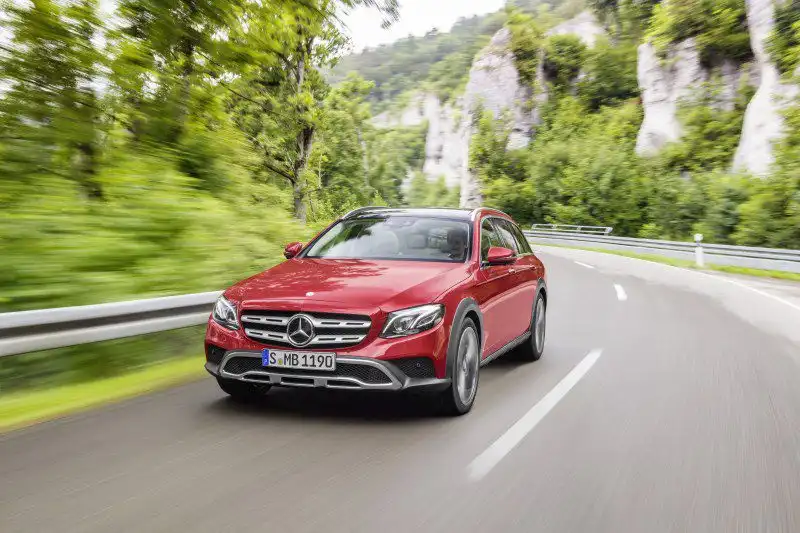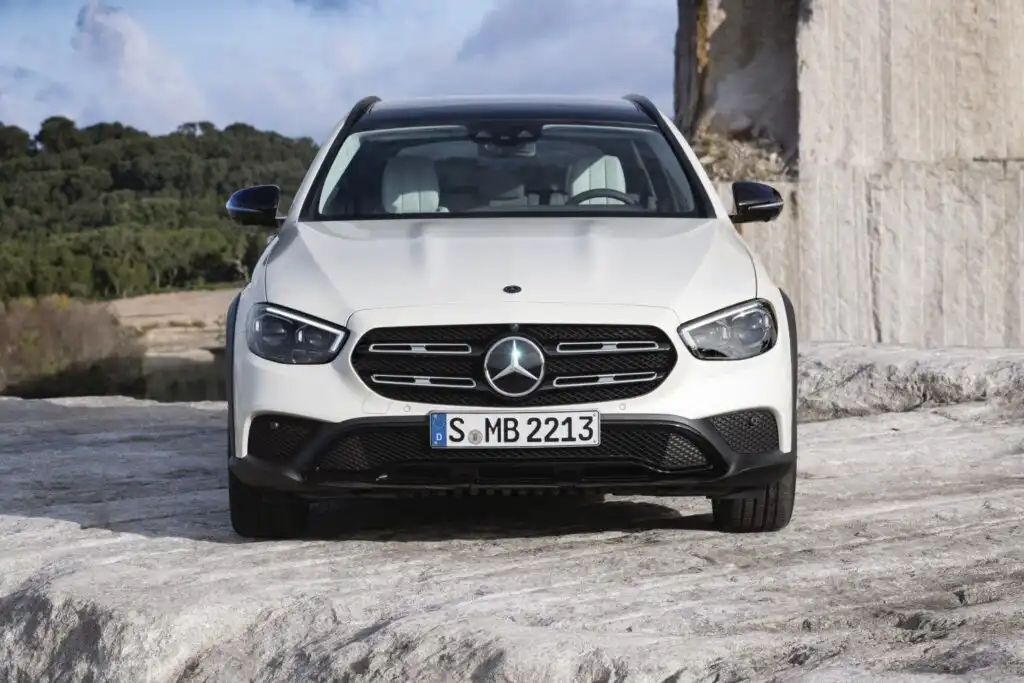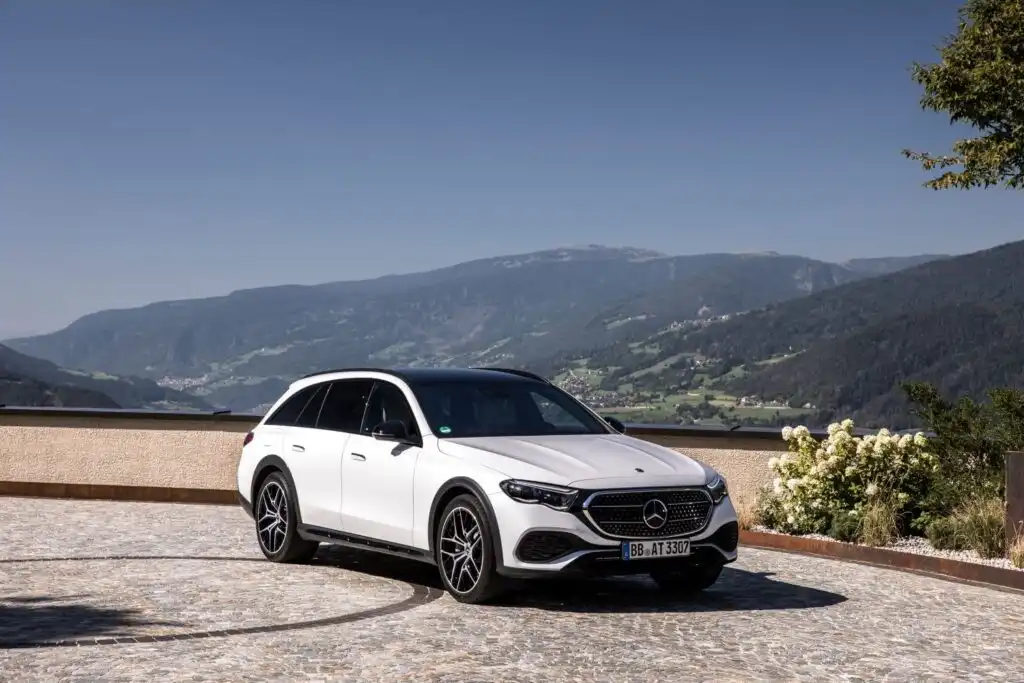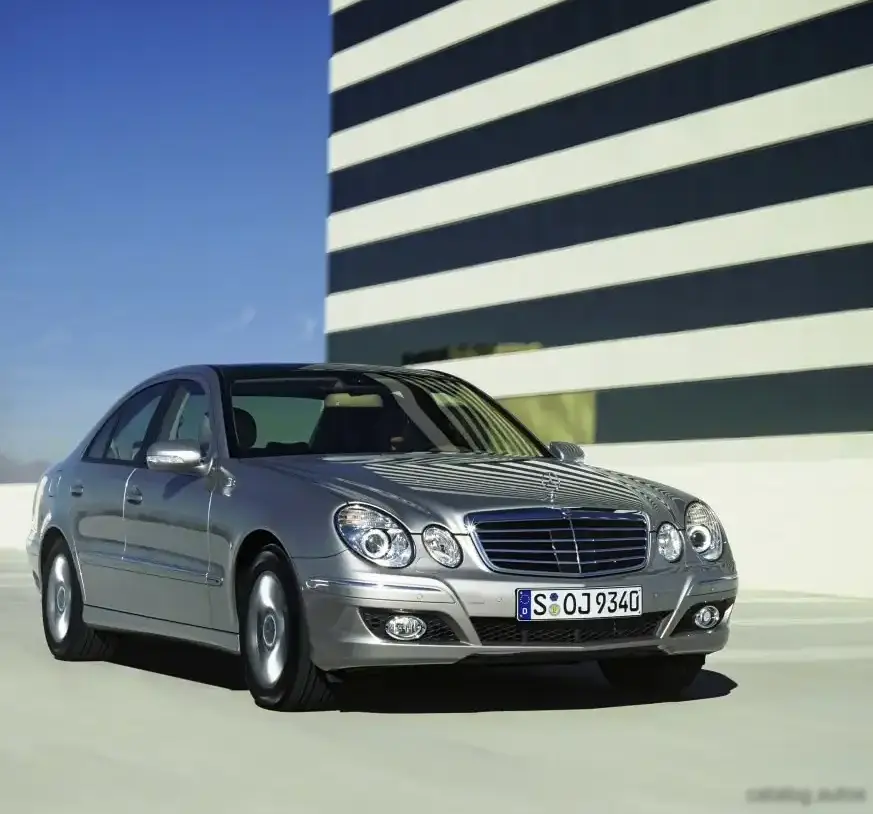
The Mercedes-Benz E 230 V6, produced from 2007 to 2009, was a variant of the W211 E-Class following the 2006 facelift. Positioned as a mid-range offering within the E-Class lineup, it aimed to provide a balance between performance and fuel efficiency. This model represented a continuation of Mercedes-Benz’s commitment to refined luxury and engineering, offering a comfortable and capable sedan for the North American and European markets. The E 230 V6 served as an alternative to the more powerful E 350 and the diesel-powered E 320 CDI, appealing to buyers seeking a smooth, naturally aspirated gasoline engine.
Technical Specifications
| Brand | Mercedes-Benz |
| Model | E-class |
| Generation | E-class (W211, facelift 2006) |
| Type (Engine) | E 230 V6 (204 Hp) |
| Start of production | 2007 |
| End of production | 2009 |
| Powertrain Architecture | Internal Combustion engine |
| Body type | Sedan |
| Seats | 5 |
| Doors | 4 |
| Fuel consumption (urban) | 13.3-13.5 l/100 km (17.7 – 17.4 US mpg, 21.2 – 20.9 UK mpg, 7.5 – 7.4 km/l) |
| Fuel consumption (extra urban) | 6.9-7.0 l/100 km (34.1 – 33.6 US mpg, 40.9 – 40.4 UK mpg, 14.5 – 14.3 km/l) |
| Fuel consumption (combined) | 9.2-9.5 l/100 km (25.6 – 24.8 US mpg, 30.7 – 29.7 UK mpg, 10.9 – 10.5 km/l) |
| CO2 emissions | 220-223 g/km |
| Fuel Type | Petrol (Gasoline) |
| Acceleration 0 – 100 km/h | 8.9 sec |
| Acceleration 0 – 62 mph | 8.9 sec |
| Acceleration 0 – 60 mph | 8.5 sec |
| Maximum speed | 248 km/h (154.1 mph) |
| Emission standard | Euro 4 |
| Weight-to-power ratio | 7.7 kg/Hp, 129.5 Hp/tonne |
| Weight-to-torque ratio | 6.4 kg/Nm, 155.6 Nm/tonne |
| Power | 204 Hp @ 6100 rpm |
| Torque | 245 Nm @ 2900-5500 rpm (180.7 lb.-ft. @ 2900-5500 rpm) |
| Engine layout | Front, Longitudinal |
| Engine Model/Code | M 272.922 |
| Engine displacement | 2496 cm3 (152.32 cu. in.) |
| Number of cylinders | 6 |
| Engine configuration | V-engine |
| Cylinder Bore | 88 mm (3.46 in.) |
| Piston Stroke | 68.4 mm (2.69 in.) |
| Compression ratio | 11.3:1 |
| Number of valves per cylinder | 4 |
| Fuel injection system | Multi-port manifold injection |
| Engine aspiration | Naturally aspirated engine |
| Valvetrain | DOHC |
| Engine oil capacity | 8 l (8.45 US qt | 7.04 UK qt) |
| Coolant capacity | 10 l (10.57 US qt | 8.8 UK qt) |
| Kerb Weight | 1575 kg (3472.28 lbs.) |
| Max. weight | 2175 kg (4795.05 lbs.) |
| Max load | 600 kg (1322.77 lbs.) |
| Trunk (boot) space (minimum) | 540 l (19.07 cu. ft.) |
| Fuel tank capacity | 65 l (17.17 US gal | 14.3 UK gal) |
| Permitted trailer load (with brakes) | 1900 kg (4188.78 lbs.) |
| Permitted trailer load (without brakes) | 750 kg (1653.47 lbs.) |
| Length | 4856 mm (191.18 in.) |
| Width | 1822 mm (71.73 in.) |
| Width including mirrors | 2063 mm (81.22 in.) |
| Height | 1483 mm (58.39 in.) |
| Wheelbase | 2854 mm (112.36 in.) |
| Front track | 1577 mm (62.09 in.) |
| Rear track | 1570 mm (61.81 in.) |
| Front overhang | 869 mm (34.21 in.) |
| Rear overhang | 1133 mm (44.61 in.) |
| Minimum turning circle | 11.4 m (37.4 ft.) |
| Drivetrain | Rear wheel drive |
| Number of gears | 6 |
| Gearbox type | Manual transmission |
| Front suspension | Independent multi-link suspension, Transverse stabilizer |
| Rear suspension | Independent multi-link suspension, Transverse stabilizer |
| Front brakes | Ventilated discs |
| Rear brakes | Disc |
| Assisting systems | ABS (Anti-lock braking system) |
| Steering type | Steering rack and pinion |
| Power steering | Hydraulic Steering |
| Tires size | 205/60 R16; 225/55 R16 |
| Wheel rims size | 7J x 16; 7.5J x 16 |
Powertrain & Engine Architecture
The E 230 V6 was powered by the M272.922 engine, a 2.5-liter naturally aspirated V6. This engine featured a 60-degree V-angle and utilized a multi-port fuel injection system. The engine produced 204 horsepower at 6100 rpm and 245 Nm (180.7 lb-ft) of torque between 2900 and 5500 rpm. The engine employed a double overhead camshaft (DOHC) valvetrain with four valves per cylinder, contributing to its smooth operation and respectable power output. The engine’s design prioritized refinement and linear power delivery over outright performance. The standard transmission was a 6-speed manual, although a 5-speed automatic transmission was also available, impacting fuel economy and acceleration slightly.
Driving Characteristics
The E 230 V6 with the manual transmission offered a reasonably engaging driving experience. While not a sports sedan, the engine provided adequate power for everyday driving and highway cruising. The 6-speed manual allowed drivers to keep the engine in its optimal power band, resulting in responsive acceleration. The automatic transmission, while convenient, dulled the driving experience somewhat, with slightly slower shifts and a less direct connection to the engine. Compared to the E 350, the E 230 V6 felt less powerful, particularly during overtaking maneuvers. However, it offered better fuel economy and a more relaxed driving experience. The rear-wheel-drive configuration provided balanced handling, typical of Mercedes-Benz sedans of the era.
Equipment & Trim Levels
The E 230 V6 typically came standard with features such as automatic climate control, power windows and locks, a multi-function steering wheel, and a premium audio system. Interior upholstery was typically cloth, with leather options available as an upgrade. Common optional extras included a sunroof, navigation system, heated seats, and parking sensors. Trim levels varied depending on the market, but generally, the E 230 V6 was positioned as a well-equipped mid-range model, offering a good balance of features and affordability. The dashboard layout was typical of the W211 E-Class, with a focus on functionality and a classic Mercedes-Benz aesthetic.
Chassis & Braking
The E 230 V6 utilized an independent multi-link suspension system at both the front and rear, providing a comfortable ride and good handling characteristics. A transverse stabilizer bar was included at both ends to reduce body roll during cornering. The braking system consisted of ventilated discs at the front and solid discs at the rear, coupled with an Anti-lock Braking System (ABS) for enhanced safety. The suspension was tuned to prioritize ride comfort over sporty handling, making it well-suited for long-distance driving. The steering was hydraulic power-assisted, providing a smooth and precise feel.
Market Reception & Comparison
The E 230 V6 was generally well-received by automotive critics as a sensible and refined option within the E-Class range. It was praised for its smooth engine, comfortable ride, and well-appointed interior. However, some critics noted that its performance was not as exhilarating as that of the E 350. In terms of fuel economy, the E 230 V6 offered a noticeable improvement over the larger-engined models, making it an attractive option for buyers concerned about running costs. Compared to the E 320 CDI diesel, the E 230 V6 offered a different driving experience, with a more linear power delivery and a quieter engine note. Reliability was generally good, although routine maintenance was essential to ensure the longevity of the engine and other components.
Legacy
The M272 engine family, including the 2.5-liter variant found in the E 230 V6, has proven to be relatively reliable over the long term, provided it receives regular maintenance. Common issues include oil leaks and occasional problems with the balance shaft. Today, the E 230 V6 represents an affordable entry point into the world of Mercedes-Benz ownership. While not as sought-after as some of the more powerful E-Class variants, it offers a comfortable, well-built, and relatively reliable sedan for those seeking a classic Mercedes-Benz experience. The availability of parts and qualified mechanics remains good, making it a viable option for enthusiasts and everyday drivers alike.