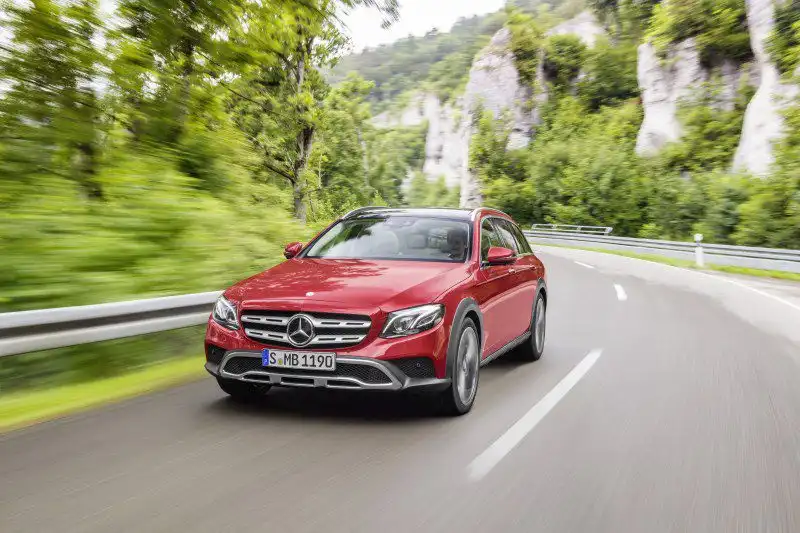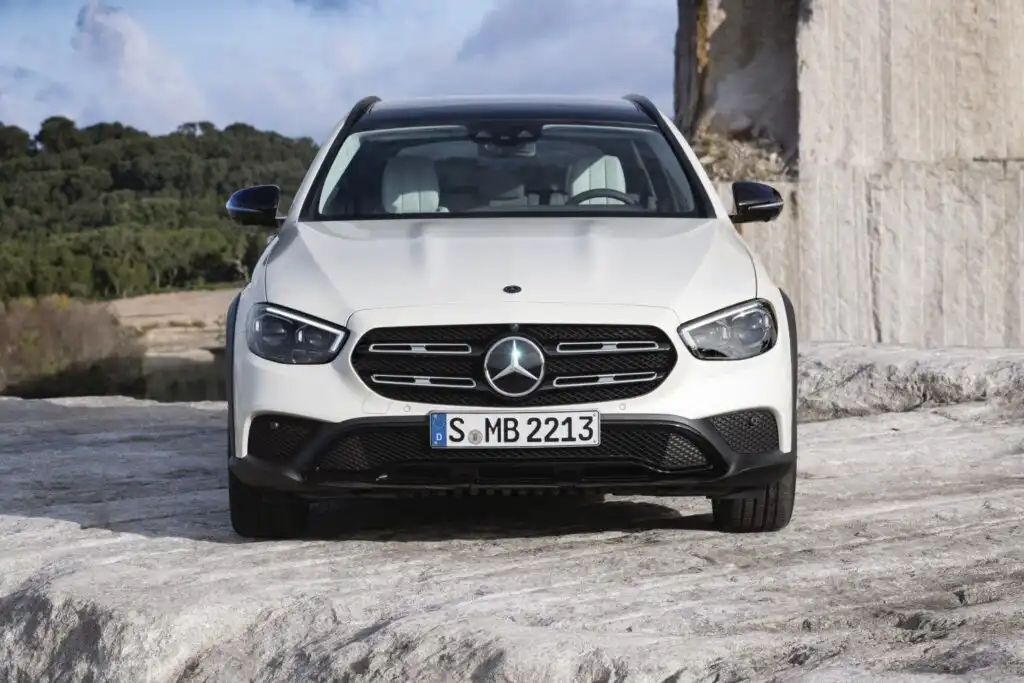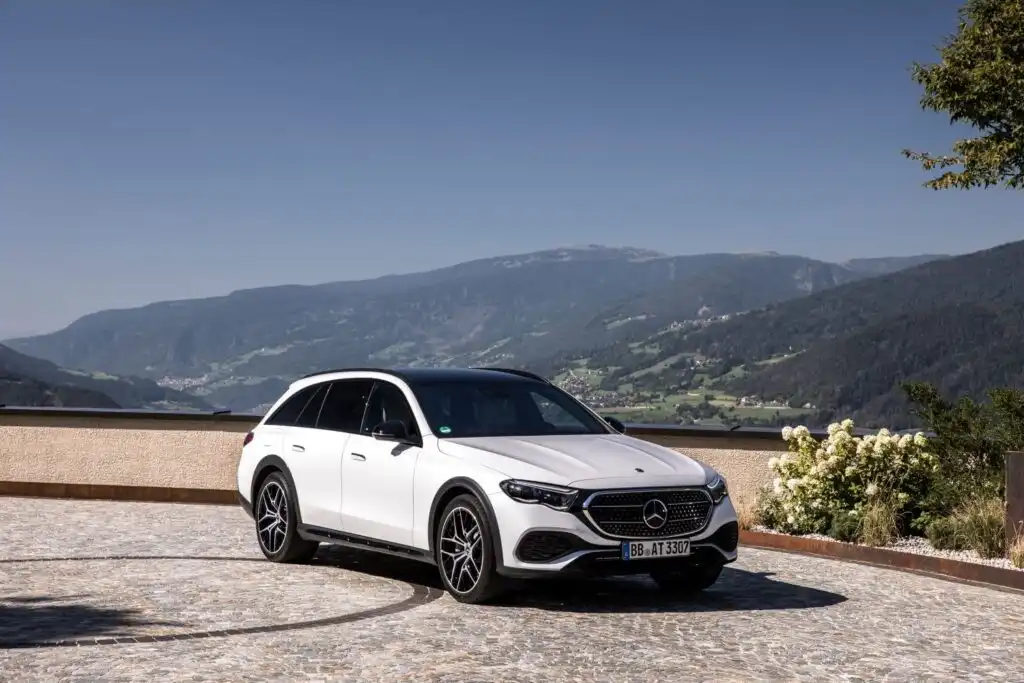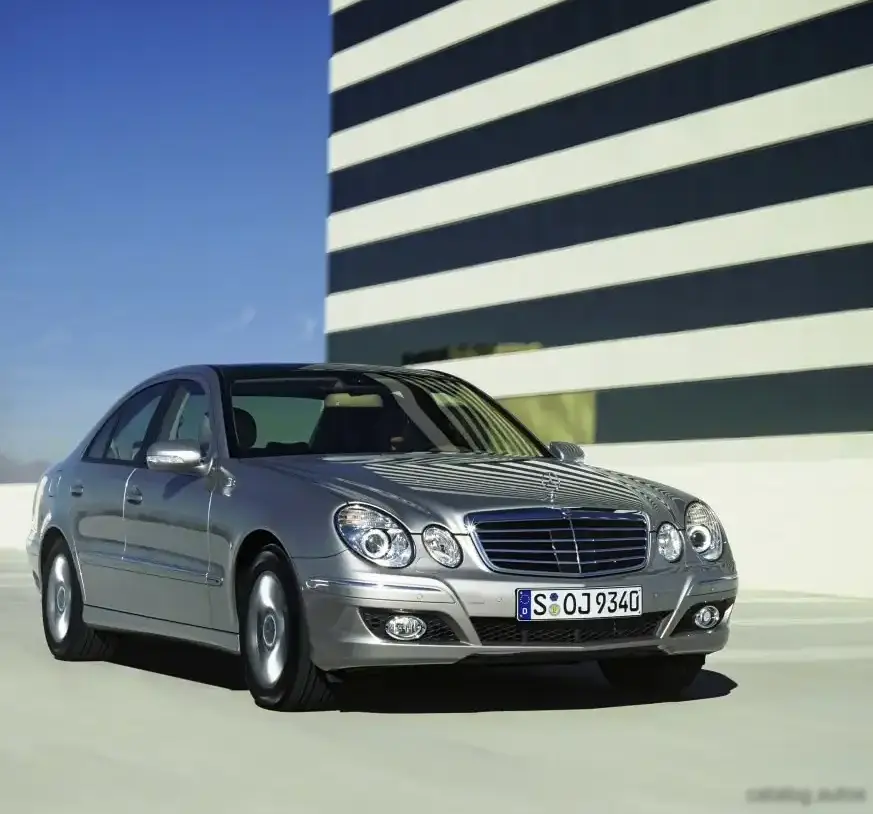
The Mercedes-Benz E 280 CDI, produced from 2006 to 2009 as part of the W211 facelift generation, represented a compelling blend of luxury, performance, and fuel efficiency within the mid-size executive car segment. This variant, equipped with a 3.0-liter V6 turbodiesel engine producing 190 horsepower and paired with the 7G-TRONIC seven-speed automatic transmission, occupied a sweet spot in the E-Class lineup, appealing to buyers seeking a refined driving experience without sacrificing practicality. It was positioned as a step up from the four-cylinder diesel models, offering significantly more power and a smoother ride, while remaining more accessible than the higher-performance E 320 CDI or the gasoline-powered E 350.
Technical Specifications
| Brand | Mercedes-Benz |
| Model | E-class |
| Generation | E-class (W211, facelift 2006) |
| Type (Engine) | E 280 CDI V6 (190 Hp) 7G-TRONIC |
| Start of production | 2006 |
| End of production | 2009 |
| Powertrain Architecture | Internal Combustion engine |
| Body type | Sedan |
| Seats | 5 |
| Doors | 4 |
| Fuel consumption (urban) | 10.1-10.4 l/100 km (23.3 – 22.6 US mpg) |
| Fuel consumption (extra urban) | 5.6-5.9 l/100 km (42 – 39.9 US mpg) |
| Fuel consumption (combined) | 7.2-7.5 l/100 km (32.7 – 31.4 US mpg) |
| CO2 emissions | 191-199 g/km |
| Fuel Type | Diesel |
| Acceleration 0 – 100 km/h | 7.6 sec |
| Acceleration 0 – 60 mph | 7.2 sec |
| Maximum speed | 238 km/h (147.89 mph) |
| Emission standard | Euro 4 |
| Weight-to-power ratio | 8.6 kg/Hp |
| Weight-to-torque ratio | 3.7 kg/Nm |
| Power | 190 Hp @ 4000 rpm |
| Torque | 440 Nm @ 1400-2800 rpm (324.53 lb.-ft.) |
| Engine layout | Front, Longitudinal |
| Engine Model/Code | OM 642.920 |
| Engine displacement | 2987 cm3 (182.28 cu. in.) |
| Number of cylinders | 6 |
| Engine configuration | V-engine |
| Cylinder Bore | 83 mm (3.27 in.) |
| Piston Stroke | 92 mm (3.62 in.) |
| Compression ratio | 17.7:1 |
| Number of valves per cylinder | 4 |
| Fuel injection system | Diesel Commonrail |
| Engine aspiration | Turbocharger, Intercooler |
| Valvetrain | DOHC |
| Engine oil capacity | 8.5 l (8.98 US qt | 7.48 UK qt) |
| Coolant capacity | 13 l (13.74 US qt | 11.44 UK qt) |
| Kerb Weight | 1640 kg (3615.58 lbs.) |
| Max. weight | 2240 kg (4938.35 lbs.) |
| Max load | 600 kg (1322.77 lbs.) |
| Trunk (boot) space (minimum) | 540 l (19.07 cu. ft.) |
| Fuel tank capacity | 65 l (17.17 US gal | 14.3 UK gal) |
| Permitted trailer load (braked) | 1900 kg (4188.78 lbs.) |
| Permitted trailer load (unbraked) | 750 kg (1653.47 lbs.) |
| Length | 4856 mm (191.18 in.) |
| Width | 1822 mm (71.73 in.) |
| Width (including mirrors) | 2063 mm (81.22 in.) |
| Height | 1484 mm (58.43 in.) |
| Wheelbase | 2854 mm (112.36 in.) |
| Front track | 1559 mm (61.38 in.) |
| Rear track | 1552 mm (61.1 in.) |
| Minimum turning circle | 11.4 m (37.4 ft.) |
| Gears/Gearbox Type | 7 gears, automatic transmission G-TRONIC |
INTRODUCTION
The W211 E-Class, introduced in 2002, represented a significant departure from its predecessors, embracing a more modern and technologically advanced design. The 2006 facelift brought revised styling, improved interior materials, and updated engine options. The E 280 CDI, launched with this refresh, quickly became a popular choice, particularly in Europe, where diesel engines held a dominant market share. It offered a compelling alternative to gasoline-powered rivals, delivering strong performance and impressive fuel economy. In the US market, where diesel adoption was slower, it was less common but still appreciated by those seeking a long-distance cruiser with low running costs.
Powertrain & Engine Architecture
At the heart of the E 280 CDI lies the OM 642.920, a 3.0-liter V6 turbodiesel engine. This engine is a robust and sophisticated design, featuring a common rail direct injection system, four valves per cylinder, and a variable geometry turbocharger. The common rail system, operating at extremely high pressures, ensures precise fuel delivery and optimized combustion. The V6 configuration provides inherent smoothness and balance, minimizing vibrations. The 7G-TRONIC transmission, a seven-speed automatic, further enhances the driving experience. This transmission is known for its smooth and quick shifts, contributing to both performance and fuel efficiency. It features a torque converter lock-up clutch that engages at higher speeds to reduce slippage and improve economy. The transmission also offers a manual shift mode for greater driver control.
Driving Characteristics
The E 280 CDI offered a refined and comfortable driving experience. The 440 Nm (324.53 lb.-ft.) of torque, available from a low 1400 rpm, provided ample pulling power for effortless overtaking and relaxed cruising. While not a sports car, the E 280 CDI could accelerate from 0 to 60 mph in around 7.2 seconds, a respectable figure for a large diesel sedan. The 7G-TRONIC transmission played a crucial role in maximizing the engine’s potential, selecting the optimal gear for any given situation. Compared to the more powerful E 320 CDI, the E 280 CDI felt slightly less urgent in its acceleration, but it offered a more balanced and economical driving experience. The automatic transmission, while smooth, could sometimes feel hesitant during quick downshifts compared to the more responsive manual transmissions available on other E-Class models.
Equipment & Trim Levels
The E 280 CDI typically came well-equipped, reflecting its position as a premium executive car. Standard features included automatic climate control, power-adjustable front seats, a multi-function steering wheel, and a high-quality audio system. Leather upholstery was often standard, or available as an option. Optional extras included a sunroof, navigation system, premium sound system, and parking sensors. The interior design was characterized by its elegant and understated styling, with high-quality materials and a focus on comfort. Trim levels varied slightly depending on the market, but generally offered a range of customization options to suit individual preferences.
Chassis & Braking
The W211 E-Class featured a sophisticated independent suspension system, with multi-link setups at both the front and rear. This provided a comfortable ride and good handling characteristics. The E 280 CDI typically came equipped with ventilated disc brakes at the front and solid disc brakes at the rear. Anti-lock braking system (ABS) and electronic stability control (ESP) were standard safety features. The suspension was tuned to prioritize comfort, but still offered a reasonable level of control and stability. Stabilizer bars were fitted to both axles to reduce body roll during cornering.
Market Reception & Comparison
The E 280 CDI was generally well-received by automotive critics. It was praised for its refined engine, smooth transmission, comfortable ride, and impressive fuel economy. Comparisons with rivals like the BMW 530d and Audi A6 3.0 TDI often highlighted the Mercedes-Benz’s superior ride quality and luxurious interior. However, some critics noted that the steering lacked the sharpness of its competitors. In terms of reliability, the OM 642 engine proved to be generally robust, although the diesel particulate filter (DPF) could be prone to clogging if the vehicle was primarily used for short trips. Fuel economy was a major selling point, with the E 280 CDI consistently achieving over 30 mpg on the highway.
Legacy
The E 280 CDI, and the OM 642 engine it featured, has proven to be a durable and reliable powertrain. Today, well-maintained examples are still relatively common on the used car market. While age and mileage inevitably take their toll, these cars can offer a comfortable and economical way to experience Mercedes-Benz luxury. Common maintenance items include regular oil changes, filter replacements, and occasional DPF cleaning. The 7G-TRONIC transmission is generally reliable, but may require fluid changes and occasional servicing. The E 280 CDI represents a sweet spot in the W211 E-Class range, offering a compelling combination of performance, efficiency, and refinement.