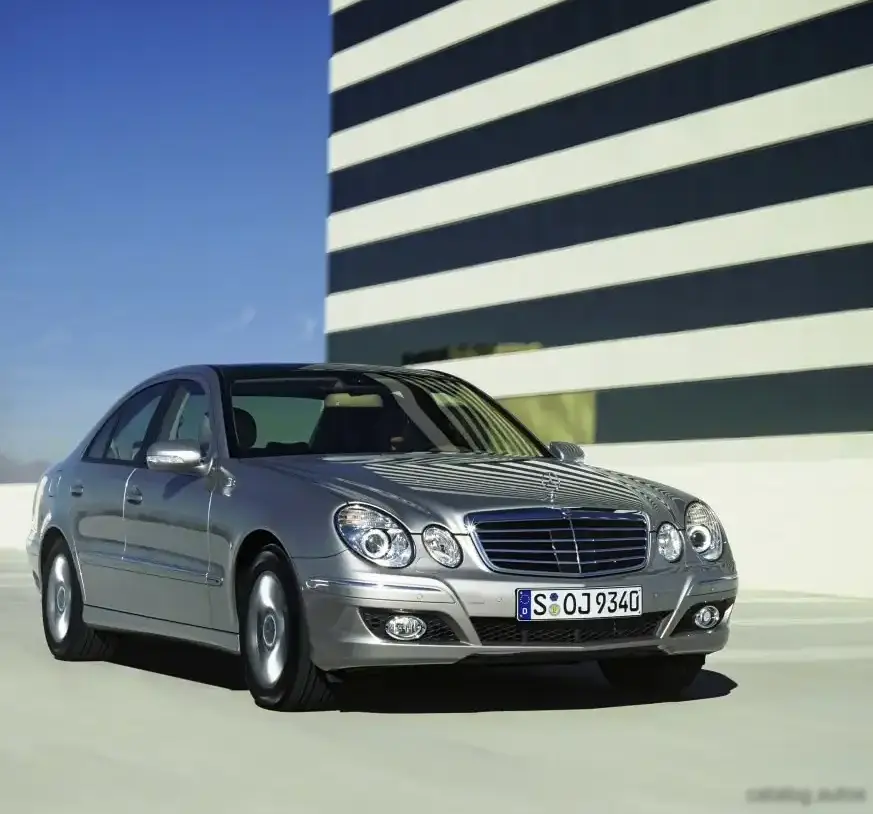
The Mercedes-Benz E 320 Bluetec, introduced as part of the W211 facelift in October 2006 and continuing through February 2009, represented a significant step forward in diesel technology for the American market. Positioned as a mid-range offering within the W211 E-Class lineup, it bridged the gap between the more affordable E320 CDI and the higher-performance E500 models. This variant was particularly notable for its implementation of Bluetec technology, a system designed to drastically reduce nitrogen oxide (NOx) emissions, allowing it to meet stringent US emissions standards. The E 320 Bluetec was exclusively offered as a four-door sedan, catering to buyers seeking a luxurious and efficient grand touring experience.
Technical Specifications
| Brand | Mercedes-Benz |
| Model | E-class |
| Generation | E-class (W211, facelift 2006) |
| Type (Engine) | E 320 BLUETEC (208 Hp) 7G-TRONIC |
| Start of production | October, 2006 |
| End of production | February, 2009 |
| Powertrain Architecture | Internal Combustion engine |
| Body type | Sedan |
| Seats | 5 |
| Doors | 4 |
| Fuel consumption (urban) | 9.1 l/100 km (25.8 US mpg, 31 UK mpg, 11 km/l) |
| Fuel consumption (extra urban) | 6.7 l/100 km (35.1 US mpg, 42.2 UK mpg, 14.9 km/l) |
| Fuel consumption (combined) | 7.3 l/100 km (32.2 US mpg, 38.7 UK mpg, 13.7 km/l) |
| Fuel Type | Diesel |
| Acceleration 0 – 100 km/h | 7.2 sec |
| Acceleration 0 – 62 mph | 7.2 sec |
| Acceleration 0 – 60 mph | 6.8 sec |
| Maximum speed | 244 km/h (151.61 mph) |
| Weight-to-power ratio | 8.4 kg/Hp, 119.5 Hp/tonne |
| Weight-to-torque ratio | 3.2 kg/Nm, 310.3 Nm/tonne |
| Power | 208 Hp @ 3800 rpm |
| Power per litre | 69.6 Hp/l |
| Torque | 540 Nm @ 1600-2400 rpm (398.28 lb.-ft. @ 1600-2400 rpm) |
| Engine layout | Front, Longitudinal |
| Engine Model/Code | OM 642.940 |
| Engine displacement | 2987 cm3 (182.28 cu. in.) |
| Number of cylinders | 6 |
| Engine configuration | V-engine |
| Cylinder Bore | 83 mm (3.27 in.) |
| Piston Stroke | 92 mm (3.62 in.) |
| Compression ratio | 16.5:1 |
| Number of valves per cylinder | 4 |
| Fuel injection system | Diesel Commonrail |
| Engine aspiration | Turbocharger, Intercooler |
| Valvetrain | SOHC |
| Engine oil capacity | 8.5 l (8.98 US qt | 7.48 UK qt) |
| Coolant | 13 l (13.74 US qt | 11.44 UK qt) |
| Kerb Weight | 1740 kg (3836.04 lbs.) |
| Max. weight | 2275 kg (5015.52 lbs.) |
| Max load | 535 kg (1179.47 lbs.) |
| Fuel tank capacity | 80 l (21.13 US gal | 17.6 UK gal) |
| Length | 4856 mm (191.18 in.) |
| Width | 1822 mm (71.73 in.) |
| Height | 1484 mm (58.43 in.) |
| Wheelbase | 2854 mm (112.36 in.) |
| Front track | 1559 mm (61.38 in.) |
| Rear track | 1552 mm (61.1 in.) |
| Drivetrain Architecture | Rear wheel drive |
| Drive wheel | Rear wheel drive |
| Number of gears | 7 |
| Gearbox type | automatic transmission G-TRONIC |
| Front suspension | Independent, type McPherson with coil spring and anti-roll bar |
| Rear suspension | Independent multi-link spring suspension with stabilizer |
| Front brakes | Ventilated discs |
| Rear brakes | Ventilated discs |
| Assisting systems | ABS (Anti-lock braking system) |
| Steering type | Steering rack and pinion |
| Power steering | Hydraulic Steering |
| Tires size | 225/55 R16 |
| Wheel rims size | 7.5J x 16 |
Powertrain & Engine Architecture
The heart of the E 320 Bluetec is the OM 642.940, a 3.0-liter V6 diesel engine. This engine utilizes a common rail direct injection system, delivering fuel at extremely high pressures for optimized combustion. The engine also features a variable geometry turbocharger (VGT) and an intercooler, enhancing both power and efficiency. The Bluetec system itself is a sophisticated combination of technologies, including a diesel particulate filter (DPF) to trap soot, a catalytic converter to reduce hydrocarbons and carbon monoxide, and a NOx storage catalyst to absorb and periodically reduce nitrogen oxides. The 7G-TRONIC automatic transmission, a seven-speed unit, was standard. This transmission is known for its smooth shifting and wide gear ratios, contributing to both fuel economy and responsive acceleration. The transmission’s programming was specifically tuned to complement the engine’s torque curve, providing seamless power delivery.
Driving Characteristics
The E 320 Bluetec offered a refined and comfortable driving experience. While not as overtly sporty as some of its gasoline-powered siblings, the 208 horsepower and substantial 398 lb-ft of torque provided ample power for both highway cruising and passing maneuvers. The 7G-TRONIC transmission contributed to smooth acceleration, and the engine’s peak torque, available from 1600-2400 rpm, meant that strong pulling power was readily accessible. Compared to the E320 CDI, the Bluetec version prioritized emissions compliance over outright performance, resulting in a slightly less aggressive throttle response. However, the difference was subtle for most drivers. The automatic transmission, while efficient, didn’t offer the same level of driver engagement as a manual gearbox.
Equipment & Trim Levels
The E 320 Bluetec typically came well-equipped, reflecting its position as a mid-range luxury sedan. Standard features included leather upholstery, automatic climate control, a premium sound system, and power-adjustable front seats. Optional extras included a navigation system, a sunroof, and upgraded interior trim packages. The exterior styling was consistent with the W211 facelift, featuring a more modern front fascia and revised taillights compared to the pre-facelift models. The interior design was characterized by its elegant and understated aesthetic, with high-quality materials and a focus on comfort.
Chassis & Braking
The E 320 Bluetec utilized a McPherson strut front suspension and a multi-link independent rear suspension. This setup provided a good balance between ride comfort and handling. Ventilated disc brakes were standard on all four wheels, providing ample stopping power. Anti-lock braking system (ABS) was also standard. The suspension tuning was geared towards providing a comfortable ride, rather than aggressive cornering. Stabilizer bars were fitted to both the front and rear axles to reduce body roll.
Market Reception & Comparison
The E 320 Bluetec was generally well-received by automotive critics, who praised its fuel efficiency, quiet operation, and comfortable ride. The Bluetec technology was seen as a significant achievement, allowing Mercedes-Benz to offer a diesel-powered vehicle that met US emissions standards. Compared to the E320 CDI, the Bluetec version offered similar fuel economy but with significantly lower emissions. The E 320 Bluetec was also more expensive than the CDI model, reflecting the added cost of the Bluetec system. Against gasoline-powered E-Class models, the Bluetec offered superior fuel economy but less outright performance.
Legacy
The OM 642 engine family, including the OM 642.940 found in the E 320 Bluetec, has proven to be remarkably durable and reliable. While the Bluetec system itself can be complex and potentially expensive to repair, the engine itself is generally considered robust. Today, well-maintained E 320 Bluetec models can still provide years of reliable service. The car represents a pivotal moment in diesel technology, demonstrating that clean diesel engines could meet stringent emissions standards without sacrificing performance or fuel economy. The used car market values these vehicles for their combination of luxury, efficiency, and longevity, making them a popular choice for buyers seeking a refined and economical grand touring sedan.