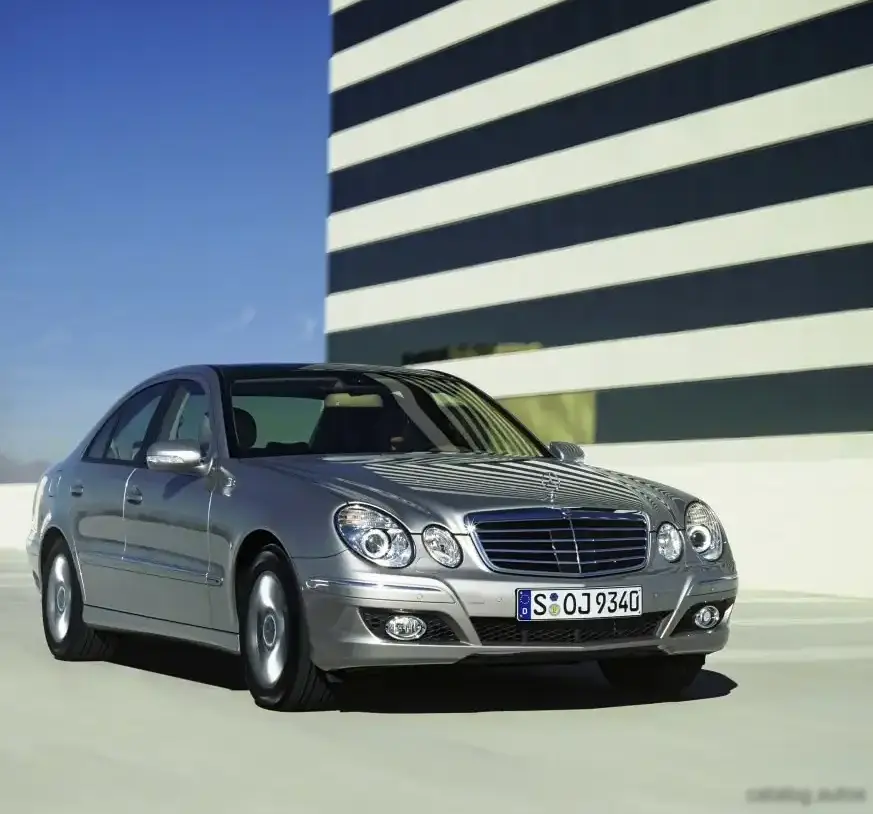
The Mercedes-Benz E 350 4MATIC, produced from 2006 to 2009 as part of the W211 facelift generation, represented a compelling blend of luxury, performance, and all-weather capability. Positioned as a mid-range offering within the E-Class lineup, it slotted between the entry-level E 300 and the higher-performance E 500 models. This variant combined a naturally aspirated 3.5-liter V6 engine with a five-speed automatic transmission and Mercedes’ 4MATIC all-wheel-drive system, appealing to buyers seeking a refined driving experience with enhanced traction. The W211 facelift, introduced in 2006, brought significant cosmetic and technological updates to the E-Class, addressing criticisms leveled at the pre-facelift models and solidifying its position in the premium executive car segment.
Technical Specifications
| Brand | Mercedes-Benz |
| Model | E-class |
| Generation | E-class (W211, facelift 2006) |
| Type | E 350 V6 (272 Hp) 4MATIC 5G-TRONIC |
| Start of production | 2006 |
| End of production | 2009 |
| Powertrain Architecture | Internal Combustion engine |
| Body type | Sedan |
| Seats | 5 |
| Doors | 4 |
| Fuel consumption (urban) | 14.5-14.9 l/100 km (16.2 – 15.8 US mpg) |
| Fuel consumption (extra urban) | 8.0-8.3 l/100 km (29.4 – 28.3 US mpg) |
| Fuel consumption (combined) | 10.4-10.7 l/100 km (22.6 – 22 US mpg) |
| CO2 emissions | 247-255 g/km |
| Fuel Type | Petrol (Gasoline) |
| Acceleration 0 – 100 km/h | 7.1 sec |
| Acceleration 0 – 60 mph | 6.7 sec |
| Maximum speed | 250 km/h (155.34 mph) |
| Emission standard | Euro 4 |
| Weight-to-power ratio | 6.3 kg/Hp |
| Weight-to-torque ratio | 4.9 kg/Nm |
| Power | 272 Hp @ 6000 rpm |
| Torque | 350 Nm @ 2400-5000 rpm (258.15 lb.-ft. @ 2400-5000 rpm) |
| Engine layout | Front, Longitudinal |
| Engine Model/Code | M 272.972 |
| Engine displacement | 3498 cm3 (213.46 cu. in.) |
| Number of cylinders | 6 |
| Engine configuration | V-engine |
| Cylinder Bore | 92.9 mm (3.66 in.) |
| Piston Stroke | 86 mm (3.39 in.) |
| Compression ratio | 10.7:1 |
| Number of valves per cylinder | 4 |
| Fuel injection system | Multi-port manifold injection |
| Engine aspiration | Naturally aspirated |
| Valvetrain | DOHC |
| Engine oil capacity | 8.5 l (8.98 US qt | 7.48 UK qt) |
| Coolant capacity | 10 l (10.57 US qt | 8.8 UK qt) |
| Kerb Weight | 1710 kg (3769.9 lbs.) |
| Max. weight | 2310 kg (5092.68 lbs.) |
| Max load | 600 kg (1322.77 lbs.) |
| Trunk (boot) space | 540 l (19.07 cu. ft.) |
| Fuel tank capacity | 80 l (21.13 US gal | 17.6 UK gal) |
| Permitted trailer load (braked) | 1900 kg (4188.78 lbs.) |
| Permitted trailer load (unbraked) | 750 kg (1653.47 lbs.) |
| Length | 4856 mm (191.18 in.) |
| Width | 1822 mm (71.73 in.) |
| Width (with mirrors) | 2063 mm (81.22 in.) |
| Height | 1499 mm (59.02 in.) |
| Wheelbase | 2854 mm (112.36 in.) |
| Front track | 1557 mm (61.3 in.) |
| Rear track | 1552 mm (61.1 in.) |
| Front overhang | 869 mm (34.21 in.) |
| Rear overhang | 1133 mm (44.61 in.) |
| Turning circle | 11.5 m (37.73 ft.) |
| Drivetrain | All wheel drive (4×4) |
| Gearbox | 5 gears, automatic transmission G-TRONIC |
| Front suspension | Double wishbone, Transverse stabilizer |
| Rear suspension | Independent multi-link suspension, Transverse stabilizer |
| Front brakes | Ventilated discs |
| Rear brakes | Ventilated discs |
| Steering | Steering rack and pinion, Hydraulic Power Steering |
| Tires | 225/55 R16 |
| Wheel rims | 7.5J x 16 |
Powertrain & Engine Architecture
The heart of the E 350 4MATIC was the M272.972 3.5-liter V6 engine. This engine, a naturally aspirated powerplant, featured a 60-degree V-angle and utilized a three-valve-per-cylinder (two intake, one exhaust) design with double overhead camshafts (DOHC). The M272 engine family was known for its smooth operation and relatively high specific output. Fuel delivery was handled by a multi-port fuel injection system, providing precise fuel metering for optimal combustion. The engine produced 272 horsepower at 6,000 rpm and 350 Nm (258 lb-ft) of torque between 2,400 and 5,000 rpm. This engine was paired with Mercedes’ 5G-TRONIC automatic transmission, a five-speed unit known for its smooth shifts and adaptive learning capabilities. The 5G-TRONIC adjusted shift points based on driving style and road conditions. The 4MATIC system was a full-time all-wheel-drive system, distributing power between the front and rear axles for enhanced traction and stability, particularly in inclement weather.
Driving Characteristics
The E 350 4MATIC offered a comfortable and refined driving experience. While not as overtly sporty as some of its competitors, the V6 engine provided ample power for everyday driving and confident highway passing. The 0-60 mph acceleration time of around 6.7 seconds was respectable for the era. The 5G-TRONIC transmission contributed to a smooth and seamless driving experience, although some drivers found it to be slightly hesitant in kickdown situations compared to more modern transmissions. The 4MATIC system provided a secure and planted feel, especially on slippery surfaces. The gear ratios were tuned for a balance of fuel efficiency and performance, with a focus on providing smooth, effortless cruising. Compared to the E 300, the E 350 offered a noticeable increase in power and responsiveness. The higher-output E 500, with its larger V8 engine, provided significantly more performance but at the cost of increased fuel consumption.
Equipment & Trim Levels
The E 350 4MATIC came standard with a generous array of features, including leather upholstery, automatic climate control, power-adjustable front seats, a premium sound system, and a sunroof. Optional extras included navigation system, upgraded leather packages, rear-seat entertainment, and advanced driver-assistance systems such as Distronic adaptive cruise control. The interior design was characterized by its elegant and understated styling, with high-quality materials and meticulous attention to detail. Dashboard configuration was typical of the W211 facelift, featuring a centrally mounted display screen and a logical layout of controls.
Chassis & Braking
The E 350 4MATIC utilized a sophisticated suspension system designed to provide a comfortable ride and precise handling. The front suspension featured a double wishbone design with a transverse stabilizer bar, while the rear suspension employed an independent multi-link setup, also with a stabilizer bar. This configuration minimized body roll and provided a stable platform for cornering. Braking duties were handled by ventilated disc brakes on all four wheels, providing ample stopping power. Anti-lock braking system (ABS) and electronic stability control (ESP) were standard features, enhancing safety and control.
Market Reception & Comparison
The E 350 4MATIC was generally well-received by automotive critics. It was praised for its comfortable ride, refined interior, and capable all-wheel-drive system. However, some reviewers noted that the styling of the W211 was somewhat conservative compared to its rivals. Fuel economy was considered average for its class, and the CO2 emissions were relatively high. Compared to the rear-wheel-drive E 350, the 4MATIC version offered superior traction and stability, making it a popular choice in regions with harsh winters. The E 350 4MATIC also offered a compelling alternative to other luxury sedans, such as the BMW 5 Series and the Audi A6.
Legacy
The M272 engine family, including the 3.5-liter variant found in the E 350 4MATIC, has proven to be relatively reliable, although preventative maintenance is crucial. Common issues include oil leaks from the valve cover gaskets and potential problems with the balance shaft. The 5G-TRONIC transmission is generally durable, but fluid changes should be performed at the recommended intervals. Today, the W211 E 350 4MATIC represents a good value in the used car market, offering a comfortable and well-equipped luxury sedan at an affordable price. Its all-wheel-drive system and proven powertrain make it a practical and reliable choice for buyers seeking a refined and capable vehicle.