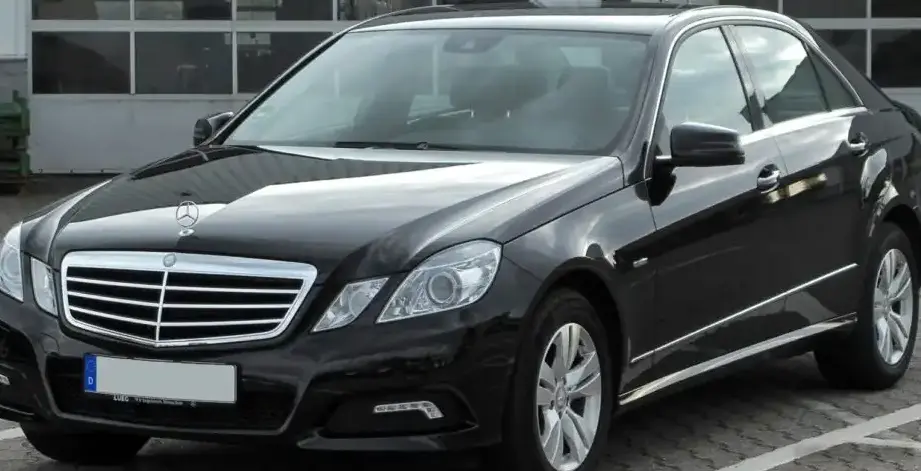
The Mercedes-Benz E 300 BlueEFFICIENCY V6 (252 Hp) 7G-TRONIC PLUS, produced from August 2011 to January 2013, represents a significant iteration within the W212 E-Class generation. Positioned as a mid-range offering, this variant balanced performance and efficiency, appealing to buyers seeking a refined luxury sedan experience. It occupied a space between the more economical four-cylinder models and the higher-performance E 550 variants. The W212 E-Class, launched in 2009, aimed to modernize the traditionally conservative E-Class formula, incorporating more advanced technology and a bolder design language. This particular model combined a naturally aspirated V6 engine with Mercedes’ 7G-TRONIC PLUS automatic transmission, a pairing designed for smooth operation and respectable fuel economy.
Technical Specifications
| Brand | Mercedes-Benz |
| Model | E-class |
| Generation | E-class (W212) |
| Type | E 300 BlueEFFICIENCY V6 (252 Hp) 7G-TRONIC PLUS |
| Start of production | August, 2011 |
| End of production | January, 2013 |
| Powertrain Architecture | Internal Combustion engine |
| Body type | Sedan |
| Seats | 5 |
| Doors | 4 |
| Fuel consumption (urban) | 9.5 l/100 km (24.8 US mpg) |
| Fuel consumption (extra urban) | 5.3-5.6 l/100 km (44.4 – 42 US mpg) |
| Fuel consumption (combined) | 6.8-7 l/100 km (34.6 – 33.6 US mpg) |
| CO2 emissions | 159-164 g/km |
| Fuel Type | Petrol (Gasoline) |
| Acceleration 0 – 100 km/h | 7.1 sec |
| Acceleration 0 – 62 mph | 7.1 sec |
| Acceleration 0 – 60 mph | 6.7 sec |
| Maximum speed | 250 km/h (155.34 mph) |
| Emission standard | Euro 5 |
| Weight-to-power ratio | 6.6 kg/Hp |
| Weight-to-torque ratio | 4.9 kg/Nm |
| Power | 252 Hp @ 6500 rpm |
| Torque | 340 Nm @ 3500-4500 rpm (250.77 lb.-ft.) |
| Engine layout | Front, Longitudinal |
| Engine Model/Code | M 276.952 |
| Engine displacement | 3498 cm3 (213.46 cu. in.) |
| Number of cylinders | 6 |
| Engine configuration | V-engine |
| Cylinder Bore | 92.9 mm (3.66 in.) |
| Piston Stroke | 86 mm (3.39 in.) |
| Compression ratio | 12:1 |
| Number of valves per cylinder | 4 |
| Fuel injection system | Direct injection |
| Engine aspiration | Naturally aspirated |
| Valvetrain | DOHC |
| Engine oil capacity | 6.5 l (6.87 US qt | 5.72 UK qt) |
| Coolant capacity | 9.6 l (10.14 US qt | 8.45 UK qt) |
| Kerb Weight | 1655 kg (3648.65 lbs.) |
| Max. weight | 2275 kg (5015.52 lbs.) |
| Max load | 620 kg (1366.87 lbs.) |
| Trunk (boot) space | 540 l (19.07 cu. ft.) |
| Fuel tank capacity | 80 l (21.13 US gal | 17.6 UK gal) |
| Length | 4868 mm (191.65 in.) |
| Width | 1854 mm (72.99 in.) |
| Height | 1471 mm (57.91 in.) |
| Wheelbase | 2874 mm (113.15 in.) |
| Drivetrain Architecture | Rear wheel drive |
| Number of gears | 7 |
| Gearbox type | Automatic transmission G-TRONIC PLUS |
Powertrain & Engine Architecture
The heart of the E 300 BlueEFFICIENCY is the M 276.952 3.5-liter V6 engine. This engine is a naturally aspirated powerplant featuring direct fuel injection and a double overhead camshaft (DOHC) valvetrain. The direct injection system, a hallmark of Mercedes-Benz technology at the time, allowed for precise fuel delivery, enhancing both power and efficiency. The engine’s architecture prioritized smoothness and refinement, characteristics expected of a luxury vehicle. The 7G-TRONIC PLUS automatic transmission, a seven-speed unit, was specifically tuned to complement the V6’s power delivery. This transmission offered smooth, almost imperceptible shifts and contributed to the car’s overall fuel efficiency. The “BlueEFFICIENCY” designation indicated the inclusion of various fuel-saving technologies, including an Eco start/stop system, which automatically shut off the engine when the vehicle was stationary.
Driving Characteristics
The E 300 7G-TRONIC PLUS offered a comfortable and composed driving experience. While not overtly sporty, the 252 horsepower and 340 Nm (250.77 lb-ft) of torque provided adequate acceleration for everyday driving and highway cruising. The 0-60 mph time of around 6.7 seconds was respectable for the era. Compared to the more powerful E 550, the E 300 felt less urgent in its acceleration, but it offered a more balanced and fuel-efficient driving experience. The 7G-TRONIC transmission’s gear ratios were optimized for both fuel economy and responsiveness. The transmission generally shifted smoothly and predictably, although some drivers noted a slight hesitation during kickdown maneuvers. The rear-wheel-drive configuration contributed to a balanced feel, although it lacked the all-weather capability of the available 4MATIC all-wheel-drive system.
Equipment & Trim Levels
The E 300 BlueEFFICIENCY typically came standard with a comprehensive list of features befitting a luxury sedan. These included leather upholstery, automatic climate control, a premium sound system, and a suite of safety features such as ABS, traction control, and multiple airbags. Optional extras included a navigation system, a panoramic sunroof, heated and ventilated seats, and advanced driver-assistance systems like lane-keeping assist and adaptive cruise control. Interior trim options ranged from wood veneers to aluminum accents, allowing buyers to personalize the cabin to their preferences. The dashboard layout was characterized by a blend of traditional Mercedes-Benz elegance and modern technology.
Chassis & Braking
The W212 E-Class featured a sophisticated suspension system designed to provide a comfortable ride and precise handling. The front suspension utilized a multi-link setup with coil springs, while the rear suspension employed a multi-link spring suspension. An optional air suspension system was available, offering adjustable ride height and damping for enhanced comfort and control. Braking duties were handled by ventilated discs on all four wheels, providing ample stopping power. The E 300’s chassis was tuned to prioritize ride comfort over outright sportiness, resulting in a smooth and refined driving experience. Stabilizer bars were fitted front and rear to minimize body roll during cornering.
Market Reception & Comparison
The E 300 BlueEFFICIENCY V6 was generally well-received by automotive critics. It was praised for its refined engine, smooth transmission, and comfortable ride. However, some reviewers noted that the engine lacked the outright punch of its competitors, and the styling was considered somewhat conservative. In terms of fuel economy, the E 300 offered a competitive advantage over the more powerful E 550, while still providing a respectable level of performance. Compared to the diesel-powered E 350 CDI, the E 300 offered a different driving experience, with a focus on smoothness and refinement rather than low-end torque. The E 300’s reliability was generally considered good, although some owners reported minor issues with the electronic systems.
Legacy
The M 276 V6 engine family, including the M 276.952 found in the E 300, proved to be a durable and reliable powerplant. While not without its potential maintenance needs (such as timing chain wear in some cases), the engine generally held up well over time. Today, the W212 E 300 represents a relatively affordable entry point into the Mercedes-Benz luxury sedan market. These vehicles are often found with reasonable mileage and well-maintained service histories. The combination of comfort, refinement, and reasonable running costs makes the E 300 a popular choice among used car buyers seeking a dependable and stylish vehicle.