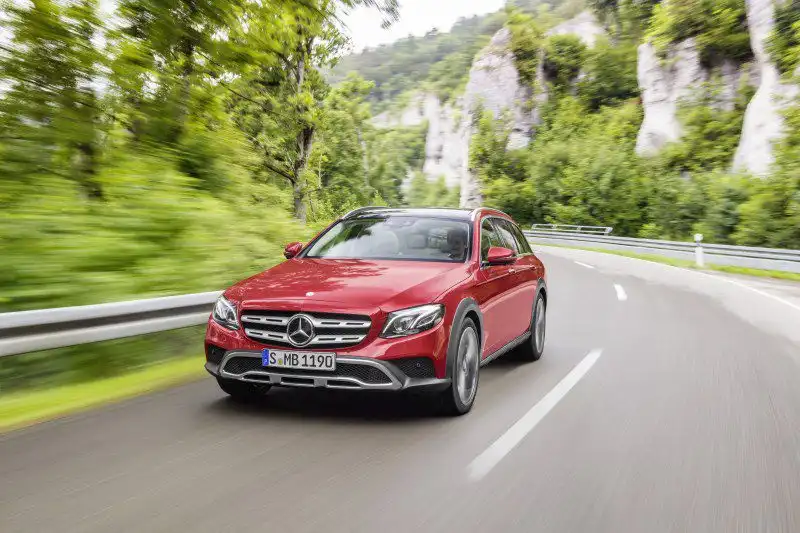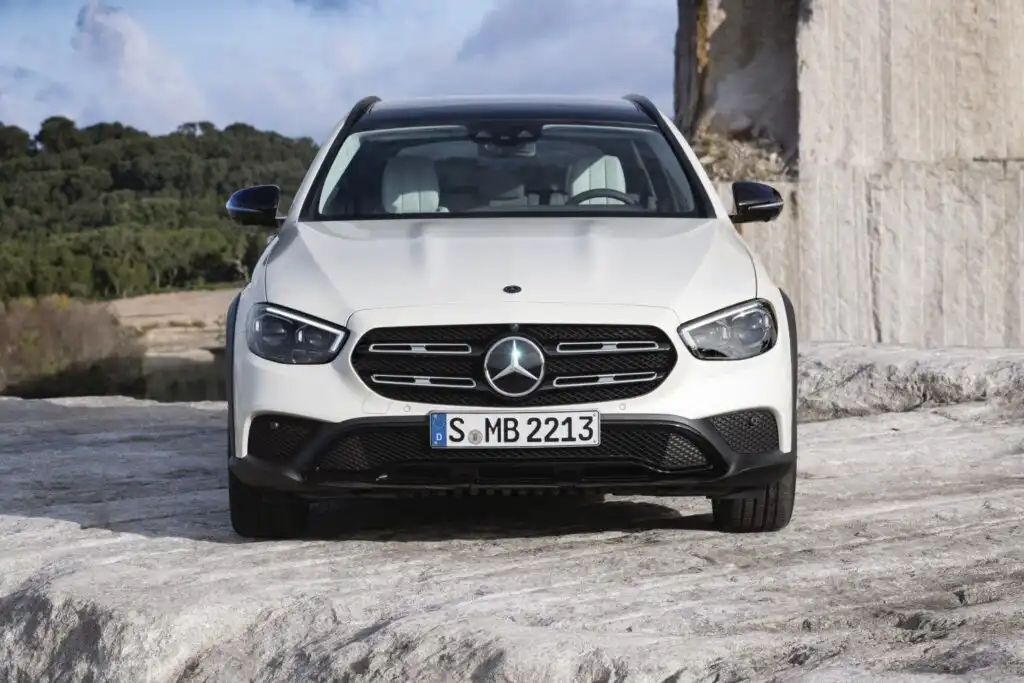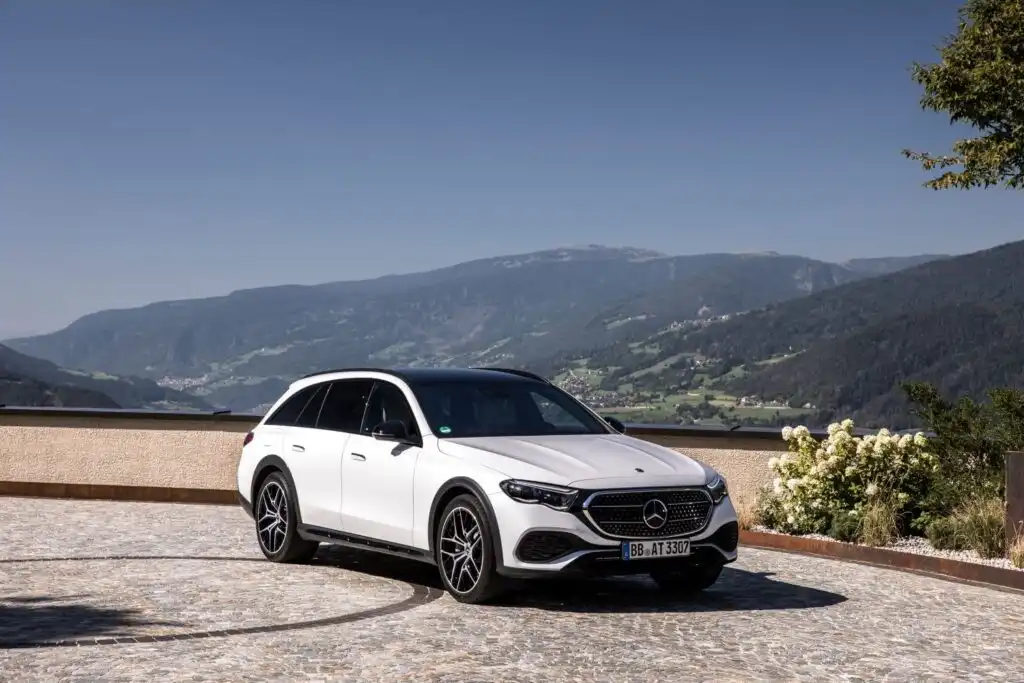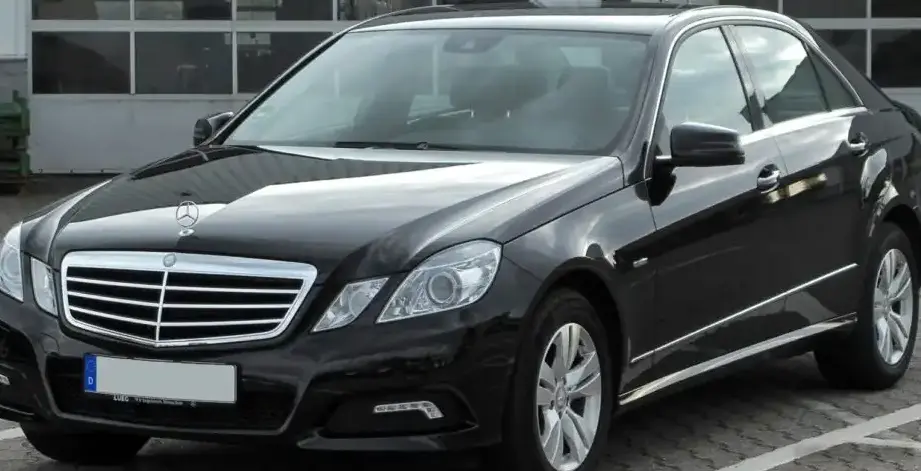
The Mercedes-Benz E 500 BlueEFFICIENCY, produced between August 2011 and January 2013, represented a high-performance variant within the W212 E-Class range. Positioned as a luxury performance sedan, it offered a significant step up in power and refinement compared to the four-cylinder and V6 models available. This variant was primarily marketed in Europe and North America to buyers seeking a blend of sophisticated comfort and robust acceleration. It sat at the top of the non-AMG E-Class lineup, offering a compelling alternative to the more overtly sporty AMG models for those prioritizing a smooth, powerful driving experience.
Technical Specifications
| Brand | Mercedes-Benz |
| Model | E-class |
| Generation | E-class (W212) |
| Type | E 500 BlueEFFICIENCY V8 (408 Hp) 7G-TRONIC PLUS |
| Start of production | August, 2011 |
| End of production | January, 2013 |
| Powertrain Architecture | Internal Combustion engine |
| Body type | Sedan |
| Seats | 5 |
| Doors | 4 |
| Fuel consumption (economy) – urban (NEDC) | 12.6 l/100 km (18.7 US mpg, 22.4 UK mpg, 7.9 km/l) |
| Fuel consumption (economy) – extra urban (NEDC) | 6.7 l/100 km (35.1 US mpg, 42.2 UK mpg, 14.9 km/l) |
| Fuel consumption (economy) – combined (NEDC) | 8.9 l/100 km (26.4 US mpg, 31.7 UK mpg, 11.2 km/l) |
| CO2 emissions (NEDC) | 209 g/km |
| Fuel Type | Petrol (Gasoline) |
| Acceleration 0 – 100 km/h | 5.2 sec |
| Acceleration 0 – 62 mph | 5.2 sec |
| Acceleration 0 – 60 mph | 4.9 sec |
| Maximum speed | 250 km/h (155.34 mph), Electronically limited |
| Emission standard | Euro 5 |
| Weight-to-power ratio | 4.6 kg/Hp, 218.8 Hp/tonne |
| Weight-to-torque ratio | 3.1 kg/Nm, 321.7 Nm/tonne |
| Power | 408 Hp @ 5000-5750 rpm |
| Power per litre | 87.5 Hp/l |
| Torque | 600 Nm @ 1600-4750 rpm (442.54 lb.-ft. @ 1600-4750 rpm) |
| Engine layout | Front, Longitudinal |
| Engine Model/Code | M 278.922 |
| Engine displacement | 4663 cm3 (284.55 cu. in.) |
| Number of cylinders | 8 |
| Engine configuration | V-engine |
| Cylinder Bore | 92.9 mm (3.66 in.) |
| Piston Stroke | 86 mm (3.39 in.) |
| Compression ratio | 10.5:1 |
| Number of valves per cylinder | 4 |
| Fuel injection system | Direct injection |
| Engine aspiration | BiTurbo, Intercooler |
| Valvetrain | DOHC |
| Engine oil capacity | 8 l (8.45 US qt | 7.04 UK qt) |
| Coolant | 12.3 l (13 US qt | 10.82 UK qt) |
| Kerb Weight | 1865 kg (4111.62 lbs.) |
| Max. weight | 2485 kg (5478.49 lbs.) |
| Max load | 620 kg (1366.87 lbs.) |
| Trunk (boot) space – minimum | 532 l (18.79 cu. ft.) |
| Fuel tank capacity | 80 l (21.13 US gal | 17.6 UK gal) |
| Max. roof load | 100 kg (220.46 lbs.) |
| Permitted trailer load with brakes (12%) | 2100 kg (4629.71 lbs.) |
| Permitted trailer load without brakes | 750 kg (1653.47 lbs.) |
| Permitted towbar download | 84 kg (185.19 lbs.) |
| Length | 4868 mm (191.65 in.) |
| Width | 1854 mm (72.99 in.) |
| Width including mirrors | 2071 mm (81.54 in.) |
| Height | 1471 mm (57.91 in.) |
| Wheelbase | 2874 mm (113.15 in.) |
| Front track | 1598 mm (62.91 in.) |
| Rear (Back) track | 1614 mm (63.54 in.) |
| Front overhang | 841 mm (33.11 in.) |
| Rear overhang | 1153 mm (45.39 in.) |
| Drag coefficient (Cd) | 0.28 |
| Minimum turning circle (turning diameter) | 11.25 m (36.91 ft.) |
| Drivetrain Architecture | The Internal combustion engine (ICE) drives the rear wheels of the vehicle. |
| Drive wheel | Rear wheel drive |
| Number of gears and type of gearbox | 7 gears, automatic transmission G-TRONIC PLUS |
| Front suspension | Independent multi-link suspension, Transverse stabilizer, Air suspension |
| Rear suspension | Independent multi-link suspension, Air suspension, Transverse stabilizer |
| Front brakes | Ventilated discs, 360 mm |
| Rear brakes | Ventilated discs, 320 mm |
| Assisting systems | ABS (Anti-lock braking system) |
| Steering type | Steering rack and pinion |
| Power steering | Hydraulic Steering |
| Tires size | Front wheel tires: 245/40 R18; 245/35 R19 Rear wheel tires: 265/35 R18; 275/30 R19 |
| Wheel rims size | Front wheel rims: 8.5J x 18; 8.5J x 19 Rear wheel rims: 9J x 18; 9.5J x 19 |
Powertrain & Engine Architecture
The heart of the E 500 BlueEFFICIENCY is the M278.922 4.7-liter V8 engine. This engine utilizes direct fuel injection and twin turbochargers to produce 408 horsepower and 442 lb-ft of torque. The ‘BlueEFFICIENCY’ designation indicates the inclusion of various fuel-saving technologies, including an Eco start/stop system. The engine’s architecture features a 92.9mm bore and 86mm stroke, resulting in a relatively short-stroke design that favors high-revving performance. The valvetrain employs double overhead camshafts (DOHC) with four valves per cylinder. The 7G-TRONIC PLUS automatic transmission, a seven-speed unit, was specifically calibrated to handle the V8’s substantial power output. This transmission offered smooth and responsive shifts, contributing to the car’s refined driving experience.
Driving Characteristics
The E 500 BlueEFFICIENCY delivered a markedly different driving experience compared to the four-cylinder and V6 E-Class models. Acceleration from 0 to 60 mph was achieved in approximately 4.9 seconds, making it a genuinely quick sedan. The twin-turbo V8 provided a broad torque curve, offering strong pull throughout the rev range. The 7G-TRONIC PLUS transmission intelligently selected gears to maintain optimal power delivery. While not as overtly sporty as the AMG variants, the E 500 offered a comfortable and confident grand touring experience. The air suspension, often equipped on this trim, further enhanced ride quality, absorbing bumps and providing a stable platform for high-speed cruising.
Equipment & Trim Levels
The E 500 BlueEFFICIENCY typically came well-equipped as standard. Features included leather upholstery, wood trim, a premium sound system, dual-zone automatic climate control, and a host of safety technologies like adaptive cruise control and lane-keeping assist. Optional extras included a panoramic sunroof, upgraded leather packages, and advanced driver assistance systems. The interior design was consistent with the W212 E-Class, emphasizing a luxurious and technologically advanced environment.
Chassis & Braking
The E 500 BlueEFFICIENCY utilized an independent multi-link suspension system at both the front and rear, often incorporating air suspension for enhanced ride comfort and adjustability. Braking duties were handled by ventilated discs on all four wheels, providing ample stopping power. The E 500 generally featured larger brake rotors compared to the lower-trim models to accommodate the increased weight and performance. The steering system was a hydraulic rack-and-pinion setup, offering precise and responsive control.
Market Reception & Comparison
Critics generally praised the E 500 BlueEFFICIENCY for its refined power delivery, comfortable ride, and luxurious interior. It was seen as a strong competitor to other luxury performance sedans, such as the BMW 550i and Audi A8. Compared to the E 350, the E 500 offered a significant performance upgrade, but at a higher price point. Fuel economy, while respectable for a V8, was naturally lower than the four-cylinder and V6 models. Reliability was generally good, although the complex twin-turbo system and advanced electronics required diligent maintenance.
Legacy
The E 500 BlueEFFICIENCY remains a desirable used car today, particularly for those seeking a blend of luxury, performance, and refinement. The M278 V8 engine, while complex, has proven to be relatively durable with proper maintenance. Common issues include occasional turbocharger problems and oil leaks. However, well-maintained examples continue to provide a rewarding driving experience. The W212 E-Class, and the E 500 variant specifically, represents a high point in Mercedes-Benz’s engineering and design, offering a compelling alternative to newer, more technologically focused vehicles.