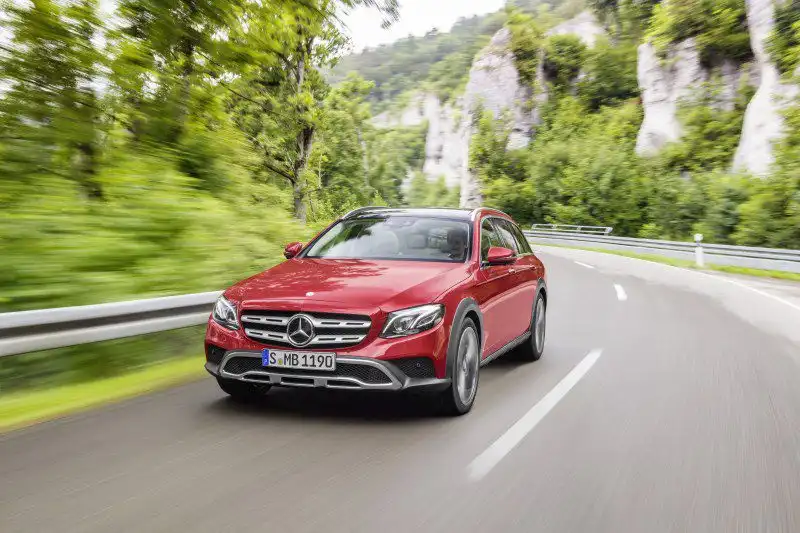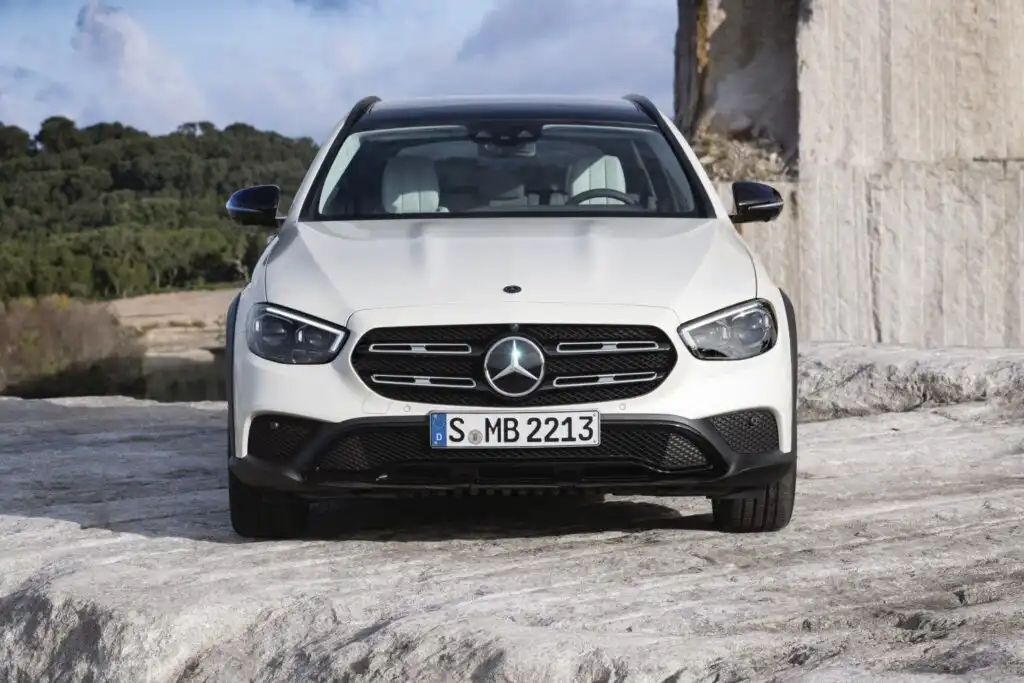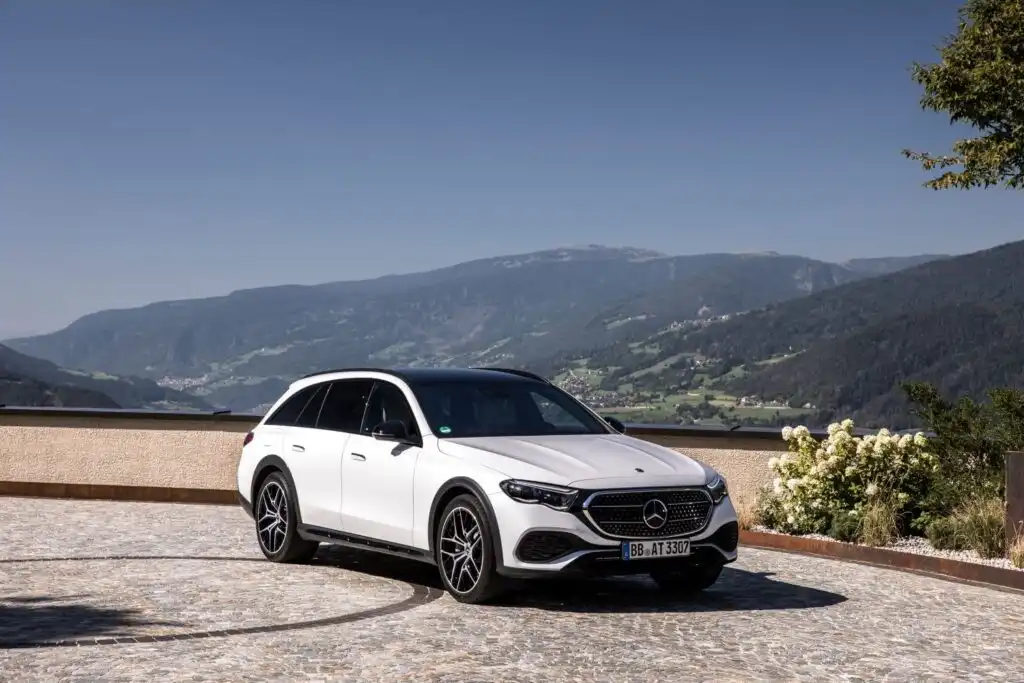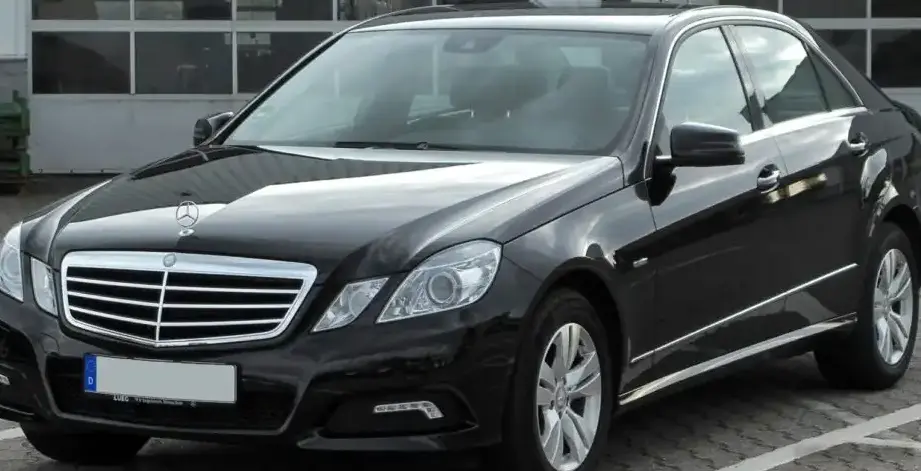
The Mercedes-Benz E 500 V8 (388 hp) 4MATIC, produced between 2009 and 2011, represented the high-performance gasoline engine option within the W212 E-Class range. Positioned as the flagship sedan before the introduction of the E 63 AMG, it offered a blend of luxury, performance, and all-weather capability. This variant utilized a naturally aspirated 5.5-liter V8 engine paired with a 7G-TRONIC automatic transmission and Mercedes-Benz’s 4MATIC all-wheel-drive system. It served as a compelling alternative for buyers seeking substantial power without the more aggressive character and higher price point of the AMG models.
Technical Specifications
| Brand | Mercedes-Benz |
| Model | E-class |
| Generation | E-class (W212) |
| Type (Engine) | E 500 V8 (388 Hp) 4MATIC 7G-TRONIC |
| Start of production | 2009 |
| End of production | 2011 |
| Powertrain Architecture | Internal Combustion engine |
| Body type | Sedan |
| Seats | 5 |
| Doors | 4 |
| Fuel consumption (economy) – urban (NEDC) | 16.3-16.6 l/100 km (14.4 – 14.2 US mpg, 17.3 – 17 UK mpg, 6.1 – 6 km/l) |
| Fuel consumption (economy) – extra urban (NEDC) | 8-8.2 l/100 km (29.4 – 28.7 US mpg, 35.3 – 34.4 UK mpg, 12.5 – 12.2 km/l) |
| Fuel consumption (economy) – combined (NEDC) | 11-11.3 l/100 km (21.4 – 20.8 US mpg, 25.7 – 25 UK mpg, 9.1 – 8.8 km/l) |
| CO2 emissions (NEDC) | 258-264 g/km |
| Fuel Type | Petrol (Gasoline) |
| Acceleration 0 – 100 km/h | 5.4 sec |
| Acceleration 0 – 62 mph | 5.4 sec |
| Acceleration 0 – 60 mph | 5.1 sec |
| Maximum speed | 250 km/h (155.34 mph) – Electronically limited |
| Emission standard | Euro 5 |
| Weight-to-power ratio | 4.7 kg/Hp, 215 Hp/tonne |
| Weight-to-torque ratio | 3.4 kg/Nm, 293.6 Nm/tonne |
| Power | 388 Hp @ 6000 rpm |
| Power per litre | 71 Hp/l |
| Torque | 530 Nm @ 2800-4800 rpm (390.91 lb.-ft. @ 2800-4800 rpm) |
| Engine layout | Front, Longitudinal |
| Engine Model/Code | M 273.970 |
| Engine displacement | 5461 cm3 (333.25 cu. in.) |
| Number of cylinders | 8 |
| Engine configuration | V-engine |
| Cylinder Bore | 98 mm (3.86 in.) |
| Piston Stroke | 90.5 mm (3.56 in.) |
| Compression ratio | 10.7:1 |
| Number of valves per cylinder | 4 |
| Fuel injection system | Multi-port manifold injection |
| Engine aspiration | Naturally aspirated engine |
| Valvetrain | DOHC |
| Engine oil capacity | 8.5 l (8.98 US qt | 7.48 UK qt) |
| Coolant | 10.3 l (10.88 US qt | 9.06 UK qt) |
| Kerb Weight | 1805 kg (3979.34 lbs.) |
| Max. weight | 2425 kg (5346.21 lbs.) |
| Max load | 620 kg (1366.87 lbs.) |
| Trunk (boot) space – minimum | 532 l (18.79 cu. ft.) |
| Fuel tank capacity | 80 l (21.13 US gal | 17.6 UK gal) |
| Max. roof load | 100 kg (220.46 lbs.) |
| Permitted trailer load with brakes (12%) | 2100 kg (4629.71 lbs.) |
| Permitted trailer load without brakes | 750 kg (1653.47 lbs.) |
| Length | 4868 mm (191.65 in.) |
| Width | 1854 mm (72.99 in.) |
| Width including mirrors | 2071 mm (81.54 in.) |
| Height | 1447 mm (56.97 in.) |
| Wheelbase | 2874 mm (113.15 in.) |
| Front track | 1585 mm (62.4 in.) |
| Rear (Back) track | 1604 mm (63.15 in.) |
| Front overhang | 841 mm (33.11 in.) |
| Rear overhang | 1153 mm (45.39 in.) |
| Drag coefficient (Cd) | 0.28 |
| Minimum turning circle (turning diameter) | 11.25 m (36.91 ft.) |
| Drivetrain Architecture | The Internal combustion engine (ICE) drives permanently the four wheels of the vehicle. |
| Drive wheel | All wheel drive (4×4) |
| Number of gears and type of gearbox | 7 gears, automatic transmission G-TRONIC |
| Front suspension | Independent multi-link suspension, Transverse stabilizer, Air suspension |
| Rear suspension | Independent multi-link suspension, Air suspension, Transverse stabilizer |
| Front brakes | Ventilated discs, 344×32 mm |
| Rear brakes | Ventilated discs, 320×24 mm |
| Assisting systems | ABS (Anti-lock braking system) |
| Steering type | Steering rack and pinion |
| Power steering | Hydraulic Steering |
| Tires size | 245/45 R17; 245/40 R18 |
| Wheel rims size | 8.5J x 17; 8.5J x 18 |
INTRODUCTION
The W212 E-Class, produced from 2009 to 2016, represented a significant evolution in Mercedes-Benz’s mid-size executive sedan. The E 500 V8 4MATIC, introduced early in the W212’s lifecycle, offered a potent combination of performance and luxury. It was designed to appeal to buyers who desired a powerful, comfortable, and capable sedan, particularly in regions with inclement weather where all-wheel drive was highly valued. The E 500 slotted in below the high-performance AMG variants, providing a more refined driving experience while still delivering impressive acceleration and a sophisticated driving dynamic.
Powertrain & Engine Architecture
At the heart of the E 500 V8 4MATIC lies the M273.970 5.5-liter naturally aspirated V8 engine. This engine, a cornerstone of Mercedes-Benz’s engine lineup for several years, features a three-valve-per-cylinder design (two intake, one exhaust) and utilizes multi-port fuel injection. The engine’s architecture is a 90-degree V configuration, contributing to its smooth operation and inherent balance. The 7G-TRONIC automatic transmission, a seven-speed unit, was specifically calibrated to handle the engine’s substantial torque output. This transmission offered smooth and responsive shifts, enhancing both performance and fuel efficiency. The 4MATIC all-wheel-drive system employs a multi-plate clutch to distribute power between the front and rear axles, providing enhanced traction and stability in various driving conditions.
Driving Characteristics
The E 500 V8 4MATIC delivered a distinctly refined driving experience. The naturally aspirated V8 provided a linear power delivery, with strong torque available across a broad RPM range. Acceleration from 0-60 mph was achieved in approximately 5.1 seconds, making it a genuinely quick sedan for its time. The 7G-TRONIC transmission contributed to this performance, offering quick and seamless gear changes. Compared to the E 350 models, the E 500 offered a significantly more powerful and responsive driving experience. While not as overtly sporty as the AMG variants, the E 500 provided a comfortable and confident ride, making it well-suited for both long-distance cruising and spirited driving. The 4MATIC system provided excellent grip and stability, particularly in wet or snowy conditions.
Equipment & Trim Levels
The E 500 V8 4MATIC came standard with a comprehensive array of luxury features. These typically included leather upholstery, wood trim, a premium sound system, dual-zone automatic climate control, and power-adjustable front seats with memory function. Standard safety features included a suite of airbags, anti-lock brakes, electronic stability control, and traction control. Optional extras included a panoramic sunroof, a navigation system, rear-seat entertainment, and advanced driver-assistance systems such as adaptive cruise control and lane-keeping assist. The interior design emphasized elegance and sophistication, with high-quality materials and meticulous attention to detail.
Chassis & Braking
The W212 E-Class chassis featured a sophisticated suspension system designed to provide a comfortable and controlled ride. The E 500 V8 4MATIC was typically equipped with an air suspension system on both the front and rear axles, allowing for adjustable ride height and damping. This system enhanced ride comfort and provided improved handling characteristics. The braking system consisted of ventilated discs on all four wheels, providing ample stopping power. Anti-lock brakes (ABS) and electronic stability control (ESC) were standard features, enhancing safety and control. The E 500’s suspension was tuned to balance comfort and handling, providing a stable and predictable driving experience.
Market Reception & Comparison
The E 500 V8 4MATIC was generally well-received by automotive critics. It was praised for its powerful engine, smooth transmission, comfortable ride, and luxurious interior. However, its fuel economy was often cited as a drawback, given the engine’s large displacement and naturally aspirated design. Compared to the E 350, the E 500 offered a significant performance upgrade, but at a higher price point. Compared to the E 63 AMG, the E 500 provided a more refined and comfortable driving experience, albeit with less outright performance. The E 500 appealed to buyers who prioritized luxury and performance over ultimate track capability.
Legacy
The M273 engine, while robust, is known to require preventative maintenance, particularly regarding valve cover gaskets and oil leaks as the vehicle ages. The 7G-TRONIC transmission is generally reliable, but fluid changes are crucial for long-term durability. Today, the W212 E 500 V8 4MATIC represents a compelling value proposition in the used car market. It offers a unique combination of performance, luxury, and all-wheel-drive capability at a relatively affordable price. Well-maintained examples are sought after by enthusiasts who appreciate the smooth power delivery of the naturally aspirated V8 and the overall refinement of the W212 E-Class.