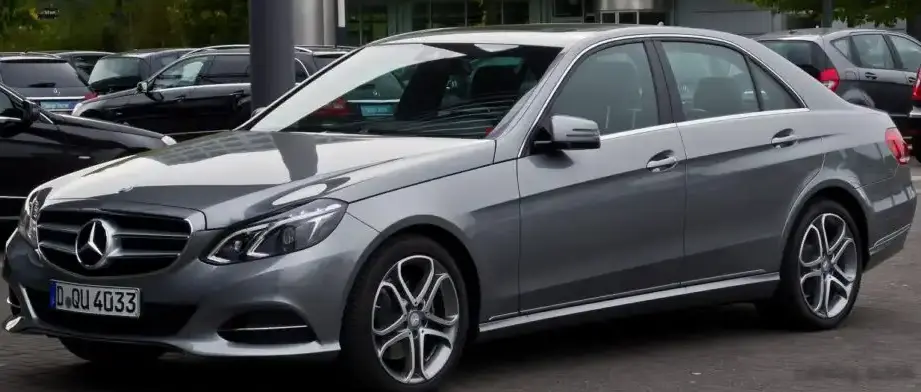
The Mercedes-Benz E 220 BlueTEC, produced from July 2014 to January 2016, was a key variant within the W212 E-Class facelift range. Representing a blend of efficiency and refinement, this model aimed to provide a comfortable and economical driving experience within the executive sedan segment. It occupied a mid-range position in the lineup, slotting below the more powerful E 250 and E 350 models, but offering a compelling alternative for buyers prioritizing fuel economy and lower running costs. The E 220 BlueTEC was primarily marketed in Europe and other regions with strong diesel acceptance, capitalizing on the benefits of advanced diesel technology.
| Brand | Mercedes-Benz |
| Model | E-class |
| Generation | E-class (W212, facelift 2013) |
| Type (Engine) | E 220 BlueTEC (170 Hp) |
| Start of production | July, 2014 |
| End of production | January, 2016 |
| Powertrain Architecture | Internal Combustion engine |
| Body type | Sedan |
| Seats | 5 |
| Doors | 4 |
| Fuel consumption (urban) | 5.5-5.9 l/100 km (42.8 – 39.9 US mpg) |
| Fuel consumption (extra urban) | 3.9-4.3 l/100 km (60.3 – 54.7 US mpg) |
| Fuel consumption (combined) | 4.5-4.9 l/100 km (52.3 – 48 US mpg) |
| CO2 emissions | 118-127 g/km |
| Fuel Type | Diesel |
| Acceleration 0 – 100 km/h | 8.6 sec |
| Acceleration 0 – 62 mph | 8.6 sec |
| Acceleration 0 – 60 mph | 8.2 sec |
| Maximum speed | 228 km/h (141.67 mph) |
| Emission standard | Euro 6 |
| Weight-to-power ratio | 9.8 kg/Hp |
| Weight-to-torque ratio | 4.2 kg/Nm |
| Power | 170 Hp @ 3000-4200 rpm |
| Torque | 400 Nm @ 1400-2800 rpm (295.02 lb.-ft. @ 1400-2800 rpm) |
| Engine layout | Front, Longitudinal |
| Engine Model/Code | OM 651.924 |
| Engine displacement | 2143 cm3 (130.77 cu. in.) |
| Number of cylinders | 4 |
| Engine configuration | Inline |
| Cylinder Bore | 83 mm (3.27 in.) |
| Piston Stroke | 99 mm (3.9 in.) |
| Compression ratio | 16.2:1 |
| Number of valves per cylinder | 4 |
| Fuel injection system | Diesel Commonrail |
| Engine aspiration | BiTurbo, Intercooler |
| Valvetrain | DOHC |
| Engine oil capacity | 6.5 l (6.87 US qt | 5.72 UK qt) |
| Coolant capacity | 10 l (10.57 US qt | 8.8 UK qt) |
| Kerb Weight | 1660 kg (3659.67 lbs.) |
| Max. weight | 2320 kg (5114.72 lbs.) |
| Max load | 660 kg (1455.05 lbs.) |
| Trunk (boot) space (minimum) | 490 l (17.3 cu. ft.) |
| Fuel tank capacity | 59 l (15.59 US gal | 12.98 UK gal) |
| AdBlue tank capacity | 25.5 l (6.74 US gal | 5.61 UK gal) |
| Max. roof load | 100 kg (220.46 lbs.) |
| Permitted trailer load (with brakes) | 1900 kg (4188.78 lbs.) |
| Permitted trailer load (without brakes) | 750 kg (1653.47 lbs.) |
| Permitted towbar download | 84 kg (185.19 lbs.) |
| Length | 4879 mm (192.09 in.) |
| Width | 1854 mm (72.99 in.) |
| Width including mirrors | 2071 mm (81.54 in.) |
| Height | 1474 mm (58.03 in.) |
| Wheelbase | 2874 mm (113.15 in.) |
| Front track | 1598 mm (62.91 in.) |
| Rear track | 1614 mm (63.54 in.) |
| Front overhang | 849 mm (33.43 in.) |
| Rear overhang | 1156 mm (45.51 in.) |
| Minimum turning circle | 11.28 m (37.01 ft.) |
| Drivetrain | Rear wheel drive |
| Number of gears | 6 |
| Gearbox type | manual transmission |
Powertrain & Engine Architecture
The E 220 BlueTEC was powered by the OM651.924, a 2.1-liter inline-four diesel engine. This engine was a mainstay of the Mercedes-Benz lineup, known for its robust construction and fuel efficiency. The ‘BlueTEC’ designation indicated the inclusion of advanced emissions control technologies, including a diesel particulate filter (DPF) and selective catalytic reduction (SCR) system utilizing AdBlue (Diesel Exhaust Fluid) to reduce NOx emissions. The engine featured a common rail direct injection system, delivering fuel at extremely high pressures for optimized combustion. A bi-turbocharger setup, employing both a small and a large turbocharger, minimized turbo lag and provided a broad torque curve. The valvetrain employed a double overhead camshaft (DOHC) design with four valves per cylinder, enhancing volumetric efficiency. The engine produced 170 horsepower at 3000-4200 rpm and a substantial 400 Nm (295 lb-ft) of torque between 1400-2800 rpm. This torque output was a key characteristic, providing strong pulling power at low engine speeds. The 6-speed manual transmission was standard, offering precise gear changes and contributing to the car’s overall efficiency.
Driving Characteristics
The E 220 BlueTEC with the manual transmission offered a balanced driving experience. While not overtly sporty, the engine’s ample torque allowed for effortless cruising and confident overtaking. The manual gearbox, while engaging, wasn’t particularly short-ratioed, prioritizing fuel economy over outright acceleration. Compared to the more powerful E 250 or E 350 models, the E 220 BlueTEC felt less urgent in its acceleration, taking approximately 8.6 seconds to reach 62 mph (8.2 seconds to 60 mph). However, the difference in everyday driving scenarios was often less noticeable, particularly in urban and highway conditions. The focus was on smooth, refined progress rather than aggressive performance. The long gearing contributed to a quiet cabin at highway speeds, enhancing comfort on long journeys.
Equipment & Trim Levels
The E 220 BlueTEC typically came well-equipped, reflecting its position as a premium executive sedan. Standard features included automatic climate control, a multi-function steering wheel, power-adjustable front seats, and a high-quality audio system. Interior upholstery was generally a combination of fabric and Artico (Mercedes’ synthetic leather), with genuine leather available as an option. The dashboard layout was typical of the W212 facelift, featuring a prominent central display screen and elegant trim finishes. Optional extras included a sunroof, navigation system, parking assist, and upgraded sound systems. The ‘SE’ trim level was a popular choice, adding features like larger alloy wheels, chrome trim, and enhanced interior appointments.
Chassis & Braking
The W212 E-Class featured a sophisticated chassis design. The front suspension utilized a multi-link setup with coil springs and a transverse stabilizer bar, providing a comfortable ride and precise handling. The rear suspension also employed a multi-link design, contributing to stability and ride quality. The E 220 BlueTEC typically came equipped with ventilated disc brakes at the front and solid disc brakes at the rear. Anti-lock braking system (ABS) and electronic stability control (ESP) were standard safety features. Optional air suspension was available, offering adjustable ride height and damping for enhanced comfort and control.
Market Reception & Comparison
The E 220 BlueTEC was generally well-received by automotive critics, who praised its fuel efficiency, comfortable ride, and refined interior. It was often seen as a sensible choice for buyers covering high mileage or prioritizing low running costs. Compared to the E 250, the E 220 BlueTEC offered significantly better fuel economy, but at the expense of some performance. The E 250, with its petrol engine, provided a more responsive driving experience but was less economical. Against competitors like the BMW 520d and Audi A6 2.0 TDI, the E 220 BlueTEC held its own in terms of refinement and fuel efficiency, although some reviewers noted that the BMW offered a slightly more engaging driving experience.
Legacy
The OM651 engine family, including the OM651.924 found in the E 220 BlueTEC, has proven to be remarkably durable and reliable. With proper maintenance, these engines can easily exceed 200,000 miles. The E 220 BlueTEC remains a popular choice in the used car market, particularly for buyers seeking a comfortable, economical, and well-equipped executive sedan. However, potential buyers should be aware of the maintenance requirements associated with diesel engines, including regular DPF regeneration and AdBlue refills. The W212 E-Class, as a whole, is considered a well-built and reliable vehicle, and the E 220 BlueTEC represents a particularly sensible and long-lasting option within the range.