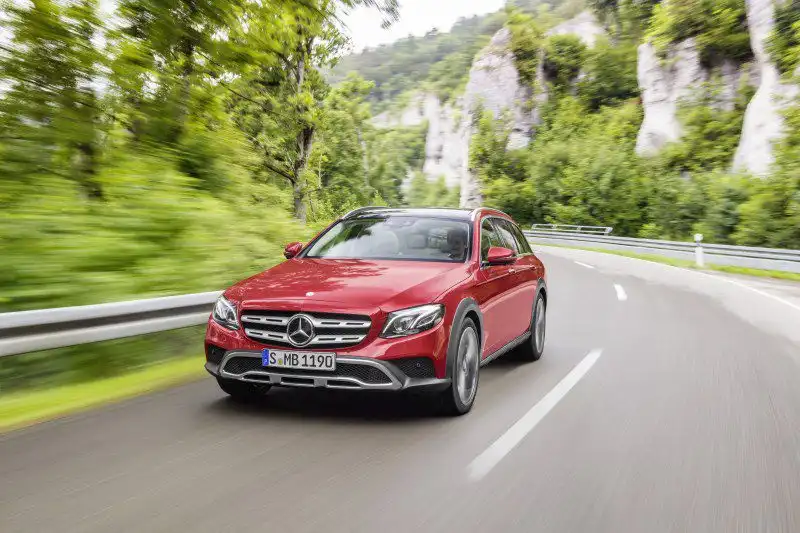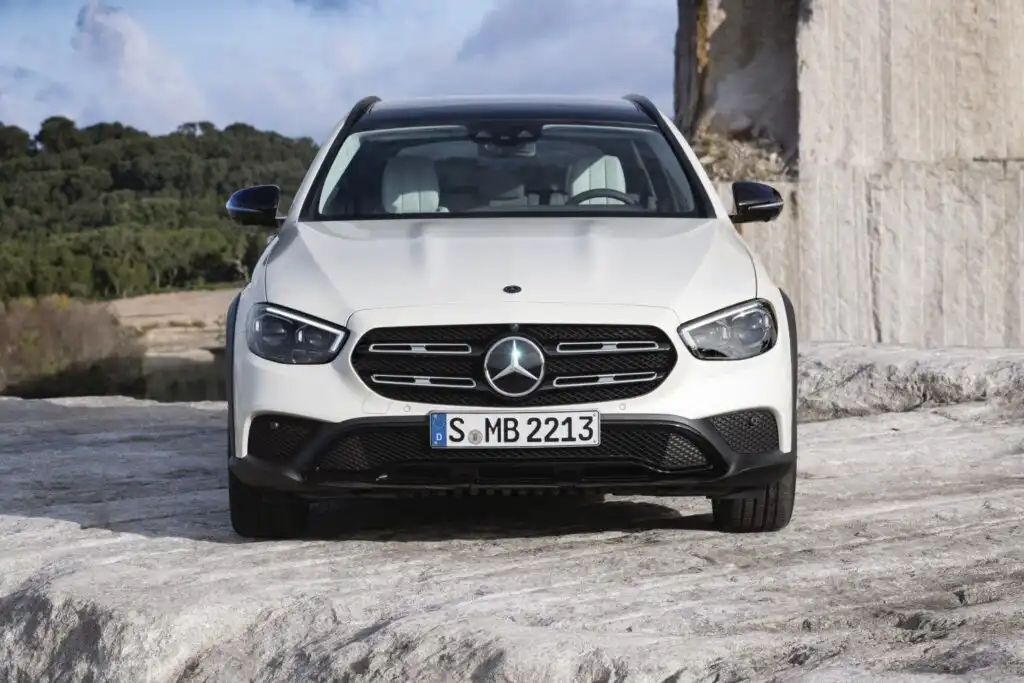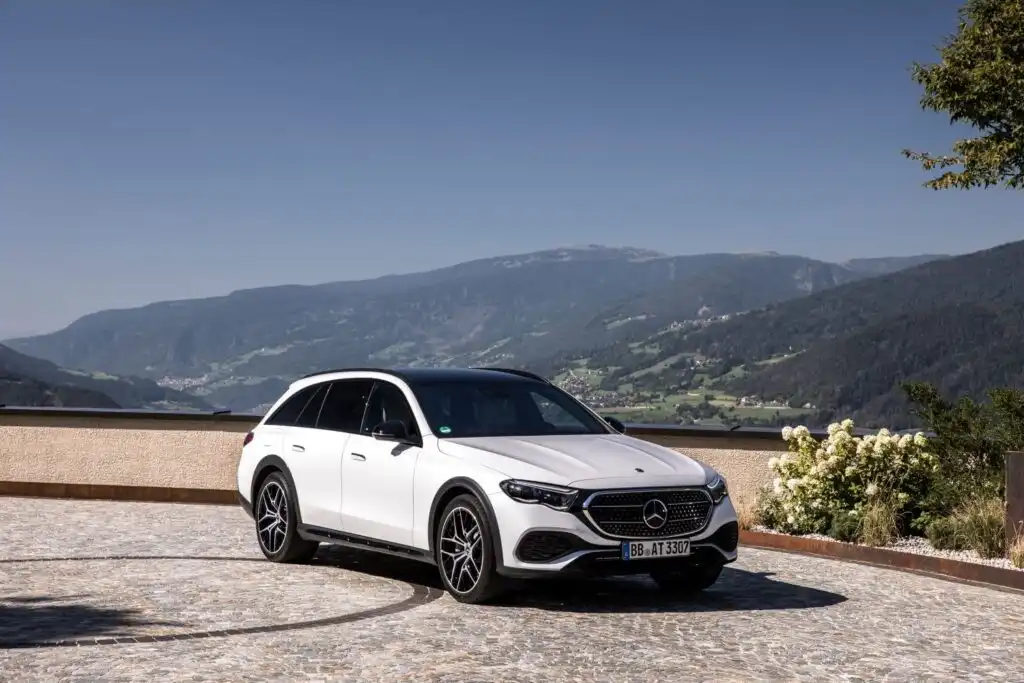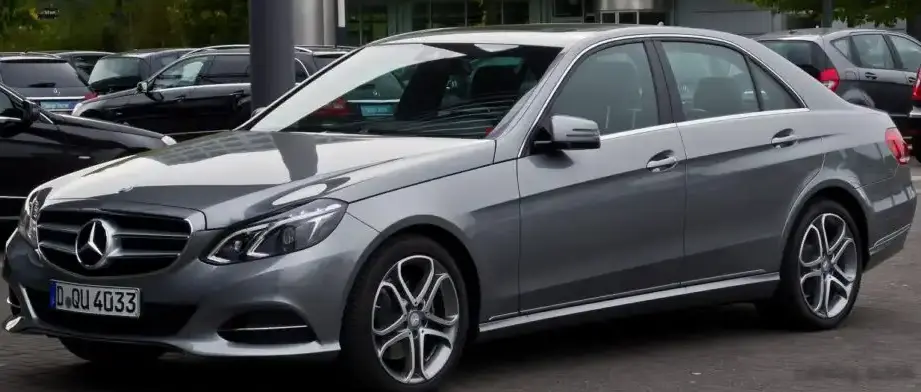
The Mercedes-Benz E 250 BlueTEC 4MATIC, produced from July 2014 to January 2016, was a significant variant within the W212 E-Class facelift range. Positioned as a fuel-efficient and technologically advanced option, it catered to buyers seeking a balance between performance, luxury, and economy. This model represented a key step in Mercedes-Benz’s efforts to offer cleaner diesel technology in the American market, a market increasingly leaning towards gasoline engines. It was part of the fourth generation of the E-Class (W212), benefitting from the 2013 facelift which included revised styling, updated technology, and more efficient engine options. The E 250 BlueTEC 4MATIC utilized a 2.1-liter turbocharged diesel engine paired with a 7G-TRONIC PLUS automatic transmission and Mercedes’ 4MATIC all-wheel-drive system.
Technical Specifications
| Brand | Mercedes-Benz |
| Model | E-class |
| Generation | E-class (W212, facelift 2013) |
| Type | E 250 BlueTEC (204 Hp) 4MATIC 7G-TRONIC PLUS |
| Start of production | July, 2014 |
| End of production | January, 2016 |
| Powertrain Architecture | Internal Combustion engine |
| Body type | Sedan |
| Seats | 5 |
| Doors | 4 |
| Fuel consumption (urban) | 6.3-6.4 l/100 km (37.3 – 36.8 US mpg, 44.8 – 44.1 UK mpg, 15.9 – 15.6 km/l) |
| Fuel consumption (extra urban) | 4.4-4.6 l/100 km (53.5 – 51.1 US mpg, 64.2 – 61.4 UK mpg, 22.7 – 21.7 km/l) |
| Fuel consumption (combined) | 5.1-5.3 l/100 km (46.1 – 44.4 US mpg, 55.4 – 53.3 UK mpg, 19.6 – 18.9 km/l) |
| CO2 emissions | 135-139 g/km |
| Fuel Type | Diesel |
| Acceleration 0 – 100 km/h | 7.8 sec |
| Acceleration 0 – 62 mph | 7.8 sec |
| Acceleration 0 – 60 mph | 7.4 sec |
| Maximum speed | 238 km/h (147.89 mph) |
| Emission standard | Euro 6 |
| Weight-to-power ratio | 8.8 kg/Hp, 113.3 Hp/tonne |
| Weight-to-torque ratio | 3.6 kg/Nm, 277.8 Nm/tonne |
| Power | 204 Hp @ 3800 rpm |
| Power per litre | 95.2 Hp/l |
| Torque | 500 Nm @ 1600-1800 rpm (368.78 lb.-ft. @ 1600-1800 rpm) |
| Engine layout | Front, Longitudinal |
| Engine Model/Code | OM 651.924 |
| Engine displacement | 2143 cm3 (130.77 cu. in.) |
| Number of cylinders | 4 |
| Engine configuration | Inline |
| Cylinder Bore | 83 mm (3.27 in.) |
| Piston Stroke | 99 mm (3.9 in.) |
| Compression ratio | 16.2:1 |
| Number of valves per cylinder | 4 |
| Fuel injection system | Diesel Commonrail |
| Engine aspiration | BiTurbo, Intercooler |
| Valvetrain | DOHC |
| Engine oil capacity | 6.5 l (6.87 US qt | 5.72 UK qt) |
| Coolant | 10 l (10.57 US qt | 8.8 UK qt) |
| Kerb Weight | 1800 kg (3968.32 lbs.) |
| Max. weight | 2440 kg (5379.28 lbs.) |
| Max load | 640 kg (1410.96 lbs.) |
| Trunk (boot) space (minimum) | 490 l (17.3 cu. ft.) |
| Fuel tank capacity | 59 l (15.59 US gal | 12.98 UK gal) |
| AdBlue tank | 25.5 l (6.74 US gal | 5.61 UK gal) |
| Max. roof load | 100 kg (220.46 lbs.) |
| Permitted trailer load (with brakes) | 2100 kg (4629.71 lbs.) |
| Permitted trailer load (without brakes) | 750 kg (1653.47 lbs.) |
| Permitted towbar download | 84 kg (185.19 lbs.) |
| Length | 4879 mm (192.09 in.) |
| Width | 1854 mm (72.99 in.) |
| Width including mirrors | 2071 mm (81.54 in.) |
| Height | 1474 mm (58.03 in.) |
| Wheelbase | 2874 mm (113.15 in.) |
| Front track | 1598 mm (62.91 in.) |
| Rear track | 1614 mm (63.54 in.) |
| Front overhang | 849 mm (33.43 in.) |
| Rear overhang | 1156 mm (45.51 in.) |
| Minimum turning circle | 11.5 m (37.73 ft.) |
| Drivetrain Architecture | ICE drives all four wheels permanently |
| Drive wheel | All wheel drive (4×4) |
| Number of gears | 9 |
| Gearbox type | Automatic transmission G-TRONIC |
| Front suspension | Coil spring, Independent multi-link, Transverse stabilizer, Optional Air Suspension |
| Rear suspension | Independent multi-link spring, Stabilizer, Optional Air Suspension |
| Front brakes | Ventilated discs |
| Rear brakes | Disc |
| Assisting systems | ABS |
| Steering type | Steering rack and pinion |
| Power steering | Electric |
| Tires size | 245/45 R17; 245/40 R18 |
| Wheel rims size | 8J x 17; 8.5J x 18 |
Powertrain & Engine Architecture
The heart of the E 250 BlueTEC 4MATIC was the OM 651.924 2.1-liter inline-four diesel engine. This engine was a highly refined unit, featuring common-rail direct injection and a sophisticated two-stage turbocharging system. The first turbocharger was a variable geometry turbo (VGT) responsible for quick response at lower engine speeds, while the second, smaller turbocharger provided increased boost at higher RPMs, contributing to the engine’s broad torque curve. The engine boasted a high compression ratio of 16.2:1, maximizing thermal efficiency. The 7G-TRONIC PLUS automatic transmission, a seven-speed unit, was specifically tuned to complement the diesel engine’s characteristics, offering smooth and efficient gear changes. This transmission featured a torque converter lock-up clutch to minimize slippage and improve fuel economy. The BlueTEC system itself incorporated advanced exhaust gas recirculation (EGR) and a selective catalytic reduction (SCR) system utilizing AdBlue to significantly reduce nitrogen oxide (NOx) emissions.
Driving Characteristics
The E 250 BlueTEC 4MATIC offered a comfortable and refined driving experience. While not overtly sporty, the 204 horsepower and 368 lb-ft of torque provided ample power for everyday driving and highway cruising. Acceleration from 0-60 mph took approximately 7.4 seconds. The 7G-TRONIC PLUS transmission was programmed for economy, with higher gears engaged quickly to reduce engine speed and fuel consumption. Compared to the more powerful E 350 models, the E 250 BlueTEC prioritized fuel efficiency and relaxed cruising over outright performance. The 4MATIC all-wheel-drive system provided enhanced traction and stability, particularly in inclement weather conditions. The transmission’s gear ratios were optimized for both fuel economy and responsiveness, with a relatively tall final drive contributing to highway efficiency.
Equipment & Trim Levels
The E 250 BlueTEC 4MATIC typically came standard with a generous array of features, including MB-Tex leatherette upholstery (genuine leather was optional), dual-zone automatic climate control, a premium sound system, and Mercedes-Benz’s COMAND infotainment system with a central display screen. Optional extras included a panoramic sunroof, advanced driver-assistance systems (such as blind-spot monitoring, lane-keeping assist, and DISTRONIC PLUS adaptive cruise control), and upgraded interior trim options like wood or aluminum accents. The interior design was characterized by Mercedes-Benz’s signature blend of luxury and functionality, with high-quality materials and a well-laid-out dashboard. Standard safety features included multiple airbags, ABS, and electronic stability control.
Chassis & Braking
The W212 E-Class featured a sophisticated chassis design, with a multi-link independent suspension at all four corners. The E 250 BlueTEC 4MATIC typically came equipped with ventilated front disc brakes and solid rear discs. Anti-lock brakes (ABS) and electronic stability control (ESC) were standard safety features. Optional air suspension (AIRMATIC) was available, providing a more comfortable ride and the ability to adjust the vehicle’s ride height. The suspension was tuned to balance ride comfort with handling stability, offering a composed and predictable driving experience. The 4MATIC system utilized a center differential to distribute torque between the front and rear axles, optimizing traction in various driving conditions.
Market Reception & Comparison
The E 250 BlueTEC 4MATIC was generally well-received by automotive critics, who praised its fuel efficiency, comfortable ride, and refined interior. It was often compared to its gasoline-powered siblings, with reviewers noting that the diesel offered superior fuel economy without sacrificing too much performance. However, some critics pointed out that the diesel engine was noticeably louder than the gasoline engines, particularly during cold starts. Compared to the E 350, the E 250 BlueTEC appealed to buyers who prioritized economy and practicality over outright performance. It also offered a compelling alternative to other luxury sedans in its class, such as the BMW 5 Series and the Audi A6.
Legacy
The OM 651 engine family, including the 2.1-liter variant used in the E 250 BlueTEC, has proven to be remarkably durable and reliable. These engines are known for their longevity and relatively low maintenance costs, provided they are properly maintained. On the used car market, the E 250 BlueTEC 4MATIC remains a popular choice for buyers seeking a comfortable, fuel-efficient, and well-equipped luxury sedan. However, potential buyers should be aware of the potential for diesel emissions system issues, such as problems with the diesel particulate filter (DPF), the AdBlue system, and the NOx sensors. Regular maintenance, including timely DPF regeneration and the use of high-quality diesel fuel, are essential to ensure the long-term reliability of these vehicles. The E 250 BlueTEC represents a transitional point in Mercedes-Benz’s diesel offerings, showcasing their commitment to cleaner diesel technology before a shift towards gasoline and hybrid powertrains.