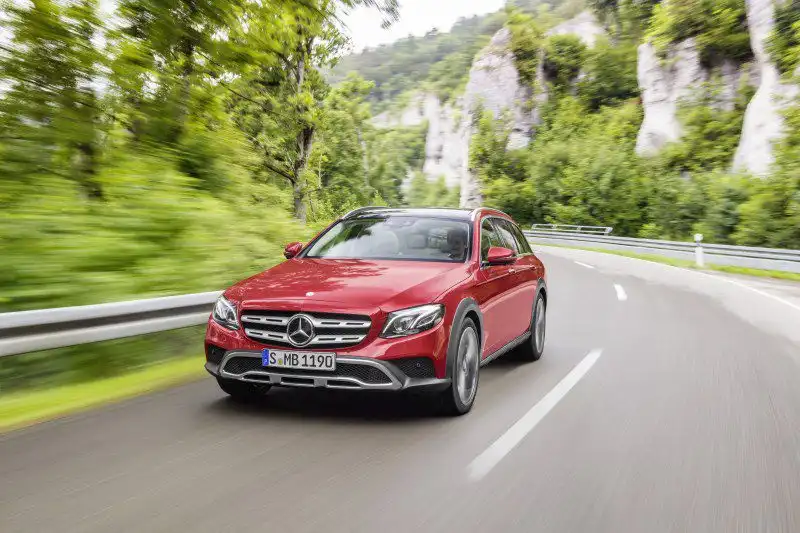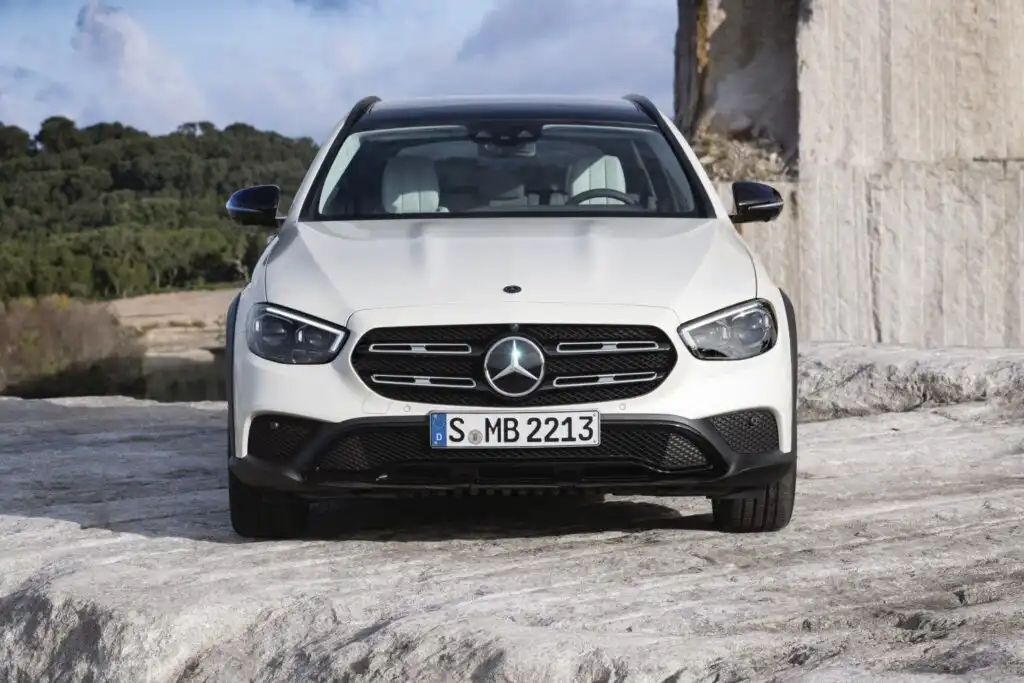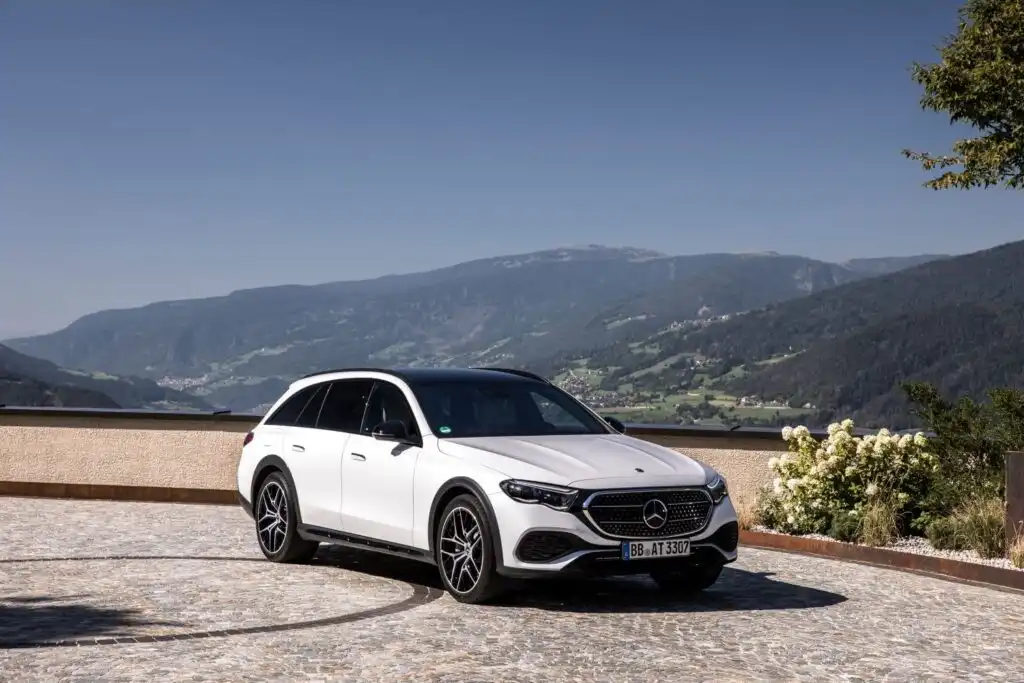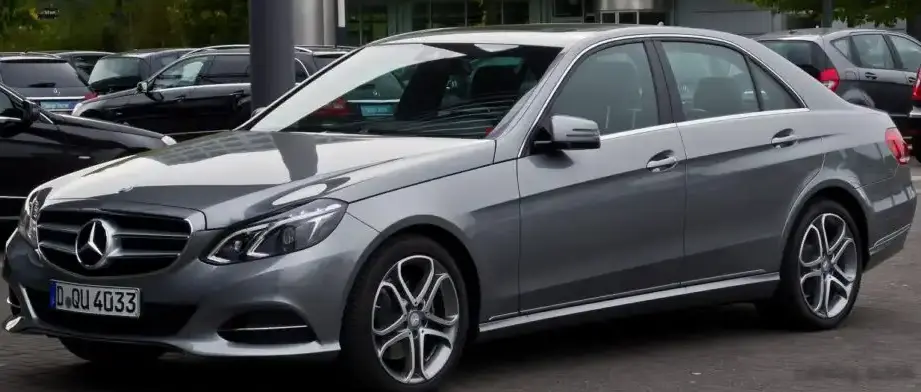
The Mercedes-Benz E 250 CDI, part of the W212 facelift generation produced from April 2013 to July 2014, represented a significant offering in the mid-size executive car segment. Positioned as a fuel-efficient and comfortable option within the E-Class range, it catered to buyers prioritizing economy without sacrificing the luxury and refinement expected from the Mercedes-Benz brand. This variant combined a 2.1-liter turbocharged diesel engine with the 7G-TRONIC PLUS seven-speed automatic transmission, offering a balance between performance and efficiency. The W212 facelift brought styling updates, improved technology, and enhanced efficiency across the E-Class lineup, solidifying its position as a strong competitor against rivals like the BMW 5 Series and Audi A6.
Technical Specifications
| Brand | Mercedes-Benz |
| Model | E-class |
| Generation | E-class (W212, facelift 2013) |
| Type (Engine) | E 250 CDI (204 Hp) 7G-TRONIC PLUS |
| Start of production | April, 2013 |
| End of production | July, 2014 |
| Powertrain Architecture | Internal Combustion engine |
| Body type | Sedan |
| Seats | 5 |
| Doors | 4 |
| Fuel consumption (economy) – urban (NEDC) | 5.7-6.2 l/100 km (41.3 – 37.9 US mpg, 49.6 – 45.6 UK mpg, 17.5 – 16.1 km/l) |
| Fuel consumption (economy) – extra urban (NEDC) | 4.2-4.5 l/100 km (56 – 52.3 US mpg, 67.3 – 62.8 UK mpg, 23.8 – 22.2 km/l) |
| Fuel consumption (economy) – combined (NEDC) | 4.7-5.1 l/100 km (50 – 46.1 US mpg, 60.1 – 55.4 UK mpg, 21.3 – 19.6 km/l) |
| CO2 emissions (NEDC) | 126-134 g/km |
| Fuel Type | Diesel |
| Acceleration 0 – 100 km/h | 7.5 sec |
| Acceleration 0 – 62 mph | 7.5 sec |
| Acceleration 0 – 60 mph | 7.1 sec |
| Maximum speed | 242 km/h (150.37 mph) |
| Emission standard | Euro 5 |
| Weight-to-power ratio | 8.3 kg/Hp, 120 Hp/tonne |
| Weight-to-torque ratio | 3.4 kg/Nm, 294.1 Nm/tonne |
| Power | 204 Hp @ 3800 rpm |
| Power per litre | 95.2 Hp/l |
| Torque | 500 Nm @ 1600-1800 rpm (368.78 lb.-ft. @ 1600-1800 rpm) |
| Engine layout | Front, Longitudinal |
| Engine Model/Code | OM 651.924 |
| Engine displacement | 2143 cm3 (130.77 cu. in.) |
| Number of cylinders | 4 |
| Engine configuration | Inline |
| Cylinder Bore | 83 mm (3.27 in.) |
| Piston Stroke | 99 mm (3.9 in.) |
| Compression ratio | 16.2:1 |
| Number of valves per cylinder | 4 |
| Fuel injection system | Diesel Commonrail |
| Engine aspiration | BiTurbo, Intercooler |
| Valvetrain | DOHC |
| Engine oil capacity | 6.5 l (6.87 US qt | 5.72 UK qt) |
| Coolant | 10 l (10.57 US qt | 8.8 UK qt) |
| Kerb Weight | 1700 kg (3747.86 lbs.) |
| Max. weight | 2330 kg (5136.77 lbs.) |
| Max load | 630 kg (1388.91 lbs.) |
| Trunk (boot) space – minimum | 540 l (19.07 cu. ft.) |
| Fuel tank capacity | 59 l (15.59 US gal | 12.98 UK gal) |
| Max. roof load | 100 kg (220.46 lbs.) |
| Permitted trailer load with brakes (12%) | 2000 kg (4409.25 lbs.) |
| Permitted trailer load without brakes | 750 kg (1653.47 lbs.) |
| Permitted towbar download | 84 kg (185.19 lbs.) |
| Length | 4879 mm (192.09 in.) |
| Width | 1854 mm (72.99 in.) |
| Width including mirrors | 2071 mm (81.54 in.) |
| Height | 1474 mm (58.03 in.) |
| Wheelbase | 2874 mm (113.15 in.) |
| Front track | 1598 mm (62.91 in.) |
| Rear (Back) track | 1614 mm (63.54 in.) |
| Front overhang | 849 mm (33.43 in.) |
| Rear overhang | 1156 mm (45.51 in.) |
| Drag coefficient (Cd) | 0.26 |
| Minimum turning circle (turning diameter) | 11.28 m (37.01 ft.) |
| Drivetrain Architecture | The Internal combustion engine (ICE) drives the rear wheels of the vehicle. |
| Drive wheel | Rear wheel drive |
| Number of gears and type of gearbox | 7 gears, automatic transmission G-TRONIC PLUS |
| Front suspension | Coil spring, Independent multi-link suspension, Transverse stabilizer, Air Suspension – Optional |
| Rear suspension | Independent multi-link spring suspension with stabilizer, Air Suspension – Optional |
| Front brakes | Ventilated discs |
| Rear brakes | Disc |
| Assisting systems | ABS (Anti-lock braking system) |
| Steering type | Steering rack and pinion |
| Power steering | Electric Steering |
| Tires size | Front wheel tires: 205/60 R16; 225/55 R16; 245/45 R17; 245/40 R18; 245/35 R19Rear wheel tires: 205/60 R16; 225/55 R16; 245/45 R17; 245/40 R18; 265/35 R18; 275/30 R19 |
| Wheel rims size | Front wheel rims: 7J x 16; 7.5J x 16; 8J x 17; 8.5J x 18; 8.5J x 19Rear wheel rims: 7J x 16; 7.5J x 16; 8J x 17; 8.5J x 18; 9J x 18; 9.5J x 19 |
Powertrain & Engine Architecture
The heart of the E 250 CDI is the OM 651.924 2.1-liter inline-four cylinder diesel engine. This engine is a highly refined unit, featuring common-rail direct injection and a sophisticated two-stage turbocharging system. The first turbocharger is a variable geometry turbo (VGT) providing boost at lower engine speeds, minimizing turbo lag and improving responsiveness. The second, smaller turbocharger kicks in at higher RPMs to maintain power output. This bi-turbo setup contributes to the engine’s impressive 500 Nm (368.78 lb.-ft.) of torque available from just 1600-1800 rpm. The engine also incorporates an intercooler to cool the intake air, further enhancing performance. The 7G-TRONIC PLUS seven-speed automatic transmission is a key component, offering smooth and efficient gear changes. It features a torque converter lock-up clutch that engages in most gears, improving fuel economy. The transmission is electronically controlled and adapts to driving style, providing both comfort and responsiveness.
Driving Characteristics
The E 250 CDI with the 7G-TRONIC PLUS transmission delivers a comfortable and refined driving experience. While not overtly sporty, the engine provides ample power for everyday driving and overtaking maneuvers. The 7.5-second 0-60 mph acceleration is respectable for a diesel-powered executive car. The transmission’s gear ratios are well-chosen, providing strong acceleration in lower gears and relaxed cruising at highway speeds. Compared to the more powerful E 350 models, the E 250 CDI prioritizes fuel efficiency over outright performance. The automatic transmission, while smooth, can sometimes feel a bit hesitant when downshifting for quick bursts of acceleration. However, for drivers seeking a balance between comfort, economy, and usability, the E 250 CDI offers a compelling package.
Equipment & Trim Levels
The E 250 CDI typically came well-equipped, even as a base model. Standard features included automatic climate control, a multi-function steering wheel, power-adjustable front seats, and a high-quality audio system. Safety features such as ABS, ESP, and multiple airbags were also standard. Optional extras included leather upholstery, a sunroof, a navigation system, and advanced driver-assistance systems like lane keeping assist and blind spot monitoring. Trim levels varied by market, but generally, the E 250 CDI could be upgraded with various packages offering enhanced luxury and technology features.
Chassis & Braking
The W212 E-Class featured a sophisticated chassis design. The front suspension utilized a multi-link setup with coil springs, while the rear suspension employed a multi-link independent suspension. This configuration provided a comfortable ride and good handling characteristics. Many E 250 CDI models were equipped with optional air suspension, which further enhanced ride comfort and allowed for adjustable ride height. The braking system consisted of ventilated discs at the front and solid discs at the rear. ABS (Anti-lock Braking System) and ESP (Electronic Stability Program) were standard, providing excellent stopping power and stability in various driving conditions.
Market Reception & Comparison
The E 250 CDI was generally well-received by automotive critics. It was praised for its fuel efficiency, comfortable ride, and refined interior. However, some reviewers noted that the engine could be a bit noisy compared to some of its rivals. Compared to the E 350 models, the E 250 CDI offered significantly better fuel economy, making it a popular choice for drivers who prioritized running costs. The E 250 CDI also proved to be more reliable than some of the more complex E-Class variants, such as the E 550 with its twin-turbo V8 engine.
Legacy
The OM 651 engine family, including the 2.1-liter variant found in the E 250 CDI, has proven to be remarkably durable and reliable. These engines are known for their longevity and relatively low maintenance costs. On the used car market, the E 250 CDI remains a popular choice, offering a good balance of luxury, economy, and reliability. However, potential buyers should be aware of the potential for diesel particulate filter (DPF) issues, particularly on vehicles that have primarily been used for short trips. Overall, the E 250 CDI represents a well-engineered and practical executive car that continues to offer good value in the used car market.