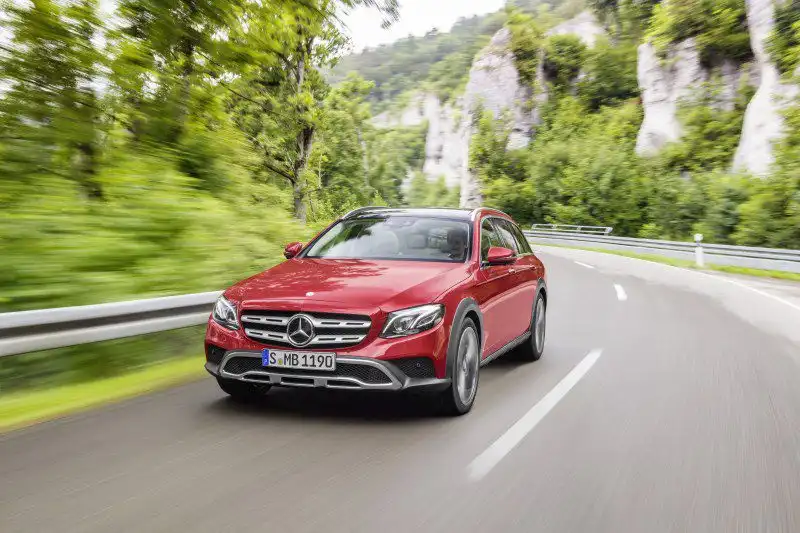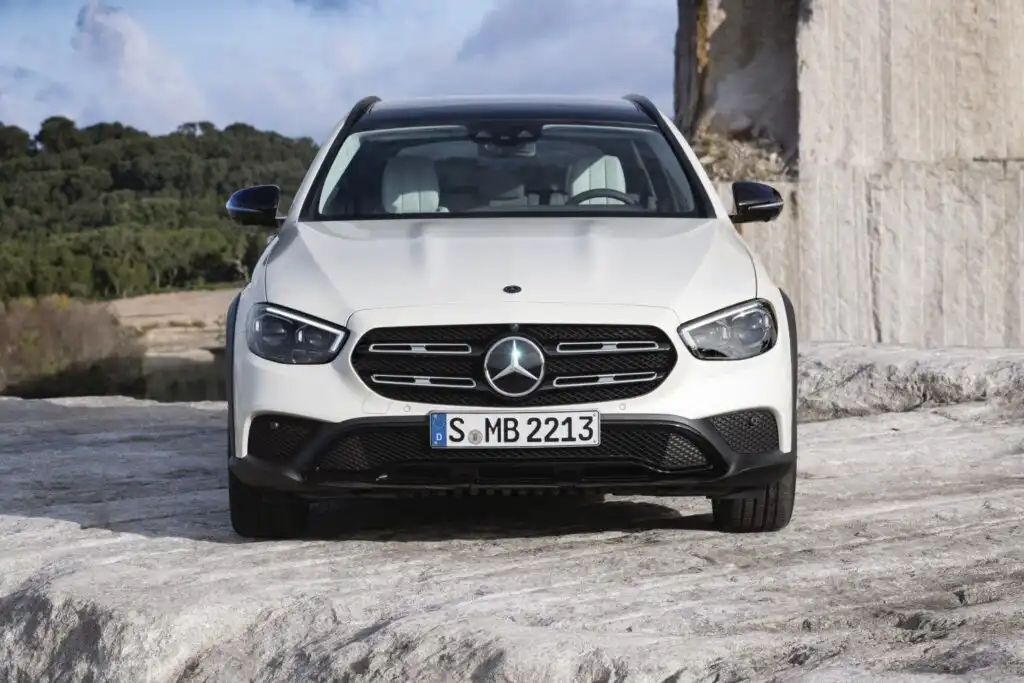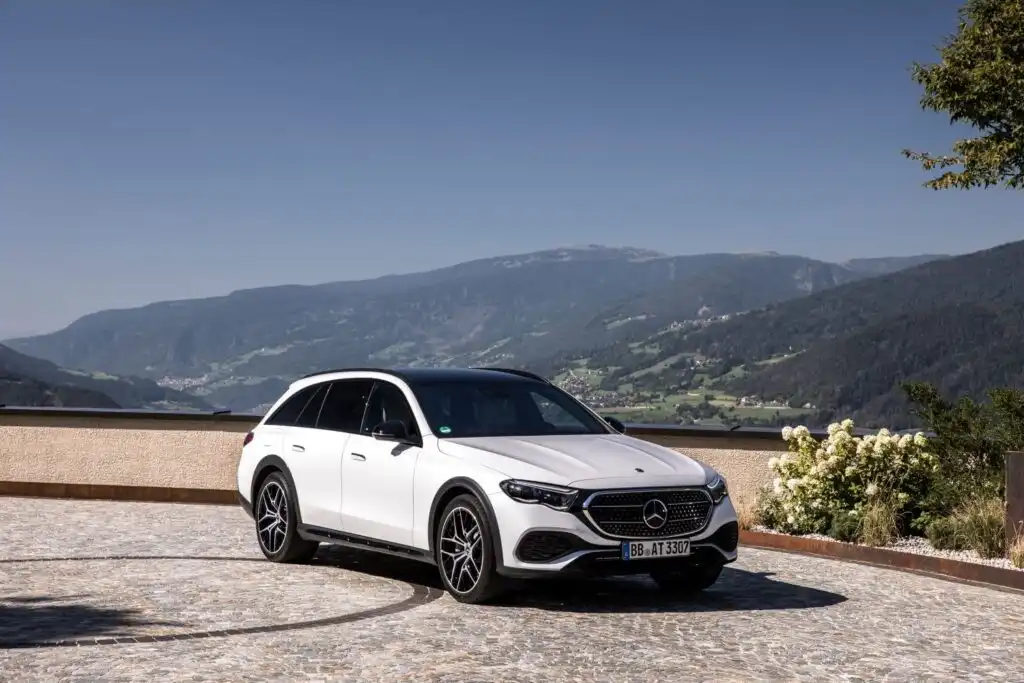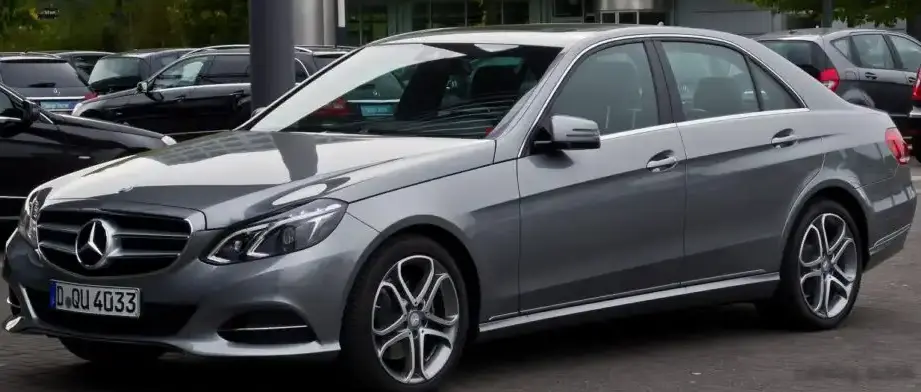
The Mercedes-Benz E 300 V6, part of the W212 facelift generation produced from April 2013 to July 2014, represented a compelling blend of luxury, performance, and efficiency within the E-Class lineup. Positioned as a mid-range offering, it bridged the gap between the more economical four-cylinder models and the higher-performance E 550 variants. This particular configuration – the 3.5-liter V6 engine paired with the 7G-TRONIC PLUS seven-speed automatic transmission – was aimed at buyers seeking a refined driving experience with ample power for both comfortable cruising and spirited driving. The W212 facelift brought with it revised styling, updated technology, and more efficient engine options, solidifying the E-Class’s reputation as a benchmark in the executive sedan segment.
Technical Specifications
| Brand | Mercedes-Benz |
| Model | E-class |
| Generation | E-class (W212, facelift 2013) |
| Type (Engine) | E 300 V6 (252 Hp) 7G-TRONIC PLUS |
| Start of production | April, 2013 |
| End of production | July, 2014 |
| Powertrain Architecture | Internal Combustion engine |
| Body type | Sedan |
| Seats | 5 |
| Doors | 4 |
| Fuel consumption (economy) – urban (NEDC) | 9.5 l/100 km (24.8 US mpg, 29.7 UK mpg, 10.5 km/l) |
| Fuel consumption (economy) – extra urban (NEDC) | 5.3-5.6 l/100 km (44.4 – 42 US mpg, 53.3 – 50.4 UK mpg, 18.9 – 17.9 km/l) |
| Fuel consumption (economy) – combined (NEDC) | 6.8-7 l/100 km (34.6 – 33.6 US mpg, 41.5 – 40.4 UK mpg, 14.7 – 14.3 km/l) |
| CO2 emissions (NEDC) | 159-164 g/km |
| Fuel Type | Petrol (Gasoline) |
| Acceleration 0 – 100 km/h | 7.1 sec |
| Acceleration 0 – 62 mph | 7.1 sec |
| Acceleration 0 – 60 mph | 6.7 sec |
| Maximum speed | 250 km/h (155.34 mph), Electronically limited |
| Emission standard | Euro 5 |
| Weight-to-power ratio | 6.6 kg/Hp, 151.8 Hp/tonne |
| Weight-to-torque ratio | 4.9 kg/Nm, 204.8 Nm/tonne |
| Power | 252 Hp @ 6500 rpm |
| Torque | 340 Nm @ 3500-4500 rpm (250.77 lb.-ft. @ 3500-4500 rpm) |
| Engine layout | Front, Longitudinal |
| Engine Model/Code | M 276.952 |
| Engine displacement | 3498 cm3 (213.46 cu. in.) |
| Number of cylinders | 6 |
| Engine configuration | V-engine |
| Cylinder Bore | 92.9 mm (3.66 in.) |
| Piston Stroke | 86 mm (3.39 in.) |
| Compression ratio | 12:1 |
| Number of valves per cylinder | 4 |
| Fuel injection system | Direct injection |
| Engine aspiration | Naturally aspirated engine |
| Valvetrain | DOHC |
| Engine oil capacity | 6.5 l (6.87 US qt | 5.72 UK qt) |
| Coolant | 9.6 l (10.14 US qt | 8.45 UK qt) |
| Kerb Weight | 1660 kg (3659.67 lbs.) |
| Max. weight | 2300 kg (5070.63 lbs.) |
| Max load | 640 kg (1410.96 lbs.) |
| Trunk (boot) space – minimum | 540 l (19.07 cu. ft.) |
| Fuel tank capacity | 59 l (15.59 US gal | 12.98 UK gal) |
| Max. roof load | 100 kg (220.46 lbs.) |
| Permitted trailer load with brakes (12%) | 2000 kg (4409.25 lbs.) |
| Permitted trailer load without brakes | 750 kg (1653.47 lbs.) |
| Permitted towbar download | 84 kg (185.19 lbs.) |
| Length | 4879 mm (192.09 in.) |
| Width | 1854 mm (72.99 in.) |
| Width including mirrors | 2071 mm (81.54 in.) |
| Height | 1474 mm (58.03 in.) |
| Wheelbase | 2874 mm (113.15 in.) |
| Front track | 1598 mm (62.91 in.) |
| Rear (Back) track | 1614 mm (63.54 in.) |
| Front overhang | 849 mm (33.43 in.) |
| Rear overhang | 1156 mm (45.51 in.) |
| Drag coefficient (Cd) | 0.26 |
| Minimum turning circle (turning diameter) | 11.28 m (37.01 ft.) |
| Drivetrain Architecture | The Internal combustion engine (ICE) drives the rear wheels of the vehicle. |
| Drive wheel | Rear wheel drive |
| Number of gears and type of gearbox | 7 gears, automatic transmission G-TRONIC PLUS |
| Front suspension | Coil spring, Independent multi-link suspension, Transverse stabilizer, Air Suspension – Optional |
| Rear suspension | Independent multi-link spring suspension with stabilizer, Air Suspension – Optional |
| Front brakes | Ventilated discs |
| Rear brakes | Ventilated discs |
| Assisting systems | ABS (Anti-lock braking system) |
| Steering type | Steering rack and pinion |
| Power steering | Electric Steering |
| Tires size | Front wheel tires: 225/55 R16; 245/45 R17; 245/40 R18; 245/35 R19Rear wheel tires: 225/55 R16; 245/45 R17; 245/40 R18; 265/35 R18; 275/30 R19 |
| Wheel rims size | Front wheel rims: 7.5J x 16; 8J x 17; 8.5J x 18; 8.5J x 19Rear wheel rims: 7.5J x 16; 8J x 17; 8.5J x 18; 9J x 18; 9.5J x 19 |
INTRODUCTION
The Mercedes-Benz E 300 V6 (W212 facelift) debuted in April 2013 as a key component of the refreshed E-Class range. Built on the W212 platform (specifically the 1HX0 chassis code for sedans), this variant aimed to deliver a balanced experience, offering more performance than the base E 250 while remaining more accessible than the flagship E 550. The facelift brought significant aesthetic updates, including a redesigned front fascia, revised headlights, and a more sculpted rear end. Internally, the focus was on refining the driving experience and improving fuel efficiency through updated engine management systems and the continued use of the highly regarded 7G-TRONIC PLUS automatic transmission.
Powertrain & Engine Architecture
At the heart of the E 300 V6 lies the M 276.952 3.5-liter naturally aspirated V6 engine. This engine is a cornerstone of Mercedes-Benz’s mid-range offerings during this period. It features a 60-degree V-angle, a cast aluminum engine block, and a four-valve-per-cylinder DOHC valvetrain. Direct fuel injection is employed, optimizing combustion efficiency and contributing to the engine’s responsive power delivery. The M 276 engine family is known for its smooth operation and relatively high specific output. Paired with this engine is the 7G-TRONIC PLUS seven-speed automatic transmission, renowned for its smooth and quick shifts. This transmission utilizes a torque converter and planetary gearsets, offering both fully automatic operation and the ability for the driver to manually select gears. The transmission’s programming is tuned for a balance of comfort and efficiency, with a focus on seamless gear changes during normal driving conditions.
Driving Characteristics
The E 300 V6 with the 7G-TRONIC PLUS transmission delivers a refined and comfortable driving experience. While not overtly sporty, the 252 horsepower and 340 Nm (250.77 lb-ft) of torque provide ample power for confident acceleration and effortless highway cruising. The 0-60 mph time of around 6.7 seconds is respectable for a luxury sedan of this size. The 7G-TRONIC PLUS transmission contributes to this performance with its quick and smooth shifts. Compared to the base E 250, the V6 offers a noticeable increase in power and responsiveness. However, it doesn’t possess the outright acceleration of the E 550’s twin-turbo V8. The transmission’s gear ratios are optimized for both fuel efficiency and performance, with relatively tall gearing in the higher gears for relaxed highway driving and shorter ratios in the lower gears for quicker acceleration. The steering is precise and well-weighted, providing a confident feel on the road.
Equipment & Trim Levels
The E 300 V6 typically came well-equipped, reflecting its position as a mid-range offering. Standard features generally included leather upholstery, power-adjustable front seats with memory function, dual-zone automatic climate control, a premium audio system, and a multi-function steering wheel. Optional extras were plentiful, allowing buyers to customize their vehicles to their preferences. These included features such as a panoramic sunroof, advanced driver-assistance systems (like lane keeping assist and blind spot monitoring), a navigation system, and upgraded interior trim options. The E 300 V6 could be specified with various packages, such as the Sport Package, which added sportier styling cues and suspension tuning, or the Premium Package, which bundled together many of the popular optional extras.
Chassis & Braking
The W212 E-Class featured a sophisticated chassis design aimed at providing a comfortable and controlled ride. The front suspension utilized a multi-link setup with coil springs and a stabilizer bar, while the rear suspension employed a multi-link independent suspension. Air suspension was available as an option, further enhancing ride comfort and allowing for adjustable ride height. Braking duties were handled by ventilated disc brakes on all four wheels, providing ample stopping power. Anti-lock braking system (ABS) and electronic stability control (ESC) were standard features, enhancing safety and stability. The E 300 V6’s suspension was typically tuned for comfort, prioritizing a smooth ride over aggressive handling. However, the chassis remained capable and provided a secure and predictable driving experience.
Market Reception & Comparison
The E 300 V6 was generally well-received by automotive critics. It was praised for its refined engine, smooth transmission, comfortable ride, and luxurious interior. Compared to the E 250, the V6 offered a significant performance upgrade without the higher price tag of the E 550. Fuel economy was considered reasonable for a V6-powered luxury sedan, with combined fuel consumption figures ranging from 6.8 to 7 liters per 100 kilometers. Reliability was generally good, although some owners reported minor issues with electronic components. The E 300 V6 offered a compelling alternative to competitors such as the BMW 535i and the Audi A6 3.0 TFSI.
Legacy
The M 276 V6 engine, as used in the E 300 V6, has proven to be a durable and reliable powertrain. While not without its potential maintenance needs (such as occasional oil leaks or timing chain wear), it generally holds up well over time with proper maintenance. In the used car market, the W212 E 300 V6 represents a good value proposition, offering a luxurious and well-equipped sedan at a relatively affordable price. Its combination of performance, comfort, and reliability makes it a popular choice among buyers seeking a premium executive car.