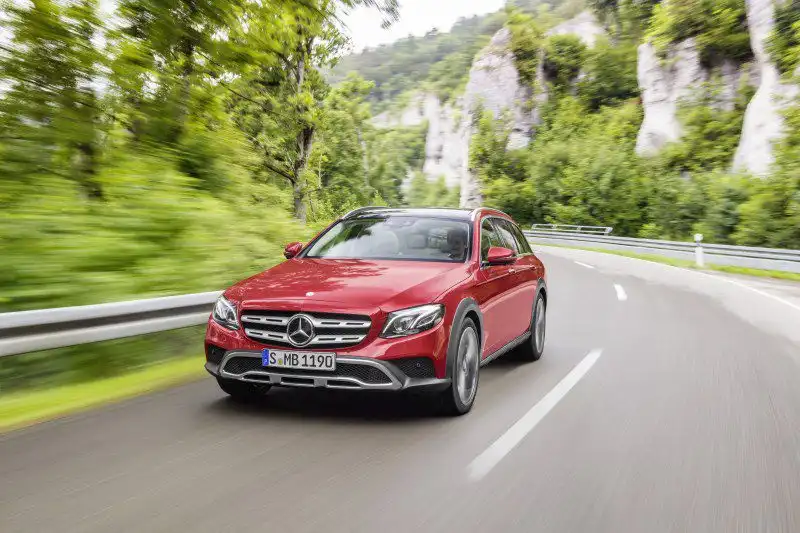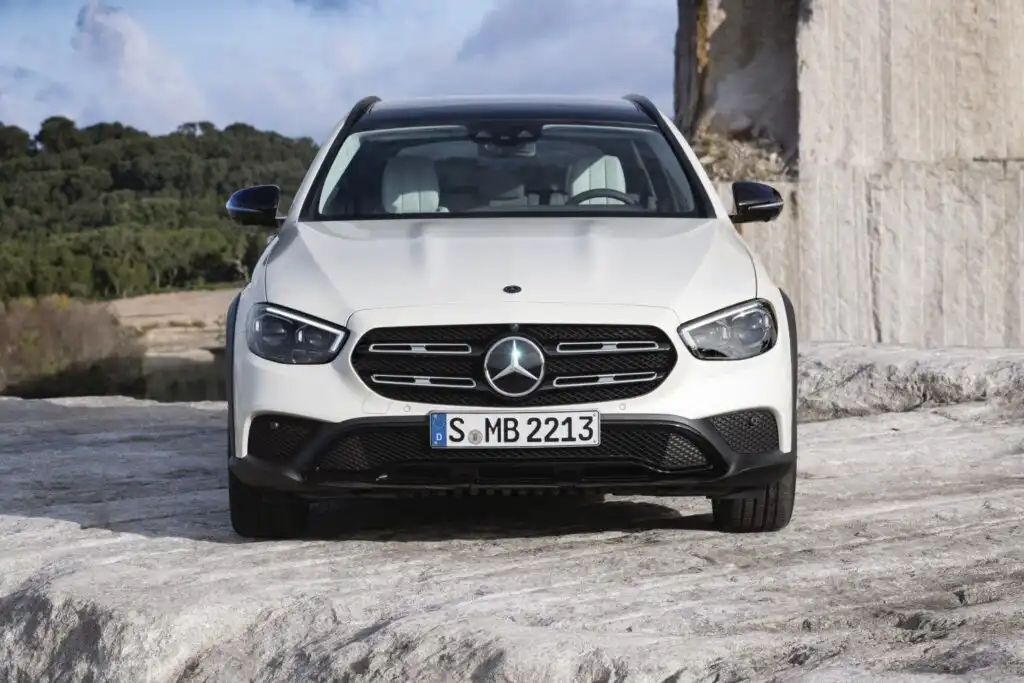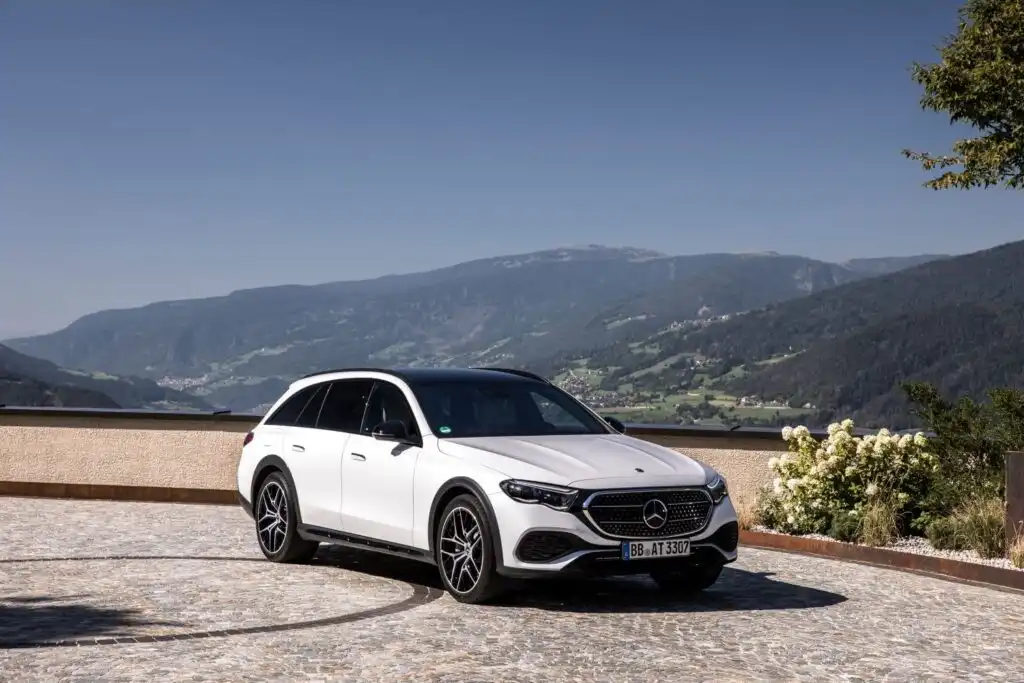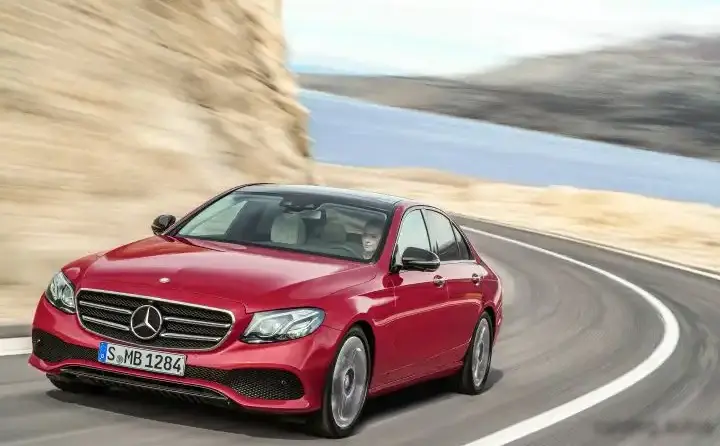
The Mercedes-Benz E 63 AMG, specifically the W213 generation produced between March 2017 and 2020, represents a high-performance iteration of the popular E-Class executive sedan. Positioned as the flagship performance variant, it aimed to deliver uncompromising power and handling while maintaining a degree of luxury and practicality. This model occupied the top tier of the W213 E-Class lineup, exceeding the capabilities of the E 43 AMG and standard E-Class models. It directly competed with performance sedans like the BMW M5 and Audi RS 6.
Technical Specifications
| Brand | Mercedes-Benz |
| Model | E-class |
| Generation | E-class (W213) |
| Type | AMG E 63 V8 (571 Hp) 4MATIC+ MCT |
| Start of production | March, 2017 |
| End of production | 2020 |
| Powertrain Architecture | Internal Combustion engine |
| Body type | Sedan |
| Seats | 5 |
| Doors | 4 |
| Fuel consumption at Low speed (WLTP) | 11.9 l/100 km (19.8 US mpg, 23.7 UK mpg, 8.4 km/l) |
| Fuel consumption at very high speed (WLTP) | 12.3 l/100 km (19.1 US mpg, 23 UK mpg, 8.1 km/l) |
| CO2 emissions (WLTP) | 270-279 g/km |
| Fuel consumption (economy) – urban | 11.4-11.7 l/100 km (20.6 – 20.1 US mpg, 24.8 – 24.1 UK mpg, 8.8 – 8.5 km/l) |
| Fuel consumption (economy) – extra urban | 7.3-7.6 l/100 km (32.2 – 30.9 US mpg, 38.7 – 37.2 UK mpg, 13.7 – 13.2 km/l) |
| Fuel consumption (economy) – combined | 8.8-9.1 l/100 km (26.7 – 25.8 US mpg, 32.1 – 31 UK mpg, 11.4 – 11 km/l) |
| CO2 emissions | 199-207 g/km |
| Fuel Type | Petrol (Gasoline) |
| Acceleration 0 – 100 km/h | 3.5 sec |
| Acceleration 0 – 62 mph | 3.5 sec |
| Acceleration 0 – 60 mph | 3.3 sec |
| Maximum speed | 250 km/h (155.34 mph) |
| Emission standard | Euro 6 |
| Weight-to-power ratio | 3.3 kg/Hp, 304.5 Hp/tonne |
| Weight-to-torque ratio | 2.5 kg/Nm, 400 Nm/tonne |
| Power | 571 Hp @ 5759-6500 rpm |
| Power per litre | 143.4 Hp/l |
| Torque | 750 Nm @ 2250-5000 rpm (553.17 lb.-ft. @ 2250-5000 rpm) |
| Engine layout | Front, Longitudinal |
| Engine Model/Code | M 177.980 |
| Engine displacement | 3982 cm3 (243 cu. in.) |
| Number of cylinders | 8 |
| Engine configuration | V-engine |
| Compression ratio | 8.6:1 |
| Fuel injection system | Direct injection |
| Engine aspiration | BiTurbo, Intercooler |
| Engine oil capacity | 9 l (9.51 US qt | 7.92 UK qt) |
| Coolant | 13.2 l (13.95 US qt | 11.61 UK qt) |
| Kerb Weight | 1875 kg (4133.67 lbs.) |
| Max. weight | 2525 kg (5566.67 lbs.) |
| Max load | 650 kg (1433 lbs.) |
| Trunk (boot) space – minimum | 540 l (19.07 cu. ft.) |
| Fuel tank capacity | 66 l (17.44 US gal | 14.52 UK gal) |
| Max. roof load | 100 kg (220.46 lbs.) |
| Length | 4988 mm (196.38 in.) |
| Width | 1907 mm (75.08 in.) |
| Width including mirrors | 2065 mm (81.3 in.) |
| Height | 1468 mm (57.8 in.) |
| Wheelbase | 2939 mm (115.71 in.) |
| Front track | 1649 mm (64.92 in.) |
| Front overhang | 882 mm (34.72 in.) |
| Rear overhang | 1167 mm (45.94 in.) |
| Ride height (ground clearance) | 127 mm (5 in.) |
| Drag coefficient (Cd) | 0.32 |
| Minimum turning circle | 12.5 m (41.01 ft.) |
| Approach angle | 12.4° |
| Departure angle | 15.1° |
| Ramp-over angle | 12° |
| Drive wheel | All wheel drive (4×4) |
| Number of gears and type of gearbox | 9 gears, automatic transmission MCT AMG SPEEDSHIFTT |
| Front suspension | Independent multi-link suspension |
| Rear suspension | Independent multi-link suspension |
| Front brakes | Ventilated discs |
| Rear brakes | Ventilated discs |
| Assisting systems | ABS (Anti-lock braking system) |
| Steering type | Steering rack and pinion |
| Power steering | Electric Steering |
| Tires size | Front wheel tires: 265/40 R19 Rear wheel tires: 295/35 R19 |
| Wheel rims size | Front wheel rims: 9.5J x 19 Rear wheel rims: 10J x 19 |
INTRODUCTION
The W213 E 63 AMG, launched in 2017, represented a significant leap forward in performance for the E-Class. Built on the MRA (Modular Rear-wheel-drive Architecture) platform, shared with other Mercedes-Benz models, it benefited from advancements in weight reduction and chassis rigidity. The key differentiator was its hand-built 4.0-liter twin-turbocharged V8 engine, a powerplant that quickly became synonymous with AMG’s performance ethos. This generation marked a shift away from the naturally aspirated V8s of previous E 63 models, embracing forced induction for increased power and efficiency. The 4MATIC+ all-wheel-drive system was standard, providing enhanced traction and stability.
Powertrain & Engine Architecture
At the heart of the E 63 AMG lies the M177 980 4.0-liter V8 engine. This engine utilizes a ‘hot-vee’ configuration, meaning the turbochargers are located within the V of the engine, resulting in a more compact design and reduced turbo lag. It employs direct fuel injection, delivering fuel directly into the combustion chamber for precise control and improved efficiency. The engine boasts a relatively high compression ratio of 8.6:1, contributing to its power output. The engine’s valvetrain features four valves per cylinder, optimized for high-flow performance. The 9-speed MCT (Multi Clutch Technology) automatic transmission, developed by AMG, is a key component of the powertrain. Unlike a traditional torque converter automatic, the MCT uses a wet multi-plate clutch pack to connect the engine to the transmission, offering faster shift times and a more direct feel. This transmission is specifically tuned for performance, with adaptive shift patterns that adjust to the driver’s style.
Driving Characteristics
The E 63 AMG delivers a truly exhilarating driving experience. The 750 Nm (553 lb-ft) of torque, available from a low 2250 rpm, provides immense pulling power across the rev range. The 9-speed MCT transmission shifts quickly and decisively, contributing to the car’s impressive acceleration. The 4MATIC+ all-wheel-drive system intelligently distributes torque between the front and rear axles, maximizing traction in all conditions. While the system is primarily rear-biased for a more engaging driving experience, it can seamlessly shift power to the front wheels when needed. Compared to the standard E-Class or even the E 43 AMG, the E 63 offers a significantly more aggressive and responsive driving experience. The suspension is tuned for performance, providing a firm but controlled ride. The steering is precise and well-weighted, offering excellent feedback to the driver. The exhaust note is characteristically AMG – loud, aggressive, and undeniably sporty.
Equipment & Trim Levels
The E 63 AMG came generously equipped as standard. Interior features included sport seats upholstered in Nappa leather, AMG-specific trim elements, and a performance steering wheel. Standard technology included the COMAND infotainment system with a large central display, a digital instrument cluster, and a suite of driver-assistance features. Optional extras included carbon fiber trim, upgraded audio systems, and advanced driver-assistance packages. The interior was designed to balance luxury and sportiness, with a focus on providing a comfortable and engaging driving environment. While trim levels were relatively limited, buyers could customize their E 63 with a wide range of options to suit their preferences.
Chassis & Braking
The W213 E 63 AMG features a sophisticated chassis designed to handle the car’s immense power. The suspension utilizes AMG Ride Control, an adaptive damping system that allows the driver to adjust the firmness of the suspension. The front suspension employs a multi-link design with stiffer springs and dampers compared to the standard E-Class. The rear suspension also utilizes a multi-link setup, optimized for handling and stability. Braking performance is exceptional, thanks to large, ventilated discs on all four wheels. The AMG braking system provides ample stopping power and resistance to fade, even under demanding conditions. The car’s electronic stability control system is finely tuned to allow for a degree of controlled oversteer, enhancing the driving experience.
Market Reception & Comparison
The W213 E 63 AMG was widely praised by automotive critics for its performance, handling, and luxurious interior. It was consistently ranked among the top performance sedans in its class. Compared to its rivals, the BMW M5 and Audi RS 6, the E 63 offered a unique blend of power, luxury, and technology. While the M5 was often lauded for its more engaging driving dynamics, the E 63 was praised for its comfortable ride and advanced features. Fuel economy, as expected for a high-performance vehicle, was relatively low, averaging around 26.7-25.8 US mpg in combined driving. Reliability was generally good, although the complex powertrain required regular maintenance.
Legacy
The W213 E 63 AMG represents a significant milestone in the evolution of the E-Class. Its 4.0-liter twin-turbo V8 engine has become a hallmark of AMG performance, and its advanced technology and luxurious interior set a new standard for the segment. On the used car market, these models hold their value well, attracting enthusiasts who appreciate their performance and exclusivity. The powertrain, while complex, has proven to be relatively durable with proper maintenance. The E 63 AMG continues to be a sought-after performance sedan, offering a compelling combination of power, luxury, and technology.