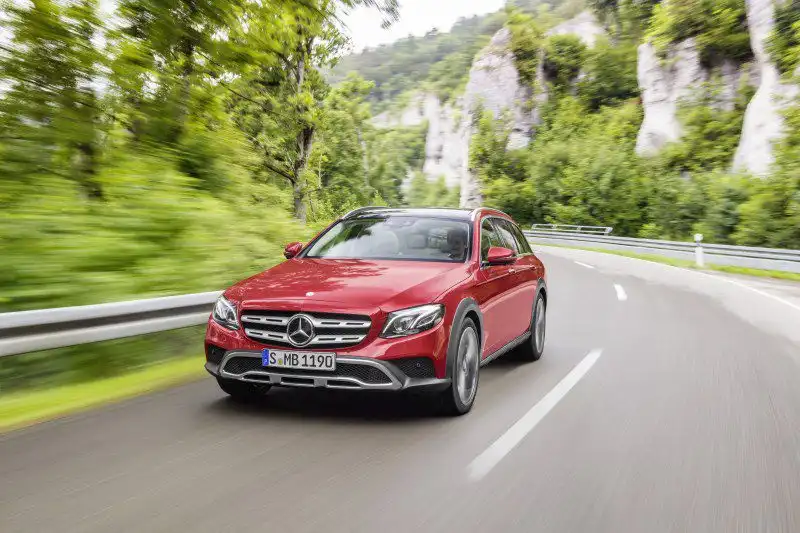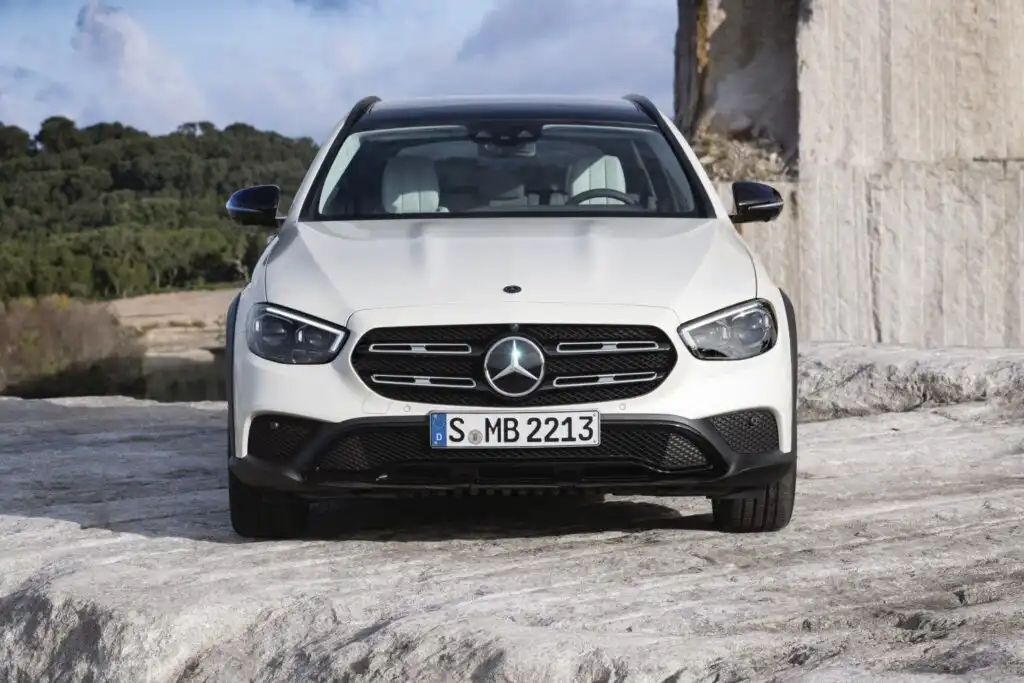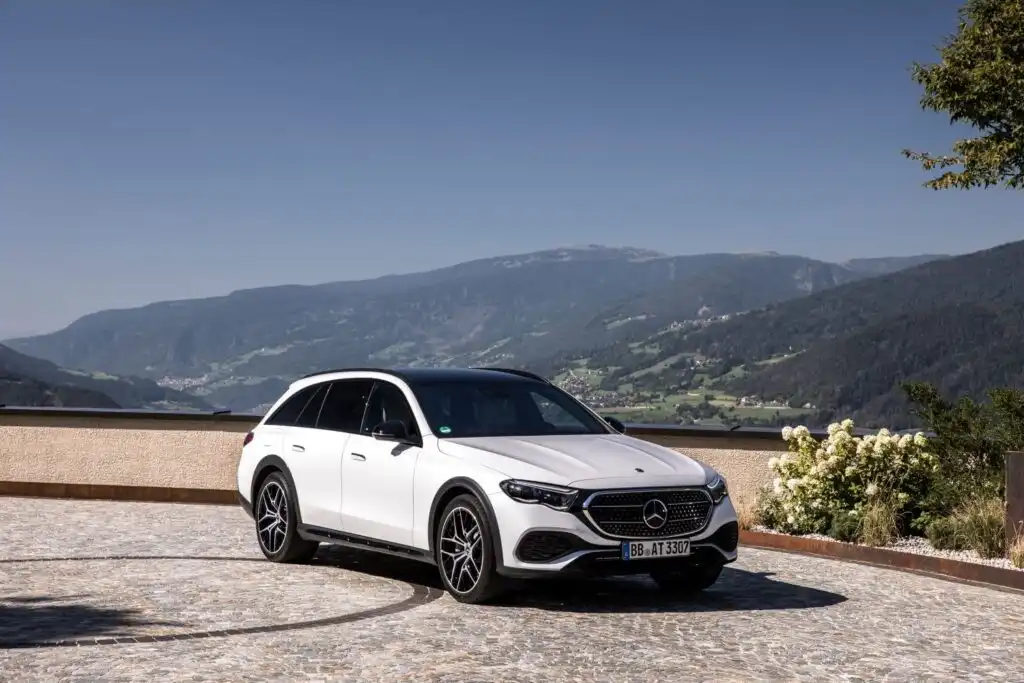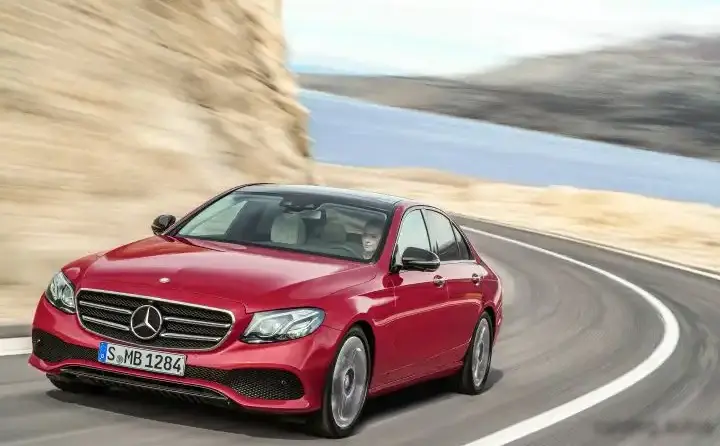
The Mercedes-Benz E 200 (W213), produced from February 2016 to 2019, represented the entry point into the fifth generation of the E-Class sedan. Positioned as a volume seller, it offered a blend of luxury, technology, and efficiency aimed at a broad customer base. This variant combined a 2.0-liter turbocharged four-cylinder engine with the sophisticated 9G-TRONIC nine-speed automatic transmission and rear-wheel drive. It served as a more accessible alternative to the higher-performance E 300 and E 43 models, and the diesel-powered E 220d, appealing to buyers prioritizing fuel economy and a comfortable driving experience. The W213 E-Class as a whole aimed to modernize the traditionally conservative E-Class formula, incorporating design cues from the S-Class and a host of advanced driver-assistance systems.
Technical Specifications
| Brand | Mercedes-Benz |
| Model | E-class |
| Generation | E-class (W213) |
| Type (Engine) | E 200 (184 Hp) 9G-TRONIC |
| Start of production | February, 2016 |
| End of production | 2019 |
| Powertrain Architecture | Internal Combustion engine |
| Body type | Sedan |
| Seats | 5 |
| Doors | 4 |
| Fuel consumption at Low speed (WLTP) | 6.9 l/100 km (34.1 US mpg, 40.9 UK mpg, 14.5 km/l) |
| Fuel consumption at very high speed (WLTP) | 7.9 l/100 km (29.8 US mpg, 35.8 UK mpg, 12.7 km/l) |
| CO2 emissions (WLTP) | 156-186 g/km |
| Fuel consumption (economy) – urban | 7.6-7.2 l/100 km (30.9 – 32.7 US mpg, 37.2 – 39.2 UK mpg, 13.2 – 13.9 km/l) |
| Fuel consumption (economy) – extra urban | 5.1-4.6 l/100 km (46.1 – 51.1 US mpg, 55.4 – 61.4 UK mpg, 19.6 – 21.7 km/l) |
| Fuel consumption (economy) – combined | 5.9-5.5 l/100 km (39.9 – 42.8 US mpg, 47.9 – 51.4 UK mpg, 16.9 – 18.2 km/l) |
| CO2 emissions | 135-125 g/km |
| Fuel Type | Petrol (Gasoline) |
| Acceleration 0 – 100 km/h | 7.7 sec |
| Acceleration 0 – 62 mph | 7.7 sec |
| Acceleration 0 – 60 mph | 7.3 sec |
| Maximum speed | 240 km/h (149.13 mph) |
| Emission standard | Euro 6 |
| Weight-to-power ratio | 8.3 kg/Hp, 120.3 Hp/tonne |
| Weight-to-torque ratio | 5.1 kg/Nm, 196.1 Nm/tonne |
| Power | 184 Hp @ 5500 rpm |
| Power per litre | 92.4 Hp/l |
| Torque | 300 Nm @ 1200-4000 rpm (221.27 lb.-ft. @ 1200-4000 rpm) |
| Engine layout | Front, Longitudinal |
| Engine Model/Code | M 274.920 |
| Engine displacement | 1991 cm3 (121.5 cu. in.) |
| Number of cylinders | 4 |
| Engine configuration | Inline |
| Compression ratio | 9.8:1 |
| Fuel injection system | Direct injection |
| Engine aspiration | Turbocharger, Intercooler |
| Engine oil capacity | 7 l (7.4 US qt, 6.16 UK qt) |
| Coolant | 12 l (12.68 US qt, 10.56 UK qt) |
| Kerb Weight | 1530 kg (3373.07 lbs.) |
| Max. weight | 2245 kg (4949.38 lbs.) |
| Max load | 715 kg (1576.31 lbs.) |
| Trunk (boot) space – minimum | 540 l (19.07 cu. ft.) |
| Fuel tank capacity | 50 l (13.21 US gal, 11 UK gal) |
| Max. roof load | 100 kg (220.46 lbs.) |
| Permitted trailer load with brakes (12%) | 1900 kg (4188.78 lbs.) |
| Permitted trailer load without brakes | 750 kg (1653.47 lbs.) |
| Length | 4923 mm (193.82 in.) |
| Width | 1852 mm (72.91 in.) |
| Width including mirrors | 2065 mm (81.3 in.) |
| Height | 1468 mm (57.8 in.) |
| Wheelbase | 2939 mm (115.71 in.) |
| Rear (Back) track | 1619 mm (63.74 in.) |
| Drag coefficient (Cd) | 0.26 |
| Minimum turning circle (turning diameter) | 11.60 m (38.06 ft.) |
| Drivetrain Architecture | The Internal combustion engine (ICE) drives the rear wheels of the vehicle. |
| Drive wheel | Rear wheel drive |
| Number of gears and type of gearbox | 9 gears, automatic transmission G-TRONIC |
| Front suspension | Independent multi-link suspension |
| Rear suspension | Independent multi-link suspension |
| Front brakes | Ventilated discs |
| Rear brakes | Ventilated discs |
| Assisting systems | ABS (Anti-lock braking system) |
| Steering type | Steering rack and pinion |
| Power steering | Electric Steering |
| Tires size | 205/65 R16 |
| Wheel rims size | 16 |
Powertrain & Engine Architecture
The E 200 utilized Mercedes-Benz’s M274.920 2.0-liter inline-four cylinder engine. This engine is a member of the modular M274 family, known for its compact design and efficiency. It features direct fuel injection, a single turbocharger with an intercooler, and variable valve timing on both the intake and exhaust sides. The engine produces 184 horsepower at 5,500 rpm and 300 Nm (221 lb-ft) of torque between 1,200 and 4,000 rpm. The 9G-TRONIC nine-speed automatic transmission was a key component, offering a wide range of gear ratios to optimize fuel economy and provide smooth shifts. This transmission was designed to handle the engine’s torque output effectively and contribute to a refined driving experience. The engine is longitudinally mounted, driving the rear wheels.
Driving Characteristics
The E 200, with its 184 hp and nine-speed automatic, provided a comfortable and refined driving experience. Acceleration from 0 to 60 mph took approximately 7.3 seconds, which was adequate for everyday driving but noticeably slower than the more powerful E 300. The 9G-TRONIC transmission generally shifted smoothly and intelligently, although some drivers noted occasional hesitation during kickdown maneuvers. The wide gear spread allowed the engine to operate efficiently at highway speeds, contributing to good fuel economy. Compared to manual transmission versions (not widely available in the US market), the automatic offered greater convenience but slightly reduced responsiveness. The rear-wheel drive configuration provided balanced handling, although it lacked the all-weather capability of the 4MATIC all-wheel drive system available on other E-Class models.
Equipment & Trim Levels
The E 200 typically came standard with features such as automatic climate control, a touchscreen infotainment system with Bluetooth connectivity, and a suite of safety features including ABS, stability control, and multiple airbags. Interior upholstery was typically MB-Tex artificial leather, with optional upgrades to genuine leather available. Standard dashboard trim included wood or aluminum accents. Common optional extras included a panoramic sunroof, premium sound system, navigation system, and various driver-assistance packages such as lane keeping assist and adaptive cruise control. The E 200 served as the base trim level, and buyers could add packages to customize the vehicle to their preferences.
Chassis & Braking
The W213 E-Class featured an independent multi-link suspension at both the front and rear, providing a comfortable ride and good handling characteristics. The E 200 typically used ventilated disc brakes on all four wheels, offering adequate stopping power for its weight class. The steering system was a rack-and-pinion setup with electric power assistance. Stabilizer bars were fitted to both the front and rear axles to reduce body roll during cornering. The suspension tuning was geared towards comfort, prioritizing a smooth ride over sporty handling.
Market Reception & Comparison
The E 200 was generally well-received by automotive critics as a capable and comfortable entry-level luxury sedan. It was praised for its fuel efficiency, refined ride, and spacious interior. However, some reviewers noted that the 2.0-liter engine could feel underpowered at times, particularly when fully loaded or during aggressive driving. Compared to the E 300, the E 200 offered a lower price point but sacrificed performance. The E 220d diesel variant provided similar fuel economy with slightly more torque, making it a popular alternative in European markets. In terms of reliability, the M274 engine family has proven generally robust, although some owners have reported issues with the turbocharger and fuel injectors.
Legacy
The W213 E 200 has established itself as a reliable and relatively affordable entry point into the Mercedes-Benz E-Class range on the used car market. The 9G-TRONIC transmission has proven durable, and the M274 engine, while not known for its blistering performance, is generally considered dependable with proper maintenance. These vehicles represent a good value for buyers seeking a comfortable, well-equipped, and fuel-efficient luxury sedan. Regular maintenance, including oil changes and inspections of the turbocharger and fuel system, is crucial to ensure long-term reliability.