Technical Specifications
| Brand | Mercedes-Benz |
| Model | E-class |
| Generation | E-class (W213) |
| Type (Engine) | E 200d (160 Hp) 9G-TRONIC |
| Start of production | May, 2019 |
| End of production | June, 2020 |
| Powertrain Architecture | Internal Combustion engine |
| Body type | Sedan |
| Seats | 5 |
| Doors | 4 |
| Combined fuel consumption (WLTP) | 5 l/100 km (47 US mpg, 56.5 UK mpg, 20 km/l) |
| CO2 emissions (WLTP) | 132 g/km |
| Fuel consumption (economy) – urban (NEDC) | 4.9-5.6 l/100 km (48 – 42 US mpg, 57.6 – 50.4 UK mpg, 20.4 – 17.9 km/l) |
| Fuel consumption (economy) – extra urban (NEDC) | 3.7-4.3 l/100 km (63.6 – 54.7 US mpg, 76.3 – 65.7 UK mpg, 27 – 23.3 km/l) |
| Fuel consumption (economy) – combined (NEDC) | 4.2-4.8 l/100 km (56 – 49 US mpg, 67.3 – 58.9 UK mpg, 23.8 – 20.8 km/l) |
| CO2 emissions (NEDC) | 110-127 g/km |
| Fuel Type | Diesel |
| Acceleration 0 – 100 km/h | 8.4 sec |
| Acceleration 0 – 62 mph | 8.4 sec |
| Acceleration 0 – 60 mph | 8 sec (Calculated) |
| Maximum speed | 226 km/h (140.43 mph) |
| Emission standard | Euro 6d-TEMP-EVAP-ISC |
| Weight-to-power ratio | 10 kg/Hp, 99.7 Hp/tonne |
| Weight-to-torque ratio | 4.5 kg/Nm, 224.3 Nm/tonne |
| Power | 160 Hp @ 3200 rpm |
| Power per litre | 100.1 Hp/l |
| Torque | 360 Nm @ 1600-2600 rpm (265.52 lb.-ft. @ 1600-2600 rpm) |
| Engine layout | Front, Longitudinal |
| Engine Model/Code | OM 654.916 |
| Engine displacement | 1598 cm3 (97.52 cu. in.) |
| Number of cylinders | 4 |
| Engine configuration | Inline |
| Cylinder Bore | 78 mm (3.07 in.) |
| Piston Stroke | 83.6 mm (3.29 in.) |
| Number of valves per cylinder | 4 |
| Fuel injection system | Diesel Commonrail |
| Engine aspiration | Turbocharger, Intercooler |
| Valvetrain | DOHC |
| Engine oil capacity | 6 l (6.34 US qt | 5.28 UK qt) |
| Coolant | 11 l (11.62 US qt | 9.68 UK qt) |
| Kerb Weight | 1605-1631 kg (3538.42 – 3595.74 lbs.) |
| Max. weight | 2320-2341 kg (5114.72 – 5161.02 lbs.) |
| Max load | 710-715 kg (1565.28 – 1576.31 lbs.) |
| Trunk (boot) space – minimum | 540 l (19.07 cu. ft.) |
| Fuel tank capacity | 50 l (13.21 US gal | 11 UK gal) |
| AdBlue tank | 23.5 l (6.21 US gal | 5.17 UK gal) |
| Max. roof load | 100 kg (220.46 lbs.) |
| Permitted trailer load with brakes (12%) | 2100 kg (4629.71 lbs.) |
| Permitted trailer load without brakes | 750 kg (1653.47 lbs.) |
| Permitted towbar download | 84 kg (185.19 lbs.) |
| Length | 4923 mm (193.82 in.) |
| Width | 1852 mm (72.91 in.) |
| Width including mirrors | 2065 mm (81.3 in.) |
| Height | 1468 mm (57.8 in.) |
| Wheelbase | 2939 mm (115.71 in.) |
| Rear (Back) track | 1619 mm (63.74 in.) |
| Front overhang | 841 mm (33.11 in.) |
| Rear overhang | 1143 mm (45 in.) |
| Minimum turning circle | 11.6 m (38.06 ft.) |
| Drivetrain Architecture | Rear wheel drive |
| Number of gears and type of gearbox | 9 gears, automatic transmission G-TRONIC |
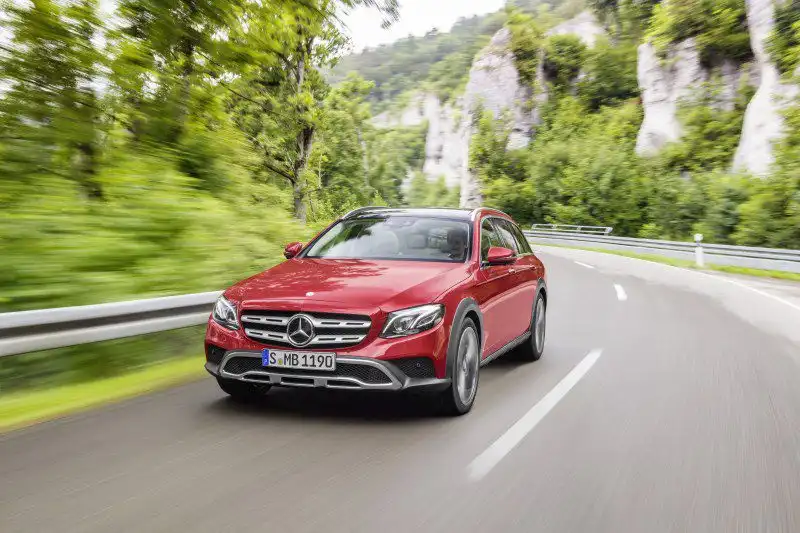
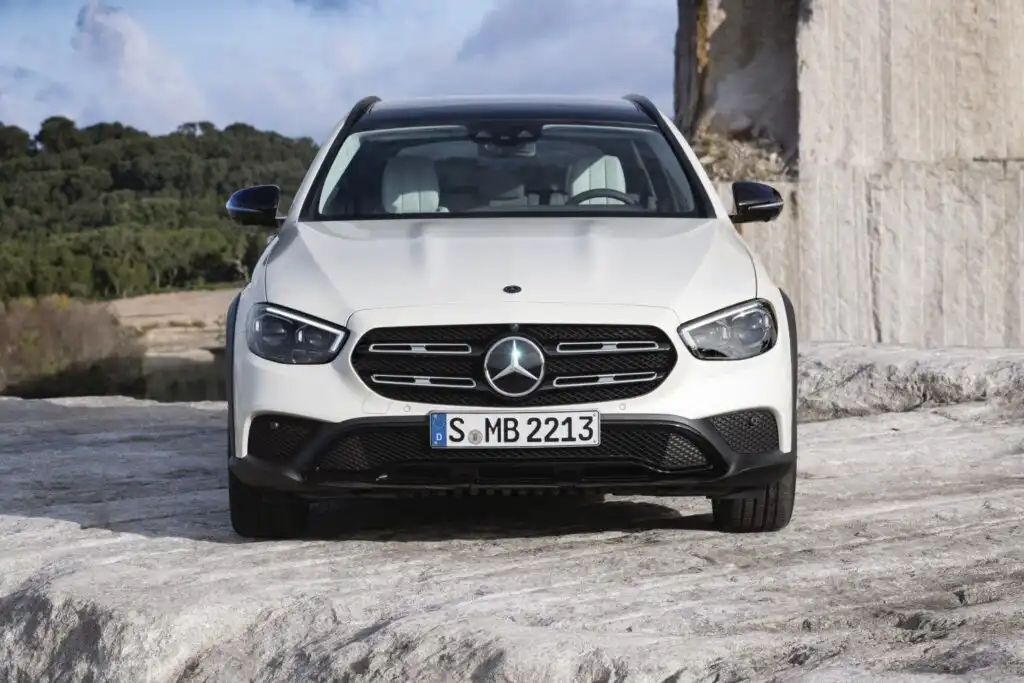
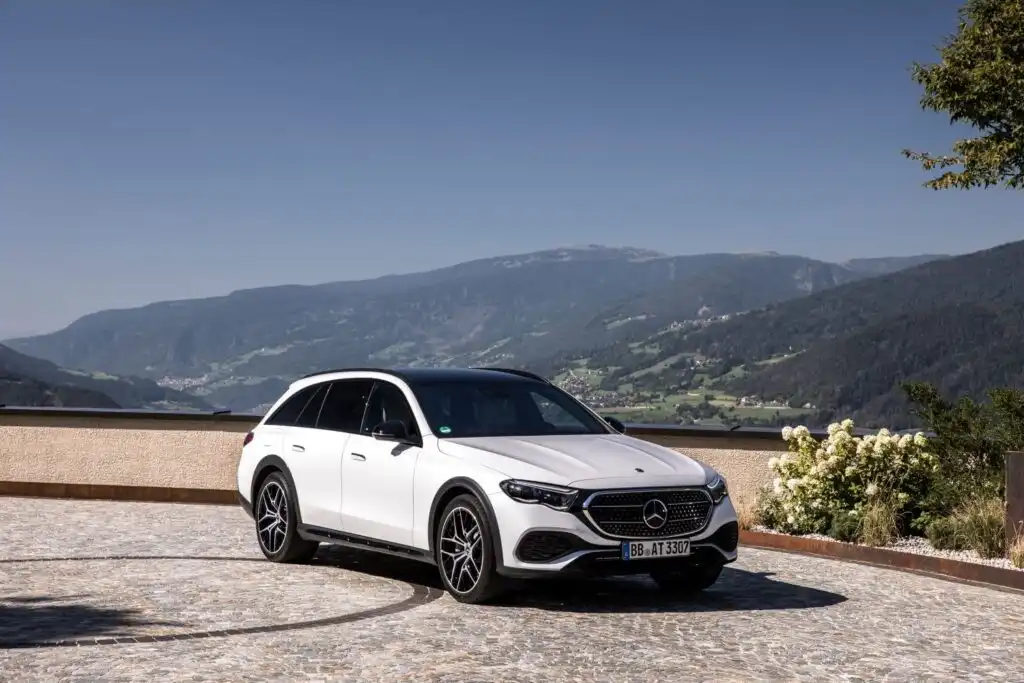
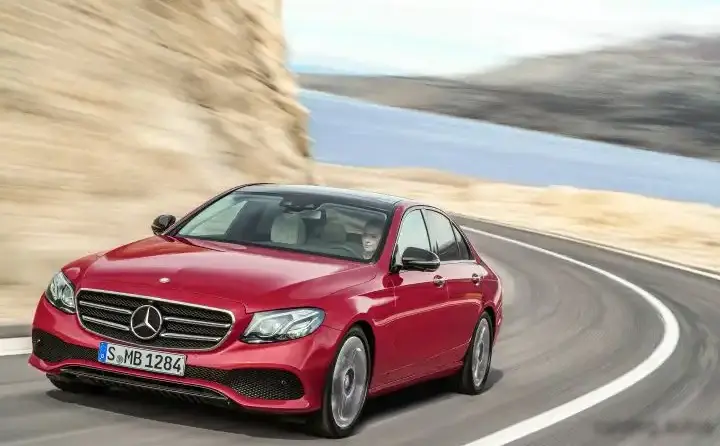
The Mercedes-Benz E 200d (160 hp) 9G-TRONIC, produced from May 2019 to June 2020, represents a significant variant within the W213 generation of the E-Class. Positioned as an entry-level diesel offering in many European markets, it aimed to provide a balance of fuel efficiency, comfortable cruising, and the prestige associated with the E-Class nameplate. This model catered to buyers prioritizing economy and refinement over outright performance, offering a more accessible entry point into the mid-size executive car segment. The W213 E-Class, launched in 2016, represented a significant leap forward in technology and design compared to its predecessor, and the E 200d 9G-TRONIC benefited from these advancements.
Powertrain & Engine Architecture
The E 200d is powered by the OM 654.916, a 1.6-liter inline-four diesel engine. This engine is a member of Mercedes-Benz’s modular engine family, known for its lightweight construction and advanced technology. It features a cast iron block with aluminum cylinder heads, and utilizes a two-stage turbocharging system with variable turbine geometry (VTG) to optimize performance and efficiency across a wide range of engine speeds. The engine employs a common-rail direct fuel injection system operating at pressures up to 2,700 bar, ensuring precise fuel delivery and contributing to reduced emissions. The valvetrain is a double overhead camshaft (DOHC) design with four valves per cylinder. The 9G-TRONIC nine-speed automatic transmission is a crucial component, offering smooth and efficient gear changes. Its wide gear ratio spread allows the engine to operate within its optimal efficiency range more frequently, further enhancing fuel economy.
Driving Characteristics
The E 200d 9G-TRONIC delivers a comfortable and refined driving experience. While not a performance-oriented variant, the 160 hp and 360 Nm of torque provide adequate power for everyday driving and highway cruising. Acceleration from 0 to 100 km/h takes approximately 8.4 seconds. The 9G-TRONIC transmission is programmed for smooth shifts and prioritizes fuel efficiency, sometimes at the expense of immediate responsiveness. Compared to the more powerful E 220d or E 300 models, the E 200d feels less eager to accelerate, but its relaxed nature makes it well-suited for long journeys. The gear ratios are optimized for low-end torque and high-speed cruising, making it a capable highway companion.
Equipment & Trim Levels
The E 200d 9G-TRONIC typically came standard with features such as automatic climate control, a touchscreen infotainment system with Mercedes’ MBUX interface, and a suite of safety features including automatic emergency braking and lane keeping assist. Interior upholstery was generally Artico leather (a high-quality synthetic leather), with options for genuine leather upgrades. Common optional extras included a panoramic sunroof, premium sound system, and advanced driver assistance systems like adaptive cruise control and blind spot monitoring. Trim levels varied by market, but generally offered packages that bundled popular options together.
Chassis & Braking
The W213 E-Class features a sophisticated chassis design. The E 200d typically utilized a steel spring suspension, although air suspension was available as an option, particularly on higher trim levels. The front suspension is a four-link independent setup, while the rear employs a multi-link independent suspension. Braking systems consisted of ventilated disc brakes on all four wheels. Anti-lock braking system (ABS) and electronic stability control (ESC) were standard features. The E 200d, being a lighter variant, often featured slightly smaller brake rotors compared to its more powerful siblings.
Market Reception & Comparison
The E 200d 9G-TRONIC was generally well-received by automotive critics as a practical and efficient option within the E-Class range. It was praised for its fuel economy, comfortable ride, and refined interior. However, some reviewers noted that the engine could feel underpowered at times, particularly when fully loaded or tackling steep inclines. Compared to the E 220d, the E 200d offered lower running costs but sacrificed some performance. Against competitors like the BMW 520d and Audi A6 2.0 TDI, the E 200d held its own in terms of fuel efficiency and refinement, but often lagged slightly in terms of outright driving dynamics.
Legacy
The OM 654 engine family, including the 1.6-liter variant found in the E 200d, has proven to be a reliable and durable powertrain. While early examples of the W213 E-Class experienced some minor software glitches, these were largely addressed through software updates. On the used car market, the E 200d 9G-TRONIC represents a good value proposition for buyers seeking a comfortable, fuel-efficient, and well-equipped executive car. Maintenance costs are generally reasonable, and the availability of spare parts is good. The combination of a modern diesel engine and a nine-speed automatic transmission continues to make this variant a compelling choice for those prioritizing economy and long-distance comfort.