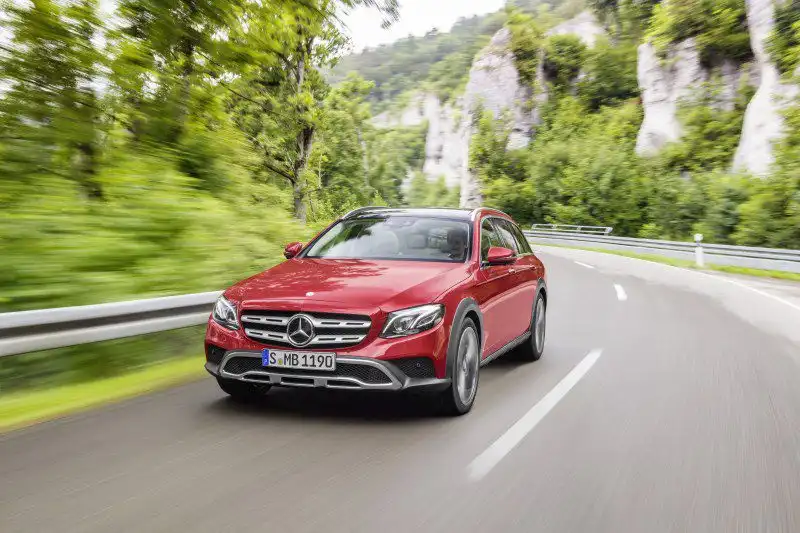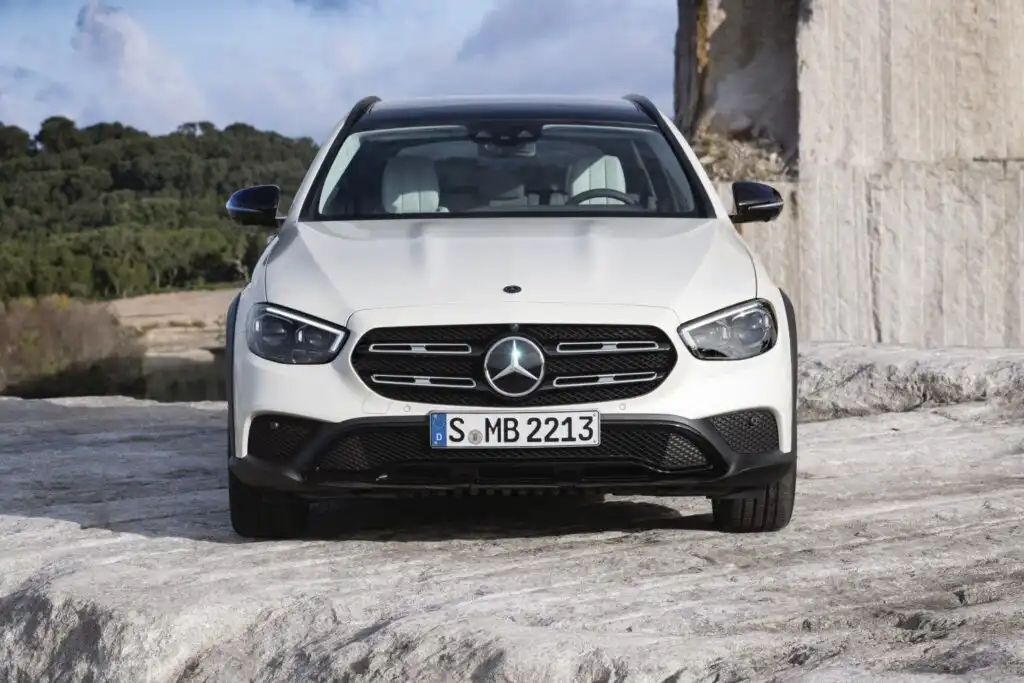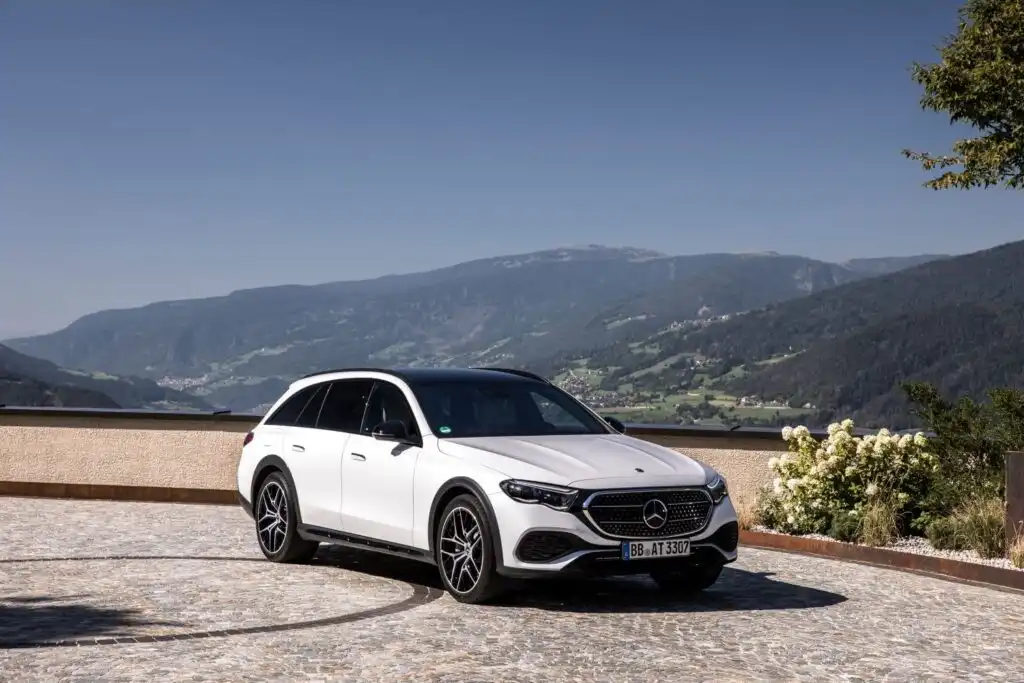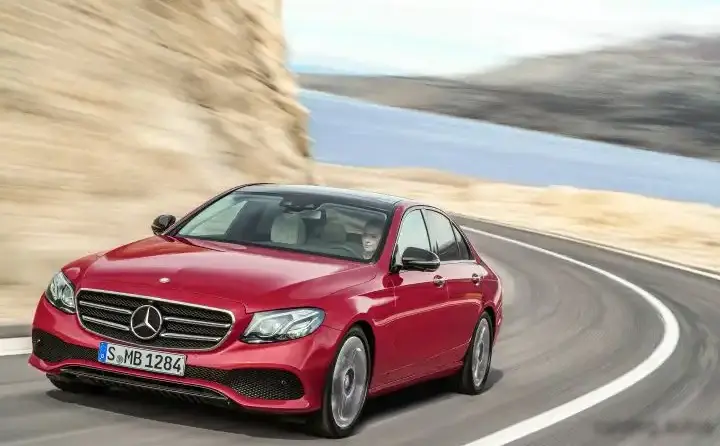
The Mercedes-Benz E 250, powered by a 2.0-liter turbocharged inline-four engine producing 211 horsepower and paired with a 9G-TRONIC nine-speed automatic transmission, was a key variant within the W213 E-Class range produced from July 2016 to April 2018. Positioned as a mid-range offering, it aimed to balance performance, efficiency, and luxury within the broader E-Class lineup. This model represented a shift towards smaller displacement, turbocharged engines in the traditionally larger-engined E-Class, reflecting a broader industry trend towards downsizing and improved fuel economy. The W213 generation itself marked a significant evolution for the E-Class, incorporating advanced technology and a more contemporary design language.
Technical Specifications
| Brand | Mercedes-Benz |
| Model | E-class |
| Generation | E-class (W213) |
| Type (Engine) | E 250 (211 Hp) 9G-TRONIC |
| Start of production | July, 2016 |
| End of production | April, 2018 |
| Powertrain Architecture | Internal Combustion engine |
| Body type | Sedan |
| Seats | 5 |
| Doors | 4 |
| Fuel consumption (urban) | 7.6-8.0 l/100 km (30.9 – 29.4 US mpg, 37.2 – 35.3 UK mpg, 13.2 – 12.5 km/l) |
| Fuel consumption (extra urban) | 4.9-5.3 l/100 km (48 – 44.4 US mpg, 57.6 – 53.3 UK mpg, 20.4 – 18.9 km/l) |
| Fuel consumption (combined) | 5.9-6.3 l/100 km (39.9 – 37.3 US mpg, 47.9 – 44.8 UK mpg, 16.9 – 15.9 km/l) |
| CO2 emissions | 132-142 g/km |
| Fuel Type | Petrol (Gasoline) |
| Acceleration 0 – 100 km/h | 6.9 sec |
| Acceleration 0 – 62 mph | 6.9 sec |
| Acceleration 0 – 60 mph | 6.6 sec |
| Maximum speed | 250 km/h (155.34 mph) |
| Emission standard | Euro 6 |
| Weight-to-power ratio | 7.3 kg/Hp, 137 Hp/tonne |
| Weight-to-torque ratio | 4.4 kg/Nm, 227.3 Nm/tonne |
| Power | 211 Hp @ 5500 rpm |
| Power per litre | 106 Hp/l |
| Torque | 350 Nm @ 1200-4000 rpm (258.15 lb.-ft. @ 1200-4000 rpm) |
| Engine layout | Front, Longitudinal |
| Engine Model/Code | M 274.920 |
| Engine displacement | 1991 cm3 (121.5 cu. in.) |
| Number of cylinders | 4 |
| Engine configuration | Inline |
| Compression ratio | 9.8:1 |
| Fuel injection system | Direct injection |
| Engine aspiration | Turbocharger, Intercooler |
| Engine oil capacity | 7 l (7.4 US qt | 6.16 UK qt) |
| Coolant | 12 l (12.68 US qt | 10.56 UK qt) |
| Kerb Weight | 1540 kg (3395.12 lbs.) |
| Max. weight | 2255 kg (4971.42 lbs.) |
| Max load | 715 kg (1576.31 lbs.) |
| Trunk (boot) space – minimum | 540 l (19.07 cu. ft.) |
| Fuel tank capacity | 50 l (13.21 US gal | 11 UK gal) |
| Max. roof load | 100 kg (220.46 lbs.) |
| Permitted trailer load with brakes (12%) | 2000 kg (4409.25 lbs.) |
| Permitted trailer load without brakes | 750 kg (1653.47 lbs.) |
| Length | 4923 mm (193.82 in.) |
| Width | 1852 mm (72.91 in.) |
| Width including mirrors | 2065 mm (81.3 in.) |
| Height | 1468 mm (57.8 in.) |
| Wheelbase | 2939 mm (115.71 in.) |
| Rear (Back) track | 1619 mm (63.74 in.) |
| Front overhang | 841 mm (33.11 in.) |
| Rear overhang | 1143 mm (45 in.) |
| Drag coefficient (Cd) | 0.27 |
| Minimum turning circle (turning diameter) | 11.6 m (38.06 ft.) |
| Drivetrain Architecture | The Internal combustion engine (ICE) drives the rear wheels of the vehicle. |
| Drive wheel | Rear wheel drive |
| Number of gears and type of gearbox | 9 gears, automatic transmission G-TRONIC |
| Front suspension | Independent multi-link suspension |
| Rear suspension | Independent multi-link suspension |
| Front brakes | Ventilated discs |
| Rear brakes | Ventilated discs |
| Assisting systems | ABS (Anti-lock braking system) |
| Steering type | Steering rack and pinion |
| Power steering | Electric Steering |
| Tires size | 225/55 R17 |
| Wheel rims size | 17 |
Powertrain & Engine Architecture
The heart of the E 250 is the M 274.920 2.0-liter inline-four engine. This engine utilizes direct fuel injection and is coupled with a twin-scroll turbocharger and intercooler to deliver a balance of power and efficiency. The engine’s aluminum block and head contribute to weight reduction. The 9G-TRONIC nine-speed automatic transmission is a crucial component, offering a wide range of gear ratios to optimize fuel economy and provide smooth shifts. This transmission features a high gear ratio spread, allowing the engine to operate at its most efficient RPM range across a variety of driving conditions. The transmission’s computer control unit adapts shift patterns based on driving style and road conditions.
Driving Characteristics
The E 250 9G-TRONIC delivers a comfortable and refined driving experience. While not as overtly sporty as the E 43 or E 63 AMG models, the 211 horsepower and 350 Nm (258 lb-ft) of torque provide adequate performance for everyday driving and highway cruising. Acceleration from 0 to 60 mph takes approximately 6.6 seconds. The nine-speed transmission helps to keep the engine in its optimal power band, minimizing turbo lag and providing responsive acceleration. Compared to the six-speed automatic offered in earlier E-Class generations, the 9G-TRONIC contributes to improved fuel economy and reduced engine noise at highway speeds. The automatic transmission, while smooth, doesn’t offer the same level of driver engagement as a manual transmission, and some drivers may find the shift logic occasionally hesitant in certain situations.
Equipment & Trim Levels
The E 250 typically came standard with features such as MB-Tex upholstery, automatic climate control, a 7-inch central display screen, and a suite of safety features including Attention Assist and Collision Prevention Assist Plus. Optional extras included leather upholstery, a larger 12.3-inch display screen, a premium sound system, and various driver assistance packages such as Lane Keeping Assist and Blind Spot Assist. Trim levels varied by market, but generally, the E 250 offered a good balance of standard features and available options, making it an attractive choice for buyers seeking a well-equipped luxury sedan.
Chassis & Braking
The W213 E-Class features a sophisticated chassis design with an independent multi-link suspension at both the front and rear. This suspension setup provides a comfortable ride while maintaining good handling characteristics. The E 250 typically came equipped with ventilated disc brakes on all four wheels, providing ample stopping power. ABS (Anti-lock Braking System) is standard, along with Electronic Stability Program (ESP). The steering is a rack-and-pinion system with electric power steering, offering precise and responsive steering feel.
Market Reception & Comparison
The E 250 was generally well-received by automotive critics, who praised its comfortable ride, refined interior, and fuel efficiency. It was often compared to its competitors in the mid-size luxury sedan segment, such as the BMW 528i and Audi A6 2.0T. The E 250 offered a competitive combination of features and performance, and its fuel economy was a key selling point. Compared to the more powerful E 300, the E 250 offered a more affordable entry point into the E-Class range, but with a noticeable reduction in performance. However, for buyers prioritizing comfort and efficiency over outright speed, the E 250 proved to be a compelling option.
Legacy
The M 274 engine, while generally reliable, has been known to exhibit some issues with the timing chain and oil leaks in higher mileage examples. The 9G-TRONIC transmission has also experienced occasional reports of software glitches and rough shifting, although these issues are often addressed through software updates. Overall, the E 250 9G-TRONIC represents a solid and well-engineered luxury sedan. On the used car market, these models offer a good value proposition, providing a comfortable and well-equipped driving experience at a relatively affordable price point. Regular maintenance and adherence to Mercedes-Benz’s recommended service intervals are crucial for ensuring the long-term reliability of this powertrain.